Introduction
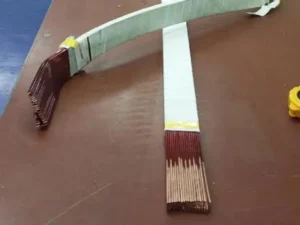
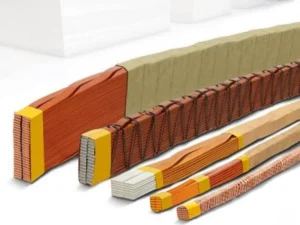
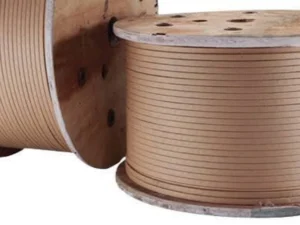
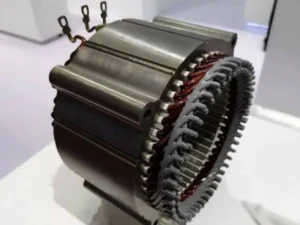
Roebel bar conductors are specialized transposed conductors used in large motors, generators, and other high-power rotating electrical machines. Unlike a conventional single rectangular copper conductor, a Roebel bar is assembled from multiple insulated copper strands that are shaped and transposed so that individual strands periodically occupy different positions within the complete conductor.
This structure is particularly important in large electrical machines, where conductor dimensions and magnetic fields can contribute to non-uniform current distribution and additional losses.
From a manufacturing perspective, the performance of a Roebel bar begins with the quality of its individual copper strands. Dimensional accuracy, strand geometry, corner radius, surface quality, mechanical properties, insulation, and transposition consistency all influence the finished conductor.
This article focuses on the structure, applications, technical requirements, strand manufacturing, and production considerations of Roebel bar conductors for motors and generators.
What Is a Roebel Bar Conductor?
A Roebel bar is a transposed conductor assembled from multiple individually insulated copper strands.
The individual strands are formed and arranged so that their positions change along the length of the conductor.
A simplified manufacturing structure is:
Copper Rod → Drawing → Rectangular Copper Strand Production → Strand Insulation → Strand Forming → Transposition → Roebel Bar Assembly
Typical characteristics include:
| Parameter | Typical Description |
| Conductor material | High-conductivity copper |
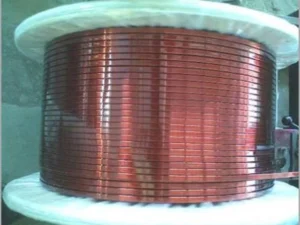
| Individual strand | Rectangular / shaped copper |
| Strand insulation | Application-specific electrical insulation |
| Number of strands | According to machine design |
| Strand arrangement | Transposed |
| Finished structure | Assembled bar conductor |
| Main applications | Large motors and generators |
| Dimensional tolerance | Application dependent |
| Surface requirement | Smooth and defect-free |
| Mechanical condition | Suitable for forming and transposition |
The exact conductor geometry is determined by electrical machine design, current capacity, slot dimensions, voltage level, cooling arrangement, and electromagnetic requirements.
Why Is Transposition Used?
In large electrical machines, conductors operate in complex electromagnetic fields.
If a large conductor were manufactured as one solid copper section, different regions of the conductor could experience different electromagnetic conditions. This can contribute to circulating currents and additional eddy-current losses.
One solution is to divide the conductor into multiple insulated strands and transpose their positions.
The principle can be simplified as:
Large Conductor → Multiple Smaller Strands → Individual Insulation → Controlled Transposition → Assembled Conductor
Through transposition, individual strands periodically occupy different positions within the conductor cross-section.
This helps achieve more balanced electromagnetic conditions among the strands and can reduce additional losses in large machine windings.
Main Applications of Roebel Bar Conductors
Roebel bars are mainly associated with large rotating electrical machines rather than ordinary small motors.
Typical applications include:
| Application | Main Conductor Requirement |
| Large generators | High-current capability |
| Hydroelectric generators | Reliable long-term winding performance |
| Turbine generators | Controlled electromagnetic losses |
| Large industrial motors | High-power winding systems |
| Specialized generators | Application-specific conductor geometry |
| High-power rotating machines | Optimized current distribution |
The conductor design varies significantly according to the machine.
For a broader introduction to flat copper conductors in electrical machines, see Copper Flat Wire for Motors and Generators: Applications and Requirements.
Structure of a Roebel Bar
A Roebel bar can be considered as a system rather than a single copper wire.
Its performance depends on several interconnected elements.
Copper Strands
The individual strands provide the electrical conduction path.
Important strand parameters include:
- Width
- Thickness
- Cross-sectional geometry
- Corner radius
- Surface quality
- Mechanical properties
- Dimensional tolerance
Strand Insulation
Individual strands are electrically insulated from neighboring strands according to the winding design.
Transposition
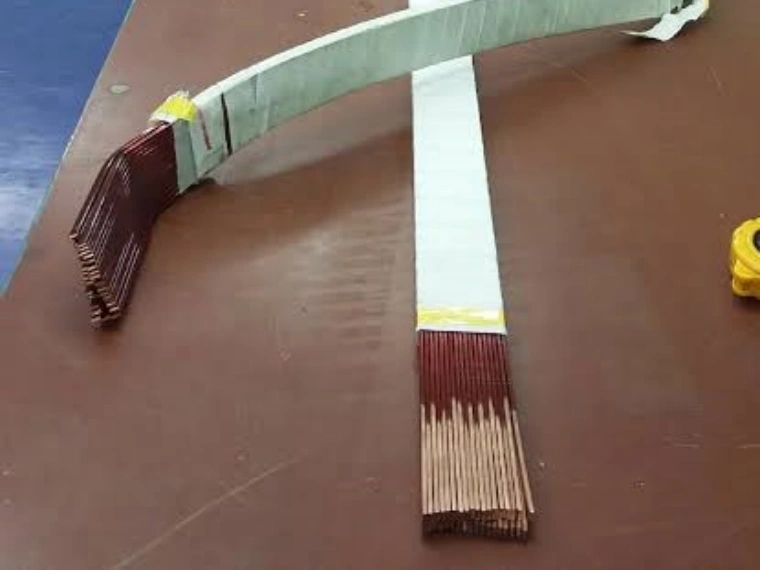
The strands are shaped and arranged so that they exchange positions along the bar.
Final Bar Geometry
After strand assembly, the completed Roebel bar must meet the overall dimensional requirements needed for the stator or other winding structure.
Technical Requirements for Individual Copper Strands
The dimensional accuracy of each strand is important because multiple strands are assembled into one finished bar.
Typical engineering references may include:
| Parameter | Typical Requirement |
| Material | Cu-ETP / OF Copper |
| Strand width | Approx. 2–15 mm |
| Strand thickness | Approx. 0.8–5 mm |
| Width tolerance | ±0.01–0.03 mm |
| Thickness tolerance | ±0.005–0.02 mm |
| High-precision thickness tolerance | Down to approx. ±0.005 mm |
| Corner radius | Application dependent |
| Surface | Smooth and defect-free |
| Edge condition | Burr-free |
| Copper condition | Application specific |
| Conductivity | High-conductivity copper |
These values are general engineering references rather than universal Roebel bar specifications.
Actual strand dimensions and tolerances should always be determined according to the customer’s conductor drawing and generator or motor design.
For more information about precision rectangular copper conductors, see Bare Rectangular Copper Wire: Types, Applications and Manufacturing
Why Strand Dimensional Accuracy Matters
In a multi-strand conductor, dimensional variation can accumulate when the strands are assembled.
Consider a simplified example:
| Strand Thickness Variation | 10 Strands | 20 Strands | 30 Strands |
| 0.002 mm | 0.02 mm | 0.04 mm | 0.06 mm |
| 0.005 mm | 0.05 mm | 0.10 mm | 0.15 mm |
| 0.010 mm | 0.10 mm | 0.20 mm | 0.30 mm |
The actual effect depends on the strand arrangement and bar geometry, but this illustrates why consistent dimensions are important.
Manufacturers should therefore control not only average strand dimensions but also continuous dimensional stability along the entire strand length.
Strand Geometry and Transposition
Roebel bar strands have more demanding forming requirements than ordinary straight rectangular copper wire.
During manufacturing, the strands must follow the designed transposition pattern while maintaining their electrical insulation and conductor integrity.
Important factors include:
| Parameter | Manufacturing Influence |
| Strand width | Final bar geometry |
| Strand thickness | Overall conductor dimensions |
| Edge geometry | Forming and insulation behavior |
| Mechanical condition | Strand formability |
| Dimensional consistency | Transposition stability |
| Insulation condition | Electrical separation |
| Strand alignment | Final bar accuracy |
This means the upstream rolling process must consider the downstream strand-forming operation.
A copper strand that meets width and thickness requirements but has poor mechanical consistency may still create problems during Roebel bar manufacturing.
Corner Radius and Edge Quality
Corner radius is another important parameter for individual copper strands.
Excessively sharp or damaged edges can increase the risk of insulation problems during subsequent processing.
| Edge Condition | Potential Effect |
| Sharp corner | Increased insulation stress |
| Burr | Potential insulation damage |
| Uneven corner radius | Inconsistent strand geometry |
| Edge crack | Reduced reliability |
| Surface scratch | May influence insulation |
| Controlled corner radius | More stable downstream processing |
The correct radius depends on strand dimensions, insulation system, and forming requirements.
For conductors using mica-based insulation systems, see Mica Insulated Rectangular Copper Wire for Motors and Generators.
Surface Quality Requirements
Roebel bar strand manufacturing requires a clean and controlled copper surface.
Typical defects to avoid include:
- Scratches
- Roll marks
- Burrs
- Edge cracks
- Copper particles
- Oxidation
- Surface contamination
Surface defects may become more important after strand insulation because the strands subsequently undergo forming and assembly.
The rolling equipment should therefore provide:
- High-quality roll surfaces
- Stable roll alignment
- Controlled lubrication
- Precision wire guidance
- Stable tension
- Careful take-up
Surface quality should be controlled from the initial rolling process rather than corrected only after strand production.
.webp)
Manufacturing Process of Roebel Bar Copper Strands
Before Roebel transposition can take place, precision copper strands must first be produced.
A typical upstream route is:
Copper Rod → Wire Drawing → Annealing → Precision Rolling → Sizing → Online Measurement → Surface Inspection → Strand Insulation
Wire Drawing
Drawing prepares the copper wire for subsequent precision rolling and can be used to achieve the required intermediate diameter.
Annealing
The mechanical condition of the copper must be suitable for downstream strand forming.
Annealing may therefore be incorporated according to the required copper properties.
Precision Rolling
The rolling process creates the rectangular strand geometry.
Important parameters include:
| Rolling Parameter | Main Influence |
| Roll gap | Strand thickness |
| Roll profile | Cross-sectional geometry |
| Roll alignment | Strand symmetry |
| Reduction per pass | Material deformation |
| Roll surface finish | Copper surface quality |
| Entry tension | Rolling stability |
| Exit tension | Dimensional consistency |
| Line speed | Production stability |
Multiple rolling or sizing stages may be used where tighter tolerances are required.
Online Measurement and Closed-Loop Control
Continuous measurement is particularly useful when large quantities of identical strands must be produced.
Typical online measurements include:
| Measurement | Purpose |
| Width | Maintain strand dimensions |
| Thickness | Control final geometry |
| Position | Maintain rolling alignment |
| Line speed | Synchronize production |
| Tension | Stabilize material flow |
| Roll position | Support automatic correction |
A closed-loop control concept can be expressed as:
Laser Measurement → Dimensional Deviation → PLC Control → Roll Adjustment → Corrected Strand
This can help maintain consistent dimensions during long production runs.
For integrated rolling technology, see Magnet Wire Rolling and Drawing Solutions for High Efficiency Electrical Conductors.
From Rectangular Copper Strands to Roebel Bar
After the individual strands are produced and insulated, they enter the forming and transposition process.
A simplified route is:
Precision Copper Strands → Individual Strand Insulation → Strand Forming → Controlled Transposition → Strand Assembly → Final Bar Forming → Inspection
This stage requires accurate coordination among multiple strands.
Important parameters include:
- Strand position
- Transposition geometry
- Strand tension
- Forming accuracy
- Insulation protection
- Overall bar dimensions
- Final straightness
The forming process must create the required transposition without damaging the copper or strand insulation.
Roebel Bar vs. CTC Conductor
Roebel bars and CTC conductors both use transposition, but they are designed for different applications and should not be treated as the same product.
| Feature | Roebel Bar | CTC |
| Basic structure | Multiple insulated strands | Multiple insulated strands |
| Transposition | Yes | Yes |
| Typical application | Motors and generators | Power transformers |
| Finished conductor | Bar-type conductor | Continuously transposed winding conductor |
| Strand geometry | Designed for Roebel forming | Rectangular CTC strands |
| Main design focus | Rotating electrical machines | Transformer windings |
| Upstream precision rolling | Important | Important |
The similarity lies in the use of multiple insulated strands and transposition.
The difference lies primarily in the conductor geometry, transposition method, manufacturing process, and final electrical application.
For transformer applications, see CTC Conductors for Power Transformers: Structure, Applications and Benefits.
Roebel Bar vs. Conventional Rectangular Copper Wire
A conventional rectangular copper conductor is significantly simpler.
| Feature | Rectangular Copper Wire | Roebel Bar |
| Number of conductors | One | Multiple strands |
| Transposition | No | Yes |
| Individual insulation | Depends on product | Required according to design |
| Manufacturing complexity | Lower | Higher |
| Typical application | Motors, transformers, coils | Large rotating machines |
| Current distribution optimization | Limited | Improved through transposition |
| Strand forming | Not required | Required |
For smaller or less demanding electrical machines, conventional rectangular copper wire may be sufficient.
Roebel technology becomes more relevant when conductor size, current, and electromagnetic conditions require a multi-strand transposed structure.
Quality Control for Roebel Bar Production
Quality control should cover both the individual strands and the assembled conductor.
Individual Strand Inspection
Important parameters include:
- Width
- Thickness
- Corner radius
- Surface condition
- Straightness
- Mechanical condition
- Electrical conductivity
- Insulation quality
Finished Roebel Bar Inspection
| Inspection Item | Purpose |
| Overall width | Verify bar dimensions |
| Overall thickness | Ensure winding compatibility |
| Strand arrangement | Verify transposition |
| Insulation condition | Detect damage |
| Surface quality | Check assembly condition |
| Straightness | Support coil manufacturing |
| Electrical testing | Verify insulation system |
Inspection requirements should ultimately follow the customer’s conductor and machine specifications.
Production Equipment Requirements
A complete production system for Roebel bar conductors can involve several specialized processes.
A typical process chain may include:
Pay-Off → Wire Drawing → Annealing → Precision Rolling → Online Measurement → Strand Insulation → Strand Forming / Transposition → Bar Assembly → Inspection
For manufacturers focused specifically on the upstream copper strand, the precision rolling section is particularly important.
Typical rolling line features may include:
- Precision multi-pass rolling
- Accurate roll-gap adjustment
- Corner radius control
- Online laser measurement
- Closed-loop dimensional correction
- Stable tension control
- Surface protection
- Precision take-up
For complete flat conductor manufacturing technology, see Complete Flat Wire Manufacturing Lines for Energy, Automotive, and Power Industries.
Information Required Before Selecting a Production Solution
Before designing equipment for Roebel bar strand production, both strand-level and final conductor requirements should be defined.
| Required Information | Example |
| Copper grade | C11000 / OF Copper |
| Raw material diameter | mm |
| Strand width | mm |
| Strand thickness | mm |
| Width tolerance | ±mm |
| Thickness tolerance | ±mm |
| Corner radius | R mm |
| Copper condition | Customer specified |
| Number of strands | Customer specified |
| Strand insulation | Customer specified |
| Final bar dimensions | mm |
| Transposition requirements | Customer specified |
| Production speed | m/min |
| Coil weight | kg |
| Online measurement | Required / Optional |
Providing these parameters allows the upstream rolling process to be designed around the actual Roebel bar requirements rather than simply producing a nominal rectangular wire.
Conclusion
Roebel bar conductors are specialized multi-strand transposed conductors designed for large motors, generators, and other high-power rotating electrical machines.
Their performance depends on the coordinated design of the complete conductor system, including:
- Copper strand dimensions
- Width and thickness tolerances
- Corner radius
- Surface quality
- Mechanical condition
- Strand insulation
- Forming accuracy
- Transposition consistency
- Final bar geometry
Although transposition is one of the defining characteristics of a Roebel bar, the quality of the final conductor begins much earlier with the manufacture of each precision rectangular copper strand.
By integrating wire drawing, annealing, precision rolling, online dimensional measurement, tension control, and precision take-up, manufacturers can produce consistent copper strands suitable for subsequent insulation and Roebel bar processing.
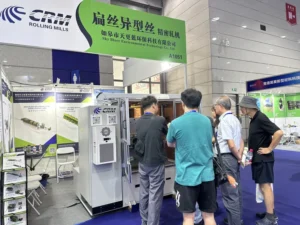
Sky Bluer Environmental Technology Co., Ltd. provides customized precision rolling mills and complete flat and rectangular wire production solutions for copper conductors used in motors, generators, transformers, and other electrical equipment.
CRM production solutions can be configured according to the customer’s raw material diameter, strand dimensions, dimensional tolerance, corner radius, surface requirements, production speed, and downstream processing requirements.
If you are developing a production line for Roebel bar copper strands or other precision rectangular conductors, send us your conductor drawings and technical specifications. Our engineering team can evaluate the appropriate rolling process and equipment configuration.