Wire Rolling Machine
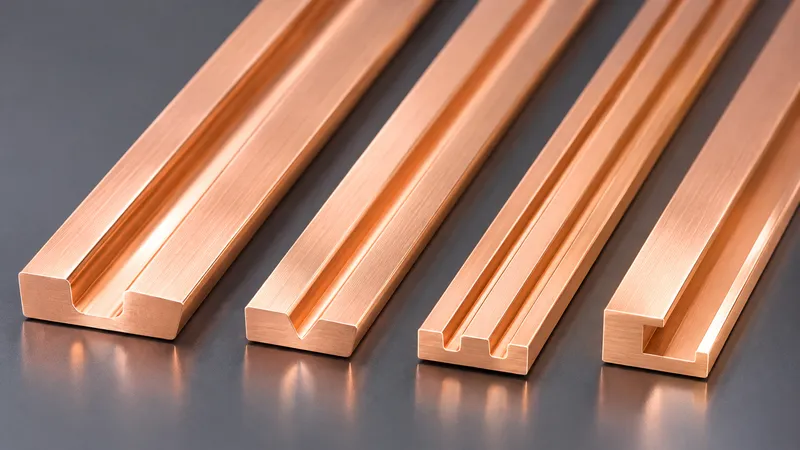
Grooved copper strips provide channels, recesses, or locating features in flat metal components. Producing these features consistently is more demanding than simply flattening wire. Grooved
Grooved copper strips provide channels, recesses, or locating features in flat metal components. Producing these features consistently is more demanding than simply flattening wire. Grooved
High-frequency induction heating uses an alternating magnetic field to heat a nearby metal workpiece without direct electrical contact. The induction coil carries alternating current, making
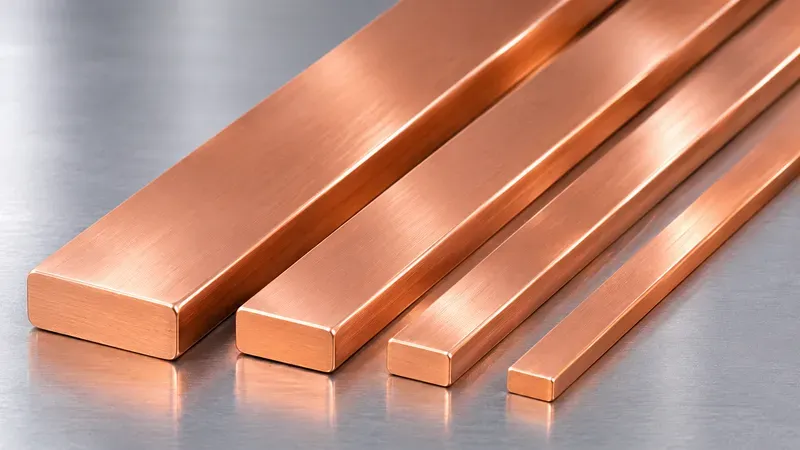
Electromagnetic coils create magnetic fields for solenoids, actuators, and lifting magnets. Round magnet wire is common, especially in compact coils, but rectangular copper wire can
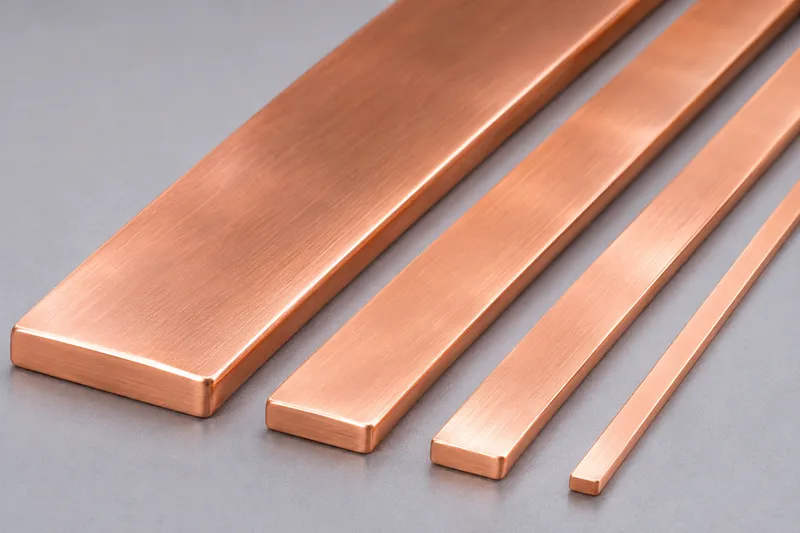
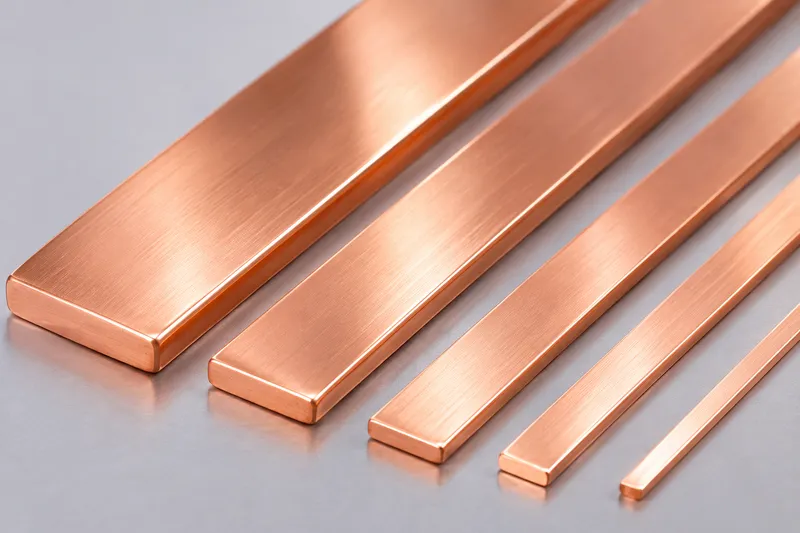
High-current direct-current (DC) systems depend on reliable conductors to transfer power between sources, converters, protection devices, and loads. Flat copper conductors are often selected because
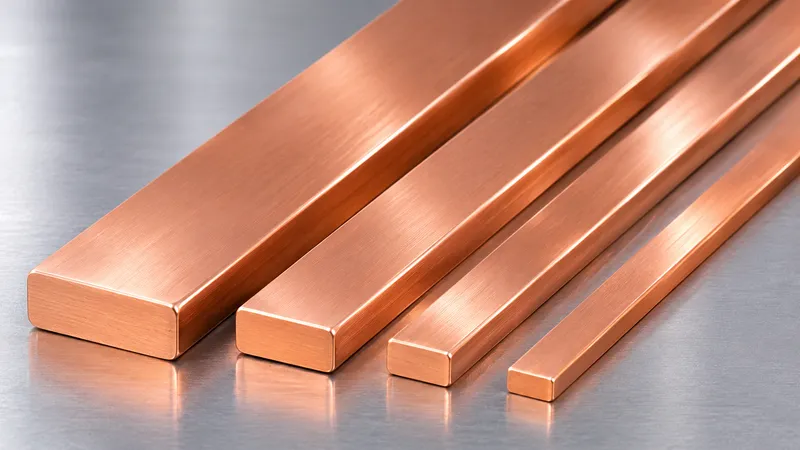
Electric vehicles (EVs) rely on high-current connections between battery modules, inverters, charging circuits, and power distribution units. These connections must minimize electrical losses while maintaining
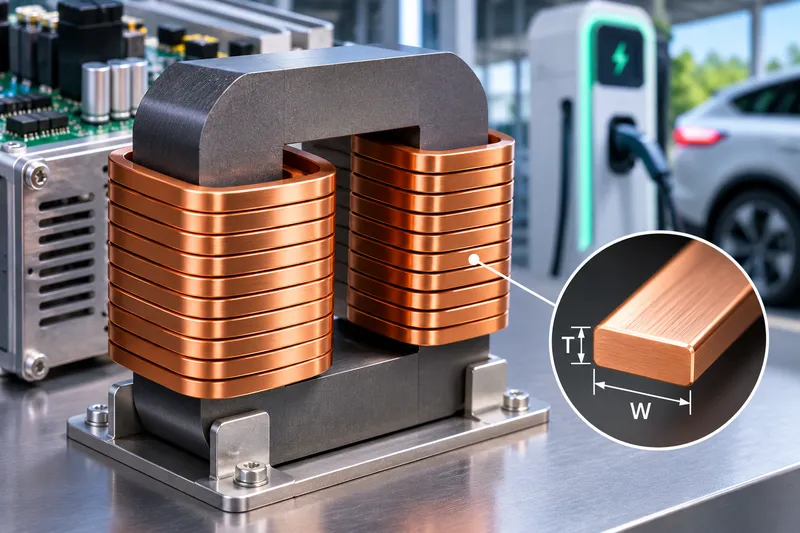
Electric vehicle (EV) charging systems rely on magnetic components to manage current, filter electrical noise, and support efficient power conversion. Inductors used in these systems
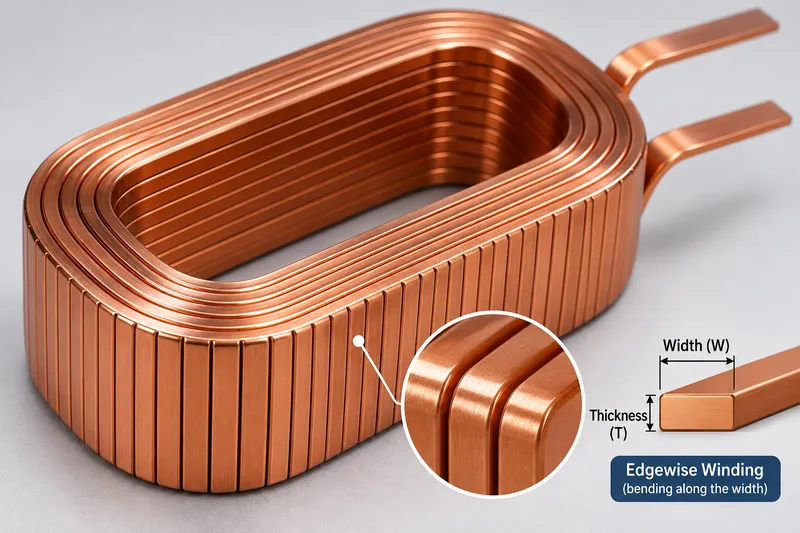
Edgewise wound flat wire coils use rectangular conductors bent around their narrow edges to form compact, repeatable windings. They are used in selected motors, inductors,
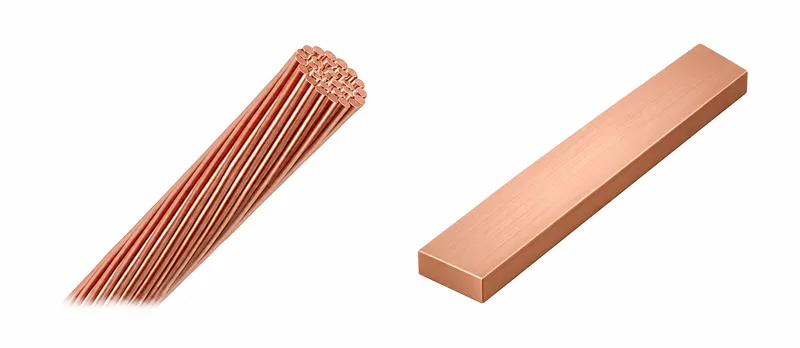
In high-frequency transformers, conductor selection involves more than copper cross-sectional area. As frequency rises, current distribution becomes uneven and winding losses can increase even when

Industrial electric motors rely on winding systems that can withstand electrical stress, thermal cycling, vibration, and continuous operation. Two common stator winding constructions are form-wound