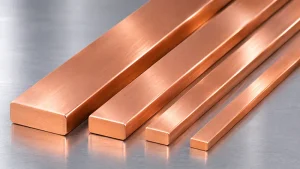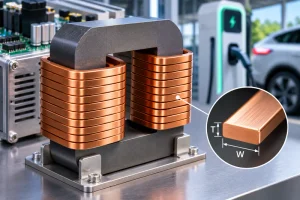
High-frequency induction heating uses an alternating magnetic field to heat a nearby metal workpiece without direct electrical contact. The induction coil carries alternating current, making conductor geometry, electrical connections, and cooling arrangements important design considerations.
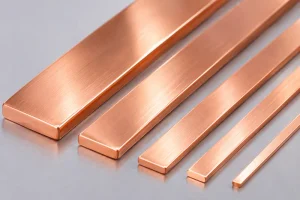
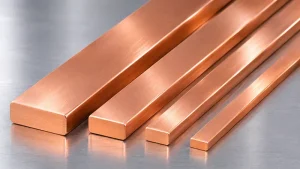
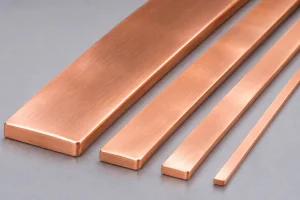
Copper strip conductors can be considered for selected induction heating coils where a flat profile helps meet space or geometric requirements. However, they are not a universal replacement for the water-cooled copper tubing commonly used in industrial induction heating systems.
This article examines copper strip selection, high-frequency electrical behavior, manufacturing requirements, and the role of precision rolling equipment.
1. Applications of Copper Strip Conductors in Induction Heating Coils
An induction heating coil generates the magnetic field that transfers energy to the workpiece. The coil conductor should not be confused with the metal strip, bar, or other material being heated.
Depending on the application, induction coils may use round copper tubing, shaped hollow conductors, solid copper profiles, or specially fabricated assemblies.
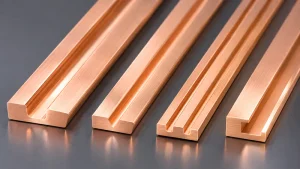
Flat copper strip may be considered for certain configurations, including:
- Space-constrained coil assemblies: Designs where conductor width and thickness must fit within limited installation space.
- Flat or spiral coil geometries: Selected arrangements where a flat conductor profile may be suitable for the intended winding path.
- Custom-shaped inductors: Applications requiring a specific conductor profile or connection arrangement.
- Specialized heating equipment: Systems where conductor geometry is evaluated alongside operating frequency, current, and cooling requirements.
The suitability of copper strip must be verified for each coil design. Conductor shape alone does not determine heating efficiency or operational reliability.
2. How High Frequency Affects Copper Strip Conductors
Skin Effect and Current Distribution
At higher alternating-current frequencies, electrical current tends to concentrate near the surface of a conductor. This phenomenon is known as the skin effect.
As a result, increasing conductor thickness does not necessarily produce a proportional reduction in high-frequency electrical resistance.
The proximity effect also influences current distribution. Magnetic fields from nearby coil turns and the workpiece can cause current to concentrate in particular regions of the conductor.
For copper strip conductors, these effects may produce uneven current distribution across the flat surfaces and edges.
A larger exposed surface area does not automatically guarantee lower electrical losses. The actual behavior depends on operating frequency, conductor dimensions, coil geometry, and surrounding electromagnetic conditions.
Width, Thickness, and Edge Geometry
The width and thickness of copper strip must be evaluated together.
A wide, thin conductor behaves differently during forming from a narrower, thicker conductor. The intended bending direction also affects the required tooling and manufacturing process.
Corner radius, edge condition, and dimensional consistency influence how the conductor fits into the coil assembly.
For high-frequency applications, electrical and thermal analysis should accompany mechanical design rather than relying on conductor dimensions alone.
3. Cooling Requirements and Electrical Connections
Cooling is a critical consideration in induction heating coil design.
Many industrial induction heating systems use hollow copper conductors with internal water circulation to remove heat generated during operation.
Solid copper strip, however, does not contain an internal cooling channel.
If a solid strip conductor is proposed, the equipment designer must establish an appropriate cooling arrangement and verify that operating temperatures remain within acceptable limits.
It should not be treated as a direct replacement for water-cooled copper tubing without engineering evaluation.
Why Electrical Joints Matter
Electrical connections can also influence coil performance and service life.
Poor contact, unsuitable joining procedures, or excessive mechanical stress may create localized heating around the connection points.
The following factors should be reviewed during coil design:
- Electrical contact resistance and connection geometry.
- Suitability of brazing or other joining methods.
- Thermal expansion and mechanical support.
- Insulation and spacing between adjacent turns.
These considerations belong to the complete induction coil design and cannot be addressed through copper strip rolling alone.
4. Copper Grades, Material Condition, and Surface Quality
Material selection should consider electrical conductivity, formability, joining requirements, and operating conditions.
| Copper Grade | Designation | Selection Consideration |
|---|---|---|
| C11000 | Cu-ETP | High electrical conductivity for general electrical applications |
| C10200 | Cu-OF | Oxygen-free copper for specified material or processing requirements |
| C10100 | Cu-OFE | High-purity oxygen-free copper where particular material specifications require it |
The Copper Development Association alloy database provides additional information about copper grades and their properties.
Temper and Formability
Material temper influences the forming behavior of copper strip.
Soft copper is generally easier to bend, while cold-worked copper may provide greater mechanical strength but reduced ductility.
Because rolling changes the material condition, intermediate or final annealing may be required, depending on the intended forming process.
Surface quality must also be considered. Scratches, burrs, dents, contamination, and excessive oxidation may interfere with forming, joining, or subsequent insulation operations.
5. Manufacturing Copper Strip Conductors with Precision Rolling
For suitable dimensions, narrow copper strip conductors can be produced from copper rod or round wire through drawing and multi-pass rolling.
Other copper strip products may be manufactured from wider rolled stock through slitting and finishing. The appropriate manufacturing route depends on the starting material and required dimensions.
A representative process for narrow flat copper conductors is:
Copper Rod/Round Wire → Drawing (if Required) → Multi-Pass Rolling → Edge Finishing → Cleaning/Annealing (as Required) → Inspection → Separate Coil Fabrication
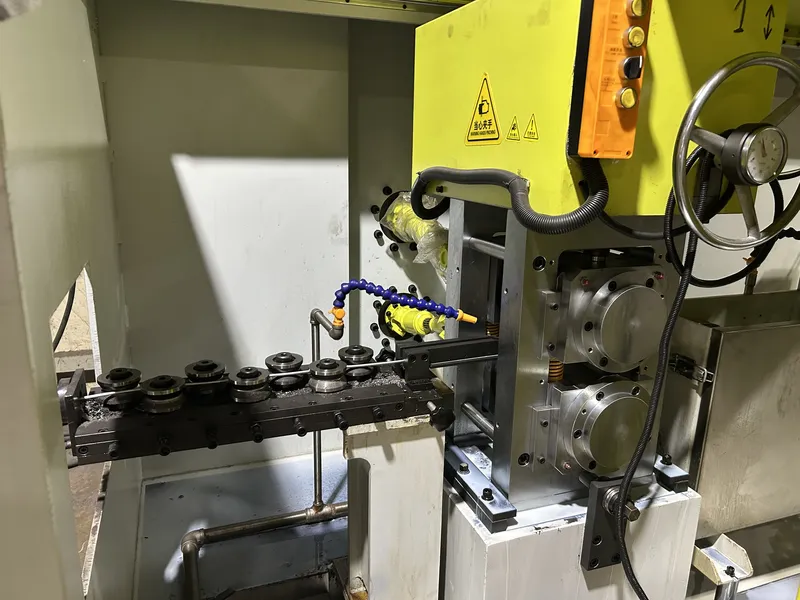
A precision flat wire rolling mill can manufacture bare flat or rectangular copper profiles when the material, input dimensions, target geometry, and production requirements fall within its designed operating range.
Key Rolling Process Considerations
- Roll gap: Influences thickness reduction and dimensional repeatability.
- Pass schedule: Distributes deformation across successive rolling passes.
- Wire guidance: Helps maintain alignment and limit lateral movement.
- Interstand tension: Supports stable material transport during continuous rolling.
- Roll surface and edge control: Influence scratches, burrs, and finished profile quality.
During rolling, thickness reduction may cause lateral spreading, increasing the conductor width. Therefore, width and thickness must be controlled together.
The choice between rolling and drawing depends on the material and required profile. See Flat Wire Rolling Mill vs Drawing Machine for Rectangular Copper Conductors for a comparison.
Rolling equipment produces bare conductor profiles. It does not manufacture complete induction heating coils, incorporate cooling channels into solid strip, or perform final electromagnetic and thermal validation.
6. Technical Information Required Before Equipment Selection
| Parameter | Information to Confirm |
|---|---|
| Copper material | Grade, temper, and annealing requirements |
| Incoming stock | Material shape, dimensions, and surface condition |
| Finished conductor | Bare width × thickness, corner radius, flatness, and tolerances |
| Forming requirements | Coil geometry, bending direction, and minimum bend radius |
| Electrical requirements | Operating frequency, current, and connection arrangement |
| Thermal requirements | Cooling method, operating temperature limits, and duty cycle |
| Production target | kg/h or tons/month, spool dimensions, and take-up arrangement |
Providing complete drawings and material specifications helps the equipment manufacturer evaluate the feasibility of a rolling solution.
The induction coil designer remains responsible for electromagnetic performance, cooling, electrical connections, and finished-coil testing.
For additional information about bare copper conductor preparation, see How to Prepare Copper Flat Wire for Enameling and Paper Insulation. The insulation requirements of induction heating coils must be evaluated separately.
7. Quality Control and Common Production Problems
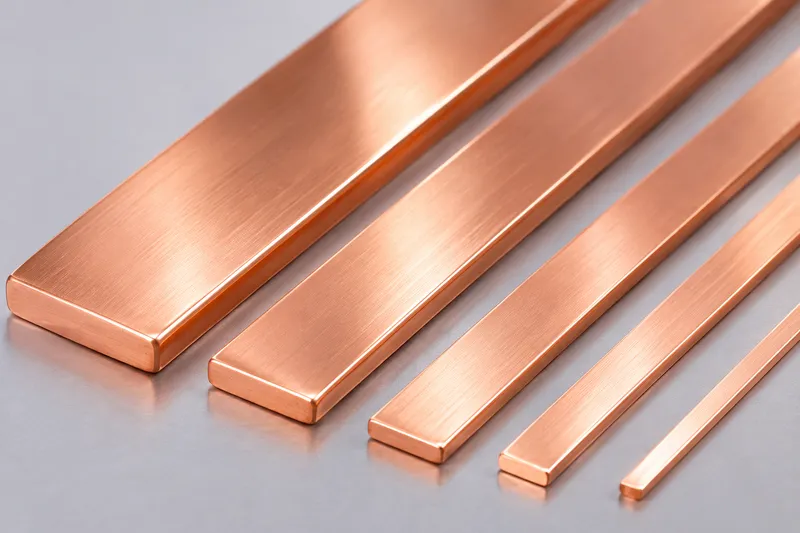
Copper strip inspection should cover dimensional consistency, edge geometry, surface condition, and material properties.
When demanding bends are required, representative forming trials may help determine whether the finished strip meets downstream processing needs.
Common Problems and Practical Checks
| Problem | Possible Cause | Practical Check |
|---|---|---|
| Width variation | Lateral spreading during rolling | Review reduction schedule and guidance |
| Thickness variation | Roll-gap or operating-condition changes | Verify settings and process stability |
| Edge cracking | Excessive deformation or unsuitable temper | Review rolling passes and annealing requirements |
| Surface scratches | Contact with rolls, guides, or handling equipment | Inspect contact surfaces |
| Inconsistent bending | Material condition or dimensional variation | Verify temper, tolerances, and forming conditions |
| Localized heating in the finished coil | Current concentration, joint resistance, or insufficient cooling | Conduct electrical and thermal evaluation of the coil |
Dimensional and surface inspection of bare copper strip should be distinguished from the electrical and thermal acceptance tests required for a completed induction heating coil.
8. Frequently Asked Questions
Can Copper Strip Replace Water-Cooled Copper Tubing?
Not automatically. Many induction heating coils rely on internal water cooling. A solid copper strip requires an independently evaluated cooling arrangement and must satisfy the electrical and thermal requirements of the application.
Is Thicker Copper Strip Always Better for High-Frequency Applications?
No. Skin effect and proximity effect influence current distribution. Increasing conductor thickness alone may not reduce high-frequency losses as expected.
Can a Rolling Mill Produce a Complete Induction Heating Coil?
No. A rolling mill manufactures bare copper profiles within its designed processing range. Coil forming, electrical joining, cooling integration, insulation, and final testing are separate manufacturing activities.
Conclusion
Copper strip conductors may be suitable for selected high-frequency induction heating coils when conductor geometry, electrical behavior, cooling requirements, and forming conditions are evaluated together.
Consistent dimensions, controlled edge geometry, and suitable surface quality help prepare the conductor for downstream fabrication.
Sky Bluer Environmental Technology Co., Ltd. manufactures precision rolling equipment for producing bare flat and rectangular metal wire, rather than complete induction heating coils.
If you are planning a copper strip conductor production project, share your copper grade, incoming stock, target width × thickness, tolerances, forming requirements, and production capacity.
Our engineering team can evaluate whether a customized precision rolling solution is suitable for your manufacturing requirements.