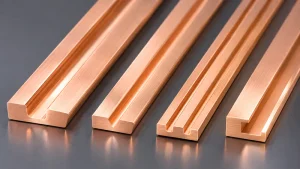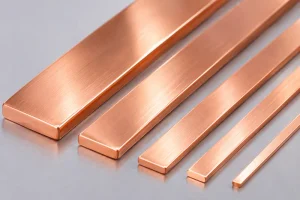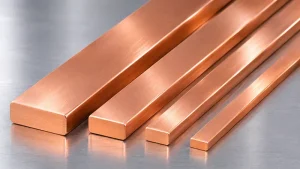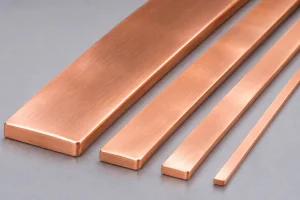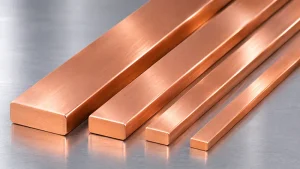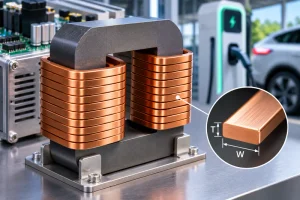
Electromagnetic coils create magnetic fields for solenoids, actuators, and lifting magnets. Round magnet wire is common, especially in compact coils, but rectangular copper wire can suit designs where winding space or conductor geometry favors a flat profile. Beyond achieving a rectangular cross-section, manufacturers must meet the dimensional, surface, and mechanical requirements of winding. This guide explains those requirements and the role of precision rolling.
1. Where Rectangular Copper Wire Fits in Coil Design
In selected larger or high-current coils, flat faces can help arrange turns in orderly layers. Any space advantage depends on insulation, corner geometry, and winding orientation.
Typical applications to evaluate include:
- Industrial electromagnets: Windings designed around specified current, space, and thermal conditions.
- Solenoid actuators and valves: Selected designs where conductor geometry and winding method permit rectangular wire.
- Lifting and holding magnets: Coils that may require substantial conductor cross-sections and robust insulation.
- Special-purpose electromagnetic equipment: Custom windings with limited installation space or unusual geometries.
Rectangular wire does not replace round wire universally. Small solenoids or tight winding paths may favor round conductors; the coil designer must select the profile first. Higher packing density alone does not establish coil performance: electrical clearances, heat removal, and assembly tolerances still matter.
2. Dimensions, Winding Space, and Corner Radius
Width and Thickness Must Be Considered Together
Width and thickness affect conductor positioning and bending. Wide, thin profiles behave differently from narrow, thick ones, even at similar cross-sectional areas.
Specify flatwise or edgewise winding: each requires different bending conditions and possibly different tooling. Validate minimum bend radius for the actual winding process.
Why Corner Geometry Matters
Corner radius affects turn placement and insulation damage risk. Burrs or sharp edges can harm enamel, film, or wrapped insulation; excessive rounding changes conductor geometry.
Drawings should identify width, thickness, corner radius, tolerances, and distinguish bare dimensions from insulated dimensions.
3. Copper Grade, Temper, and Bendability
Copper must meet both conductivity and forming requirements.
| Copper Grade | Designation | Selection Consideration |
|---|---|---|
| C11000 | Cu-ETP | High conductivity for general electrical applications |
| C10200 | Cu-OF | Oxygen-free copper for specified material or processing requirements |
| C10100 | Cu-OFE | High-purity oxygen-free copper where the specification requires it |
The Copper Development Association alloy database provides background information on copper grades.
Temper matters: soft copper generally bends more easily; cold-worked copper can be stronger but less ductile. Because rolling changes material condition, annealing may be needed before winding.
Specify grade, incoming and final temper, and any bendability tests when requesting equipment.
4. Surface Quality and Insulation Compatibility
Coil wire may receive enamel, film, paper, or other insulation depending on electrical, thermal, and winding requirements.
Before insulation, the bare conductor should be evaluated for:
- Surface scratches and dents: Defects that may interfere with subsequent coating or wrapping.
- Burrs and edge condition: Features that can damage insulation during winding.
- Cleanliness: Residues or contamination that may affect downstream processing.
- Dimensional consistency: Variations that can disturb winding alignment or finished coil dimensions.
A smooth surface alone does not prove insulation performance; dielectric tests belong to downstream processes.
For more detail, see How to Prepare Copper Flat Wire for Enameling and Paper Insulation.
5. How Precision Rolling Produces Rectangular Copper Wire
Suitable sizes may be produced from copper rod or round wire through drawing and multi-pass rolling:
Copper Rod/Round Wire → Drawing (if Required) → Multi-Pass Rolling → Edge Finishing → Cleaning/Annealing (as Required) → Inspection → Separate Insulation and Coil-Winding Processes
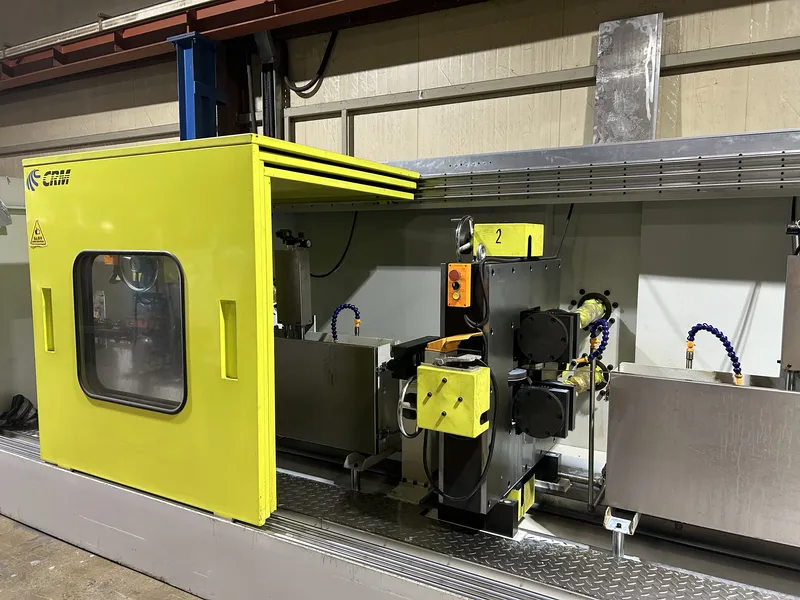
A precision flat wire rolling mill can produce bare rectangular copper wire when the material, input dimensions, finished profile, and production requirements fall within its engineered operating range.
What the Rolling Equipment Controls
- Roll gap: Influences thickness reduction and repeatability.
- Pass schedule: Distributes deformation to manage work hardening and edge formation.
- Wire guidance: Helps limit lateral movement and alignment errors.
- Interstand tension: Supports stable transport through successive stands.
- Roll surface and handling: Influence the risk of scratches and unwanted marks.
Thickness reduction may increase width through lateral spreading. Machine configuration depends on input stock, passes, tolerances, and capacity.
Rolling mills do not perform enameling, winding, core assembly, or final solenoid testing. Compare forming methods in Flat Wire Rolling Mill vs Drawing Machine for Rectangular Copper Conductors.
6. Information to Provide Before Equipment Selection
| Parameter | Information to Confirm |
|---|---|
| Copper material | Grade, temper, and annealing requirements |
| Incoming stock | Shape, dimensions, and surface condition |
| Finished conductor | Bare width × thickness, corner radius, and tolerances |
| Winding requirements | Flatwise or edgewise winding, bend radius, coil geometry |
| Surface requirements | Burr limits, scratch criteria, cleanliness |
| Downstream operations | Insulation method, winding, joining, and inspection |
| Production target | kg/h or tons/month, coil size, and take-up arrangement |
Provide drawings and winding details rather than requesting “maximum precision.” State insulated dimensions separately. Also confirm whether wire will be supplied on a take-up spool or as cut lengths: handling requirements can affect downstream winding and the equipment configuration.
7. Quality Control and Common Production Problems
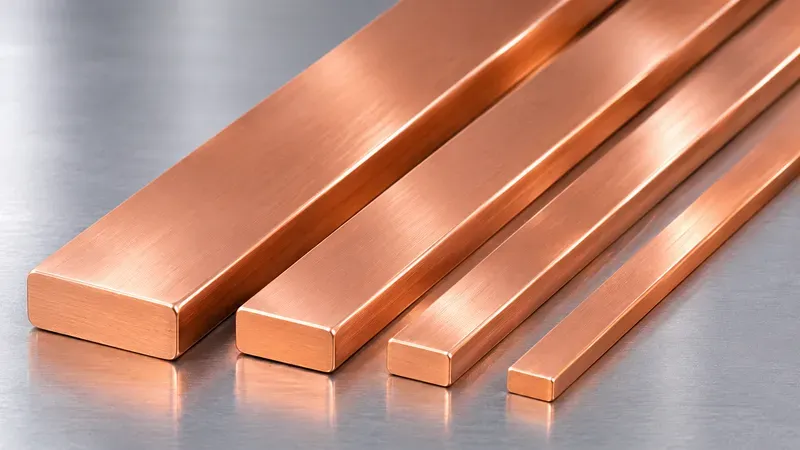
Check incoming copper for grade and defects. During rolling, monitor dimensions, edges, surface, and stability. Consider mechanical-property checks for demanding bends.
| Problem | Possible Cause | Practical Check |
|---|---|---|
| Thickness variation | Roll-gap or operating-condition changes | Verify settings and process stability |
| Width variation | Uncontrolled lateral spread | Review reduction schedule and guidance |
| Edge cracking | Excessive deformation or unsuitable temper | Review passes and annealing needs |
| Surface scratches | Roll, guide, or handling contact | Inspect contact surfaces |
| Insulation damage during winding | Burrs, corner geometry, or tight bends | Review edge quality and winding method |
Finished-coil electrical and thermal tests are separate from bare-wire acceptance.
8. Frequently Asked Questions
Is Rectangular Copper Wire Always Better Than Round Magnet Wire?
No. Rectangular profiles can suit selected winding layouts, but round wire may be easier to handle in small or complex coils. The choice depends on the full coil design.
Can a Rolling Mill Produce Insulated Magnet Wire?
No. A rolling mill forms bare conductor stock within its designed range. Enameling, wrapping, and other insulation processes require separate equipment.
Does Rectangular Wire Automatically Improve Solenoid Force?
No. Magnetic force depends on current, number of turns, magnetic circuit, air gap, core material, and operating conditions. Conductor shape is only one design consideration.
Conclusion
Rectangular copper wire can suit selected coils when geometry, temper, insulation, and winding requirements are coordinated. Reliable production depends on consistent dimensions, edges, and surface quality.
Sky Bluer Environmental Technology Co., Ltd. manufactures precision rolling equipment for bare flat and rectangular metal wire—not complete electromagnetic coils or solenoid assemblies.
Share your copper grade, incoming stock, target width × thickness, tolerances, winding requirements, and production capacity. Our engineering team can evaluate whether a customized rolling solution is suitable for your project.