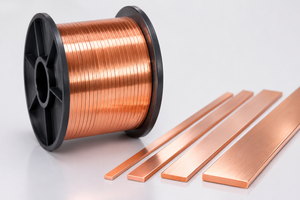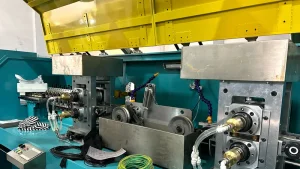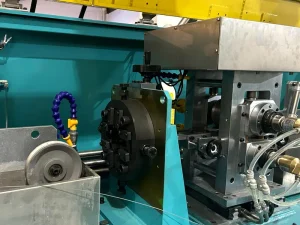
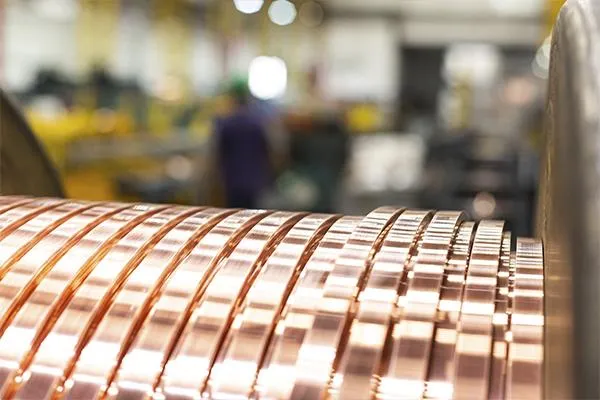
Copper flat wire for enameling and paper insulation requires more than accurate width and thickness. Corner geometry, surface cleanliness, residual stress, and mechanical properties directly influence insulation quality and winding performance.
For transformer and motor manufacturers, many insulation defects originate before coating or paper wrapping begins. A stable rolling process is therefore essential to producing reliable rectangular copper conductors.
This guide explains practical preparation methods, rolling parameters, inspection requirements, and troubleshooting procedures.
1. Copper Flat Wire for Enameling: Conductor Requirements
Material Grade and Dimensions
Common electrical conductor materials include C11000 (Cu-ETP), C10200 (Cu-OF), and C10100 (Cu-OFE).
Before production, engineers should confirm the bare conductor width, thickness, corner radius, dimensional tolerances, and required temper.
Bare conductor dimensions must be distinguished from finished insulated dimensions, which include enamel or paper insulation thickness.
Engineering Reference: Cross-Section Calculation
For a rectangular conductor with nominal dimensions of 5.00 × 2.00 mm:
Nominal cross-sectional area = 5.00 × 2.00 = 10.00 mm²
This calculation assumes sharp corners. Actual copper area decreases when rounded corners are introduced within the same overall width and thickness.
The final geometry must follow the conductor drawing and applicable specifications.
2. Optimize the Copper Flat Wire Rolling Process
A typical manufacturing sequence is:
Round Wire → Drawing (if required) → Multi-Pass Rolling → Edge Forming → Annealing (if required) → Cleaning and Inspection → Take-Up
Roll Gap and Reduction Control
Two-high (2-Hi) rolling stands are commonly used for rectangular copper wire production.
Roll gap primarily controls thickness, while finished width also depends on lateral metal flow, roll geometry, and reduction distribution.
Thickness reduction per pass can be calculated as:
Reduction (%) = [(Incoming Thickness − Outgoing Thickness) / Incoming Thickness] × 100
For example, reducing thickness from 2.00 mm to 1.80 mm represents a 10% reduction.
This is a calculation example, not a universal recommended reduction. Actual pass schedules depend on material condition, rolling load, and final geometry.
Tension and Alignment
Before changing the roll gap, verify roll parallelism, incoming wire alignment, and entry-to-exit tension.
If thickness remains stable but width fluctuates, investigate lateral spreading, incoming material variation, and tension rather than repeatedly adjusting the gap.
For a comparison of forming methods, see Flat Wire Rolling Mill vs Drawing Machine for Rectangular Copper Conductors.
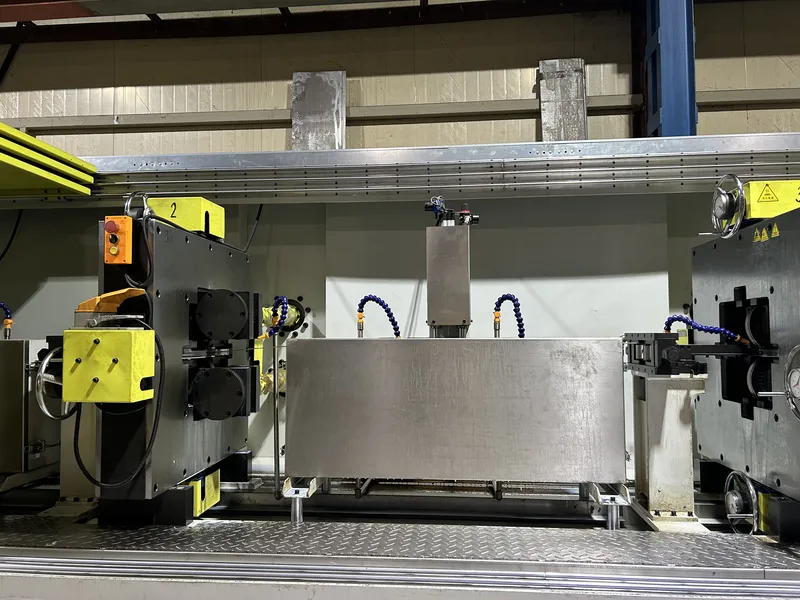
3. Control Corner Radius Before Insulation
Enameled Copper Wire
Sharp or inconsistent corners can make uniform enamel coverage more difficult, potentially creating localized insulation weaknesses.
Paper-Insulated Copper Wire
Burrs and sharp edges may damage insulation paper during wrapping and subsequent winding.
| Corner Problem | Possible Cause | Corrective Action |
|---|---|---|
| Unequal corner radii | Off-center feeding | Check wire alignment |
| Sharp corners | Insufficient edge forming | Inspect forming tools |
| Excessive rounding | Incorrect roll profile | Review tooling geometry |
| Radius variation | Tool wear or unstable tension | Inspect rolls and tension control |
Corner radius should be verified using suitable profile measurement methods, not width and thickness measurements alone.
Learn more in How to Control Edge Radius in Rectangular Copper Wire Production.
4. Surface Preparation and Annealing
Surface Cleaning
Rolling lubricant, copper particles, oxidation, and scratches can affect downstream insulation.
Before enameling, remove contaminants using cleaning methods compatible with the coating system.
Before paper wrapping, inspect the conductor for burrs, embedded particles, and surface damage.
Mechanical Property Control
Cold rolling increases copper hardness and reduces ductility. Depending on accumulated deformation and required final temper, annealing may be necessary.
Annealing conditions must be selected according to copper grade, deformation history, and mechanical property requirements.
After annealing, verify the specified material condition and inspect for surface oxidation.
5. Quality Inspection Before Insulation
Inspection should evaluate conductor geometry, surface condition, and mechanical properties.
| Inspection Item | Recommended Method | Acceptance Basis |
|---|---|---|
| Width and thickness | Calibrated dimensional measurement | Drawing tolerances |
| Corner radius | Optical profile measurement | Specified geometry |
| Surface quality | Visual or camera inspection | Surface acceptance criteria |
| Mechanical properties | Tensile or hardness testing | Required temper |
| Straightness | Straightness measurement | Product specification |
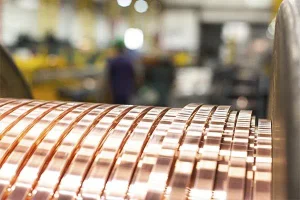
| Winding quality | Spool and tension inspection | Handling requirements |
Inspect samples during startup, after process adjustments, and throughout production.
Online dimensional measurement supports continuous monitoring but does not replace surface inspection or mechanical testing.
6. Root-Cause Troubleshooting Matrix
When insulation defects occur, engineers should trace potential causes through rolling, edge forming, cleaning, and material preparation.
| Production Problem | Possible Root Cause | First Check |
|---|---|---|
| Thickness drift | Roll wear or thermal changes | Roll condition and gap stability |
| Width fluctuation | Unstable lateral spread | Reduction schedule and tension |
| Uneven enamel coverage | Corner geometry or coating conditions | Corner profile and coating settings |
| Paper tearing | Burrs or sharp edges | Edge-forming tools |
| Surface scratches | Contaminated rolls or guides | Contact surfaces |
| Excessive springback | Material condition or residual stress | Temper and deformation history |
| Irregular winding | Unstable take-up tension | Take-up synchronization |
Practical Diagnostic Procedure
First, determine whether the defect is continuous, periodic, or intermittent.
Periodic thickness variation may indicate roll eccentricity. Gradual dimensional drift may suggest thermal changes or tool wear.
Next, compare incoming material measurements, rolling settings, and inspection records.
Adjust one process variable at a time and verify the result before making further changes.
7. Select the Right Copper Flat Wire Rolling Mill
Equipment selection should begin with the finished bare conductor specification rather than nominal machine speed.
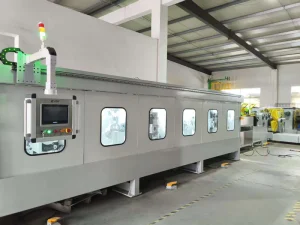
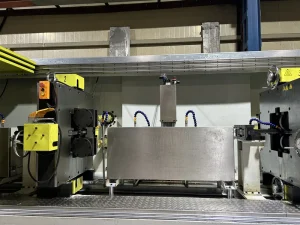
A suitable production line coordinates rolling stands, edge-forming tools, lubrication, tension control, inspection, and take-up.
For equipment configurations, see the CRM Precision Flat Wire Rolling Mill.
Before requesting a quotation, provide:
- Copper grade and incoming dimensions
- Finished width, thickness, and tolerances
- Required corner radius and surface quality
- Mechanical properties and annealing requirements
- Production capacity and spool specifications
- Intended enameling or paper insulation process
Machine-specific capabilities and achievable tolerances should be confirmed against the actual conductor drawing.
Frequently Asked Questions
Can copper flat wire be enameled directly after rolling?
Yes, if its dimensions, surface cleanliness, and mechanical properties meet the coating requirements. Additional cleaning or annealing may be necessary.
Is the same corner radius suitable for enameling and paper insulation?
Not necessarily. Corner radius depends on conductor geometry, insulation design, and applicable specifications.
Is annealing always required before insulation?
No. It depends on copper grade, accumulated deformation, and required final mechanical properties.
Can one rolling mill prepare wire for both insulation methods?
Yes, provided the equipment meets both applications’ requirements. Different tooling or process settings may be necessary.
Conclusion
Preparing copper flat wire for enameling and paper insulation requires coordinated control of rolling accuracy, corner geometry, surface condition, annealing, and tension.
Reliable production depends on consistent conductor quality throughout the process—not simply meeting nominal dimensions.
Sky Bluer Environmental Technology Co., Ltd. (CRM) designs and manufactures precision rolling mills and customized wire-processing equipment for rectangular copper conductors.
Planning a copper flat wire production project? Share your material grade, incoming size, finished dimensions, tolerances, and insulation requirements with our engineering team to evaluate a suitable rolling configuration.