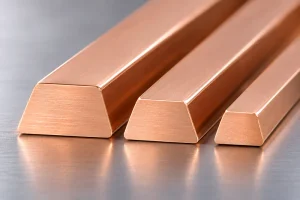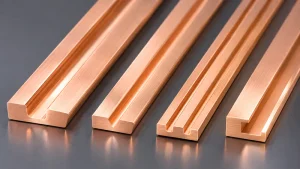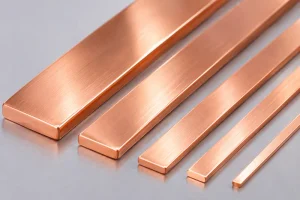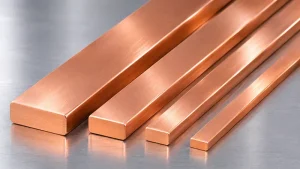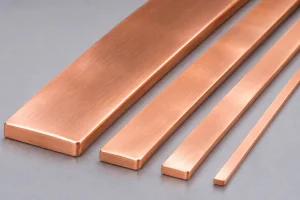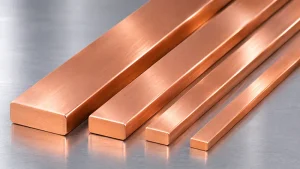
Trapezoidal copper wire is a shaped electrical conductor with a cross-section that differs from conventional round or rectangular wire. Its unequal face widths and inclined sides can help accommodate specific winding geometries where standard conductor profiles do not fit the available space efficiently.
Trapezoidal copper wire manufacturing requires coordinated control of cross-sectional geometry, side angles, corner radii, material properties, and surface quality. These characteristics influence conductor alignment, insulation compatibility, and downstream winding operations.
This guide explains the design considerations, precision profile rolling processes, quality requirements, and equipment selection principles for manufacturing trapezoidal copper conductors.
1. What Is Trapezoidal Copper Wire?
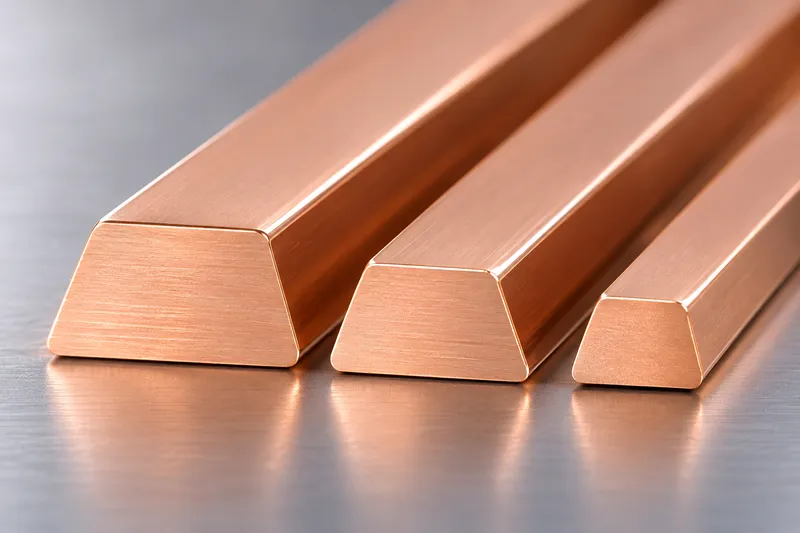
Trapezoidal copper wire typically has two parallel faces of unequal width connected by inclined sides. Depending on the application, the cross-section may be symmetrical or asymmetrical.
Unlike rectangular copper wire, a trapezoidal conductor has side angles that must be controlled in addition to width and thickness.
| Profile Characteristic | Rectangular Copper Wire | Trapezoidal Copper Wire |
|---|---|---|
| Parallel face widths | Equal | Unequal |
| Side geometry | Nominally perpendicular | Inclined on one or both sides |
| Main dimensional controls | Width and thickness | Face widths, height, and side angles |
| Tooling requirements | Rectangular forming tools | Profile-specific forming tools |
| Orientation during winding | Application-dependent | Particularly important for asymmetric profiles |
The conductor profile normally remains consistent along its length. The term trapezoidal describes its cross-section rather than a gradual change in width along the wire.
2. Why Use Trapezoidal Copper Wire in Specialized Windings?
Accommodation of Non-Rectangular Winding Spaces
Certain electrical winding designs contain curved, tapered, or sector-shaped spaces. Conventional rectangular conductors may leave unused regions or require additional spacing.
A suitably designed trapezoidal profile may improve geometric compatibility with these winding arrangements.
Potential applications include:
- Custom electrical machine windings
- Specialized annular or sector-based coil arrangements
- Selected reactor and inductor winding designs
- Application-specific electromagnetic assemblies
These applications are design-dependent rather than universal uses of trapezoidal copper wire.
Copper Utilization and Electrical Considerations
Improved geometric fit may allow more copper to occupy a particular winding space. However, a trapezoidal profile does not automatically improve electrical efficiency or reduce temperature rise.
Conductor area, insulation thickness, winding length, operating frequency, cooling conditions, and electromagnetic design must also be considered.
For conventional coil conductor requirements, see Rectangular Copper Wire for Electromagnetic Coils and Solenoids.
3. Copper Grades and Material Properties
Electrical conductor manufacturing generally requires copper with suitable conductivity, formability, and mechanical properties.
| Copper Grade | Designation | Manufacturing Considerations |
|---|---|---|
| C11000 | Cu-ETP | High-conductivity copper; confirm temper and forming requirements |
| C10200 | Cu-OF | Oxygen-free copper for specified material and processing requirements |
| C10100 | Cu-OFE | High-purity oxygen-free copper for applications with stringent material requirements |
Material properties can be reviewed through the Copper Development Association alloy database and verified against supplier certificates.
Cold rolling introduces work hardening, which can reduce ductility and influence subsequent bending performance.
Depending on accumulated deformation and the required final temper, intermediate or final annealing may be necessary. Annealing conditions should be selected according to the copper grade and winding requirements.
4. Critical Dimensions in Trapezoidal Copper Wire Manufacturing
A complete cross-sectional drawing is essential when designing profile rolling equipment.
| Parameter | Engineering Importance |
|---|---|
| Wider face width | Defines the larger parallel surface |
| Narrower face width | Influences profile taper and winding fit |
| Profile height | Determines the distance between parallel faces |
| Side angles | Control the inclined geometry |
| Corner radii | Influence insulation coverage and forming behavior |
| Profile symmetry | Determines alignment and orientation requirements |
| Cross-sectional area | Influences electrical resistance and copper utilization |
The angle reference must be clearly defined on the drawing. An angle measured from a parallel face differs from one measured from the vertical direction.
Corner rounding also changes the actual copper area compared with an ideal sharp-cornered trapezoid.
Engineers should distinguish bare conductor dimensions from finished insulated dimensions when evaluating winding fit.
5. How Precision Rolling Produces Trapezoidal Copper Wire
A representative manufacturing route is:
Copper Rod or Round Wire → Drawing or Pre-Rolling (if Required) → Profile Rolling → Final Sizing and Edge Finishing (as Required) → Annealing and Cleaning (as Required) → Inspection → Take-Up
The exact sequence depends on the starting material, finished profile, and mechanical property requirements.
Multi-Pass Profile Rolling
Rather than attempting to form a complex cross-section in one operation, multiple rolling passes can progressively distribute deformation.
Initial passes establish the approximate width and thickness. Subsequent forming passes develop the inclined sides and refine the finished profile.
The pass schedule must account for lateral metal flow, accumulated work hardening, roll loading, and dimensional stability.
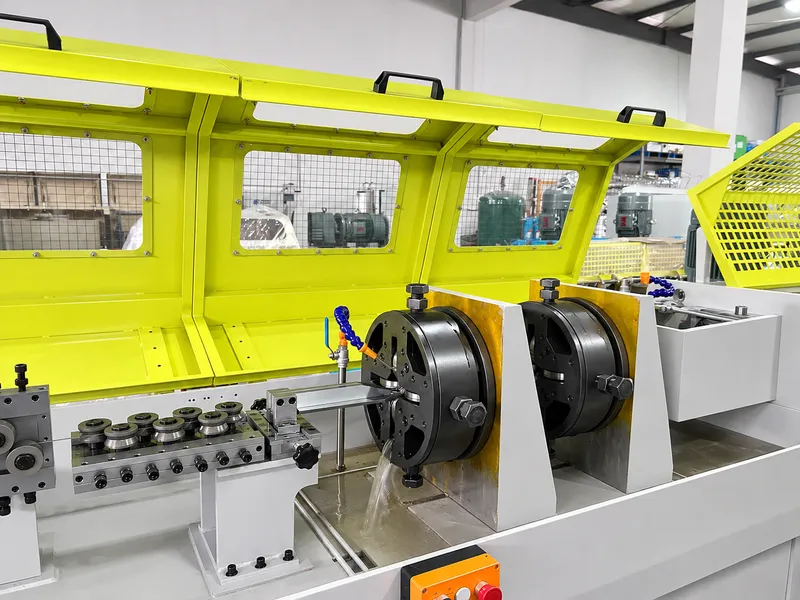
Profiled Rolls and Turks Head Systems
Specially designed rolls can guide metal deformation toward the required trapezoidal geometry.
Depending on the profile, a Turks Head arrangement may provide additional shaping from multiple directions. A dedicated profile drawing die may also be considered for forming or final sizing.
The selection depends on the material, reduction requirements, and achievable cross-sectional accuracy.
A customized shaped wire production line can integrate appropriate rolling, shaping, guiding, and take-up equipment.
For differences between forming methods, read Flat Wire Rolling Mill vs Drawing Machine for Rectangular Copper Conductors.
6. Surface Quality, Insulation, and Winding Performance
Corner Radius and Surface Preparation
Trapezoidal conductors can have acute and obtuse corners with different forming conditions.
Sharp corners, burrs, and scratches may increase the risk of insulation damage. Excessive corner rounding, however, can affect copper area and geometric fit.
Each corner should therefore be evaluated against its specified radius rather than assuming that one radius is suitable for every corner.
Depending on the winding design, the conductor may receive enamel, paper, tape, or another qualified insulation system.
Read How to Prepare Copper Flat Wire for Enameling and Paper Insulation for related surface preparation principles.
Bending and Profile Orientation
The orientation of a trapezoidal conductor can influence bending behavior and turn alignment.
Uncontrolled rotation or twisting during feeding and winding may prevent neighboring turns from fitting as intended.
Winding trials should evaluate springback, profile distortion, minimum bend radius, and insulation integrity after forming.
Conductor rolling and finished coil manufacturing are separate processes, each requiring its own acceptance criteria.
7. Quality Inspection and Common Manufacturing Defects
Measuring only the maximum width and overall height is insufficient to verify a trapezoidal profile.
Optical profile measurement, calibrated gauges, or cross-sectional sample inspection can help evaluate face widths, side angles, corner radii, and symmetry.
Straightness and twist should also be checked using agreed measurement methods.
| Manufacturing Problem | Possible Cause | Recommended Check |
|---|---|---|
| Incorrect side angle | Unsuitable roll profile or uneven deformation | Review tooling geometry and pass design |
| Unequal side geometry | Misalignment or uneven material flow | Inspect roll alignment and entry guides |
| Profile twisting | Unbalanced forming forces or poor guidance | Check forming alignment and wire orientation |
| Width or height variation | Unstable tension, roll wear, or gap drift | Compare measurements with operating settings |
| Corner cracking | Excessive local strain or unsuitable temper | Review material condition and pass reductions |
| Surface scratches | Contaminated rolls, guides, or handling surfaces | Inspect and clean contact surfaces |
Inspection should include startup samples and periodic production checks to identify gradual changes in the profile.
8. Equipment Selection for Trapezoidal Copper Wire Production
Before requesting a technical proposal, manufacturers should provide the following information:
- Copper grade, incoming dimensions, and material temper
- Finished cross-sectional drawing with dimensional and angular tolerances
- Corner radius and surface quality requirements
- Required mechanical properties and annealing conditions
- Downstream insulation and winding methods
- Target production capacity, spool dimensions, and take-up requirements
Equipment configuration should be based on the actual deformation process rather than nominal machine speed alone.
Complex profiles may require dedicated tooling, additional forming passes, or profile measurement systems. Achievable tolerances and production speeds should be confirmed through engineering evaluation or manufacturing trials.
Frequently Asked Questions
Can trapezoidal copper wire be produced directly from round wire?
Yes, suitable profiles may be produced from round copper wire through rolling, drawing, or a combined forming process. Feasibility depends on the required geometry and material reduction.
Can a standard flat wire rolling mill produce trapezoidal wire?
Not necessarily. Dedicated forming rolls, additional shaping stages, or customized equipment may be required.
Does trapezoidal copper wire always improve winding space utilization?
No. The benefit depends on conductor geometry, insulation thickness, winding orientation, and the available winding space.
Conclusion
Successful trapezoidal copper wire manufacturing requires precise control of profile geometry, material deformation, corner condition, and downstream winding compatibility.
Sky Bluer Environmental Technology Co., Ltd. (CRM Rolling Mills) designs and manufactures customized rolling and wire-forming equipment for flat, rectangular, trapezoidal, and other special-profile metal wires.
Planning a trapezoidal copper wire production project? Share your material grade, incoming dimensions, finished cross-sectional drawing, tolerances, and target capacity with our engineering team for a technical feasibility assessment.