Turnkey Busbar Ribbon Production Line for Solar Module Current Collection
- About Company
Overview of Busbar Ribbon Machine
The busbar ribbon machine produces flat copper ribbons used in photovoltaic (PV) modules to transfer electrical current from solar cells to the junction box. Unlike interconnect ribbons, busbar ribbons have larger dimensions and higher current-carrying capacity, crucial for high-power solar applications.
Typically, busbar ribbons range from 0.20 to 0.50 mm in thickness and 3.0 to 6.0 mm in width. These dimensions ensure excellent conductivity, corrosion resistance, and long-term reliability, optimizing the efficiency and performance of solar modules.
- Key Differences Between Busbar Ribbon and Interconnect Ribbon
Busbar ribbon features larger width and higher current-carrying capacity, making it essential for high-efficiency and high-power solar modules.
- About Company
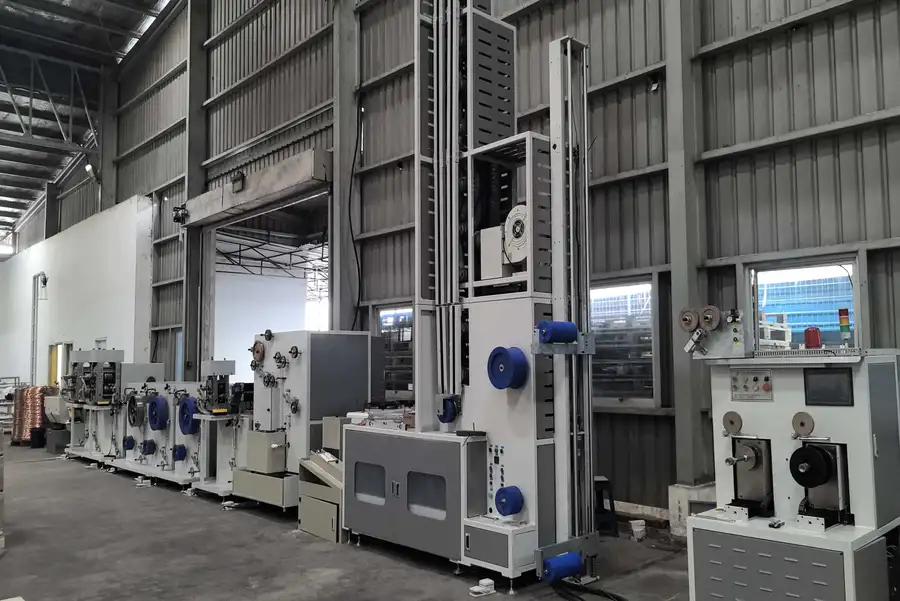
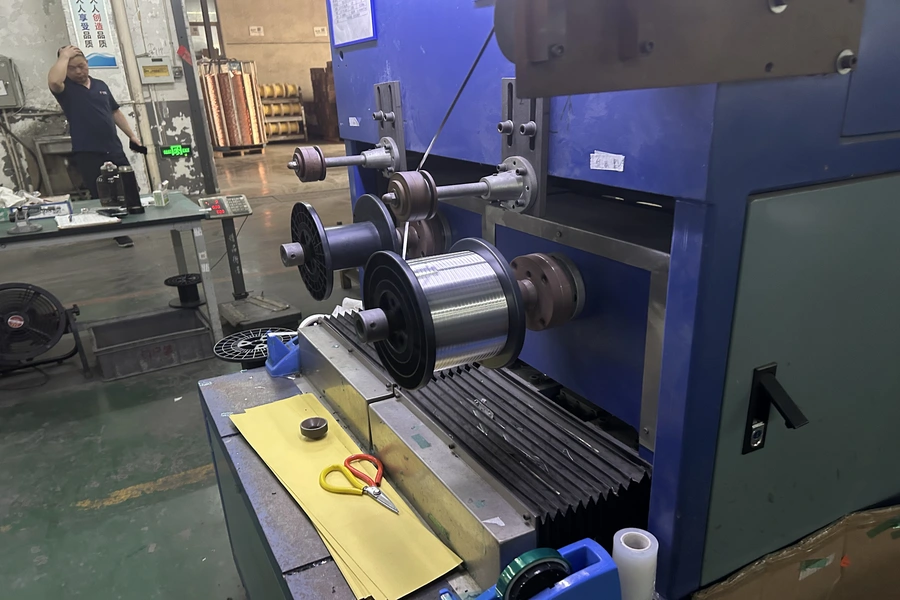
Busbar Ribbon Process Overview
Key Production Stages
- Multi-stage Wire Drawing: Coarse, medium, and fine drawing processes for achieving the desired wire diameter.
- Annealing Furnace: Improves ductility and electrical conductivity.
- Precision Rolling: Flattens round wire into a precise busbar ribbon.
- Multi-Stage Flat Wire Shaping (Optional): Further improves dimensional accuracy and surface quality.
- Surface Treatment & Cleaning: Removes oxidation and contaminants to ensure coating adhesion.
- Plating Line: Applies uniform tin or alloy coating to improve solderability.
- Take-Up System: Ensures stable tension and smooth winding of finished ribbon.
- Packaging System (Optional): Protects ribbon surface quality during storage and transportation.
- About Company
Busbar Ribbon Specifications
Typical Specifications
- Thickness: 0.20 – 0.50 mm
- Width: 3.0 – 6.0 mm
- Material: High-purity copper
- Coating: Tin or tin alloy
- Coating Thickness: Customizable based on requirements
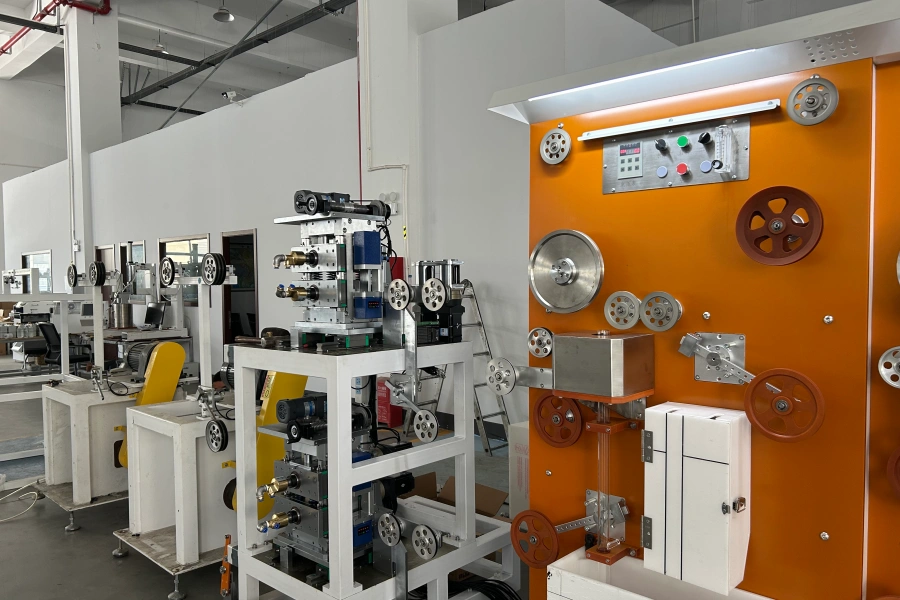
Bus Ribbon Production Line Configuration
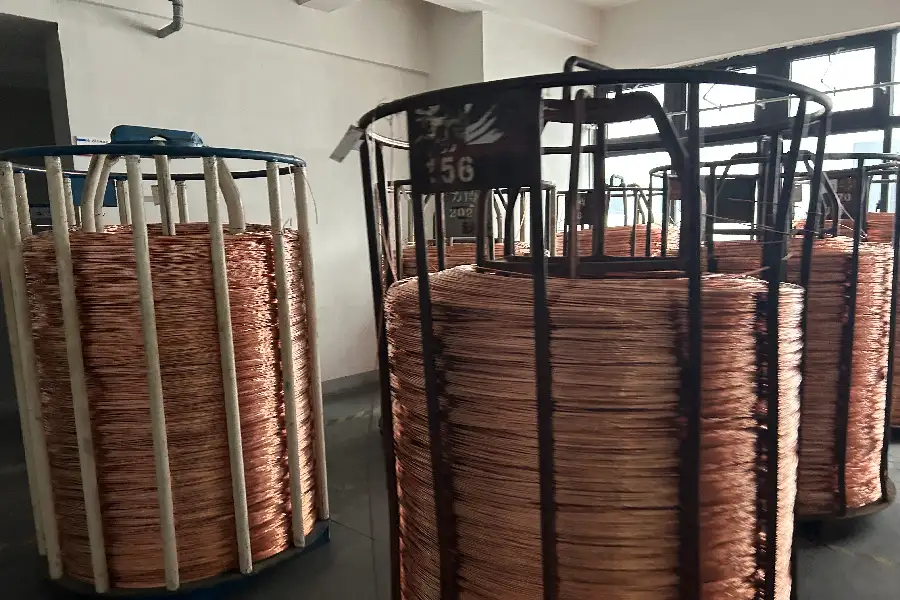
Copper Wire Feeding
Ensures stable unwinding of copper wire with precise tension control for continuous operation.
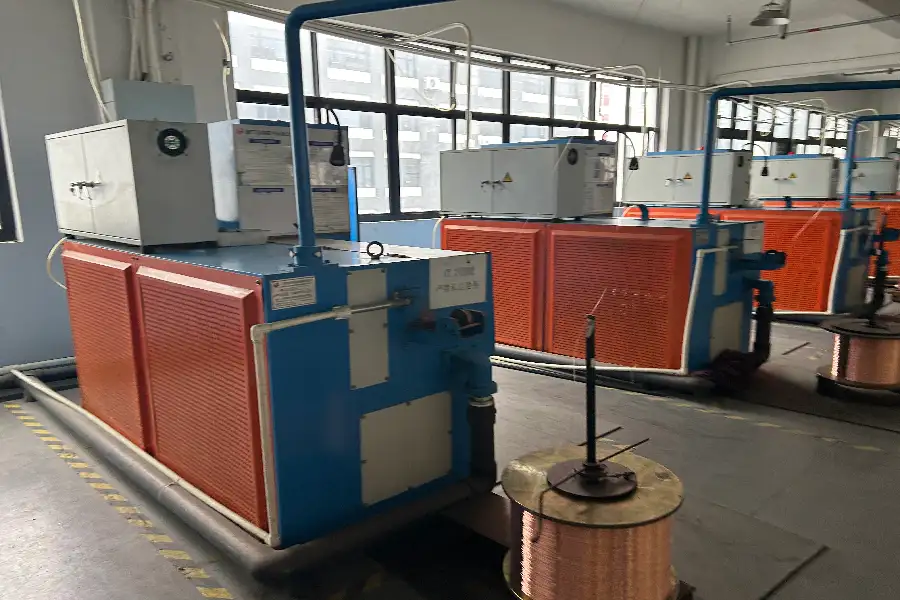
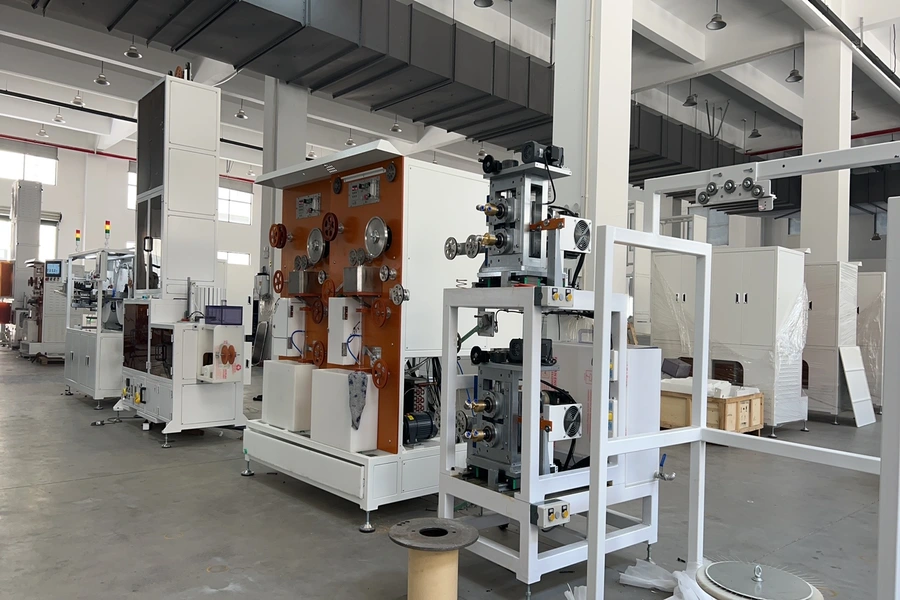
Annealing Furnace
The controlled heat treatment enhances the copper wire’s ductility and conductivity.
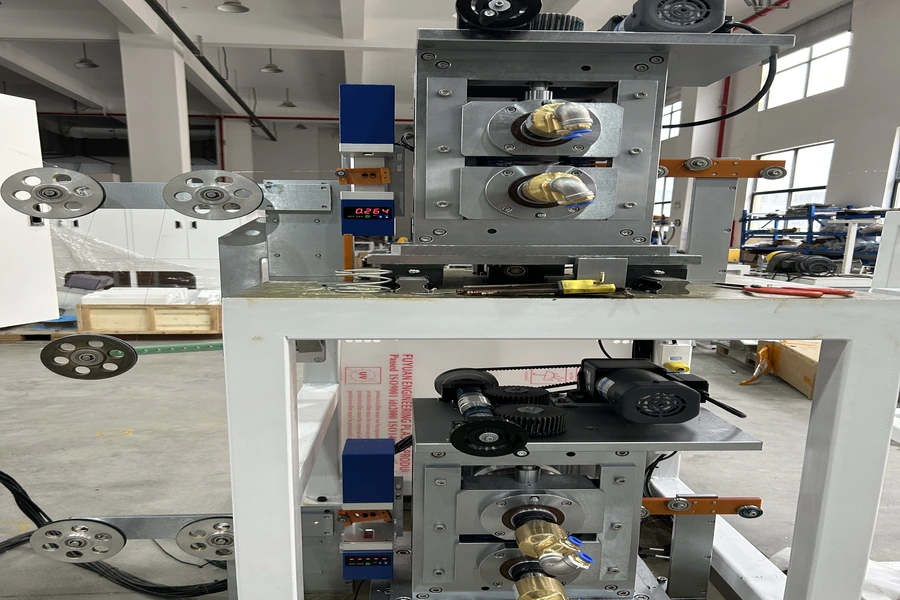
Precision Rolling Mill
The rolling mill flattens round copper wire into busbar ribbons with accurate thickness and width control.
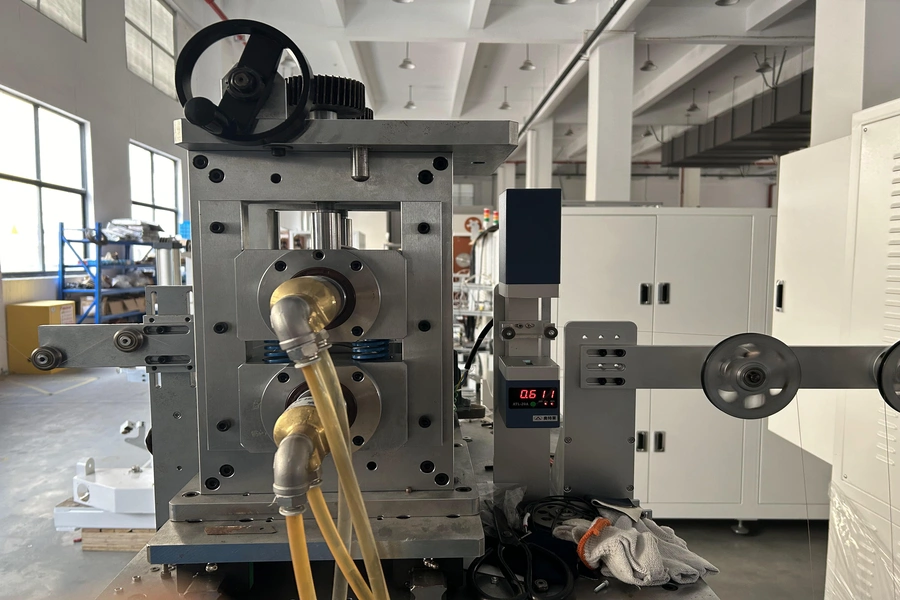
Flat Wire Shaping System
The optional flat wire shaping improves dimensional accuracy, edge quality, and surface consistency.
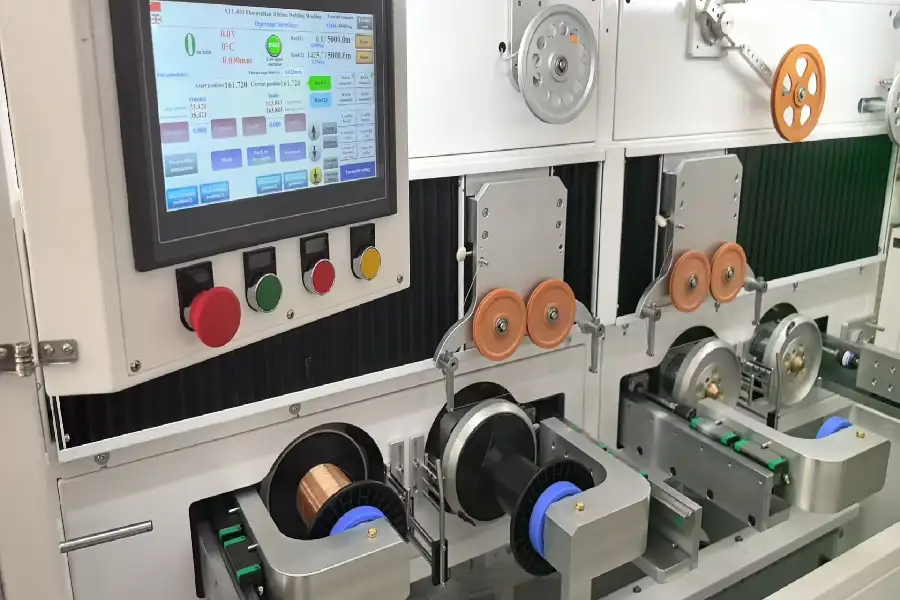
Surface Treatment & Cleaning
Removes oxidation and contaminants to ensure strong coating adhesion.
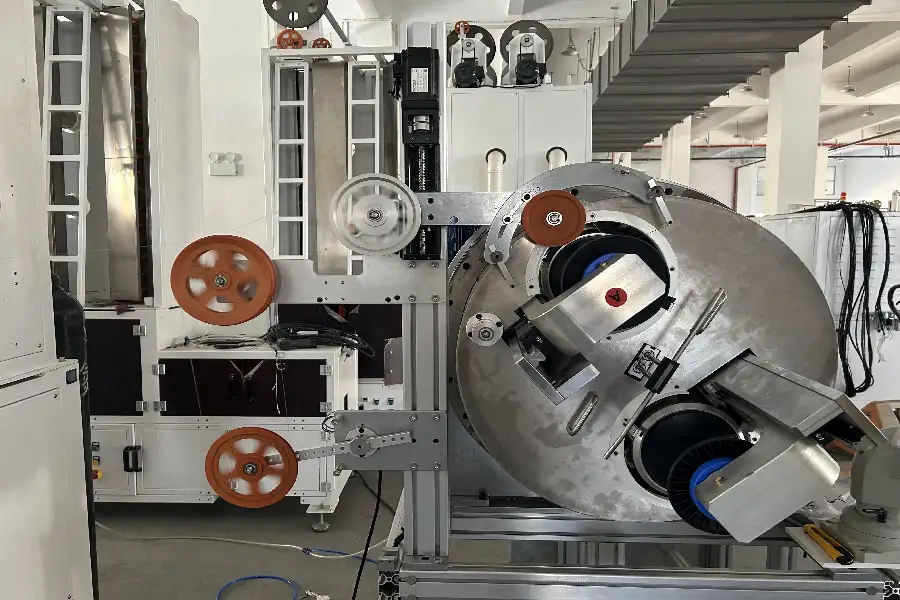
Hot Plating System
Applies a uniform tin or tin alloy coating for improved solderability and corrosion resistance.
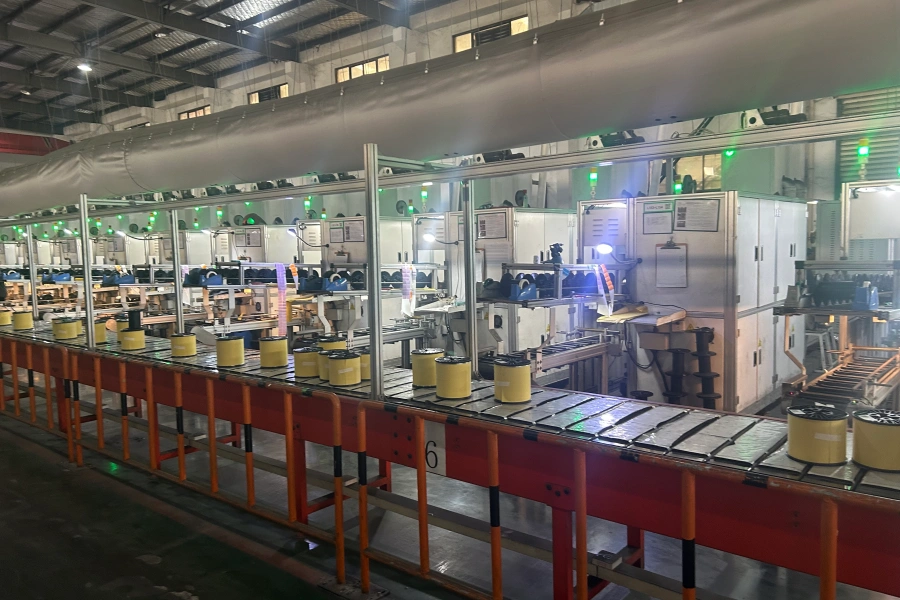
Busbar Take-Up System
Provides stable tension control and smooth winding of finished busbar ribbons.
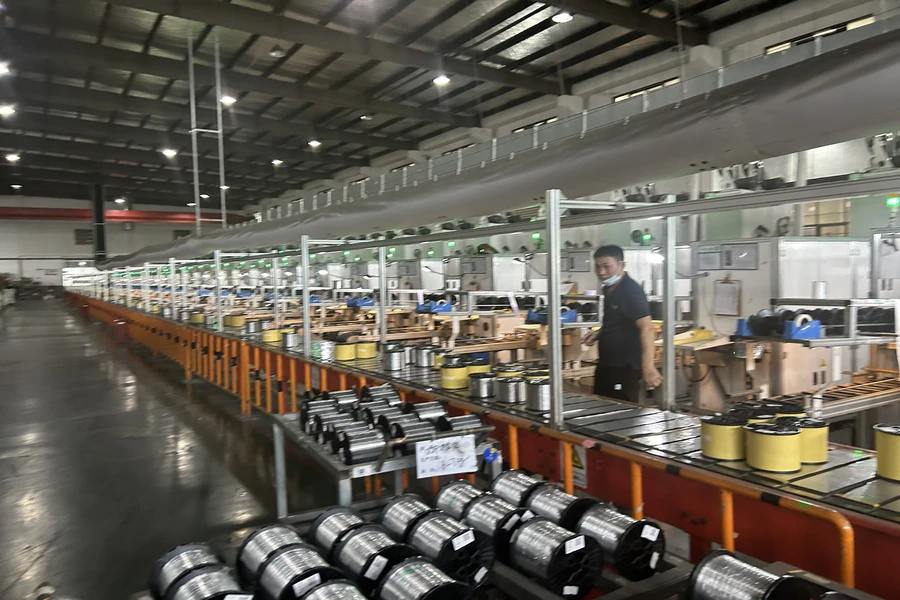
Packaging System (Optional)
Vacuum or standard packaging protects the ribbon during storage and transportation.
- About Company
Technical Features
- High current-carrying capacity suitable for high-power solar applications
- Stable conductivity with low electrical resistance
- Excellent coating uniformity and adhesion
- Precision thickness and width control for optimal performance
- Continuous high-speed production capability
- Optional high-precision shaping process for advanced applications
- About Company
Why Choose Us?
Our Expertise and Experience
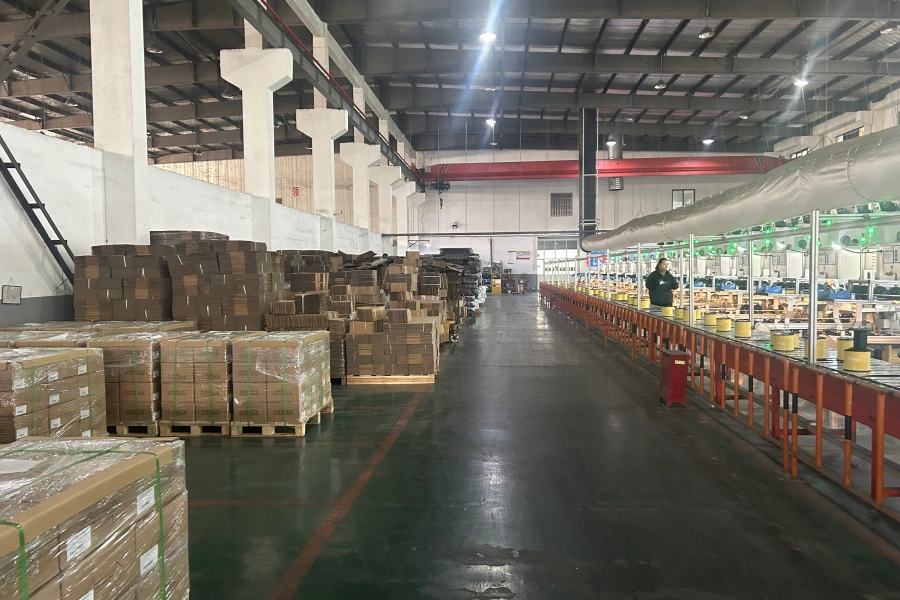
- Proven track record in PV ribbon production line solutions with over 30 years of industry experience.
- Complete turnkey solutionfrom raw material to finished product.
- Stable and reliable performancewith minimal maintenance.
- Customizable engineering designand layout support tailored to your needs.
- Professional technical serviceand after-sales support to ensure long-term success.

- About Company
About Sky Bluer Environmental Technology Co., Ltd.
With over 15 years of industry expertise, Sky Bluer Environmental Technology Co., Ltd. stands as a trusted leader in the design and manufacture of turnkey solutions for busbar production lines, PV ribbon machines, and interconnect ribbon systems. We specialize in end-to-end factory planning and layout optimization, ensuring a seamless integration of all production stages. From raw material processing to the final busbar ribbon, every aspect of the process is meticulously engineered to deliver superior quality, maximum operational efficiency, and long-term performance.
Common Questions
FAQ
What is busbar ribbon used for?
Busbar ribbon is a critical component in photovoltaic (PV) modules, used to collect and transmit electrical current from solar cells to the junction box. With typical dimensions of 0.20 – 0.50 mm thickness and 3.0 – 6.0 mm width, it is designed to handle high current loads, typically ranging from 5 A to 20 A per ribbon, depending on the solar module’s power requirements. The superior conductivity and mechanical strength of busbar ribbons ensure minimal energy loss and enhanced module efficiency.
What is the difference between busbar ribbon and interconnect ribbon?
Busbar ribbon differs from interconnect ribbon primarily in its dimensions and current-carrying capacity. Busbar ribbons are typically 3.0 – 6.0 mm in width and 0.20 – 0.50 mm in thickness, designed to carry higher currents of 5 – 20 A. In contrast, interconnect ribbons are usually thinner and narrower, with widths ranging from 1.0 – 2.5 mm and thicknesses between 0.10 – 0.30 mm, and they carry lower currents, typically 1 – 5 A per ribbon. Busbar ribbons are intended for high-power applications, while interconnect ribbons are used to link individual solar cells within a module.
Why is busbar ribbon wider than interconnect ribbon?
The wider dimensions of busbar ribbon, typically 3.0 – 6.0 mm, are designed to handle the higher electrical currents required in large-scale and high-efficiency photovoltaic modules. The increased width allows for a larger surface area, which reduces resistance and minimizes energy loss during current transmission. This is essential for high-power solar panels used in utility-scale solar installations, where efficiency and reliability are paramount. Interconnect ribbons, which connect individual cells, have a smaller surface area and are designed for lower currents (typically 1 – 5 A).
H3: What equipment is required for busbar ribbon production?
The complete busbar ribbon production line involves specialized equipment to ensure the production of high-precision, high-performance ribbons. The main equipment includes:
- Drawing Systems: Multi-stage wire drawing machines (coarse, medium, and fine) that progressively reduce the copper wire diameter from 3.0 mm to the required final dimensions of 0.20 – 0.50 mm thickness.
- Annealing Furnace: Heat treatment process that improves the ductility and electrical conductivity of copper, ensuring high-quality ribbon material.
- Precision Rolling Mill: Converts round copper wire into flat ribbons, with precise control of thickness and width, achieving tolerances as tight as ±0.002 mm for both thickness and width.
- Shaping Systems: Multi-stage systems designed to further refine the dimensions and surface quality of the ribbon, ensuring uniform thickness and edge quality.
- Plating Line: Applies a uniform coating of tin or tin alloy with a thickness of 2 – 5 μm, enhancing solderability and corrosion resistance.
- Winding Systems: Controlled winding of the finished ribbon with precise tension to ensure smooth, reliable handling and packaging.
These systems work in tandem to produce busbar ribbons with tight dimensional tolerances, low electrical resistance (typically < 0.003 Ω/m), and excellent mechanical strength to meet the rigorous demands of solar power applications.
- About Company
Contact Us for More Information
Ready to upgrade your solar panel manufacturing with a high-performance busbar ribbon production line? At Sky Bluer Environmental Technology Co., Ltd., we provide tailored solutions that enhance efficiency and quality. Our expert team offers full support from design to implementation, ensuring the optimal performance of your production line.
Contact us today for a detailed quotation, technical proposal, or layout design. Let us help you achieve the best results in your solar panel production.