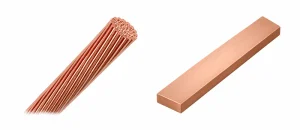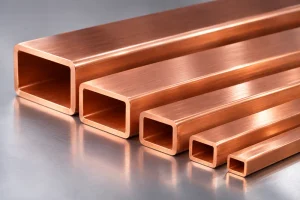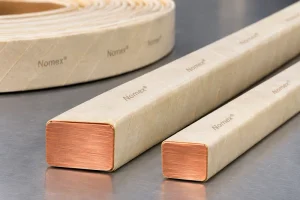
High-temperature electric motors require winding conductors that can withstand thermal stress, vibration, and repeated operating cycles. In demanding applications, glass fiber insulated rectangular copper wire provides an insulation option where conventional winding-wire coatings may not meet the specified requirements.
Its performance depends on more than the glass fiber covering. Copper geometry, insulation construction, impregnation materials, winding conditions, and the complete electrical insulation system must work together.
This guide explains the conductor structure, thermal ratings, manufacturing process, quality requirements, and key considerations for high-temperature motor windings.
1. What Is Glass Fiber Insulated Rectangular Copper Wire?
Glass fiber insulated rectangular copper wire is a winding conductor with a rectangular copper core surrounded by glass fiber yarn or tape. The covering is generally impregnated with a suitable resin or varnish to stabilize the fibers and provide the required insulation properties.
Depending on the specification, the construction may include:
- Bare rectangular copper conductor: The metallic core provides electrical conductivity.
- Enameled rectangular copper conductor: An additional enamel layer provides electrical insulation beneath the glass fiber covering.
- Glass fiber wrapping: One or more coverings provide mechanical reinforcement and contribute to the insulation structure.
- Resin or varnish impregnation: The selected material bonds the covering and influences its electrical, mechanical, and thermal performance.
The finished insulation thickness must be included when calculating the space occupied by conductors inside motor slots.

2. Thermal Ratings for High-Temperature Motor Windings
Glass fiber can withstand elevated temperatures, but the temperature capability of the finished winding wire cannot be determined from the glass fibers alone.
The enamel, impregnation material, and overall insulation construction influence the applicable temperature index.
Relevant international standards include:
| Standard | Insulation construction | Temperature index |
|---|---|---|
| IEC 60317-31:2015 | Glass-fiber-wound, resin- or varnish-impregnated rectangular copper wire | 180 |
| IEC 60317-62:2020 | Polyester glass-fiber-wound rectangular copper wire impregnated with silicone resin or varnish | 200 |
These standards cover specified winding-wire constructions, not every product marketed as fiberglass-insulated copper wire.
Both standards specify nominal conductor widths of 2.0–16.0 mm and thicknesses of 0.80–5.60 mm, subject to their applicable dimensional requirements.
A wire temperature index of 180 or 200 does not automatically establish the permissible operating temperature of a complete motor. Motor insulation-system qualification, cooling conditions, thermal aging, and applicable design standards must also be considered.
3. Copper Material and Rectangular Conductor Geometry
The copper core must provide suitable electrical conductivity, mechanical properties, and dimensional consistency.
Common conductor materials include C11000 (Cu-ETP) and oxygen-free grades such as C10200 (Cu-OF). The final selection depends on the approved motor-winding specification.
Width, Thickness, and Corner Radius
Rectangular conductors use slot space efficiently, but their geometry requires careful control.
Important parameters include:
- Bare copper width and thickness
- Dimensional tolerances
- Corner radius and edge condition
- Required temper and elongation
- Surface cleanliness and straightness
Sharp corners or burrs may damage glass fibers during wrapping and bending. Excessively rounded corners, however, reduce the copper area within a fixed external profile.
The insulation thickness must also be considered separately from the bare conductor dimensions.
For a nominal bare copper section measuring 5.00 × 2.00 mm, the sharp-corner rectangular area is:
A = 5.00 × 2.00 = 10.00 mm²
Actual copper area is slightly smaller when rounded corners are present. Electrical calculations should use the approved conductor geometry.
4. Preparing Rectangular Copper Wire Before Insulation
Reliable glass fiber insulation begins with a consistent copper conductor.
A possible upstream manufacturing sequence is:
Copper Rod or Round Wire → Drawing (if required) → Multi-Pass Rolling → Edge Forming → Annealing (if required) → Cleaning → Inspection
Rolling Accuracy and Surface Quality
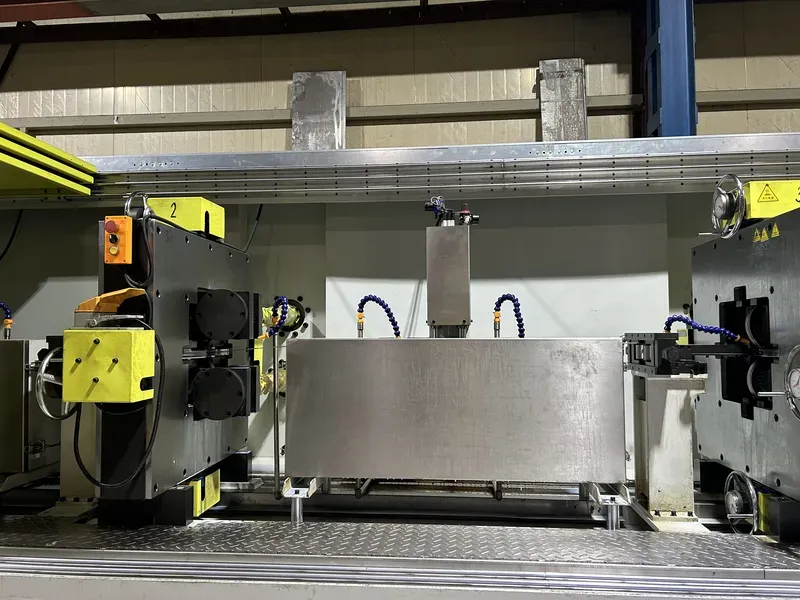
A precision flat wire rolling mill can form round or preprocessed copper wire into a rectangular profile.
Roll gap, reduction schedule, alignment, and tension influence finished thickness, width, and edge geometry. Excessive reduction or unstable feeding may cause uneven corners, surface marks, or dimensional variation.
For related equipment information, see our precision flat wire rolling mill.
The conductor should be inspected for scratches, burrs, embedded particles, and lubricant residue before insulation.
Mechanical Properties and Annealing
Cold working increases copper hardness and changes its ductility. If the conductor must undergo significant bending during coil manufacturing, its mechanical condition becomes particularly important.
Annealing may be necessary depending on the incoming material, accumulated deformation, and required final temper.
For additional preparation guidance, see How to Prepare Copper Flat Wire for Enameling and Paper Insulation.
5. Glass Fiber Wrapping and Impregnation Process
The insulation stage requires equipment specifically designed for fiber covering and the selected impregnation process.
Step 1: Conductor Preparation
The copper surface must be clean and compatible with any underlying enamel or subsequent insulation materials.
Step 2: Glass Fiber Application
Glass fiber yarn or tape is applied around the conductor using controlled wrapping conditions.
Wrapping tension, overlap, covering arrangement, and conductor guidance affect insulation uniformity. Excessive tension can damage fibers, while insufficient control may create gaps or uneven covering.
Step 3: Resin or Varnish Impregnation
The covering is impregnated with the specified material. Suitable processing conditions help achieve the required bonding, insulation performance, and mechanical stability.
Step 4: Curing and Inspection
Curing conditions must follow the selected resin or varnish system. After processing, the finished wire is inspected for dimensions, insulation integrity, surface defects, and other specified properties.
A conventional copper flat wire rolling mill does not perform glass fiber wrapping or impregnation by itself. These are separate manufacturing operations requiring appropriate equipment.
6. Quality Control and Common Manufacturing Problems
Quality control should address both the bare conductor and the completed insulated winding wire.
| Inspection item | Main checks | Purpose |
|---|---|---|
| Copper conductor | Grade, dimensions, conductivity, temper | Verify electrical and mechanical properties |
| Corner geometry | Radius, burrs, edge consistency | Reduce insulation damage |
| Surface condition | Scratches, particles, lubricant residue | Support reliable insulation application |
| Glass fiber covering | Coverage, uniformity, fiber damage | Maintain consistent insulation |
| Impregnation | Material, curing condition, visible defects | Verify covering integrity |
| Finished insulation | Dimensions, specified electrical tests | Confirm product compliance |
Troubleshooting Matrix
| Problem | Possible cause | Recommended action |
|---|---|---|
| Uneven insulation thickness | Unstable wrapping tension or inconsistent copper dimensions | Check wrapping settings and conductor geometry |
| Broken glass fibers | Excessive tension, sharp edges, or damaged guides | Inspect conductor corners and contact surfaces |
| Poor impregnation | Unsuitable material application or processing conditions | Review resin compatibility and process parameters |
| Insulation damage during bending | Excessive bending strain or unsuitable conductor condition | Review bend geometry, temper, and insulation construction |
| Electrical test failure | Insulation defects, contamination, or process variation | Inspect covering, cleanliness, and test records |
Electrical acceptance limits must follow the specified winding-wire standard and the motor manufacturer’s approved requirements.
7. How to Specify Glass Fiber Insulated Rectangular Copper Wire
A complete technical inquiry should distinguish the copper conductor requirements from the finished insulation requirements.
Provide the following information:
- Copper grade, temper, and bare conductor dimensions
- Width, thickness, corner radius, and tolerances
- Bare or enameled conductor construction
- Glass fiber covering arrangement and impregnation material
- Required temperature index and applicable standard
- Finished insulated dimensions and electrical test requirements
- Coil-forming conditions, delivery format, and production quantity
For the upstream copper-forming process, compare the equipment options in our flat wire rolling mill vs drawing machine guide.
Frequently Asked Questions
Is glass fiber insulated copper wire suitable for all high-temperature motors?
No. Suitability depends on the complete insulation system, operating conditions, winding design, and approved motor specifications. Glass fiber insulation alone does not guarantee compatibility.
Is Class 200 winding wire always better than Class 180?
Not necessarily. A higher temperature index may be useful when required by the design, but electrical properties, mechanical behavior, processing compatibility, and cost must also be evaluated.
Can rectangular copper wire be insulated immediately after rolling?
Only when its surface condition, dimensions, corner geometry, and mechanical properties meet the insulation-process requirements. Additional cleaning or annealing may be necessary.
Can a flat wire rolling mill produce finished glass fiber insulated wire?
Not independently. A rolling mill produces the required bare rectangular copper profile. Glass fiber wrapping, impregnation, and curing require separate processes and equipment.
Conclusion
Glass fiber insulated rectangular copper wire is an important option for high-temperature motor windings, but reliable performance requires coordinated control of copper geometry, material condition, fiber covering, impregnation, and electrical testing.
The quality of the bare rectangular copper conductor directly influences subsequent insulation processing and winding performance.
Sky Bluer Environmental Technology Co., Ltd. (CRM) manufactures precision rolling mills and customized wire-forming equipment for solid rectangular copper conductors.
If your project requires bare rectangular copper wire for subsequent glass fiber insulation, share your copper grade, incoming dimensions, finished conductor size, tolerances, corner radius, and production capacity. Our engineering team can evaluate a suitable upstream rolling solution.