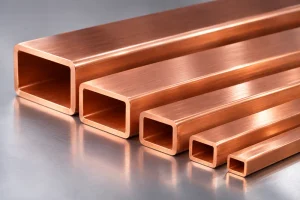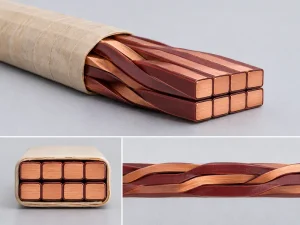
Large generators produce substantial heat in their stator windings. In some direct water-cooled designs, hollow copper conductors carry current while cooling water flows through an internal passage. This introduces requirements that ordinary solid rectangular copper wire does not face.
Performance depends on copper quality, geometry, cleanliness, hydraulic design, joint integrity, and the complete cooling and insulation system.
1. What Are Hollow Copper Conductors?
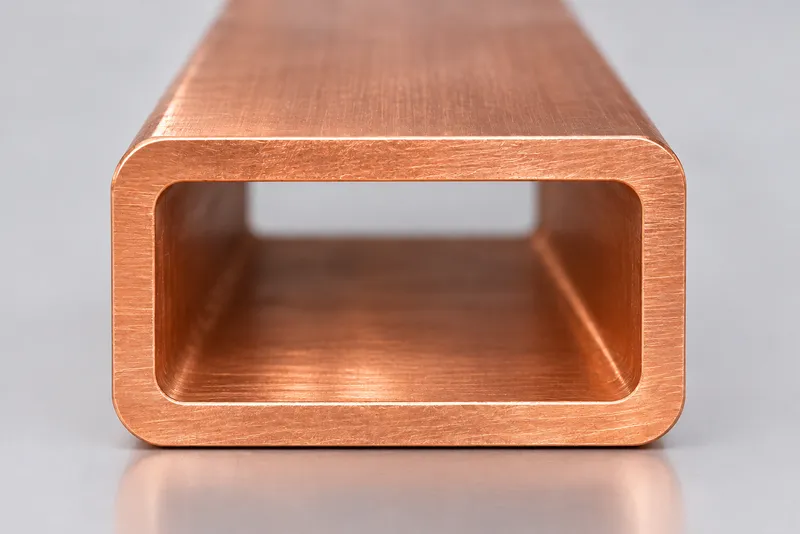
A hollow copper conductor is a current-carrying copper profile with a continuous internal channel. The outside is often rectangular, while the passage may have a rectangular, rounded, or otherwise engineered shape. In a water-cooled generator stator bar, cooling water flows through designated hollow strands or passages to remove heat from the winding.
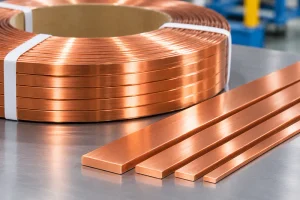
Some stator bars combine hollow and solid copper strands. Their arrangement, transposition, insulation, and connections depend on the generator design. A hollow conductor is only one component of the winding assembly.
2. Why Use Direct Water Cooling?
Electrical losses generate heat inside generator windings. In suitable large-machine designs, circulating treated water through hollow conductors can remove heat directly from the copper rather than relying only on heat transfer through surrounding insulation and gas.
The design must balance coolant flow, pressure drop, inlet temperature, allowable winding temperature, and leakage risk. More flow is not necessarily better if pressure loss becomes excessive.
The circuit also needs electrical isolation, water chemistry control, and monitoring. The generator manufacturer establishes the limits.
3. Copper Material and Hollow-Profile Geometry
Material selection should consider electrical conductivity, mechanical properties, forming behavior, and compatibility with the specified joining process. Oxygen-free copper grades such as C10200 (Cu-OF) or C10100 (Cu-OFE) may be evaluated where the application requires them. The final grade and condition must follow the generator manufacturer’s approved specification.
A hollow-conductor drawing should identify:
- Outside width and thickness, with dimensional tolerances
- Internal channel width, height, shape, and tolerances
- Minimum wall thickness, corner radii, and concentricity or wall uniformity
- Copper grade, temper, conductivity, and surface requirements
- Length, straightness, end condition, and inspection criteria
For a simplified sharp-corner rectangular profile, the copper cross-sectional area is:
A = (W × T) − (w × t)
Here, uppercase dimensions describe the outside, while lowercase dimensions describe the internal channel. Actual calculations must account for rounded corners and the approved drawing.
For hollow copper conductors, the metal area affects electrical resistance, while the channel area and shape influence coolant flow and pressure drop. Both must be considered together.
4. Manufacturing and Forming Considerations
Hollow copper conductors require a manufacturing route capable of producing a continuous internal passage with controlled wall thickness. Depending on the product design, this may involve tube production, drawing through suitable tooling, sizing, straightening, and specialized finishing.
A conventional flat-wire rolling mill cannot simply turn solid wire into a hollow conductor.
Uneven deformation can shift the channel, thin a wall, or distort corners. Tooling, reduction schedule, lubrication, and inspections must match the copper condition and profile.
Particles, lubricant residue, scratches, and restrictions inside the channel may compromise cooling. Cleaning and inspection must address internal surfaces.
5. From Conductor to Generator Stator Winding
Step 1: Confirm the Approved Drawing
Verify dimensions, channel geometry, copper grade, wall-thickness limits, and inspection methods.
Step 2: Produce and Size the Hollow Profile
Use a qualified hollow-profile manufacturing process to obtain the specified cross-section. Measure both external and internal dimensions, including minimum wall thickness.
Step 3: Clean and Inspect the Water Passage
Remove processing residues using approved procedures. Verify that the passage is unobstructed and that internal surfaces meet the project requirements.
Step 4: Assemble and Join the Stator Bar
The generator manufacturer arranges the strands and makes electrical and hydraulic connections. Defective joints may increase resistance, restrict flow, or leak.
Step 5: Insulate, Test, and Integrate
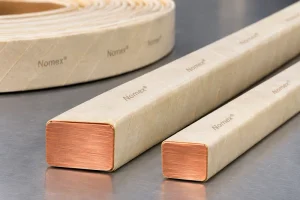
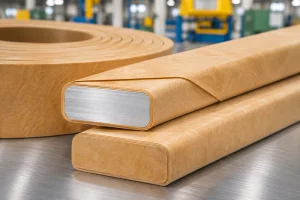
The completed bar undergoes insulation, specified pressure or leak checks, electrical tests, and cooling-circuit integration. Acceptance limits follow the approved design.
For related upstream copper-forming information, see our precision flat wire rolling mill, guide to preparing copper flat wire for insulation, and copper versus aluminum flat wire rolling comparison.
6. Quality Control and Troubleshooting
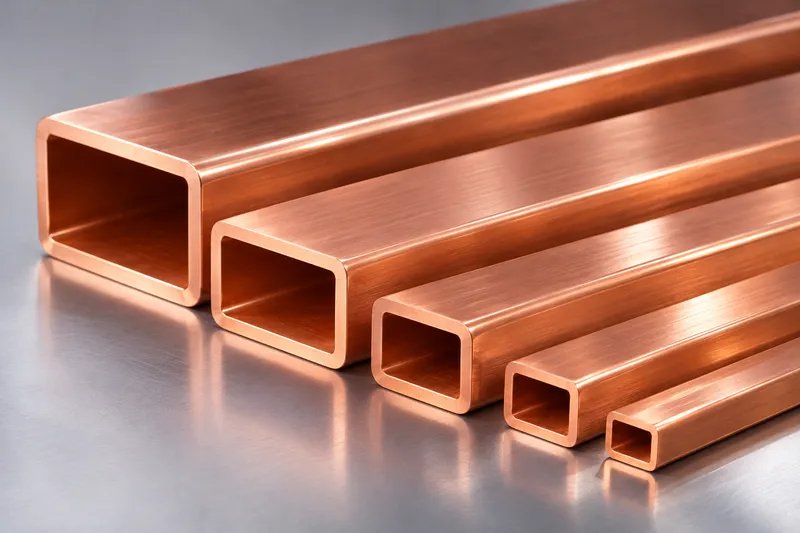
Quality control for hollow copper conductors should cover material traceability, geometry, cleanliness, and project-specific requirements before assembly.
| Inspection item | Main checks | Why it matters |
|---|---|---|
| Copper material | Grade, temper, conductivity, traceability | Consistent electrical and forming properties |
| External geometry | Width, thickness, straightness, corners | Assembly fit and dimensional control |
| Internal channel | Passage size, shape, obstruction | Predictable coolant flow |
| Wall integrity | Minimum thickness, uniformity, defects | Mechanical integrity and leakage risk |
| Surface cleanliness | Residues, particles, internal finish | Reduced risk of contamination and blockage |
| Finished assembly | Specified joint, pressure, leak and electrical tests | Verify winding-system performance |
Common Problems and Corrective Actions
| Problem | Possible cause | Recommended check |
|---|---|---|
| Uneven wall thickness | Tool misalignment or unstable forming | Inspect tooling and measure wall distribution |
| Restricted coolant passage | Channel distortion or trapped debris | Check internal geometry and cleanliness |
| Excessive pressure drop | Undersized passage, deposits, or circuit restriction | Review flow data and inspect the cooling path |
| Leakage near a connection | Joint defect or assembly damage | Apply approved leak-testing and joint-inspection procedures |
Pressure-drop or leak-test acceptance values must come from the approved generator design, not generic copper-wire specifications.
7. How to Specify a Hollow Copper Conductor
A useful inquiry includes the generator application, approved cross-sectional drawing, copper grade and temper, outside and internal dimensions, minimum wall thickness, tolerances, and required production quantity.
Provide cleanliness criteria, joining requirements, inspection methods, and hydraulic or leak-test conditions. Specify any accompanying solid rectangular strands separately.
Frequently Asked Questions
Is a hollow copper conductor the same as a copper cooling tube?
Not necessarily. A hollow conductor must satisfy electrical and mechanical requirements in addition to carrying coolant; a general-purpose tube may not meet those specifications.
Can ordinary tap water be used inside the conductor?
Water quality must follow the generator manufacturer’s cooling-system specification. Direct water-cooled generator circuits typically use carefully controlled treated water, with conductivity and contamination monitored.
Can a flat-wire rolling mill manufacture hollow copper conductors?
Not by itself. Hollow profiles need dedicated manufacturing methods and tooling. A flat-wire rolling mill may be relevant to separate solid rectangular strands, subject to the required specifications.
Conclusion
Hollow copper conductors can enable effective direct cooling in suitably designed generator stator windings, but their performance depends on much more than the external copper profile. Internal geometry, wall integrity, cleanliness, joint quality, and water-circuit controls must be engineered and verified together.
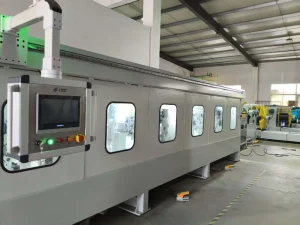
Sky Bluer Environmental Technology Co., Ltd. (CRM) manufactures precision rolling mills and customized equipment for solid flat and rectangular metal-wire forming. If your generator-winding project also requires solid rectangular copper strands, share the material, input size, finished dimensions, tolerances, and capacity so our team can evaluate an appropriate upstream forming solution.