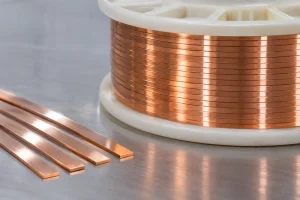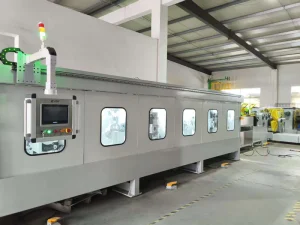
Choosing a flat wire rolling mill supplier involves more than comparing machine prices. A suitable partner must understand your material, finished wire geometry, tolerances, production targets, and factory conditions. Two suppliers may quote similar equipment while offering different process capabilities, controls, testing methods, and after-sales support.
A structured evaluation helps buyers identify a technically suitable solution rather than an attractive but incomplete quotation.
1. Define the Product Before Comparing Suppliers
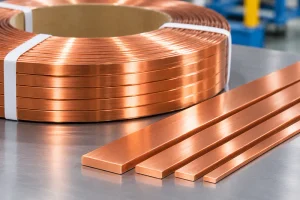
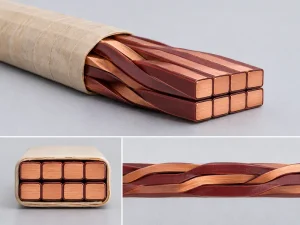
Start with the finished wire rather than a preferred machine model. Specify the material grade, input form and dimensions, target width and thickness, cross-sectional drawing, edge radius, surface finish, and required output.
Rectangular copper conductors for transformer windings may have different quality priorities from aluminum flat wire or stainless steel profiles. A supplier should ask about the final application instead of assuming one rolling configuration suits every material.
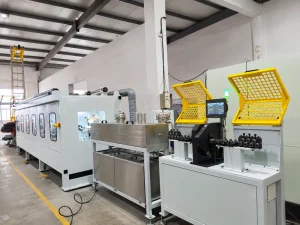
Also clarify whether the project needs only a rolling mill or a line incorporating payoff, drawing, annealing, inspection, and take-up. See our guide to specifying a flat magnet wire production line for related planning considerations.
2. Assess Process Engineering Capability
A capable supplier should explain how the incoming wire becomes the specified finished profile. Request a process flow, proposed rolling stages, roll arrangement, tooling concept, and reasons for major design choices.
Depending on the application, two-high rolling stands, multi-roll configurations, or Turks Head arrangements may be considered. These designs are not interchangeable: suitability depends on material behavior, reduction, cross-sectional geometry, and quality requirements. More rolls or higher advertised speed do not automatically mean better results.
Ask how the supplier will manage wire alignment, inter-stand tension, lubrication, cooling, and size changes. Answers should relate to your actual product rather than generic catalogue specifications.
For technical background, read our Copper Rolling Process Guide.
3. Verify Tolerances and Finished-Wire Quality
Dimensional precision should be demonstrated, not merely promised. Ask for achievable width and thickness tolerances for representative product sizes, together with the operating conditions under which they apply.
Quality evaluation should cover edge radius, surface marks, burrs, twisting, and any application-specific mechanical or electrical properties. A nominal dimension alone does not establish process consistency.
Clarify the measurement instruments, sampling frequency, and whether inspection is offline or online. Online measurement and automatic closed-loop correction are different functions; confirm which capabilities are included.
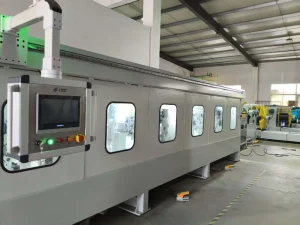
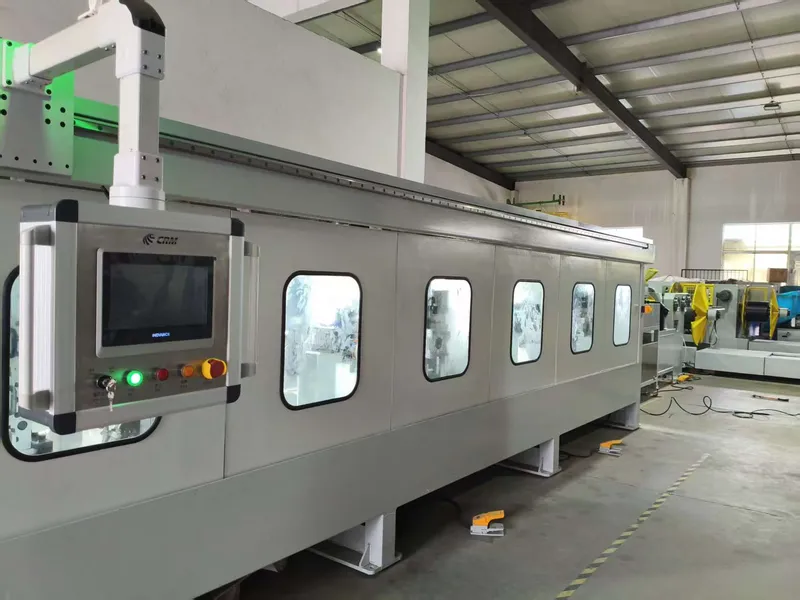
The CRM Precision Flat Wire Rolling Mill provides a reference when discussing precision rolling configurations.
4. Examine Machine Design and Automation
Review mechanical construction, roll-gap adjustment, drive arrangement, guiding devices, and maintenance access. A suitable machine should support stable operation throughout the agreed product range, not simply reach a target dimension during a short demonstration.
Automation options may include PLC/HMI controls, synchronized drives, stored production recipes, tension monitoring, and online inspection. Distinguish standard features from optional upgrades.
Where automatic correction is proposed, ask about sensors, actuators, control logic, and adjustment limits. Check whether rolls, guides, and tooling can be changed safely and efficiently. Confirm applicable safety requirements for the destination market and the documentation supplied.
5. Compare Realistic Capacity and Utility Requirements
Maximum mechanical speed is not guaranteed production output. Request stable running speed and accepted output for specified wire sizes, including assumptions about operating hours, changeovers, and yield.
Review motor power, electrical supply, cooling water, lubrication, filtration, compressed air where applicable, and factory layout. Missing utility information can create unexpected installation costs.
Ask whether output figures come from calculations, previous comparable applications, or witnessed trials. The basis matters as much as the number.
6. Require Evidence and a Clear Factory Acceptance Test
Before ordering, request relevant machine photographs, process videos, sample inspection records, or references to comparable installations where disclosure is permitted. Evidence from a similar application is more informative than a generic promotional video.
Agree on a factory acceptance test (FAT) before manufacturing begins. Define representative materials and sizes, sampling methods, dimensional and surface criteria, stable running conditions, and how accepted output will be recorded. Clarify who supplies the test material and whether the buyer can witness the trial.
| Evaluation item | Evidence to request |
|---|---|
| Product capability | Drawings, sample results, comparable applications |
| Dimensional accuracy | Measured width, thickness, and edge data |
| Process stability | Trial duration, speed, and tension conditions |
| Automation | Demonstration of included functions |
| Production output | Accepted quantity under agreed test conditions |
| Documentation | Test report, manuals, and deviation list |
Record guaranteed values and acceptance conditions in the approved technical agreement. Verbal assurances cannot replace measurable criteria.
7. Compare Supply Scope and Total Project Cost
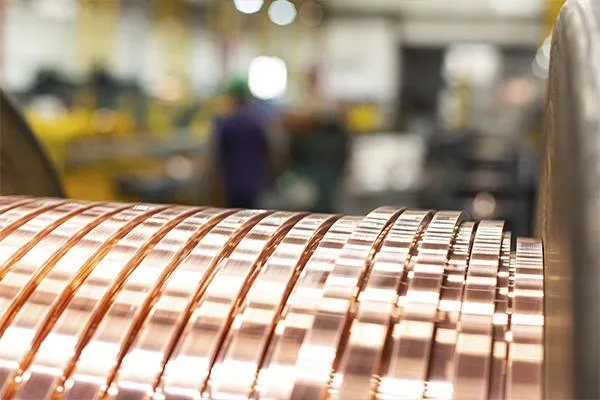
A lower price may reflect a narrower supply scope rather than better value. Compare quotations line by line, including rolling stands, tooling, electrical controls, payoff and take-up, inspection, safety guarding, spare parts, and documentation.
Clarify responsibility for freight, installation, commissioning, training, and integration with existing equipment. Consider roll servicing, downtime, maintenance, and future size changes when assessing long-term costs.
Request an explicit list of exclusions and technical deviations to avoid unexpected purchases after ordering.
8. Evaluate Delivery, Service, and Communication
A reliable flat wire rolling mill supplier should offer a realistic schedule, defined engineering milestones, and clear procedures for drawing approvals and design changes.
Check remote troubleshooting, on-site service availability, spare-parts lead times, operator training, and documentation. Confirm service arrangements in writing, particularly for international projects.
Technical responsiveness matters. A supplier who identifies missing specifications and explains trade-offs may be more useful than one who promises everything without qualification.
9. Flat Wire Rolling Mill Supplier Evaluation Checklist
Send the same RFQ to shortlisted suppliers and compare responses against common criteria:
- Material grade, input size, and finished-wire drawings
- Product range, tolerances, and surface requirements
- Process flow, rolling stages, and tooling
- Stable speed, capacity, and utility requirements
- Automation, inspection, and safety functions
- FAT plan, guaranteed values, and deviations
- Supply scope, delivery schedule, and service terms
Separate confirmed specifications, optional features, and unverified claims in your comparison sheet.
Frequently Asked Questions
How can I tell whether a supplier can meet tight tolerances?
Request size-specific guaranteed values, measurement methods, and results from comparable trials. Confirm the conditions under which tolerances apply.
Is a higher-speed rolling mill always the better choice?
No. Stable production, acceptable yield, changeover time, and finished-wire quality are often more relevant than maximum speed.
Should I choose a supplier that offers a complete production line?
Only if the project requires it. Compare the necessary processes and integration responsibilities rather than assuming a larger supply scope is better.
What should be agreed before paying a deposit?
Confirm technical specifications, supply scope, delivery milestones, FAT criteria, warranty, service arrangements, and how deviations will be handled in the contract.
Conclusion
Evaluating a flat wire rolling mill supplier requires more than checking specifications and prices. Process engineering, verified quality, realistic output, transparent testing, complete quotations, and dependable support should all inform the decision.
Sky Bluer Environmental Technology Co., Ltd. (CRM) manufactures precision rolling mills and customized wire-processing equipment. Share your material grade, input dimensions, finished-wire drawing, tolerances, and production target with our engineering team to discuss a suitable configuration.