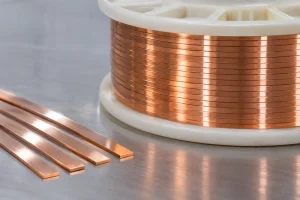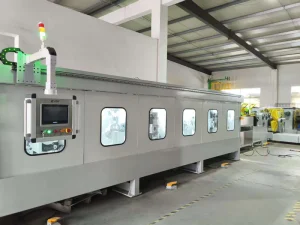
Flat magnet wire production line cost depends on more than the price of a rolling mill. Material grade, finished dimensions, tolerances, production capacity, automation, and auxiliary equipment all affect the total investment. Two lines that look similar may have very different prices because they serve different manufacturing requirements.
For buyers, the key is to compare equipment based on a clearly defined product and scope of supply—not the lowest quoted price alone.
1. Start with the Finished Product and Line Scope
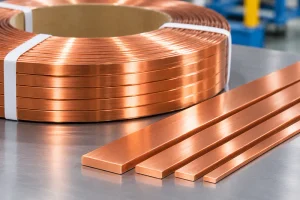
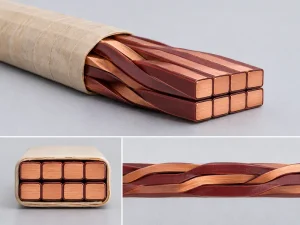
Flat magnet wire typically uses rectangular copper or aluminum conductors for electrical windings. The finished product may be a bare conductor or a conductor with enamel, paper, or another specified insulation system.
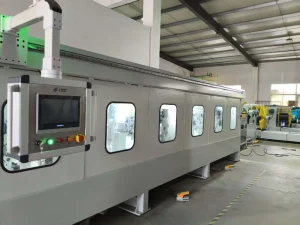
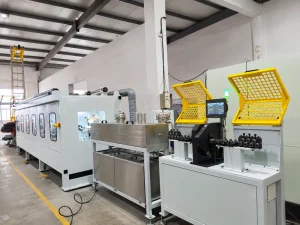
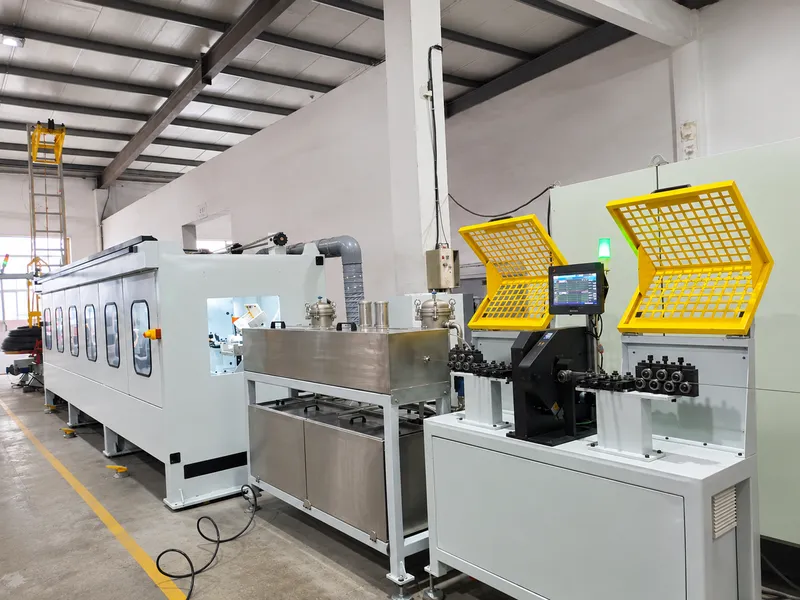
A bare-conductor forming line may include a payoff, wire preparation equipment, rolling stands, guides, inspection devices, and a take-up. A complete insulated-wire line may require additional processing and insulation equipment.
A quotation for bare rectangular wire production is not equivalent to one for finished insulated magnet wire. Before requesting prices, define the final product and which processes the supplier must provide.
For detailed planning considerations, see How to Specify a Flat Magnet Wire Production Line for Custom Dimensions.
2. Material Grade and Incoming Wire Condition
Copper and aluminum behave differently during deformation, so material selection can influence tooling, rolling reductions, lubrication, and process control.
Common conductor materials include C11000 (Cu-ETP), C10200 (Cu-OF), C10100 (Cu-OFE), and aluminum grades such as AA1350, AA1060, and AA1050, where suitable for the application.
Incoming material also matters. A line starting with prepared round wire may need fewer processing stages than one starting with larger rod. Variations in hardness, surface quality, or input dimensions can increase preparation and inspection requirements.
Ask suppliers to base their proposals on the actual material grade, condition, and input size, rather than a generic copper or aluminum specification.
3. How Conductor Dimensions Affect Flat Magnet Wire Production Line Cost
The finished width, thickness, cross-sectional profile, and edge radius determine much of the rolling arrangement. A machine designed for one narrow size range may be simpler than a flexible line intended to handle many profiles.
| Specification | Potential cost impact |
|---|---|
| Width and thickness range | Roll size, adjustment range, and guides |
| Input-to-output reduction | Number and arrangement of rolling stages |
| Edge radius and profile | Customized rolls and inspection requirements |
| Frequent size changes | Additional tooling and changeover provisions |
Depending on the material and required reduction, multiple rolling stages may be necessary. More stages can increase equipment and integration costs, but fewer stages are not automatically better if product quality or process stability suffers.
For background on material deformation, read our Copper Rolling Process Guide.
4. Dimensional Tolerances and Inspection
Tighter tolerances can increase the demand for mechanical precision, stable wire guidance, accurate roll-gap adjustment, and measurement equipment.
Buyers should specify width and thickness tolerances, edge-radius requirements, surface finish, and any relevant mechanical properties. A nominal product size alone is not enough for a reliable quotation.
Offline inspection may be sufficient for some projects. Others may require online dimensional monitoring. However, online measurement does not automatically include automatic correction. A closed-loop adjustment function must be explicitly specified and verified.
The CRM Precision Flat Wire Rolling Mill provides a reference for discussing application-specific rolling configurations.

5. Production Capacity and Stable Line Speed
Higher production requirements may affect motor sizing, drive selection, cooling, material handling, and take-up equipment. But maximum advertised speed is not the same as usable production output.
Theoretical mass throughput is related to finished cross-sectional area, line speed, and material density, using consistent units. Actual accepted output also depends on operating time, size changes, scrap, and quality yield.
When comparing offers, request separate figures for maximum mechanical speed, stable speed for specified wire sizes, and accepted output under agreed conditions. A high-speed line may offer little economic advantage when demand is limited or product changes are frequent.
6. Automation and Tension Management
Automation affects both the initial price and the amount of operator intervention required. Depending on the design, options may include PLC/HMI controls, coordinated drives, recipe storage, dancer systems, load cells, and online monitoring.
The appropriate configuration depends on the product range and process requirements. Manual roll-gap adjustment, motorized adjustment, and automatic closed-loop correction are different capabilities and should not be treated as interchangeable.
Ask the supplier to identify exactly which controls and sensors are included, rather than assuming every line has the same functions.
7. Auxiliary Equipment and Installation Scope
A rolling mill is only one part of the project. Additional equipment may include wire drawing, annealing where required, lubrication and cooling, filtration, payoff and take-up systems, inspection instruments, and electrical safety systems.
Not every line needs every module. Annealing depends on material condition and required properties; enameling or paper insulation is relevant only when included in the finished-product scope.
Quotations should itemize major modules and clarify whether installation, commissioning, training, spare parts, freight, and site utilities are included. Otherwise, a lower initial quote may simply exclude essential items.
8. Flat Magnet Wire Production Line Cost and Total Cost of Ownership
Equipment quality, spare-parts availability, maintenance access, energy use, downtime, and rejected material influence long-term costs.
| Cost category | What to compare |
|---|---|
| Capital investment | Rolling equipment, tooling, controls, auxiliary systems |
| Project delivery | Freight, installation, commissioning, training |
| Operating expenses | Power, labor, cooling, lubricants |
| Maintenance and losses | Spare parts, roll servicing, downtime, scrap |
| Future flexibility | Additional sizes, tooling changes, upgrades |
One useful metric is:
Production Cost per Accepted Kilogram = Relevant Production Costs ÷ Accepted Finished Output
Use the same time period and cost boundaries for every supplier comparison.
The lowest purchase price is not necessarily the lowest cost of producing qualified flat wire.
9. What to Include in a Supplier RFQ
To obtain comparable quotations, provide:
- Material grade, condition, and input dimensions
- Finished conductor drawings, dimensions, and tolerances
- Surface, edge-radius, and mechanical-property requirements
- Required product range and production capacity
- Payoff, take-up, inspection, and automation expectations
- Whether annealing or insulation processes are required
- Site utilities and proposed factory acceptance testing (FAT) criteria
During FAT, verify representative sizes, finished dimensions, surface quality, stable operation, and accepted output according to an agreed test plan.
Guaranteed values must be recorded in the approved technical specifications.
Frequently Asked Questions
Why does flat magnet wire production line cost vary between suppliers?
Suppliers may quote different process scopes, rolling stages, precision levels, automation, and auxiliary equipment. Compare offers against identical product requirements.
Does tighter tolerance always mean a higher price?
Not always, but tighter tolerances may require more precise mechanics, inspection, and control. The actual impact depends on the conductor and process.
Can one line process both copper and aluminum?
Some configurations can, but compatibility must be checked for each material grade, size range, tooling arrangement, and operating condition.
Should annealing and insulation be included?
Only if the required process and finished product call for them. Clearly distinguish bare-conductor forming from complete insulated magnet wire manufacturing.
Conclusion
Flat magnet wire production line cost is driven by the interaction of product specifications, rolling complexity, precision, capacity, automation, and the agreed scope of supply. A technically comparable quotation is more useful than a price without clearly defined performance requirements.
Sky Bluer Environmental Technology Co., Ltd. (CRM) manufactures precision rolling mills and customized wire-processing equipment. Share your material grade, input dimensions, finished conductor drawing, tolerances, and target output with our engineering team to discuss an appropriate configuration.