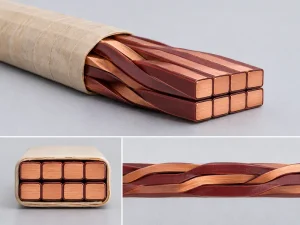
Dry-type transformers need carefully engineered windings to carry current, limit losses, and withstand electrical, thermal, and mechanical stresses without relying on insulating oil. One conductor option is Nomex insulated rectangular copper wire: a rectangular copper conductor wrapped with aramid insulating paper. It can help meet demanding insulation and winding-space requirements, provided the conductor and complete transformer insulation system are designed together.
Reliable performance depends on copper dimensions, corner quality, paper wrapping, and downstream manufacturing—not simply on choosing a high-performance insulation material.
1. What Is Nomex Insulated Rectangular Copper Wire?
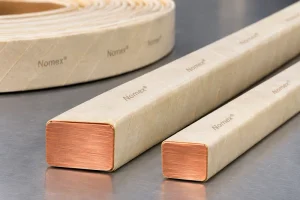
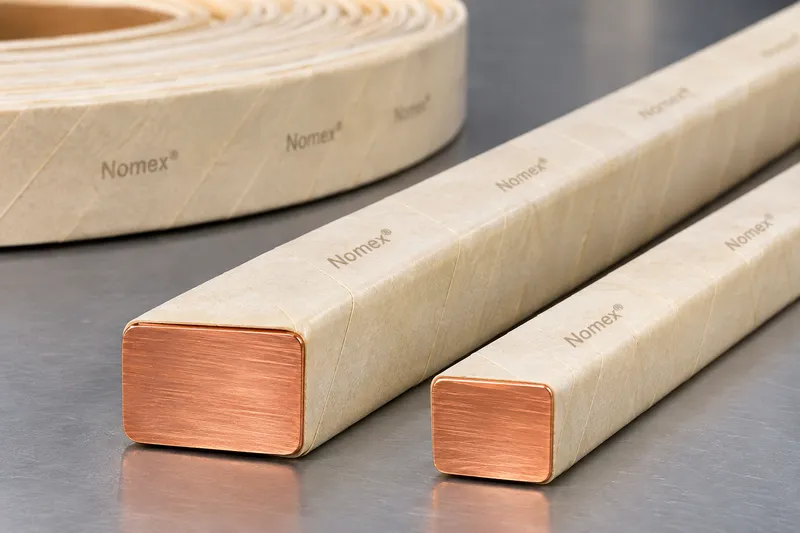
Nomex is DuPont’s trade name for a family of meta-aramid materials, including electrical insulation papers. In this application, an approved Nomex paper is wrapped around a bare rectangular copper conductor to separate adjacent winding turns electrically.
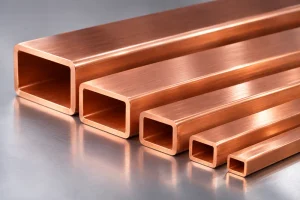
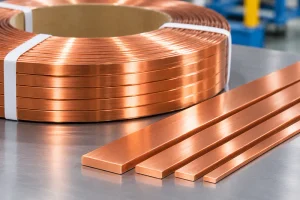
Rectangular wire can be arranged efficiently in many transformer windings. Its flat surfaces also support controlled wrapping, provided width, thickness, and corner geometry remain consistent.
The finished wire combines a copper core with a specified paper insulation build. It is not a complete transformer winding, and the paper grade alone does not establish the thermal classification or dielectric strength of the assembled transformer.
2. Why Use Nomex in Dry-Type Transformers?
Unlike oil-immersed transformers, dry-type designs rely on solid insulation and specified cooling arrangements. Some use vacuum-pressure impregnation (VPI); others use cast-resin or different winding constructions. The appropriate insulation depends on the design.
Nomex electrical papers are valued for their thermal endurance and electrical insulating properties. They may be specified when a winding needs paper-based turn insulation compatible with its intended temperatures and processing methods.
However, Nomex wrapping does not automatically make a conductor suitable for every dry-type transformer. Paper type, thickness, varnish or resin compatibility, winding clearances, and the verified thermal rating of the entire insulation system must be considered.
3. Copper Grade, Dimensions, and Edge Radius
Common electrical copper grades include C11000 (Cu-ETP) and oxygen-free C10200 (Cu-OF). Material grade and temper should be selected according to conductivity, forming behavior, winding requirements, and the customer’s specifications.
A useful bare-conductor specification defines:
- Width, thickness, and cross-sectional area
- Dimensional tolerances and corner radius
- Surface finish, burr limits, and cleanliness
- Copper grade, temper, and conductivity requirements
Corner geometry is particularly important. Sharp edges or burrs can tear insulation during wrapping or winding. Conversely, changing the corner radius affects copper cross-sectional area and finished conductor geometry.
Always distinguish the bare copper dimensions from the final dimensions after paper insulation. Actual insulation buildup depends on paper thickness, layer arrangement, and overlap.
4. Nomex Paper Wrapping: Critical Process Controls
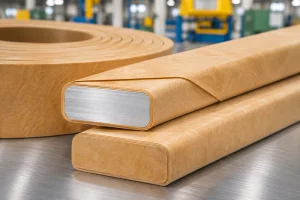
The wrapping specification should identify the approved Nomex paper type, nominal thickness, number of layers, wrapping pitch, overlap, and permitted overall dimensions. These parameters influence both electrical separation and winding-space utilization.
Wrapping tension must remain stable. Low tension can produce loose layers and wrinkles, while excessive tension may damage the paper, especially around corners. Guide alignment and consistent conductor dimensions also help maintain uniform coverage.
Inspect for exposed copper, folds, uneven overlaps, and localized thickness buildup. A neat-looking wrap is not sufficient evidence of electrical compliance.
Where VPI varnish or resin is involved, verify material compatibility and the required processing conditions. Not all insulation-paper constructions behave identically during impregnation or curing.
5. Manufacturing Process: From Copper to Insulated Wire
Step 1: Verify Raw Material
Confirm copper grade, temper, incoming dimensions, conductivity, and surface condition before production.
Step 2: Draw and/or Roll the Conductor
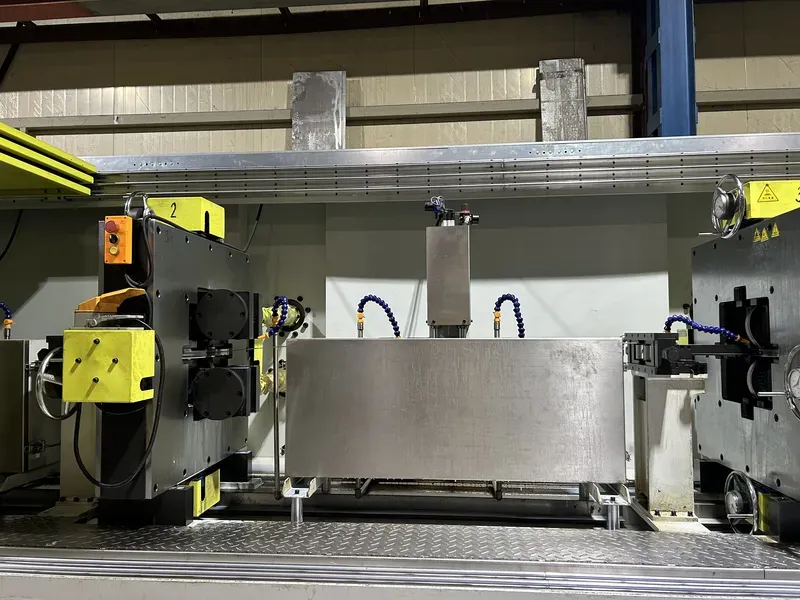
Use suitable drawing and precision rolling equipment to form the required rectangular cross-section. Control roll alignment, reduction schedule, width, thickness, and corner radius. Consistent processing matters more than maximum rated speed.
Step 3: Clean and Inspect
Check for burrs, scratches, oil residue, particles, and dimensional deviations. Surface preparation must meet the subsequent insulation process requirements.
Step 4: Apply Nomex Paper
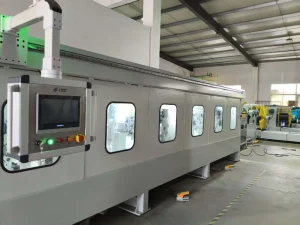
Use dedicated wrapping equipment to apply the specified paper while monitoring tension, overlap, layer positioning, and finished insulation thickness.
Step 5: Take Up and Protect
Wind onto suitable reels without excessive bending, crushing, abrasion, or damage to the paper. Follow approved handling and storage procedures.
Step 6: Manufacture and Test the Winding
The transformer manufacturer completes winding, assembly, and any specified drying, impregnation, curing, and electrical tests. The sequence varies with the transformer design.
For related upstream equipment and engineering guidance, see our precision flat wire rolling mill, guide to preparing copper flat wire for insulation, and copper versus aluminum flat wire rolling comparison.
6. Quality Control and Troubleshooting
Quality control must cover both the bare conductor and the paper-insulated product.
| Inspection item | Main checks | Purpose |
|---|---|---|
| Copper material | Grade, temper, conductivity, traceability | Stable electrical properties |
| Bare dimensions | Width, thickness, corner radius | Predictable winding geometry |
| Surface condition | Burrs, scratches, cleanliness | Prevent paper damage |
| Paper insulation | Type, layers, overlap, coverage | Consistent turn-to-turn insulation |
| Finished dimensions | Overall width, thickness, local buildup | Fit within winding space |
| Handling | Reel condition, abrasion, bending | Protect insulation integrity |
Common Problems and Corrective Actions
| Problem | Possible cause | Recommended check |
|---|---|---|
| Paper tears at corners | Sharp edges or burrs | Inspect radius and improve edge finishing |
| Wrinkles or loose layers | Unstable wrapping tension | Adjust tension and guide alignment |
| Uneven finished dimensions | Variable bare wire or overlap | Check rolling stability and wrapping setup |
| Marks after take-up | Excessive contact pressure | Inspect reel path and contact surfaces |
Electrical validation may include dielectric withstand and, where specified, partial-discharge testing of the transformer. These are not replaced by visual inspection of the insulated conductor.
7. How to Specify the Right Conductor
An effective inquiry should state the copper grade and temper, incoming dimensions, target bare width and thickness, corner radius, tolerances, and production capacity.
Also specify the Nomex paper type, insulation thickness and layers, wrapping pattern, final insulated dimensions, reel requirements, and relevant electrical and thermal criteria. A cross-sectional drawing helps avoid ambiguity.
Identify whether the dry-type transformer uses VPI, resin encapsulation, or another validated construction. This distinguishes upstream wire-forming needs from dedicated insulation and transformer-manufacturing equipment.
Frequently Asked Questions
Is Nomex the same as ordinary kraft paper?
No. Nomex is aramid-based, whereas conventional kraft paper is cellulose-based. Their suitability depends on the approved insulation system.
Does Nomex automatically make a transformer Class 220?
No. Thermal classification depends on the verified insulation system and transformer design, not one material alone.
Can a flat wire rolling mill apply Nomex insulation?
No. A rolling mill forms the rectangular copper conductor. Dedicated wrapping equipment applies the paper, and transformer production requires additional operations.
Conclusion
Nomex insulated rectangular copper wire can support demanding dry-type transformer designs when copper geometry, edge quality, paper wrapping, and winding construction are engineered together. Accurate forming and disciplined inspection are essential before insulation is applied.
Sky Bluer Environmental Technology Co., Ltd. (CRM) manufactures precision rolling mills and customized equipment for forming rectangular copper and other metal wires. Share your material grade, incoming dimensions, target width and thickness, tolerances, and production capacity to discuss an appropriate upstream rectangular-wire forming solution.