Introduction
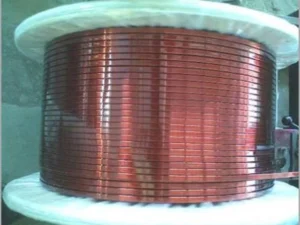
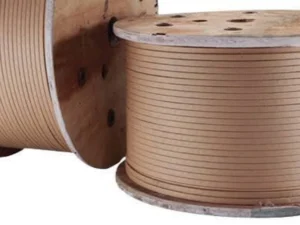
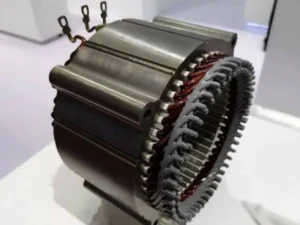
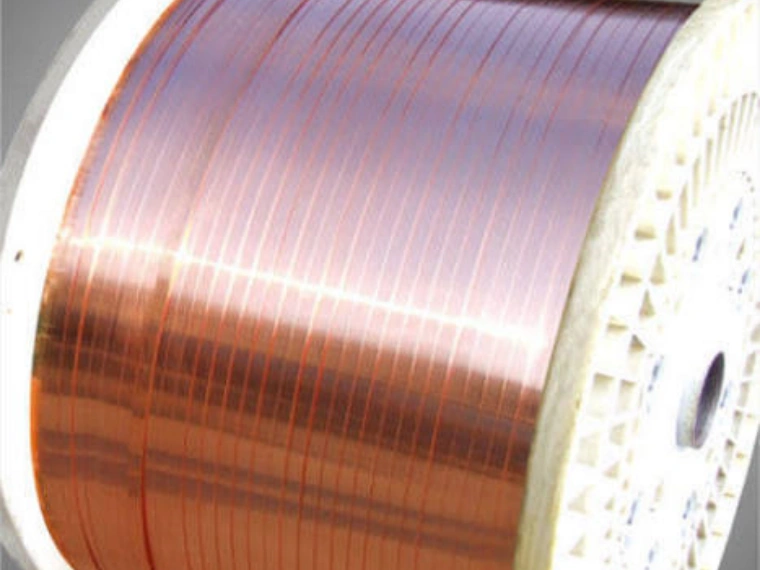
Bare rectangular copper wire is a precision copper conductor with a rectangular cross-section and no enamel, paper, mica, or other insulation applied to its surface. It is widely used as the conductive foundation for transformers, motors, generators, CTC conductors, and other electrical equipment.
Unlike conventional round copper wire, rectangular copper wire is designed to provide better space utilization and more controlled conductor geometry. For this reason, its manufacturing process requires accurate control of width, thickness, corner radius, surface quality, straightness, and dimensional stability.
This article focuses specifically on bare rectangular copper wire itself, including its main types, technical parameters, manufacturing process, and quality requirements.
What Is Bare Rectangular Copper Wire?
Bare rectangular copper wire is generally manufactured by transforming copper rod or round copper wire into a rectangular cross-section through drawing and precision rolling.
The final dimensions depend on the electrical application, winding structure, insulation system, and required current-carrying capacity.
Typical technical parameters include:
| Parameter | Typical Range |
| Material | Cu-ETP / Oxygen-Free Copper |
| Input diameter | 1–10 mm |
| Finished width | 1–30 mm |
| Finished thickness | 0.3–10 mm |
| Width tolerance | ±0.005–0.03 mm |
| Thickness tolerance | ±0.003–0.02 mm |
| Corner radius | Application dependent |
| Surface | Smooth and defect-free |
| Cross-section | Rectangular |
| Electrical conductivity | High conductivity copper |
These ranges are engineering references rather than universal standards. Actual specifications should be determined according to the customer’s product drawing and applicable standards.
Main Types of Bare Rectangular Copper Wire
Bare rectangular copper wire can be classified according to copper material, mechanical condition, dimensions, and application requirements.
Copper Material
The most common materials are high-conductivity copper grades.
| Material | Main Characteristics | Typical Application |
| Cu-ETP | High conductivity, good workability | General electrical conductors |
| Oxygen-free copper | Low oxygen content, high conductivity | High-performance conductors |
| High-conductivity copper | Excellent electrical performance | Transformer and motor conductors |
| Copper alloy | Higher mechanical strength | Special applications |
For most electrical applications, the selection should balance electrical conductivity, formability, mechanical properties, and processing stability.
Mechanical Condition
Copper can also be supplied in different mechanical conditions.
| Condition | Formability | Typical Application |
| Soft / Annealed | Excellent | Winding and forming |
| Semi-hard | Moderate | Dimensional stability applications |
| Hard-drawn | Lower | Specialized conductors |
For conductors that will undergo significant winding, bending, or forming, soft or annealed copper is often preferred.
Key Dimensions of Rectangular Copper Wire
A high-quality rectangular conductor cannot be specified only by its nominal width and thickness.
The complete geometry may include:
- Width
- Thickness
- Corner radius
- Width-to-thickness ratio
- Edge condition
- Straightness
- Cross-sectional symmetry
For example, a precision product specification could be:
| Parameter | Example |
| Width | 8.00 mm |
| Thickness | 2.00 mm |
| Width tolerance | ±0.010 mm |
| Thickness tolerance | ±0.005 mm |
| Corner radius | R0.20 mm |
| Cross-section | Rectangular |
This is significantly more useful for production engineering than simply specifying “8 × 2 mm copper wire.”
Why Dimensional Accuracy Is Important
Bare rectangular copper wire is often an intermediate product that will later be enameled, paper covered, transposed, or wound.
Small dimensional deviations can accumulate across multiple layers or strands.
For example:
| Thickness Deviation | 500 Conductors | Total Accumulated Difference |
| 0.001 mm | 500 | 0.50 mm |
| 0.003 mm | 500 | 1.50 mm |
| 0.005 mm | 500 | 2.50 mm |
| 0.010 mm | 500 | 5.00 mm |
Therefore, tight thickness and width control can be particularly important for high-density winding systems.
For transformer conductor production, see our Precision Flat Wire Rolling Mills for Transformer Copper and Aluminum Conductors.
Bare Rectangular Copper Wire Manufacturing Process
A typical production route is:
Copper Rod / Round Wire → Drawing → Precision Rolling → Sizing → Online Measurement → Straightening → Take-Up
Each stage has a specific function.
Drawing
Drawing reduces the incoming diameter and improves dimensional consistency before the material enters the rolling section.
Precision Rolling
Rolling transforms the circular cross-section into the required rectangular geometry.
Instead of achieving the complete deformation in one operation, multi-pass rolling can gradually control width and thickness.
| Rolling Stage | Main Function |
| Initial pass | Begin cross-section transformation |
| Intermediate passes | Develop width and thickness |
| Precision passes | Approach target dimensions |
| Final sizing | Stabilize final geometry |
| Online inspection | Detect dimensional deviation |
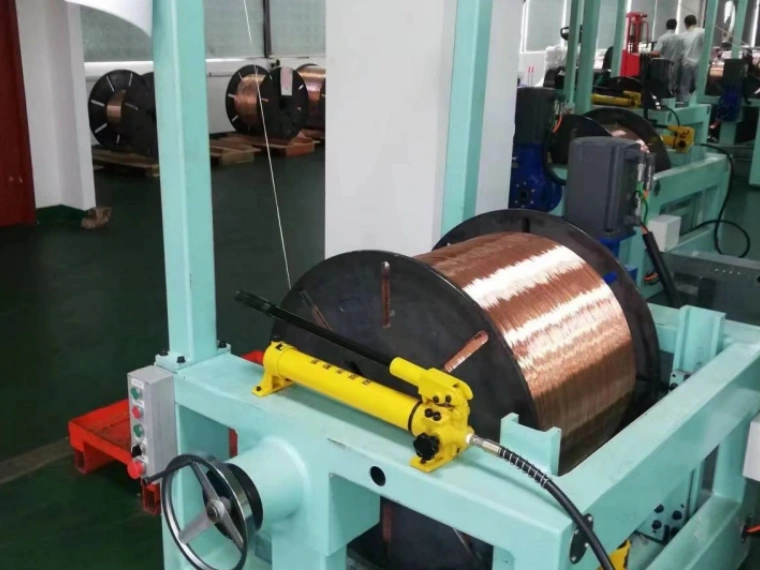
For demanding rectangular copper wire applications, precision rolling systems can be configured according to the required dimensions and tolerance.
Multi-Pass Rolling and Dimensional Control
The rolling pass schedule is one of the most important elements in precision rectangular wire production.
An excessive reduction in a single pass can cause instability in width expansion, edge formation, surface quality, and material deformation.
A simplified example is:
| Pass | Width | Thickness | Purpose |
| Entry | 3.00 mm | 3.00 mm | Initial material |
| Pass 1 | 3.50 mm | 2.60 mm | Initial flattening |
| Pass 2 | 4.20 mm | 2.25 mm | Width development |
| Pass 3 | 4.80 mm | 2.05 mm | Geometry stabilization |
| Pass 4 | 5.00 mm | 2.00 mm | Final sizing |
This is only an illustrative pass schedule. Actual reductions must be calculated according to copper grade, input size, finished dimensions, rolling force, roll diameter, speed, friction, and required tolerance.
For more information about precision flat wire equipment, see Precision Flat Wire Rolling Mill for Transformers.
Corner Radius and Edge Quality
Corner geometry is one of the characteristics that differentiates precision rectangular copper wire from basic flattened wire.
Important edge defects include:
- Sharp corners
- Uneven corner radius
- Burrs
- Edge cracks
- Rolled-over edges
- Surface damage
These defects can become particularly important when the conductor subsequently receives insulation.
| Edge Condition | Potential Problem |
| Excessively sharp edge | Higher insulation stress |
| Uneven radius | Inconsistent insulation geometry |
| Burr | Potential insulation damage |
| Edge crack | Reduced conductor reliability |
| Rolled edge | Dimensional instability |
| Surface scratch | Reduced surface quality |
For enamel-coated applications, the bare copper surface provides the substrate for the insulation layer. More information is available in What is Enamelled Copper Flat Wire? Applications and Benefits.
Surface Quality Requirements
Bare copper is relatively soft, so the production line must minimize mechanical damage during rolling and handling.
Typical surface defects include:
| Surface Defect | Possible Cause |
| Longitudinal scratches | Damaged guides or rolls |
| Roll marks | Poor roll surface |
| Pitting | Material or process contamination |
| Oxidation | Improper handling or storage |
| Embedded particles | Insufficient cleaning |
| Cracks | Excessive deformation |
Roll surface condition, alignment, lubrication, cooling, guide design, and wire tension can all affect the finished surface.
For electrical conductors, surface quality is not merely an appearance issue. It can affect subsequent insulation and winding processes.
Online Measurement and Automatic Control
Modern precision rolling lines can integrate online laser or optical measurement systems.
Typical parameters include:
| Parameter | Measurement Method |
| Width | Laser / optical gauge |
| Thickness | Laser / optical gauge |
| Position | Optical sensor |
| Line speed | Encoder |
| Tension | Tension sensor |
| Roll position | Position feedback |
The control principle is:
Online Measurement → Deviation Detection → PLC Processing → Roll Adjustment → Corrected Product
This closed-loop approach can significantly improve dimensional consistency during continuous production.
For high-precision products, online measurement is especially valuable because it can detect dimensional drift before a large quantity of nonconforming material is produced.
Typical Precision Requirements
Different applications require different dimensional accuracy.
| Product Level | Width Tolerance | Thickness Tolerance |
| General rectangular copper wire | ±0.03–0.05 mm | ±0.02–0.03 mm |
| Industrial winding conductor | ±0.02–0.03 mm | ±0.01–0.02 mm |
| Precision electrical conductor | ±0.01–0.02 mm | ±0.005–0.01 mm |
| High-precision conductor | ±0.005–0.01 mm | ±0.003–0.005 mm |
These figures are engineering reference ranges, not universal specifications.
The appropriate tolerance should be confirmed based on the conductor dimensions, copper grade, insulation process, winding design, and applicable product standard.
Applications of Bare Rectangular Copper Wire
Bare rectangular copper wire is used as the starting conductor for several different products.
| Application | Typical Subsequent Process |
| Transformer conductor | Paper covering / insulation |
| Motor conductor | Enameling / forming |
| Generator conductor | Insulation / winding |
| CTC conductor | Transposition + insulation |
| Specialized conductor | Forming / insulation |
The downstream application determines many of the upstream conductor requirements.
For example, CTC production has additional transposition and insulation requirements. Our CTC Production Line provides more information about this specialized manufacturing process.
Likewise, rectangular copper conductors for EV motor hairpin systems require additional forming and insulation processes, which are covered in our EV Motor Hairpin Wire Production Lines page.
Bare Rectangular Copper Wire vs. Insulated Flat Wire
It is important to distinguish bare rectangular copper wire from the finished insulated conductor.
| Feature | Bare Rectangular Copper Wire | Enameled / Insulated Wire |
| Copper surface | Exposed | Covered |
| Main manufacturing process | Drawing + rolling | Rolling + insulation |
| Main dimensional concern | Width / thickness / radius | Conductor + insulation dimensions |
| Surface requirement | Clean and defect-free | Suitable for insulation adhesion |
| Final application | Intermediate conductor | Finished winding conductor |
This distinction also helps prevent confusion between the manufacturing technology of the copper conductor and the downstream insulation technology.
For a comparison of insulated conductor structures, see Flat vs Round Enamelled Wire: Key Differences, Uses, and Production Equipment.
How to Specify a Bare Rectangular Copper Wire Production Line
Before selecting equipment, the customer should provide a complete technical specification.
| Item | Required Information |
| Copper grade | Cu-ETP / OF Copper / Other |
| Input diameter | mm |
| Finished width | mm |
| Finished thickness | mm |
| Width tolerance | ± mm |
| Thickness tolerance | ± mm |
| Corner radius | R mm |
| Production speed | m/min |
| Coil weight | kg |
| Pay-off | Spool / Coil |
| Take-up | Spool / Coil |
| Annealing | Required / Not required |
| Online gauge | Required / Optional |
| Automation | Manual / Automatic |
Based on these parameters, the machine configuration can be determined more accurately, including rolling mill type, roll diameter, pass schedule, tension system, measurement equipment, and take-up system.
Precision Rolling for Bare Rectangular Copper Wire
For high-quality bare rectangular copper wire, the rolling machine should provide stable deformation and accurate dimensional control throughout the production process.
A complete precision rolling system may include:
- Multi-pass rolling mill
- Precision roll-gap adjustment
- Four-roll forming technology
- Entry and exit tension control
- Online laser measurement
- PLC automatic control
- Automatic dimensional correction
- Precision take-up system
For CTC, busbar, and other rectangular conductor applications, rolling technology can be further customized according to the product geometry. See Precision Rolling Technology for CTC, Busbar, and Rectangular Wire Applications.
For combined drawing and rolling requirements, see Magnet Wire Rolling and Drawing Solutions for High Efficiency Electrical Conductors.
Conclusion
Bare rectangular copper wire is an important precision conductor used as the foundation for transformer, motor, generator, CTC, and other electrical conductor systems.
Its quality depends on more than nominal width and thickness. Copper grade, mechanical condition, dimensional tolerance, corner radius, edge quality, surface condition, straightness, and production stability must all be controlled.
For demanding applications, precision multi-pass rolling combined with online measurement and automatic control can provide significantly better dimensional consistency than conventional flattening processes.
The production line should ultimately be designed around the customer’s complete requirements, from input copper wire to final rectangular dimensions and downstream insulation or winding process.
Sky Bluer Environmental Technology Co., Ltd. provides customized precision rolling mills, wire drawing machines, and complete flat wire production solutions for copper and other conductive materials.
If you are looking for a bare rectangular copper wire production line, send us your input diameter, copper grade, finished width, thickness, tolerance, corner radius, production speed, and coil requirements. Our engineering team can recommend a suitable production process and equipment configuration.