From Engineering Experience to Reliable Production Solutions
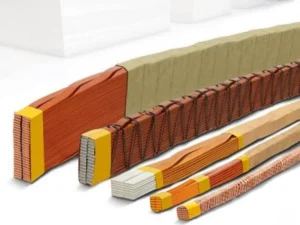
I have worked in the precision wire processing and rolling industry for more than 25 years, helping manufacturers develop production lines for copper, aluminum, and specialty alloy conductors. Throughout my career, I have seen how precision rolling technology has transformed the production of CTC conductors, busbars, and rectangular conductors, enabling manufacturers to achieve tighter tolerances, higher productivity, and more consistent product quality.
In this guide, I share practical knowledge gained from years of engineering experience. Here, I guide you through the complete manufacturing process of CTC conductors, busbars, and rectangular conductors, covering the key production technologies, equipment selection, and quality control practices that ensure reliable, high-performance electrical conductors.
Application Requirements for Heavy Electrical Conductors
Different electrical applications impose different requirements on conductor geometry and material performance.
Common Material Systems
The most frequently used conductor materials include:
- OFHC Copper (C10200)
- ETP Copper (C11000)
- Electrical Grade Aluminum 1350
- Electrical Grade Aluminum 1370
- Laminated Copper-Aluminum Composite Conductors
These materials are selected based on conductivity requirements, weight considerations, thermal performance, and manufacturing cost.
Typical Product Dimensions
| Conductor Type | Thickness | Width | Typical Application |
| CTC Strip | 0.8 – 3.5 mm | 5 – 25 mm | Power Transformers |
| Busbar | 2 – 12 mm | 10 – 120 mm | Power Distribution |
| Rectangular Conductor | 0.5 – 6 mm | 3 – 40 mm | Industrial Equipment |
Critical Performance Requirements
For high-power electrical systems, manufacturers typically focus on:
- Low electrical resistance variation along the conductor length
- Stable conductor geometry during thermal expansion
- High mechanical rigidity under electromagnetic loading
- Uniform current distribution
- Long-term dimensional stability during installation and operation
Why Precision Rolling Matters in Heavy Conductor Production
As conductor size increases, manufacturing complexity rises significantly.
For example, a deviation of only a few microns in a transformer CTC strand can accumulate across dozens of transposed conductors, creating unequal current paths inside the winding. Similarly, flatness errors in large busbars can complicate assembly and increase contact resistance at connection points.
Precision rolling helps manufacturers achieve:
- Consistent thickness across the entire conductor width
- Improved edge quality
- Reduced residual stress
- Better straightness and flatness
- Stable electrical performance throughout the finished product
These factors directly affect transformer efficiency, power distribution reliability, and equipment lifespan.
Manufacturing Complexity of CTC and Busbar Rolling
Compared with standard wire rolling, heavy conductor production introduces several unique challenges.
Multi-Strand Deformation Effects
In CTC manufacturing, multiple conductors must maintain nearly identical mechanical properties. Uneven deformation can create:
- Strand elongation differences
- Transposition instability
- Assembly difficulties
- Uneven electromagnetic loading
Wide Section Rolling Challenges
As conductor width increases, controlling deformation becomes increasingly difficult.
Common issues include:
- Roll bending
- Crown formation
- Edge thinning
- Center buckling
- Width fluctuation
Without proper compensation systems, these defects can significantly reduce product quality.
Thermal Expansion Considerations
Copper and aluminum conductors experience continuous thermal expansion and contraction during service.
Residual stresses generated during rolling can later result in:
- Warping
- Twisting
- Distortion during installation
- Reduced mechanical stability
Rolling Process Engineering for Heavy Conductors
Modern production lines utilize multiple rolling and conditioning stages to achieve optimal conductor quality.
Typical Manufacturing Flow
- Heavy-gauge rod or slab preparation
- Multi-stage breakdown rolling
- Intermediate stress-relief annealing
- Precision width calibration rolling
- Edge conditioning and deburring
- Surface cleaning
- Final flattening and straightening
- Inspection and packaging
Core Engineering Objective
The primary goal throughout the process is to maintain:
Uniform strain distribution across the entire conductor cross-section.
Achieving this prevents localized stress concentration and ensures stable mechanical and electrical performance.
Technical Challenges in Heavy Conductor Rolling
Roll Deflection Under High Load
Large conductors require substantial rolling forces. Excessive load can cause roller deflection, leading to thickness variation across the strip width.
Thickness Non-Uniformity
Wide conductor sections often develop:
- Center thickening
- Edge thinning
- Uneven reduction ratios
These defects can negatively impact current distribution.
Residual Stress Formation
Improper rolling schedules may leave internal stress within the conductor, causing:
- Bowing
- Coil instability
- Shape distortion after cutting
Surface Quality Issues
Heavy-gauge copper and aluminum conductors must maintain clean surfaces to maximize conductivity and improve downstream joining processes.
Common defects include:
- Oxidation
- Roll marks
- Surface scratches
- Edge burrs
Precision Rolling Mill Solutions
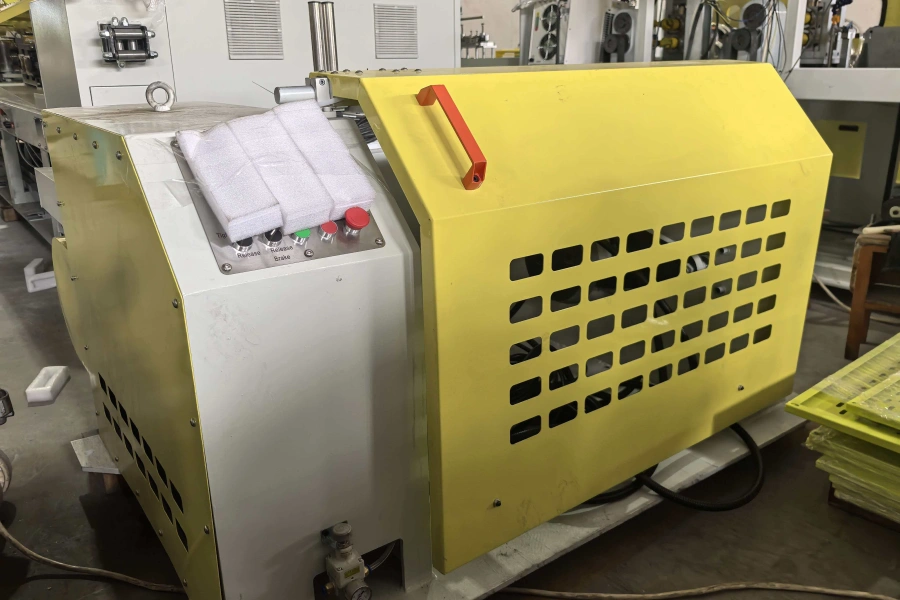
Precision rolling mill systems integrate multiple advanced engineering technologies to overcome the challenges of heavy-gauge CTC, busbar, and rectangular conductor production. High-rigidity rolling stand designs are used to minimize elastic deformation under extreme rolling loads, ensuring stable dimensional accuracy even during continuous high-force operation. In combination with crown-controlled roll technology, the system actively compensates for natural roll bending and pressure distribution imbalance, allowing consistent thickness control across wide conductor surfaces. At the same time, intelligent hydraulic gap adjustment systems continuously optimize roll spacing based on real-time rolling force variations, material behavior changes, and thermal expansion effects, ensuring stable process conditions throughout production. To further enhance accuracy and quality consistency, modern production lines are equipped with online measurement systems such as laser thickness gauges, flatness monitoring devices, width inspection sensors, and surface defect detection cameras. These technologies work together in a closed-loop control environment, enabling real-time feedback and correction to maintain strict tolerances, improve surface quality, and ensure long-term production stability.
Typical Production Targets
| Performance Indicator | Target Value |
| Thickness Tolerance | ±0.01 mm |
| Flatness Deviation | ≤ 5–10 μm |
| Edge Uniformity | < 2% |
| Surface Defect Rate | < 0.3% |
| Width Accuracy | ±0.02 mm |
Production Advantages
Precision rolling technology provides significant benefits for manufacturers and end users alike.
Key advantages include:
- Improved current distribution uniformity
- Reduced electrical losses
- Enhanced transformer efficiency
- Better thermal stability during operation
- Higher mechanical rigidity of busbar systems
- Reduced vibration caused by electromagnetic forces
- Improved assembly accuracy and installation efficiency
- Longer service life of electrical equipment
These benefits contribute directly to higher system reliability and lower operating costs.
Complete Rolling Solutions for CTC Conductors
As demand for higher-capacity transformers, renewable energy systems, and modern power grids continues to grow, manufacturers require rolling equipment that delivers exceptional precision, stability, and production efficiency. High-performance rolling technology has become the foundation for manufacturing CTC conductors, busbars, and rectangular electrical conductors that meet increasingly stringent dimensional and electrical performance requirements.
With more than 25 years of engineering experience, Sky Bluer specializes in the design and manufacture of metal strip rolling mills, rectangular wire rolling mills, and complete production lines for CTC conductors, busbars, and other precision electrical conductors. Our turnkey solutions combine precision rolling, intelligent automation, and reliable process control to help manufacturers achieve outstanding dimensional accuracy, stable production, and consistent product quality.
If you are planning a new CTC conductor or busbar production project, or looking for a reliable metal strip and flat wire rolling mill manufacturer, contact Sky Bluer today. Our engineering team is ready to provide a customized solution tailored to your production requirements.