Introduction
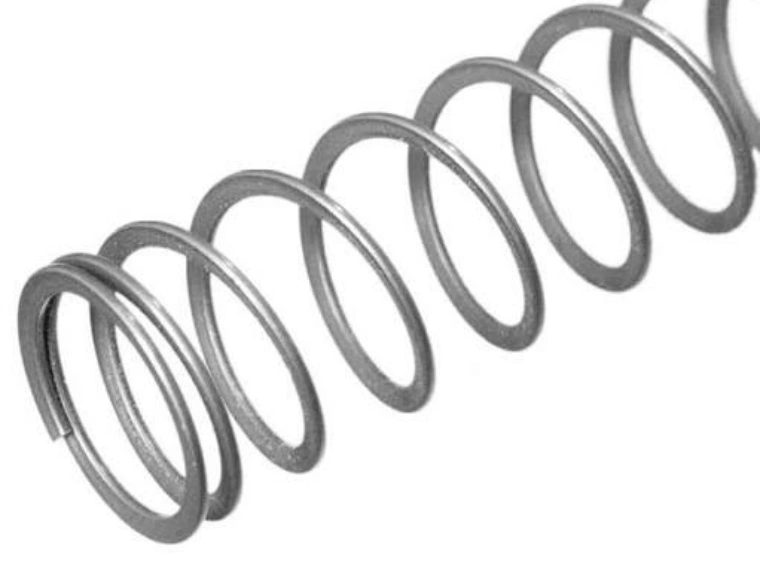
Hardenable spring steel flat wire is widely used in automotive springs, industrial spring components, mechanical parts, and precision assemblies where high strength and fatigue resistance are required.
Materials such as SAE1095, SAE9254, 60Si2Mn, 50CrV4, and SUP10 provide excellent mechanical performance after heat treatment. However, these high-strength materials also create higher challenges during flat wire manufacturing.
During rolling, small variations in thickness, width, edge condition, or surface quality may influence the final spring performance.
Therefore, quality control is not only a final inspection step but an integrated part of the entire rolling process.
A modern spring steel flat wire production line combines:
- Precision rolling technology
- Online measurement systems
- Process monitoring
- Automatic adjustment
- Final quality inspection
Through advanced quality control methods, manufacturers can achieve stable dimensions, reduced material waste, and consistent product performance.
Sky Bluer Environmental Technology Co., Ltd. (CRM) provides precision rolling solutions with integrated measurement and control systems for high-performance spring steel flat wire production.
Why Quality Control Is Critical for Spring Steel Flat Wire
Spring components usually operate under repeated loading conditions. Even small defects can become potential failure points during long-term service.
The main quality requirements include:
| Quality Factor | Influence on Final Product |
| Thickness accuracy | Determines spring force and assembly performance |
| Width accuracy | Affects product consistency |
| Surface quality | Influences fatigue life |
| Edge condition | Prevents crack initiation |
| Straightness | Improves downstream processing |
For high-strength spring steels, maintaining stable quality throughout continuous production is more important than simply achieving a target dimension once.
Dimensional Accuracy Control During Rolling
Dimensional accuracy is one of the most important factors in flat wire production.
During rolling, manufacturers need to control:
- Thickness
- Width
- Profile shape
- Straightness
Typical precision requirements:
| Parameter | Typical Requirement |
| Thickness tolerance | ±0.005–0.02 mm |
| Width tolerance | ±0.01–0.05 mm |
| Straightness | ≤3/1000 mm |
| Surface roughness | Ra 0.4–0.8 μm |
To achieve these requirements, precision rolling systems use:
- High rigidity rolling structures
- Accurate roll adjustment
- Stable servo drives
- Controlled reduction schedules
Online Laser Measurement System
Traditional manual inspection can only check samples after production. For precision spring steel flat wire, this method may not provide sufficient control.
Online laser measurement systems allow continuous monitoring during production.
The system can measure:
- Wire thickness
- Wire width
- Profile dimensions
- Product deviation
Main advantages include:
Real-Time Quality Monitoring
The system detects dimensional changes immediately during rolling, allowing operators to respond quickly.
Closed-Loop Process Control
Measurement data can be connected with the control system to automatically adjust:
- Roll gap
- Rolling pressure
- Production parameters
Reduced Material Waste
Early detection of deviation helps reduce:
- Scrap material
- Production downtime
- Manual adjustment time
Surface Quality Control
Surface quality is especially important for spring steel because fatigue cracks often begin from surface defects.
Common surface problems include:
| Defect | Possible Cause |
| Scratches | Poor roll condition |
| Edge cracks | Excessive deformation |
| Uneven surface | Unstable rolling pressure |
| Oxidation marks | Improper surface handling |
To improve surface quality, manufacturers should control:
- Roll surface condition
- Lubrication system
- Rolling speed
- Material cleanliness
Precision rolling equipment with optimized tooling helps produce smoother flat wire surfaces suitable for demanding spring applications.
Edge Quality and Profile Control
The edge condition of flat wire directly affects spring performance.
Poor edge quality may cause:
- Stress concentration
- Crack initiation
- Reduced fatigue life
Four-roll Turks Head rolling systems are often used for precision rectangular profiles because they provide deformation control from multiple directions.
Advantages include:
- Better edge symmetry
- Improved rectangular shape
- Higher profile accuracy
-1.webp)
Quality Control Process in Spring Steel Flat Wire Production
A complete quality management process usually includes:
| Production Stage | Quality Control Method |
| Raw material inspection | Check material grade and condition |
| Pay-off process | Monitor feeding stability |
| Straightening | Control wire alignment |
| Rolling process | Online dimensional measurement |
| Surface inspection | Check defects and finish |
| Final winding | Verify coil quality |
This integrated approach ensures that every production stage contributes to final product reliability.
CRM Precision Rolling Quality Control Solution
Sky Bluer Environmental Technology Co., Ltd. (CRM) develops customized precision rolling systems for spring steel flat wire manufacturers.
CRM solutions include:
| Equipment/System | Function |
| Precision Rolling Mill | Accurate wire forming |
| Four-roll Turks Head System | Profile control |
| Rolling Cassette | Stable roll adjustment |
| Laser Measuring System | Real-time inspection |
| Closed-loop Control | Automatic process optimization |
By combining precision mechanical design and intelligent control technology, CRM helps manufacturers improve production stability and achieve consistent flat wire quality.
FAQ
1. Why is quality control important in spring steel flat wire production?
Because small dimensional or surface defects may reduce fatigue life and affect final spring performance.
2. What parameters should be controlled during flat wire rolling?
Main parameters include thickness, width, straightness, surface quality, and edge condition.
3. How does laser measurement improve rolling quality?
Laser measurement provides real-time dimensional monitoring and helps maintain stable production accuracy.
4. What tolerance can precision rolling achieve?
Depending on material and equipment configuration, precision rolling can achieve thickness tolerances around ±0.005–0.02 mm.
5. Which equipment improves profile accuracy?
Four-roll Turks Head rolling systems are commonly used for high-precision rectangular and flat wire profiles.
6. Does CRM provide online inspection solutions?
Yes. CRM integrates laser measurement and closed-loop control systems into customized flat wire production solutions.
Conclusion
Quality control is the foundation of reliable spring steel flat wire manufacturing.
For hardenable spring steel materials, controlling dimensions, surface quality, and profile accuracy throughout the rolling process is essential to ensure long service life and stable spring performance.
Modern precision rolling systems with online measurement and automatic control provide manufacturers with higher efficiency, lower waste, and improved product consistency.
With customized precision rolling solutions, CRM supports global customers in producing high-quality spring steel flat wire for automotive, industrial, and precision applications.