Introduction
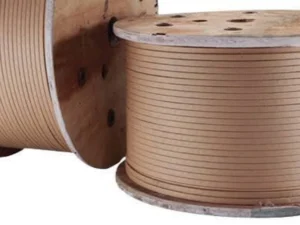
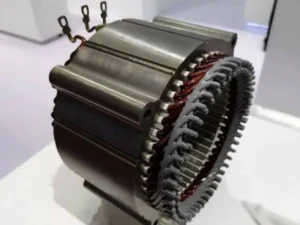
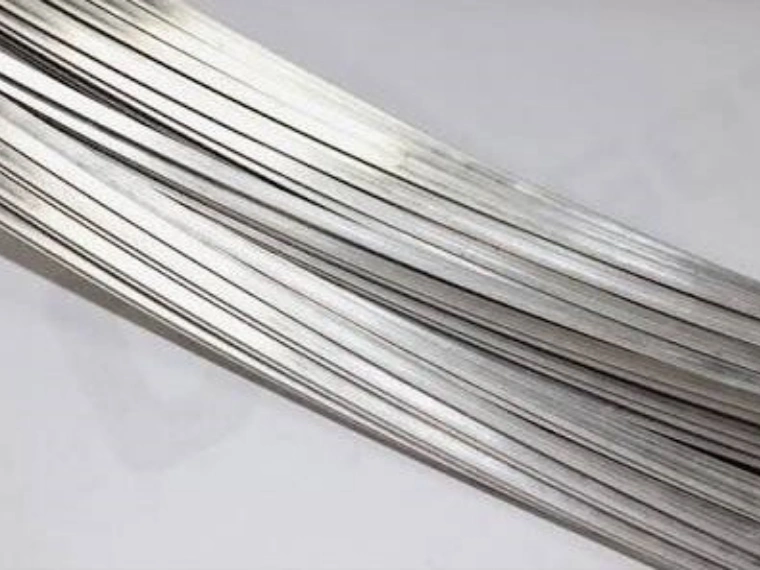
Oil tempered spring steel wire is a core material for automotive springs, valve springs, suspension parts and industrial spring products, valued for its outstanding fatigue resistance and stable mechanical properties. Compared with ordinary steel wire, oil tempered flat wire features higher strength and hardness after special heat treatment, leading to greater deformation resistance during processing. For manufacturers processing round oil tempered wire into flat and rectangular profiles, the selection of rolling mills is pivotal, as equipment configuration directly determines product dimensional accuracy, surface quality, edge integrity, production efficiency and tool service life. A qualified precision rolling system must be matched with material grades, wire specifications, production capacity and tolerance standards. Sky Bluer Environmental Technology Co., Ltd. (CRM) delivers customized precision rolling solutions for oil tempered flat wire manufacturing, enabling manufacturers to achieve stable, high-quality and high-efficiency production.
Core Characteristics of Oil Tempered Spring Steel Wire
Oil tempered spring steel wire adopts specialized tempering heat treatment, boasting ultra-high tensile strength and excellent fatigue performance, which lays the foundation for high-performance spring manufacturing. Multiple mainstream material grades are widely used in production, with distinct characteristics and application scenarios, as shown in the table below.
| Material | Characteristics | Application |
| SAE9254 | High fatigue resistance | Automotive springs |
| 60Si2Mn | High elastic limit | Industrial springs |
| SUP10 | Good strength and toughness | Vehicle components |
| 50CrV4 | Excellent hardenability | High-performance springs |
Meanwhile, the unique physical properties of oil tempered wire bring strict requirements for rolling processing, and each property directly affects rolling quality and equipment selection:
| Property | Influence on Rolling |
| High strength | Requires rigid equipment structure to bear rolling pressure |
| High hardness | Requires wear-resistant rolls to avoid surface abrasion |
| Strong work hardening | Needs controlled rolling reduction to reduce material stress |
| Fatigue requirement | Requires superior surface quality control |
Due to its limited plastic deformation capacity, improper rolling parameters will easily cause edge cracking, uneven deformation and dimensional instability, making professional equipment and precise processing essential.
Key Criteria for Rolling Mill Selection
The selection of a suitable rolling mill for oil tempered flat wire production focuses on three core dimensions: material status, finished wire size and precision requirements, with clear matching standards for different production conditions.
Material Status
Oil tempered spring wire has far higher hardness than conventional annealed wire, leading to poor ductility and high deformation resistance. The rolling process must adopt refined processing parameters, including controlled reduction per pass, stable and constant rolling pressure, high-precision roll adjustment and a complete lubrication system. For products requiring large deformation, multi-pass rolling is mandatory to disperse stress concentration and prevent material damage.
Finished Wire Size & Matching Equipment
Different wire specifications and forming demands correspond to exclusive rolling mill configurations, ensuring production efficiency and product quality:
| Product Requirement | Recommended Equipment |
| Standard flat wire | Two-roll precision rolling mill |
| High precision rectangular wire | Four-roll Turks Head rolling mill |
| Multiple profile shapes | Universal rolling mill |
| Large reduction ratio processing | Multi-pass rolling system |
Accuracy Requirement
Spring products have extremely strict dimensional and surface precision standards. Professional precision rolling equipment can stably meet the following industrial tolerance indicators:
| Parameter | Accuracy Standard |
| Thickness tolerance | ±0.005–0.02 mm |
| Width tolerance | ±0.01–0.05 mm |
| Straightness | ≤3/1000 mm |
| Surface roughness | Ra 0.4–0.8 μm |
Overview of Mainstream Rolling Mill Systems
Three mainstream rolling mill systems are applied in oil tempered flat wire production, each with unique advantages and targeted application scenarios, adapting to different precision and production demands.
Two-Roll Precision Rolling Mill
It is the most conventional rolling equipment for standard flat wire production, with core advantages of simple structure, convenient operation and high continuous production efficiency. It is suitable for ordinary spring products with moderate precision requirements, achieving a perfect balance of production cost and operational stability.
Four-Roll Turks Head Rolling Mill
Optimized for high-precision processing scenarios, this equipment effectively improves wire width accuracy and rectangular profile regularity, reduces edge deformation and dimensional deviation. It is the preferred choice for high-performance products such as automotive spring wire and precision industrial flat wire.
Multi-Pass Rolling System
Designed for hard-to-deform high-hardness materials and large reduction ratio processing tasks, it adopts segmented gradual deformation technology. It can reduce forming stress, optimize material flow, improve surface finish and greatly extend tool service life, solving the core processing pain points of oil tempered wire.
Value of Rolling Cassette Technology
The rolling cassette is a core component that determines the final quality of flat wire products. It precisely controls roll positioning, rolling reduction accuracy, product geometry and surface contact state during processing. High-quality customized rolling cassettes not only support rapid parameter adjustment and stable continuous operation, but also reduce equipment maintenance downtime and ensure consistent dimensional accuracy of batch products. CRM designs exclusive rolling cassettes according to different steel grades and product specifications, realizing targeted matching of equipment and materials.
Intelligent Quality Control Auxiliary Systems
Modern high-standard flat wire production relies on intelligent auxiliary systems to stabilize product consistency. The online laser measurement system realizes real-time dynamic monitoring of wire thickness, width and profile accuracy, and cooperates with the closed-loop control system to automatically adjust rolling parameters, eliminating manual adjustment errors. The automatic winding system maintains constant tension in the production process, ensuring uniform coil forming and effective product protection. These intelligent configurations greatly reduce material waste and improve production stability and yield.
CRM Customized Rolling Solutions
CRM provides one-stop complete precision rolling solutions for oil tempered flat wire manufacturing, covering core equipment such as precision rolling mills, four-roll Turks Head systems, customized rolling cassettes and online measuring systems, as well as full-set production line services. The company conducts personalized project evaluation based on customer material grades, raw wire diameters, finished product sizes, precision tolerance standards and production capacity demands, and delivers targeted engineering design schemes to help manufacturers achieve stable production and consistent product quality.
-1.webp)
FAQ
1. Can oil tempered spring wire be rolled into flat wire?
Yes. Due to its high strength and hardness, it requires controlled deformation parameters and professional rolling equipment to avoid processing defects.
2. Which rolling mill suits automotive spring wire?
Four-roll Turks Head rolling mill is the optimal choice, with superior dimensional control and profile accuracy for high-end automotive spring products.
3. What is the advantage of multi-pass rolling for oil tempered wire?
It disperses forming stress effectively, preventing edge cracking and surface defects to improve product quality.
4. What precision tolerance can the rolling process achieve?
The precision rolling process can reach a thickness tolerance of ±0.005–0.02 mm according to different materials and equipment configurations.
5. What is the core function of a rolling cassette?
It accurately controls roll positioning and rolling deformation accuracy, directly determining the final flat wire quality.
6. Does CRM provide full production lines?
Yes. CRM provides fully customized rolling equipment, testing systems and complete production solutions based on customer demands.
Conclusion
Rolling mill selection is the key link to guarantee the qualified rate and stability of oil tempered flat wire products. Two-roll rolling mills are suitable for conventional standard flat wire production with cost and efficiency advantages, while four-roll Turks Head rolling systems and multi-pass rolling solutions are more suitable for high-precision, high-performance and complex-specification spring steel products. With professional customized rolling technology and complete equipment solutions, CRM empowers global manufacturers to produce high-reliability oil tempered flat wire for automotive and industrial spring fields.