Introduction: Why Material Selection Matters in Spring Steel Flat Wire Production
Spring steel is a critical material for components that require high strength, elasticity, and fatigue resistance. In industries such as automotive manufacturing, mechanical engineering, and precision equipment, spring performance depends not only on design but also on the quality and characteristics of the raw material.
When producing precision flat wire from spring steel, selecting the correct material grade is one of the most important steps.
Different standards, including SAE, DIN, EN, and JIS, define spring steel grades according to chemical composition, mechanical properties, and application requirements.
For manufacturers, understanding these differences helps determine:
- Suitable rolling process
- Required forming force
- Heat treatment conditions
- Final product performance
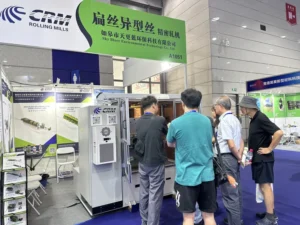
Sky Bluer Environmental Technology Co., Ltd. (CRM) provides customized precision rolling solutions for different spring steel grades, helping customers achieve stable flat wire production with accurate dimensions and excellent surface quality.
Common Spring Steel Standards Used in Flat Wire Manufacturing
Spring steel materials are usually classified according to international standards.
The most common systems include:
| Standard | Region | Typical Grades |
| SAE | United States | SAE1070, SAE1075, SAE1095, SAE9254 |
| DIN | Germany | 50CrV4, 55CrSi7 |
| EN | Europe | EN10270, 50CrV4 |
| JIS | Japan | SUP7, SUP10 |
Although different countries use different naming systems, many grades have similar chemical characteristics and performance requirements.
SAE Spring Steel Grades
SAE spring steel grades are widely used in North America and international markets.
SAE1070 / SAE1075
High carbon spring steels with good strength and wear resistance.
Typical characteristics:
- High carbon content
- Good elastic performance
- Suitable for general spring applications
Applications include:
- Industrial springs
- Clips
- Mechanical components
SAE1095
SAE1095 contains higher carbon content and provides excellent hardness after heat treatment.
Advantages:
- High strength
- Good wear resistance
- Excellent spring force retention
Common applications:
- Precision springs
- Flat spring components
- High-load applications
SAE9254
SAE9254 is a silicon alloy spring steel designed for high fatigue resistance.
Features:
- Excellent elasticity
- High tensile strength
- Good fatigue performance
Applications:
- Automotive suspension springs
- High-performance springs
DIN and EN Spring Steel Grades
European spring steel standards are commonly used in automotive and industrial applications.
50CrV4
50CrV4 is one of the most widely used alloy spring steels in Europe.
Main alloy elements:
| Element | Function |
| Carbon | Improves hardness and strength |
| Chromium | Improves hardenability |
| Vanadium | Improves toughness and grain structure |
Advantages:
- High fatigue resistance
- Good toughness
- Stable mechanical properties
Applications:
- Vehicle springs
- Heavy-duty spring components
- Industrial machinery
55CrSi7
This silicon chromium spring steel provides:
- High elastic limit
- Good impact resistance
- Excellent spring performance
It is often used where repeated loading and long service life are required.
JIS Spring Steel Grades
Japanese spring steel standards are commonly used in automotive and precision manufacturing industries.
SUP7
SUP7 is a silicon manganese spring steel with:
- Good elasticity
- High strength
- Good heat treatment response
SUP10
SUP10 is a chromium-vanadium spring steel widely used for demanding applications.
Characteristics:
- High fatigue resistance
- Excellent durability
- Stable performance under repeated loading
Applications:
- Automotive suspension systems
- Precision spring components
- Industrial springs
Comparison of Common Spring Steel Grades
Different grades provide different performance characteristics.
| Grade | Strength | Fatigue Resistance | Typical Application |
| SAE1075 | Medium-High | Good | General springs |
| SAE1095 | High | Good | Precision flat springs |
| SAE9254 | Very High | Excellent | Automotive springs |
| 60Si2Mn | High | Excellent | Industrial springs |
| 50CrV4 | Very High | Excellent | Heavy-duty applications |
| SUP10 | High | Excellent | Automotive components |
-1.webp)
Influence of Material Grade on Precision Rolling Process
Different spring steel grades have different deformation characteristics.
High-strength materials usually require:
Controlled Reduction
Large reduction in one pass may cause:
- Edge cracking
- Surface damage
- Internal stress
Therefore, manufacturers often use:
- Multi-pass rolling
- Optimized roll design
- Controlled rolling speed
- Suitable Rolling Equipment
Material selection also affects equipment configuration.
| Material Requirement | Recommended Solution |
| Standard carbon spring steel | Two-roll precision rolling mill |
| High-strength alloy spring steel | Four-roll Turks Head system |
| Large deformation requirement | Multi-pass rolling line |
| High precision product | Rolling + online measurement system |
Surface Quality Requirements for Spring Steel Flat Wire
Spring components often experience repeated loading cycles. Surface defects may reduce fatigue life.
Important quality factors include:
- Smooth surface finish
- Uniform edges
- Stable dimensions
- Low residual stress
Modern precision rolling systems use:
- Precision rolling cassettes
- Laser measuring systems
- Closed-loop control technology
to maintain consistent product quality.
CRM Precision Rolling Solutions for Different Spring Steel Grades
Sky Bluer Environmental Technology Co., Ltd. (CRM) designs precision rolling systems according to different spring steel materials and production requirements.
CRM solutions include:
| Equipment | Function |
| Precision Rolling Mill | Flat wire forming |
| Four-roll Turks Head System | High accuracy profile control |
| Rolling Cassette | Precision roll adjustment |
| Online Measuring System | Real-time quality monitoring |
| Complete Production Line | Integrated manufacturing |
By understanding material characteristics and optimizing the rolling process, CRM helps manufacturers produce high-quality spring steel flat wire for automotive, industrial, and precision applications.
FAQ
1. Which spring steel grade is best for flat wire production?
The best grade depends on the application. SAE9254, 50CrV4, 60Si2Mn, and SUP10 are commonly used for high-performance spring applications.
2. Can different spring steel grades use the same rolling mill?
Yes, but the rolling parameters, tooling, and reduction schedule may need adjustment according to material characteristics.
3. What is the difference between SAE and DIN spring steel standards?
SAE standards are mainly used in North America, while DIN and EN standards are commonly used in Europe. They define similar material properties using different naming systems.
4. Why does spring steel grade affect rolling performance?
Different alloy compositions influence hardness, deformation resistance, and work hardening behavior during rolling.
5. Which rolling mill is suitable for high-strength spring steel?
Four-roll Turks Head rolling systems and multi-pass precision rolling lines are commonly recommended for high-strength spring steel.
6. Does CRM provide solutions for customized spring steel materials?
Yes. CRM designs rolling solutions according to material grade, wire size, tolerance requirements, and production capacity.
Conclusion
Selecting the correct spring steel grade is the foundation of successful flat wire manufacturing.
SAE, DIN, EN, and JIS standards provide different material options according to strength, fatigue resistance, and application requirements.
However, even the best material requires suitable processing technology. A properly designed precision rolling system ensures accurate dimensions, stable quality, and reliable production performance.
With customized precision rolling solutions, CRM supports global manufacturers in processing various spring steel grades into high-quality flat wire products.