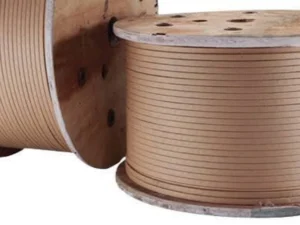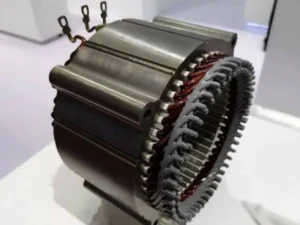
Introduction
Silicon chrome spring steel is one of the most important materials used in high-performance spring manufacturing. Due to its excellent elastic limit, fatigue resistance, and high tensile strength, materials such as 60Si2Mn, SUP10, SAE9254, and 50CrV4 are widely applied in automotive springs, industrial springs, and precision mechanical components.
However, producing high-quality silicon chrome spring steel flat wire requires more than simple wire flattening. Compared with conventional carbon steel, silicon chrome spring steel has higher strength and stronger work-hardening characteristics, making the forming process more challenging.
During flat wire production, manufacturers must carefully control deformation, surface quality, edge condition, and dimensional accuracy. A complete precision rolling system integrating feeding, straightening, rolling, online inspection, and winding is essential for achieving stable production.
Sky Bluer Environmental Technology Co., Ltd. (CRM) provides customized precision rolling solutions for manufacturers producing high-strength spring steel flat wire with strict requirements for accuracy and reliability.
Characteristics of Silicon Chrome Spring Steel for Flat Wire Production
Silicon chrome spring steel belongs to alloy spring steel with enhanced mechanical properties. The addition of silicon improves elasticity, while chromium and other alloying elements improve hardenability and fatigue performance.
Common materials include:
| Material Grade | Standard | Main Features | Applications |
| 60Si2Mn | GB | High strength and fatigue resistance | Automotive springs |
| SUP10 | JIS | Excellent elasticity and toughness | Vehicle spring components |
| SAE9254 | ASTM | High fatigue performance | Heavy-duty springs |
| 50CrV4 | EN | Chromium-vanadium alloy steel | High-performance springs |
The typical characteristics of these materials include:
| Property | Influence on Production |
| High tensile strength | Requires rigid rolling equipment |
| Strong work hardening | Requires controlled reduction per pass |
| High hardness | Increases tool wear requirements |
| High fatigue resistance | Requires excellent surface quality |
Because spring components often operate under repeated loading conditions, even small surface defects or dimensional variations may reduce service life. Therefore, precision rolling technology plays an important role in maintaining product reliability.
Why Precision Rolling Is Required for Silicon Chrome Spring Steel Flat Wire
Traditional wire processing methods may not provide sufficient control for high-performance spring applications. Precision rolling offers several advantages in producing rectangular and flat spring steel wire.
Controlled Material Deformation
Silicon chrome spring steel has high deformation resistance. Excessive reduction in one pass may cause:
- Edge cracking
- Uneven thickness
- Internal stress concentration
Multi-pass rolling gradually reduces the wire section, allowing better material flow and improved dimensional stability.
Improved Surface Quality
Spring steel components are sensitive to surface defects because cracks can become fatigue initiation points during operation.
Precision rolling systems help achieve:
- Smooth surface finish
- Stable edge quality
- Reduced surface damage
Accurate Dimensional Control
Spring manufacturers usually require strict control of thickness and width because the final wire geometry directly affects spring force and assembly performance.
Typical precision requirements:
| Parameter | Typical Accuracy |
| Thickness tolerance | ±0.005–0.02 mm |
| Width tolerance | ±0.01–0.05 mm |
| Straightness | ≤3/1000 mm |
| Surface roughness | Ra 0.4–0.8 μm |
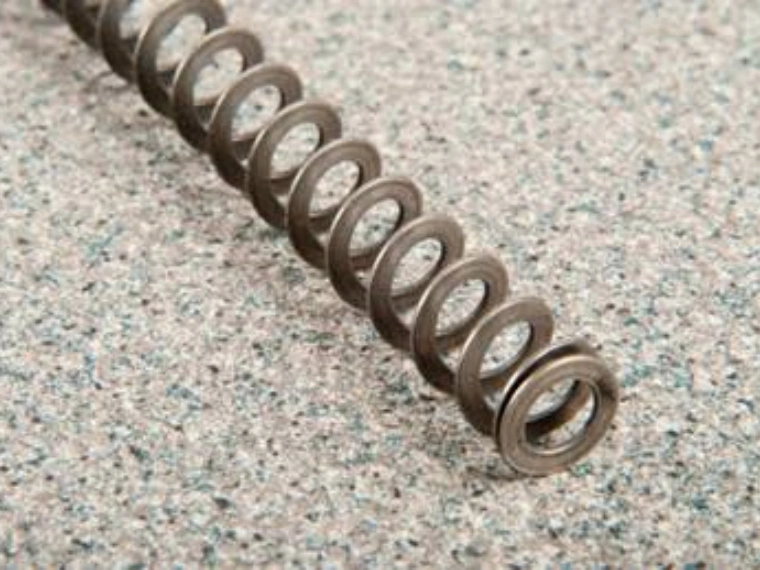
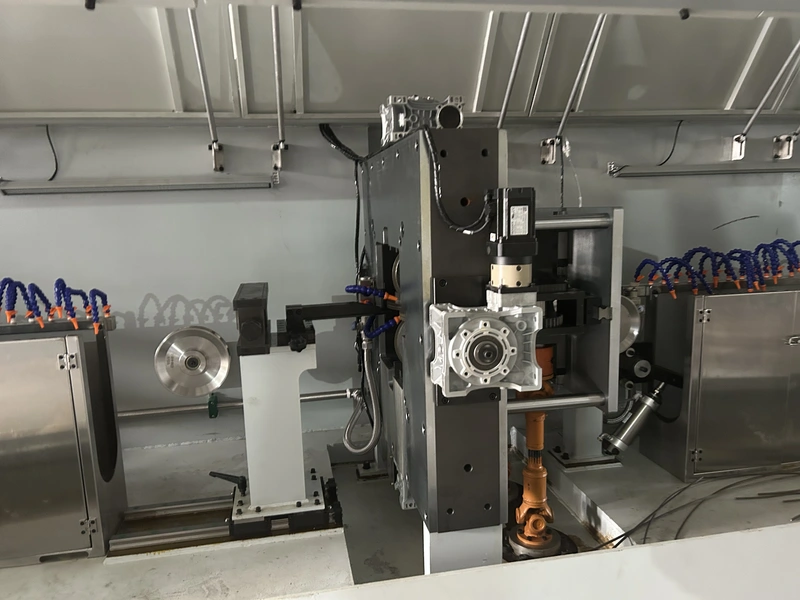
Complete Precision Rolling System Configuration
A modern silicon chrome spring steel flat wire production line normally includes several integrated modules.
Pay-off System
The pay-off unit provides stable wire feeding before forming.
Main functions include:
- Continuous material supply
- Stable tension control
- Wire guidance
- Coil handling
For high-strength spring steel, stable feeding is important because fluctuations in tension may affect final dimensions.
Straightening Unit
Before entering the rolling mill, the wire must be properly straightened.
The straightening process removes:
- Initial bending
- Coil memory
- Feeding deviation
A stable straightening system improves rolling consistency and reduces dimensional variation.
Precision Rolling Mill
The rolling mill is the core equipment for forming silicon chrome spring steel flat wire.
Depending on product requirements, manufacturers may choose:
- Two-roll precision rolling mill
- Four-roll Turks Head rolling system
- Universal rolling mill
Typical production parameters:
| Parameter | Range |
| Material | 60Si2Mn, SUP10, SAE9254 |
| Input diameter | 2–12 mm |
| Finished width | 1–30 mm |
| Finished thickness | 0.3–8 mm |
| Speed | 30–350 m/min |
A precision rolling mill requires:
- High rigidity structure
- Accurate roll adjustment
- Wear-resistant rolling tools
- Stable servo control system
Online Measurement System
Modern spring steel production increasingly uses laser measuring technology for real-time inspection.
The system monitors:
- Wire thickness
- Wire width
- Profile accuracy
With closed-loop control, the rolling system can automatically adjust parameters to maintain stable output quality.
Take-up System
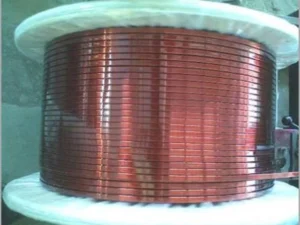
The final winding process ensures that finished flat wire maintains good coil shape.
A reliable take-up system provides:
- Constant tension winding
- Uniform coils
- Easy transportation
- Protection of finished products
Key Challenges in Silicon Chrome Spring Steel Rolling
Edge Quality Control
Because spring steel has high strength, improper deformation may cause edge cracks. Optimized roll design and reduction schedules are necessary to achieve smooth edges.
Residual Stress Control
Excessive forming force can create internal stress that affects later heat treatment and spring performance.
Controlled rolling passes help reduce stress concentration.
Production Stability
For automotive and industrial applications, manufacturers need consistent quality during long-term continuous production. Online measurement and automatic control systems improve process stability.
CRM Precision Rolling Solutions for Spring Steel Manufacturing
Sky Bluer Environmental Technology Co., Ltd. (CRM) develops customized precision rolling systems for high-performance metal forming applications.
CRM solutions are designed according to:
- Material grade
- Finished wire dimensions
- Accuracy requirements
- Production capacity
- Automation requirements
By combining precision rolling technology, online measurement systems, and customized tooling solutions, CRM helps spring manufacturers achieve stable and efficient silicon chrome spring steel flat wire production.
For companies producing automotive springs, industrial springs, and precision components, a properly designed rolling system is the foundation for consistent product quality and long-term manufacturing success.
Conclusion
Silicon chrome spring steel flat wire production requires advanced forming technology and precise process control. From material preparation and straightening to precision rolling and online inspection, every stage influences the final product performance.
A complete precision rolling system provides manufacturers with better dimensional accuracy, improved surface quality, and higher production efficiency.
With professional engineering experience and customized equipment solutions, CRM supports global spring manufacturers in developing reliable flat wire production systems for demanding industrial applications.