Introduction
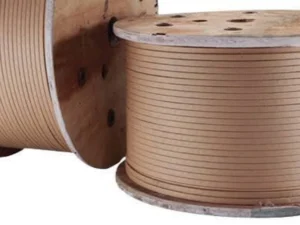
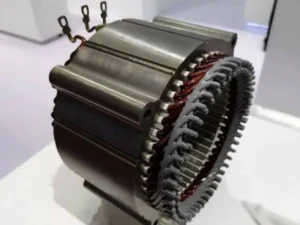
Paper covered copper flat wire is one of the most widely used insulated conductors in power and distribution transformer windings. It combines a high-conductivity rectangular copper conductor with one or more layers of electrical insulation paper, providing both electrical insulation and mechanical protection during transformer winding and long-term operation.
For transformer manufacturers, conductor performance depends not only on the insulation paper itself. The dimensional accuracy, corner radius, surface quality, mechanical condition, and straightness of the bare rectangular copper conductor underneath the paper insulation can directly influence paper covering quality and winding consistency.
This makes precision copper flat wire production an important upstream process in the manufacture of paper covered transformer conductors.
What Is Paper Covered Copper Flat Wire?
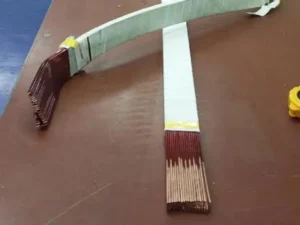
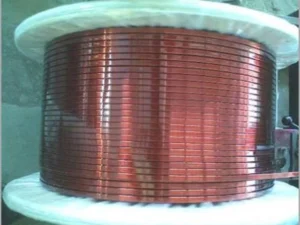
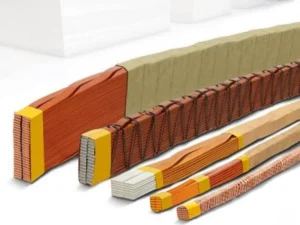
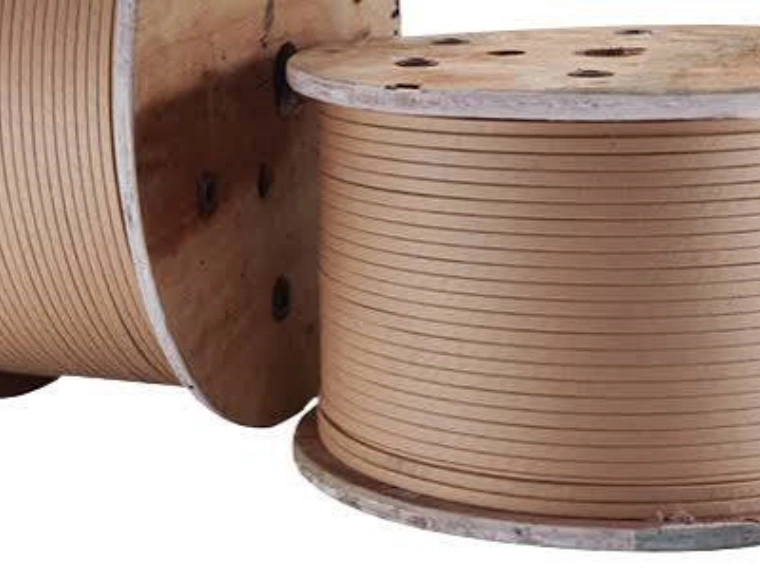
Paper covered copper flat wire consists of a rectangular copper conductor wrapped with electrical insulation paper.
A simplified structure is:
Rectangular Copper Conductor → Paper Insulation Layers → Finished Paper Covered Conductor
Depending on transformer design, different insulation papers and wrapping structures can be selected.
Typical conductor characteristics include:
| Parameter | Typical Requirement |
| Conductor material | Cu-ETP / Oxygen-Free Copper |
| Conductor shape | Rectangular / Flat |
| Width | Approx. 2–20 mm |
| Thickness | Approx. 0.8–6 mm |
| Width tolerance | ±0.01–0.03 mm |
| Thickness tolerance | ±0.005–0.02 mm |
| Corner radius | Controlled according to specification |
| Copper condition | Usually soft / annealed |
| Surface | Smooth and defect-free |
| Insulation | Electrical insulation paper |
| Paper layers | According to transformer design |
Actual dimensions, insulation thickness, paper grade, and conductor tolerances depend on the transformer specification and applicable standards.
For more information about the uninsulated conductor itself, see Bare Rectangular Copper Wire: Types, Applications and Manufacturing.
Why Flat Copper Conductors Are Used in Transformer Windings
Transformer windings must accommodate a large amount of conductive material within a limited winding space.
Compared with round wire, rectangular copper conductors provide a more compact arrangement.
| Characteristic | Round Copper Wire | Rectangular Copper Wire |
| Conductor shape | Circular | Rectangular |
| Space utilization | Lower | Higher |
| Layer arrangement | Less compact | More compact |
| Winding geometry | Conventional | Highly controlled |
| Large-current capability | Size dependent | Well suited |
| Dimensional requirements | Moderate | Higher |
The rectangular cross-section allows adjacent conductors to be arranged more closely, helping transformer designers optimize winding geometry.
This is particularly valuable in medium- and large-capacity transformers where winding dimensions, conductor cross-sectional area, cooling, and insulation must be carefully coordinated.
Why Paper Is Used as Transformer Conductor Insulation
Paper insulation has been used extensively in oil-immersed transformer systems because of its electrical insulation characteristics and compatibility with transformer insulation systems.
Common insulation materials may include:
- Kraft electrical insulation paper
- Thermally upgraded paper
- High-density insulation paper
- Other transformer-grade cellulose materials
The paper is normally wrapped around the rectangular conductor in controlled layers.
The insulation system must provide consistent coverage, particularly around the edges and corners of the copper conductor.
This is one reason why corner radius and surface quality of the bare copper wire are critical before paper covering begins.
Typical Technical Requirements for the Copper Conductor
Before paper insulation is applied, the bare rectangular copper conductor should meet strict geometric and surface requirements.
Typical engineering ranges include:
| Technical Parameter | Reference Range |
| Copper grade | C11000 / Cu-ETP / OF Copper |
| Conductivity | Approx. ≥97% IACS |
| Width | 2–20 mm |
| Thickness | 0.8–6 mm |
| Width tolerance | ±0.01–0.03 mm |
| Thickness tolerance | ±0.005–0.02 mm |
| Corner radius | R0.2–1.0 mm, application dependent |
| Surface roughness | Typically low and controlled |
| Straightness | According to winding requirement |
| Edge condition | Smooth, burr-free |
| Mechanical condition | Soft / annealed |
These values are general engineering references. Actual specifications should always follow the transformer manufacturer’s conductor drawing and applicable standard.
For equipment specifically designed around transformer conductor production, see Precision Flat Wire Rolling Mills for Transformer Copper and Aluminum Conductors.
Why Thickness Tolerance Matters in Transformer Windings
Thickness is one of the most important dimensional parameters in transformer flat wire.
A small conductor thickness deviation can accumulate across multiple winding layers.
For example:
| Thickness Variation | 100 Layers | 300 Layers | 500 Layers |
| 0.002 mm | 0.20 mm | 0.60 mm | 1.00 mm |
| 0.005 mm | 0.50 mm | 1.50 mm | 2.50 mm |
| 0.010 mm | 1.00 mm | 3.00 mm | 5.00 mm |
This simplified calculation demonstrates why transformer conductor manufacturers often require tight dimensional consistency rather than simply meeting an average finished size.
Stable thickness helps maintain predictable winding dimensions and provides a more consistent base for paper insulation.
Corner Radius Requirements Before Paper Covering
A rectangular conductor cannot be treated as a perfect rectangle with infinitely sharp corners.
The four corners should have a controlled radius.
If the corner is too sharp, the paper insulation may experience higher local mechanical stress during wrapping and winding.
If the radius is too large, however, the effective copper cross-section and conductor geometry may differ from the intended design.
| Corner Condition | Possible Effect |
| Excessively sharp | Increased stress on paper insulation |
| Uneven radius | Non-uniform insulation wrapping |
| Excessively large radius | Changes conductor geometry |
| Burr on edge | Possible paper damage |
| Edge crack | Reliability concern |
| Stable controlled radius | Consistent insulation process |
Therefore, corner radius should be specified together with width and thickness.
For example, instead of specifying only:
5.00 × 2.00 mm
a more complete specification may be:
- Width: 5.00 ±0.01 mm
- Thickness: 2.00 ±0.005 mm
- Corner radius: R0.30 mm
Surface Quality Requirements
Paper covering does not eliminate the need for a high-quality copper surface.
Surface defects on the bare conductor can create problems during insulation and winding.
Typical defects to control include:
- Longitudinal scratches
- Burrs
- Edge cracks
- Roll marks
- Copper particles
- Surface contamination
- Oxidation
| Surface Issue | Potential Influence |
| Burr | May damage paper |
| Deep scratch | Creates irregular conductor surface |
| Roll mark | Affects dimensional consistency |
| Contamination | Influences insulation processing |
| Oxidation | Reduces surface quality |
| Edge crack | May affect conductor reliability |
Roll surface finish, guides, lubrication, tension control, and handling systems should therefore be designed to minimize conductor damage.
Manufacturing Process Before Paper Covering
The quality of paper covered copper wire begins before the paper covering machine.
A typical upstream production route is:
Copper Rod → Wire Drawing → Annealing → Precision Rolling → Online Measurement → Surface Inspection → Paper Covering → Take-Up
Depending on the starting material and final dimensions, drawing and annealing can be configured differently.
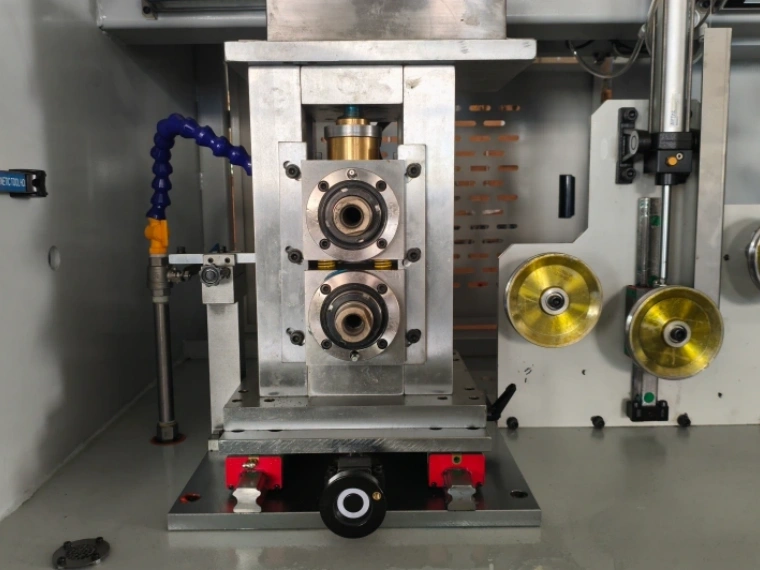
Precision Rolling
The rolling section transforms the copper wire into the required rectangular geometry.
Important rolling parameters include:
| Rolling Parameter | Main Influence |
| Roll gap | Finished thickness |
| Roll alignment | Cross-sectional symmetry |
| Rolling reduction | Material deformation |
| Entry tension | Production stability |
| Exit tension | Dimensional consistency |
| Roll surface finish | Copper surface quality |
| Roll geometry | Edge and corner formation |
| Rolling speed | Productivity and process stability |
For high-precision transformer wire, the rolling process may use multiple forming and sizing stages rather than relying on a single heavy reduction.
Online Measurement for Transformer Copper Flat Wire
Continuous production requires continuous dimensional control.
Modern flat wire production lines can integrate laser measurement equipment to monitor the conductor during rolling.
| Measurement | Purpose |
| Width | Control finished conductor width |
| Thickness | Maintain winding dimension |
| Line speed | Synchronize equipment |
| Tension | Maintain stable processing |
| Position | Prevent conductor misalignment |
| Roll position | Support dimensional adjustment |
A closed-loop control system can operate according to:
Laser Measurement → Dimensional Comparison → PLC → Rolling Adjustment → Continuous Correction
This helps reduce dimensional drift during long production runs.
For a broader introduction to complete rolling systems, see Complete Flat Wire Manufacturing Lines for Energy, Automotive, and Power Industries.
Paper Covering Process
After the rectangular copper conductor meets the required dimensions and surface condition, paper insulation is applied.
A simplified process is:
Bare Flat Copper Wire → Tension Control → Paper Feeding → Paper Wrapping → Insulation Inspection → Take-Up
Important paper covering parameters include:
| Parameter | Function |
| Paper tension | Maintains consistent wrapping |
| Wrapping angle | Controls insulation structure |
| Overlap | Prevents insulation gaps |
| Number of layers | Determines insulation structure |
| Conductor tension | Maintains stable movement |
| Take-up tension | Protects finished conductor |
| Winding quality | Ensures proper storage and handling |
The exact insulation design depends on the transformer manufacturer’s requirements.
The upstream rolling process and downstream paper covering process should therefore be considered as connected manufacturing stages.
Bare Conductor Dimensions vs. Finished Insulated Dimensions
One common mistake is to specify only the final paper covered wire dimensions.
The manufacturer should distinguish between:
Bare conductor dimensions and overall insulated dimensions.
For example:
| Parameter | Bare Conductor | Paper Covered Conductor |
| Width | 8.00 mm | 8.40 mm* |
| Thickness | 2.00 mm | 2.40 mm* |
| Corner radius | Controlled copper radius | Covered by insulation |
| Surface | Bare copper | Paper insulation |
| Tolerance | Rolling controlled | Rolling + insulation controlled |
*Illustrative dimensions only.
The final size depends on paper thickness, wrapping layers, overlap, and compression.
Therefore, when designing a production line, both conductor geometry and insulation build should be considered.
Paper Covered Wire vs. Enameled Flat Wire
Paper covering and enameling are two different insulation approaches.
| Feature | Paper Covered Copper Wire | Enameled Copper Flat Wire |
| Insulation | Electrical paper | Enamel coating |
| Insulation structure | Wrapped layers | Coated layers |
| Typical application | Transformers | Motors, transformers, coils |
| Conductor geometry | Often rectangular | Round or rectangular |
| Upstream rolling precision | High | High |
| Surface quality requirement | High | Very high |
| Main insulation control | Paper tension & overlap | Coating thickness & curing |
Both products depend on a high-quality bare conductor, but their downstream manufacturing technologies are significantly different.
For more information about enameled rectangular conductors, see What is Enamelled Copper Flat Wire? Applications and Benefits.
Paper Covered Conductors and CTC
Paper covered rectangular copper wire should also be distinguished from Continuously Transposed Conductors (CTC).
CTC uses multiple rectangular copper strands that are individually insulated and continuously transposed into a larger conductor structure.
| Product | Structure |
| Paper covered flat wire | Single rectangular conductor + paper |
| Enameled rectangular wire | Single conductor + enamel |
| CTC | Multiple insulated rectangular strands + transposition |
CTC is particularly important for large power transformer applications where conductor arrangement and electromagnetic performance become more complex.
For more information, see CTC Production Line.
The detailed structure, applications, and advantages of CTC conductors will be discussed separately in our next technical article.
How to Specify a Production Line
Before designing a paper covered copper flat wire production solution, several technical parameters should be confirmed.
| Required Information | Example |
| Copper material | C11000 / OF Copper |
| Input diameter | 3.0 mm |
| Finished bare width | 6.0 mm |
| Finished bare thickness | 2.0 mm |
| Width tolerance | ±0.01 mm |
| Thickness tolerance | ±0.005 mm |
| Corner radius | R0.30 mm |
| Copper condition | Soft |
| Paper type | Customer specified |
| Number of paper layers | Customer specified |
| Production speed | m/min |
| Coil weight | kg |
| Online measurement | Required / Optional |
Providing these parameters allows the rolling and insulation processes to be configured according to the final transformer conductor rather than selecting equipment based only on nominal wire size.
Complete Production Solutions for Transformer Conductors
A complete transformer conductor production system may integrate:
- Pay-off
- Wire drawing
- Annealing
- Precision rolling
- Corner radius control
- Online width and thickness measurement
- Surface inspection
- Paper covering
- Tension control
- Precision take-up
The exact configuration depends on the customer’s raw material, conductor dimensions, production capacity, insulation requirements, and automation level.
For integrated flat wire production technology, see Copper Flat Wire Production Line for Enameled and Paper Covered Conductors.
Conclusion
Paper covered copper flat wire is an important winding conductor for power and distribution transformers.
Reliable performance starts with the quality of the bare rectangular copper conductor.
Before paper insulation is applied, manufacturers need precise control of:
- Width and thickness
- Dimensional tolerance
- Corner radius
- Surface quality
- Mechanical condition
- Straightness
- Production tension
The paper covering process then adds another layer of control involving paper tension, wrapping angle, overlap, insulation thickness, and finished winding quality.
By integrating precision rolling, online dimensional measurement, stable tension control, paper covering, and precision take-up, manufacturers can achieve more consistent transformer conductor production.
Sky Bluer Environmental Technology Co., Ltd. provides customized precision rolling mills and complete flat wire manufacturing solutions for transformer copper and aluminum conductors. CRM solutions can be configured according to conductor material, finished dimensions, tolerance, corner radius, insulation requirements, production speed, and coil specifications.
If you are planning a paper covered copper flat wire production line, send us your raw material diameter, finished conductor width and thickness, tolerance, corner radius, paper insulation specification, production speed, and coil weight. Our engineering team can recommend a suitable production process and equipment configuration.