High Precision Manufacturing Solutions for Transformer, EV Motor, and Magnet Wire Industries
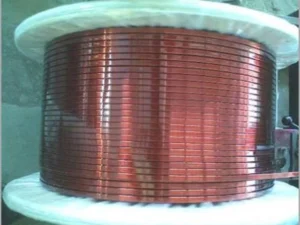
In copper flat wire production, We do not focus only on width and thickness reduction. Once the conductor enters flat rolling, edge stress, surface quality, residual stress, and annealing stability begin to determine the final insulation performance.
In actual production, most failures do not come from the enamel or insulation paper itself. They come from unstable rolling, incorrect reduction schedules, poor edge control, or insufficient annealing during conductor forming.
In this article, I will guide manufacturers and engineers through rolling machine selection, production line configuration, conductor specifications, process control, and common production problems in enameled and paper covered copper flat wire manufacturing.
This is especially true in:
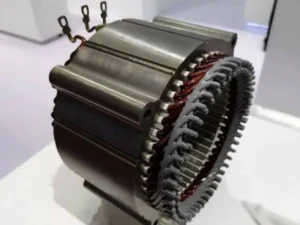
- EV hairpin motor winding
- High voltage transformer winding
- Dry-type transformers
- High-frequency magnet wire
- Renewable energy systems
- Reactor coils
At Sky Bluer Environmental Technology Co., Ltd., we design complete copper flat wire production lines with integrated:
- Precision flat rolling mills
- Continuous annealing systems
- Online edge control
- Enameling lines
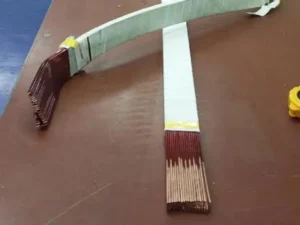
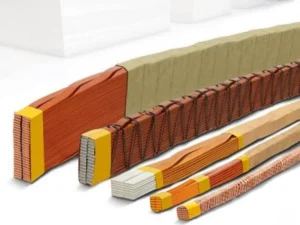
- Paper covering systems
- Servo tension control
- Laser measurement systems
- Automatic spooling systems
Our systems are designed for continuous industrial production with high dimensional consistency and insulation stability.
Complete Production Process
Standard Process Route
8 mm Copper Rod
→ Rod Breakdown Drawing
→ Intermediate Drawing
→ Multi-pass Flat Rolling
→ Intermediate Annealing
→ Precision Sizing
→ Surface Polishing
→ Final Annealing
→ Enameling / Paper Covering
→ Spark Testing
→ Precision Spooling
Bare Copper Flat Wire Technical Specifications
Standard Bare Conductor Range
| Item | Standard Range |
| Width | 0.80 – 30.00 mm |
| Thickness | 0.20 – 10.00 mm |
| Width/Thickness Ratio | 1:1 – 12:1 |
| Corner Radius | R0.15 – R2.00 |
| Conductivity | ≥100% IACS |
| Tensile Strength | 180 – 280 MPa |
| Elongation | 25 – 45% |
| Surface Roughness | Ra 0.08 – 0.40 μm |
| Camber | ≤1 mm/m |
| Twist | ≤2 turn/m |
Precision Tolerance Standards
Tolerance stability directly determines whether the conductor can survive:
- High-speed enameling
- Tight transformer winding
- Hairpin bending
- High-frequency insulation stress
Width Tolerance Reference
| Width Range | Standard Tolerance | High Precision |
| 0.80 – 2.00 mm | ±0.010 mm | ±0.005 mm |
| 2.00 – 5.00 mm | ±0.015 mm | ±0.008 mm |
| 5.00 – 10.00 mm | ±0.020 mm | ±0.010 mm |
| 10.00 – 20.00 mm | ±0.030 mm | ±0.015 mm |
| >20 mm | ±0.050 mm | ±0.020 mm |
Thickness Tolerance Reference
| Thickness Range | Standard Tolerance | High Precision |
| 0.20 – 0.50 mm | ±0.003 mm | ±0.002 mm |
| 0.50 – 1.00 mm | ±0.005 mm | ±0.003 mm |
| 1.00 – 3.00 mm | ±0.008 mm | ±0.005 mm |
| 3.00 – 6.00 mm | ±0.015 mm | ±0.008 mm |
| >6.00 mm | ±0.020 mm | ±0.010 mm |
Enameled Copper Flat Wire Specifications
Typical Finished Conductor Sizes
Small Precision Magnet Wire
| Width × Thickness | Application |
| 1.20 × 0.40 mm | High frequency coils |
| 1.50 × 0.60 mm | Servo motors |
| 2.00 × 0.80 mm | Industrial motors |
| 2.50 × 1.00 mm | Compressors |
EV Hairpin Motor Conductors
| Width × Thickness | Typical Use |
| 3.00 × 1.50 mm | 400V EV motors |
| 4.00 × 1.80 mm | High speed traction motors |
| 5.00 × 2.00 mm | Hairpin stators |
| 6.00 × 2.50 mm | Heavy duty EV systems |
| 8.00 × 3.00 mm | Busbar winding systems |
Enamel Coating Specifications
| Parameter | Standard Value |
| Enamel Type | Polyester / Polyamide-imide / PEEK |
| Thermal Class | 180°C / 200°C / 220°C |
| Film Thickness | 20 – 150 μm |
| Breakdown Voltage | 6 – 15 kV |
| Adhesion Grade | Grade 1 |
| Pinhole Count | ≤5 defect/km |
| Surface Gloss | ≥85 GU |
| Solvent Residue | <5 mg/m² |
Recommended Surface Roughness Before Enameling
| Application | Required Ra |
| Standard Magnet Wire | ≤0.25 μm |
| EV Hairpin Wire | ≤0.15 μm |
| High Voltage Wire | ≤0.10 μm |
Excessive roughness causes:
- Enamel pinholes
- Uneven film thickness
- Partial discharge
- Corona failure
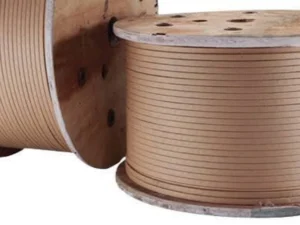
Paper Covered Copper Flat Wire Specifications
Standard Transformer Conductors
| Bare Size | Finished Size | Application |
| 3 × 1 mm | 3.5 × 1.5 mm | Distribution transformer |
| 5 × 2 mm | 5.8 × 2.8 mm | Oil transformer |
| 8 × 3 mm | 9 × 4 mm | Power transformer |
| 12 × 4 mm | 13.5 × 5.5 mm | Reactor coils |
| 20 × 5 mm | 22 × 7 mm | HV transformer |
Paper Covering Parameters
| Parameter | Typical Range |
| Paper Material | Kraft / NOMEX / Crepe |
| Paper Thickness | 0.025 – 0.130 mm |
| Covering Layers | 1 – 8 |
| Overlap Ratio | 15 – 65% |
| Wrapping Angle | 15° – 45° |
| Moisture Content | ≤6% |
| Adhesive Type | Thermal bonding optional |
| Finished Thickness Tolerance | ±0.03 mm |
Copper Flat Rolling Parameters
Rolling Reduction Schedule
Recommended Reduction Ratio Per Pass
| Conductor Thickness | Reduction Per Pass |
| >5 mm | 10 – 15% |
| 2 – 5 mm | 8 – 12% |
| 1 – 2 mm | 5 – 8% |
| <1 mm | 3 – 5% |
Heavy single-pass reduction often causes:
- Edge cracking
- Camber
- Internal stress concentration
- Surface tearing
Recommended Rolling Speed
| Product Type | Rolling Speed |
| Small Precision Wire | 80 – 650 m/min |
| EV Flat Wire | 50 – 600 m/min |
| Transformer Conductors | 20 – 250 m/min |
Roll Configuration Parameters
Precision Rolling Mill Specifications
| Item | Typical Value |
| Rolling Type | 2-high / 4-high |
| Roll Material | Tungsten carbide/Tool steel |
| Roll Hardness | HRC 62 – 68 |
| Roll Diameter | 80 – 250 mm |
| Roll Runout | ≤0.002 mm |
| Roll Surface Finish | Ra ≤0.05 μm |
| Servo Position Accuracy | ±0.001 mm |
Edge Radius Control Standards
Recommended Corner Radius
| Thickness | Edge Radius |
| 0.20 – 0.50 mm | R0.15 – R0.30 |
| 0.50 – 1.00 mm | R0.20 – R0.50 |
| 1.00 – 3.00 mm | R0.40 – R0.80 |
| 3.00 – 6.00 mm | R0.80 – R1.20 |
| >6 mm | R1.20 – R2.00 |
Improper edge geometry causes:
- Paper cutting
- Enamel thinning
- Coil short circuit
- Poor slot filling
Continuous Annealing Parameters
Inline Annealing Specifications
| Parameter | Typical Range |
| Annealing Temperature | 350 – 650°C |
| Furnace Length | 3 – 12 m |
| Heating Method | Electric / Induction |
| Protective Atmosphere | Nitrogen / Steam |
| Oxygen Content | <20 ppm |
| Cooling Method | Water / Air |
| Line Speed | 20 – 300 m/min |
Final Mechanical Properties After Annealing
| Parameter | Standard Value |
| Conductivity | ≥100% IACS |
| Tensile Strength | 180 – 230 MPa |
| Elongation | ≥35% |
| Residual Stress | Low tension grade |
Enameled Flat Wire Production Parameters
Enameling Oven Configuration
| Item | Standard Value |
| Oven Length | 12 – 48 m |
| Heating Zones | 4 – 12 |
| Oven Temperature | 350 – 550°C |
| Air Circulation | Hot air forced circulation |
| Solvent Exhaust | Automatic |
| Coating Passes | 6 – 20 |
| Max Line Speed | 150 m/min |
Film Thickness Standards
| Grade | Typical Thickness |
| Grade 1 | 20 – 40 μm |
| Grade 2 | 40 – 80 μm |
| Grade 3 | 80 – 150 μm |
Paper Covering Machine Parameters
Standard Covering Machine Data
| Parameter | Typical Value |
| Wrapping Heads | 2 – 8 |
| Wrapping Speed | 20 – 120 m/min |
| Tension Accuracy | ±0.5 N |
| Traverse Accuracy | ±0.1 mm |
| Spool Weight | 200 – 1500 kg |
| Automatic Stop | Paper break detection |
Online Inspection System
Integrated Quality Control
| Inspection Item | Equipment |
| Width Measurement | Laser gauge |
| Thickness Measurement | Eddy current gauge |
| Surface Defects | CCD camera |
| Spark Testing | High voltage detector |
| Tension Monitoring | Load cell |
| Edge Inspection | Vision system |
Common Production Problems and Engineering Solutions
1. Edge Cracking
Main Causes
- Excessive reduction
- Poor annealing
- Improper edge radius
Recommended Solutions
- Reduce single-pass reduction below 8%
- Increase intermediate annealing
- Optimize roll groove geometry
2. Width Fluctuation
Main Causes
- Roll deflection
- Thermal expansion
- Tension instability
Solutions
- Use 4-high rolling mill
- Add automatic AGC control
- Improve servo tension synchronization
3. Enamel Pinhole Defects
Main Causes
- Surface scratches
- Oxidation
- Copper powder contamination
Solutions
- Add online polishing
- Improve cleaning section
- Reduce lubricant residue
4. Paper Wrinkle During Wrapping
Main Causes
- Uneven paper tension
- Poor overlap control
- Excessive conductor vibration
Solutions
- Servo-controlled tension
- Precision dancer system
- Stabilized payoff structure
Recommended Production Line Configuration
EV Motor Flat Wire Line
| Equipment | Configuration |
| Payoff | Automatic dual spool |
| Drawing Machine | 13 die |
| Rolling Mill | 4-high precision |
| Annealing | Inline induction |
| Enameling Oven | Multi-zone |
| Spark Tester | 15 kV |
| Take-up | Precision spooler |
Transformer Paper Covered Line
| Equipment | Configuration |
| Payoff | Heavy duty |
| Rolling Mill | Large section flat rolling |
| Annealing | Continuous resistance annealing |
| Paper Wrapping | 4-head servo |
| Drying System | Hot air circulation |
| Take-up | Heavy spool system |
Production Capacity Reference
| Product Type | Daily Output |
| Small Magnet Wire | 300 – 1000 kg/day |
| EV Hairpin Conductors | 1 – 8 ton/day |
| Transformer Conductors | 3 – 20 ton/day |
Engineering and Turnkey Support
We provide:
- Complete production line design
- Flat wire process development
- Roll pass calculation
- Annealing optimization
- Insulation process integration
- Installation and commissioning
- Operator training
- Production troubleshooting
Each production line can be customized according to:
- Conductor dimensions
- Tolerance requirements
- Insulation type
- Production capacity
- Application industry
Contact our engineering team for customized copper flat wire production solutions.