Introduction
Transformer windings require flat copper and aluminum conductors with extremely stable dimensional control, especially in high-voltage (HV) and ultra-high-voltage (UHV) transformer systems. As transformer efficiency continues to improve toward low-loss and compact designs, conductor geometry tolerance has become a critical factor influencing electromagnetic performance, thermal behavior, and insulation reliability.
Compared with round wire, flat conductor rolling introduces more complex plastic deformation behavior. During rolling, the material undergoes anisotropic elongation, where thickness uniformity, edge radius stability, and surface integrity must be controlled simultaneously. Even minor deviations can lead to uneven winding tension, localized heating, and insulation stress concentration.
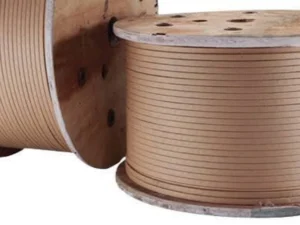
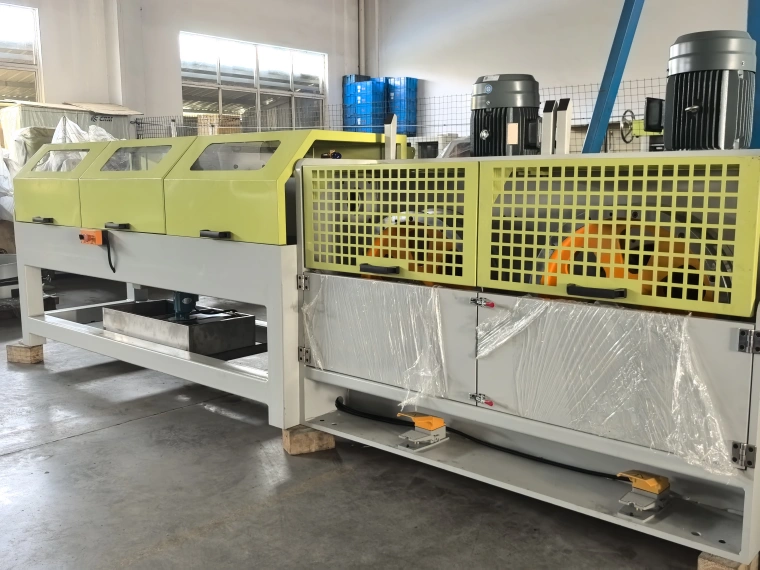
Precision flat wire rolling mills are therefore engineered specifically for oxygen-free copper (OFC), electrolytic tough pitch copper (ETP), and electrical-grade aluminum alloys, enabling continuous production of high-accuracy rectangular and flat profiles used in transformer windings, foil windings, and high-efficiency distribution systems.
Transformer Conductor Material Grades and Typical Dimensions
Transformer flat wire production follows strict electrical and mechanical standards, especially in IEC and ASTM-based manufacturing systems.
Common Materials Used
Copper Grades
- C11000 (ETP Copper)
- C10200 (Oxygen-Free High Conductivity Copper, OFHC)
- Silver-alloyed copper (for high thermal stability applications)
Aluminum Grades
- 1050 / 1060 / 1070 (high-purity electrical aluminum)
- 1350 EC-grade aluminum (commonly used in transformer windings)
Special Alloy Conductors
- Cu-Ag alloys (high temperature stability)
- Cu-Mg alloys (mechanical reinforcement applications)
Typical Flat Wire Dimensions
| Material | Thickness (mm) | Width (mm) | Tolerance (mm) |
| Copper | 0.10 – 3.0 | 1.0 – 25 | ±0.005 – ±0.02 |
| Aluminum | 0.20 – 4.0 | 2.0 – 30 | ±0.01 – ±0.03 |
Key Geometric Requirements in Transformer Use
Transformer performance is highly sensitive to conductor geometry:
- Edge radius: 0.02–0.15 mm
→ Prevents insulation damage and partial discharge risk
- Surface roughness: Ra ≤ 0.4 μm
→ Improves enamel or paper insulation adhesion
- Flatness deviation: ≤ 3–5 μm per 100 mm
→ Ensures uniform winding pressure distribution
- Thickness variation: ≤ ±1–2% across coil length
→ Critical for impedance stability
These parameters directly influence winding tightness, dielectric strength, and long-term thermal reliability.
.webp)
Manufacturing Process and Rolling Pass Design
Transformer conductor rolling requires a multi-stage controlled deformation strategy to balance plastic flow, grain structure stability, and surface quality.
Standard Production Workflow
- Incoming wire cleaning and oxide removal
- Surface lubrication pre-treatment
- Multi-stage rough rolling (bulk reduction)
- Intermediate annealing (350–550°C for copper)
- Precision finishing rolling
- Online tension calibration and correction
- Surface polishing / smoothing
- Final inspection (laser + eddy current + optical systems)
Rolling Pass Design Strategy
Rolling reduction is carefully distributed to avoid stress concentration:
- Initial reduction per pass: 15–25%
- Intermediate passes: 10–15%
- Finishing passes: 5–10%
- Total elongation control: 20–40% (application-dependent)
Metallurgical Control Considerations
- Grain refinement control to improve ductility
- Prevention of directional hardening in copper strips
- Recrystallization management during annealing
- Reduction of anisotropic deformation in aluminum
In advanced transformer-grade production, grain structure uniformity is as important as dimensional accuracy.
Technical Challenges in Transformer Flat Wire Rolling
Flat conductor production introduces several engineering challenges that directly affect transformer performance:
1. Thickness Non-Uniformity
Caused by:
- Roll deflection under high load
- Thermal expansion differences
- Inconsistent lubrication film thickness
2. Edge Defects and Burr Formation
- High reduction ratios create micro-cracks at edges
- Improper roll alignment leads to asymmetric deformation
3. Surface Oxidation and Contamination
- Copper oxidation reduces insulation adhesion
- Aluminum forms oxide layers affecting bonding quality
4. Tension Instability
- Leads to width fluctuation and coil misalignment
- Especially critical in high-speed continuous rolling lines
5. Material-Specific Behavior Differences
- Copper: prone to work hardening
- Aluminum: more elastic recovery and shape springback
Rolling Mill Engineering Solutions
Modern precision rolling mills integrate multi-layer control systems to overcome these challenges.
Structural Rigidity System
- High-stiffness frame design (low elastic deformation)
- Anti-deflection backup rolls
- Finite element optimized roll stack geometry
Precision Gap Control System
- Servo-controlled roll gap adjustment
- Accuracy up to ±1 μm
- Automatic compensation for wear and temperature drift
Closed-Loop Tension Control
- Multi-zone tension sensors
- Real-time feedback control
- Prevents elongation inconsistency across coil length
Cooling and Lubrication System
- Multi-zone oil emulsion control
- Temperature-stabilized roll surface
- Reduces friction-induced surface defects
Online Inspection and AI Monitoring
- Laser thickness measurement
- Eddy current conductivity detection
- Surface defect recognition (AI vision system)
- Automatic rejection and correction feedback loop
Production Advantages in Transformer Applications
Precision flat wire rolling mills provide significant performance improvements in transformer manufacturing:
Electrical Performance Benefits
- Stable conductivity along full coil length
- Reduced hot spot formation in windings
- Lower eddy current losses
Mechanical Benefits
- Improved winding tension uniformity
- Reduced deformation during coil assembly
- Higher packing density in transformer cores
Manufacturing Efficiency
- Lower scrap rate in insulation coating process
- Reduced rework during coil winding
- Higher automation compatibility
Long-Term Reliability
- Enhanced dielectric stability
- Reduced partial discharge risk
- Improved thermal aging resistance
Application Scope in Electrical Industry
Precision flat conductor materials are widely used in:
- Power transformers (distribution & transmission level)
- Dry-type transformers
- EV charging station transformers
- Industrial rectifier transformers
- High-efficiency energy storage systems
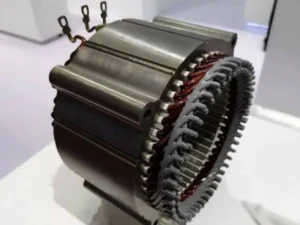
- Electrical motor windings (special designs)
Conclusion
Precision flat wire rolling is a foundational upstream process that directly determines transformer efficiency, thermal stability, and long-term operational reliability. As electrical systems continue moving toward higher efficiency and compact design, the demand for ultra-precise conductor geometry control will continue to increase.
Modern precision rolling mills integrate mechanical rigidity, digital control, and real-time inspection systems to ensure that copper and aluminum conductors meet increasingly strict electrical and geometric standards required by next-generation transformer technology.
This technological development is supported and advanced by Sky Bluer Environmental Technology Co., Ltd., contributing to higher manufacturing precision and improved performance consistency in the global conductor processing industry.