Introduction
Complete flat wire manufacturing lines are fully integrated production systems that combine wire drawing, precision rolling, annealing, surface conditioning, and automated inspection into a single continuous workflow. These turnkey solutions are widely used in energy infrastructure, electric vehicles, energy storage systems, and industrial power applications.
Compared with standalone equipment, complete lines focus on process continuity and system-level synchronization, ensuring stable geometry, consistent material properties, and repeatable surface quality from raw material to finished coil.
Industry Application Scope
Complete flat wire systems are designed for high-performance conductor manufacturing across multiple sectors.
Key Application Areas
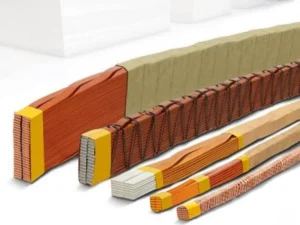
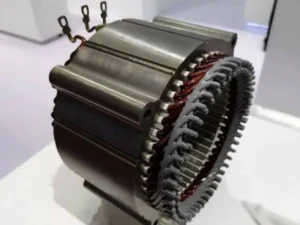
- EV traction motors (hairpin and rectangular conductors)
- Power transformers (flat copper and aluminum windings)
- Energy storage systems (busbars and laminated conductors)
- Industrial electrical distribution systems
Output Product Types
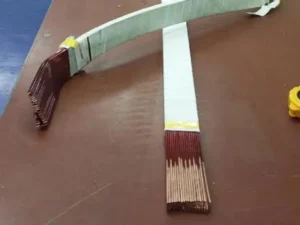
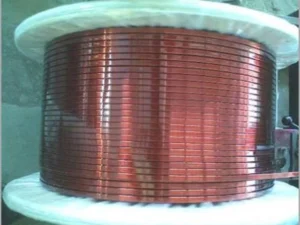
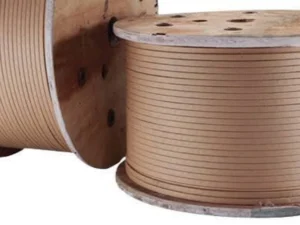
- Flat copper wire for high-efficiency windings
- Rectangular aluminum strip for lightweight power systems
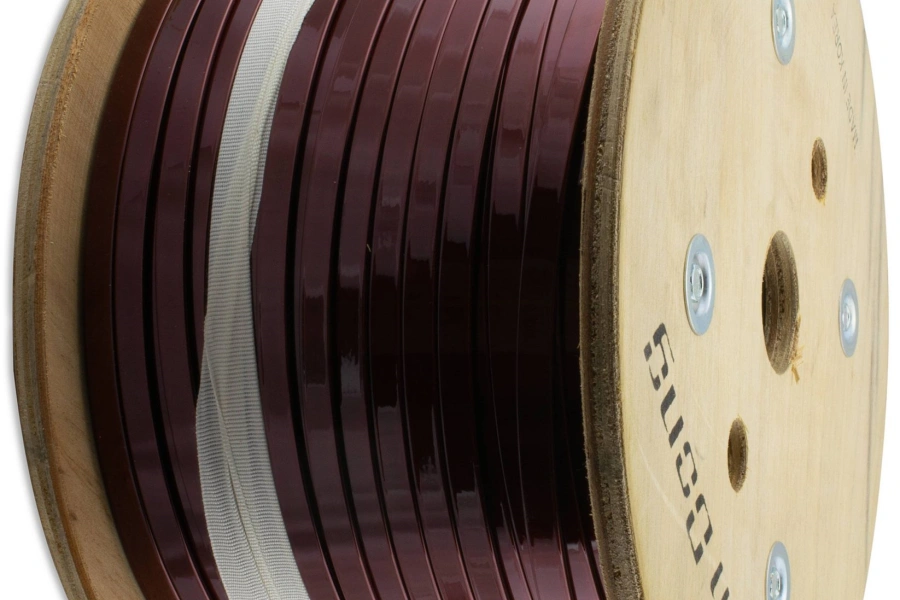
- Magnet wire preform conductors for enamel coating
- Laminated conductors for high-current applications
Each product requires different combinations of deformation control, thermal treatment, and surface conditioning, all managed within a unified system.
Integrated Manufacturing Process Flow
A complete flat wire line operates as a continuous production chain where each stage directly influences the next.
Standard Process Flow
- Rod breakdown drawing system
- Intermediate annealing furnace
- Multi-pass precision rolling mill
- Edge conditioning and deburring system
- Online cleaning and lubrication control
- Final calibration unit
- Automatic coiling system
- Inline quality inspection (laser + eddy current)
System Logic
The core principle is:All modules must operate under synchronized material flow conditions
Any mismatch in speed, tension, or thermal behavior can lead to dimensional deviation or surface instability.
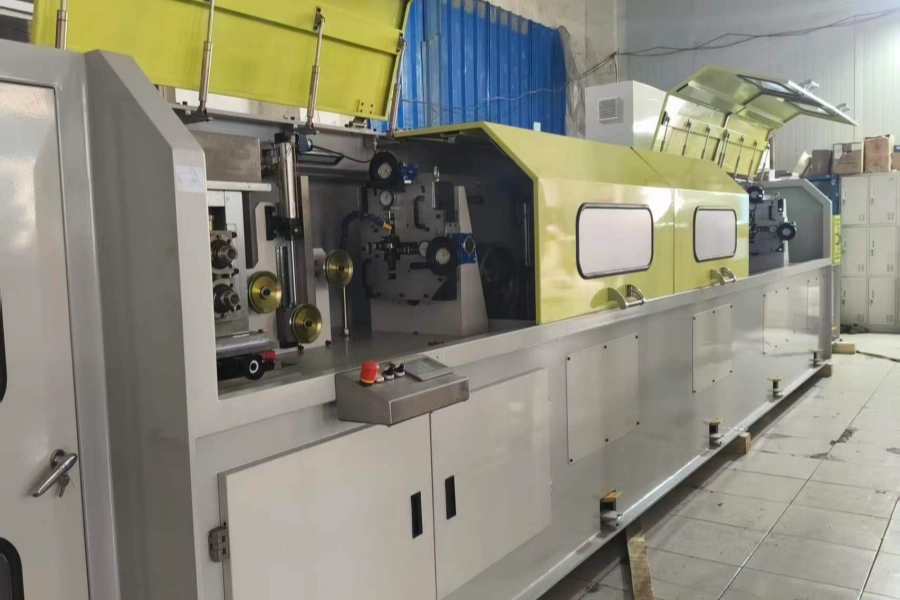
Technical Challenges in Complete Line Integration
Tension Mismatch Between Modules
Different process sections (drawing, rolling, coiling) generate inconsistent tension levels, affecting dimensional stability.
Thermal Drift Effects
Temperature differences between annealing and deformation zones can cause:
- Non-uniform recrystallization
- Variations in mechanical strength
- Unstable elongation behavior
Speed Synchronization Complexity
Maintaining stable line speed is difficult during:
- Start-up and shutdown cycles
- Product changeovers
- Coil replacement operations
Surface Contamination Risks
Long production runs may introduce:
- Lubricant residue accumulation
- Oxidation on exposed conductor surfaces
- Reduced coating or insulation adhesion performance
Engineering Design Solutions
Modern turnkey systems address these challenges through integrated control and automation strategies, where all key functions are unified into a single coordinated production framework. A centralized control system based on a unified PLC architecture synchronizes all modules in real time, ensuring stable communication and consistent process coordination across the entire production line. At the same time, dynamic tension balancing is achieved through closed-loop feedback systems that continuously adjust mechanical tension throughout all processing stages, maintaining stable and uniform material flow even under high-speed operation. Thermal compensation control is also implemented through multi-zone temperature management, which reduces thermal drift between different process sections and stabilizes material behavior during annealing and deformation. In addition, modular rolling system design allows flexible adjustment of rolling stands for different product specifications, significantly improving changeover efficiency and production adaptability. Finally, predictive maintenance monitoring systems based on sensors continuously track vibration, temperature, wear, and load conditions, enabling early detection of potential failures and helping prevent unexpected downtime, thereby improving overall line reliability and operational stability.
Key Performance Targets
- Line stability: >95% continuous operation efficiency
- Dimensional consistency: ±0.003–0.01 mm (depending on product grade)
- High long-run process stability with minimal drift
Production Advantages
Complete flat wire manufacturing lines provide significant improvements in both efficiency and product quality:
- Fully automated continuous production
- Reduced manpower dependency
- Stable geometry across long production runs
- High yield rates (>98% in optimized systems)
- Flexible switching between different conductor specifications
These advantages directly translate into higher productivity, lower operating costs, and improved product consistency.
Strategic Value for Manufacturers
Beyond production efficiency, complete lines provide long-term industrial competitiveness.
They enable manufacturers to:
- Enter EV motor conductor supply chains (hairpin and rectangular conductors)
- Supply transformer and high-voltage OEM markets
- Expand into advanced electrical conductor materials
- Reduce outsourcing dependence for upstream processing
- Build fully integrated conductor manufacturing capabilities
As global demand for electrification and energy efficiency increases, integrated flat wire production systems are becoming a core infrastructure for advanced electrical manufacturing.
Conclusion
Complete flat wire manufacturing lines represent the highest level of integration in modern conductor production technology. By combining drawing, rolling, annealing, surface treatment, and inspection into a synchronized continuous system, manufacturers can achieve stable dimensional control, consistent material properties, and high-efficiency production.
The key value of these systems lies in their ability to manage the entire production chain as a unified process rather than isolated stages. Through centralized control systems, dynamic tension regulation, thermal compensation, and real-time quality monitoring, complete lines ensure long-run stability and high yield performance even under demanding industrial conditions.
Ultimately, these systems provide not only manufacturing efficiency but also strategic industrial capability, enabling companies to participate in high-value markets such as EV motors, transformer windings, and advanced energy infrastructure.
From an advanced equipment development perspective, these integrated manufacturing capabilities are closely aligned with the engineering focus of Sky Bluer Environmental Technology Co., Ltd, which specializes in precision rolling systems and turnkey conductor production line solutions for global energy and electrical manufacturing industries.