Introduction
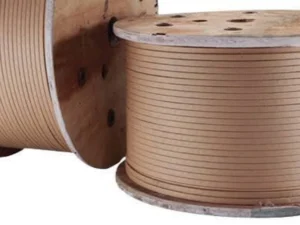
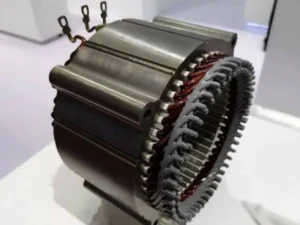
Mica insulated rectangular copper wire is a specialized electrical conductor designed for motors, generators, traction systems, and other electrical machines where the winding insulation must withstand demanding thermal, electrical, and mechanical operating conditions.
The conductor typically combines a precision rectangular copper core with mica-based insulation, sometimes together with additional insulation materials depending on the final winding system.
For conductor manufacturers, reliable mica insulation starts with the quality of the rectangular copper underneath it. Width, thickness, corner radius, surface condition, straightness, and mechanical properties must be carefully controlled before the insulation process.
This article focuses on the structure, technical requirements, insulation considerations, applications, and upstream manufacturing process of mica insulated rectangular copper wire for motors and generators.
What Is Mica Insulated Rectangular Copper Wire?
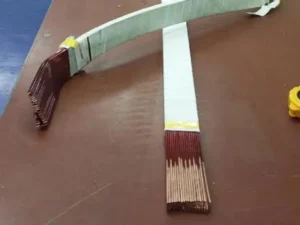
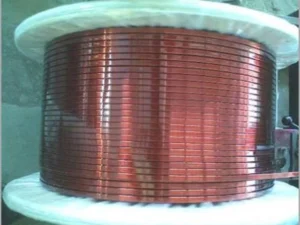
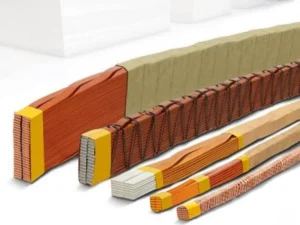
Mica insulated rectangular copper wire consists of a rectangular copper conductor surrounded by mica-based electrical insulation.
A simplified structure is:
Rectangular Copper Conductor → Mica Insulation → Additional Insulation / Protection if Required → Finished Conductor
Depending on the electrical machine and insulation system, mica may be combined with other materials such as glass fabric, film, resin, or additional protective layers.
Typical characteristics include:
| Parameter | Typical Requirement |
| Conductor material | Cu-ETP / Oxygen-Free Copper |
| Conductor shape | Rectangular |
| Copper condition | Soft / annealed or application-specific |
| Width | Approx. 2–20 mm |
| Thickness | Approx. 0.8–6 mm |
| Width tolerance | ±0.01–0.03 mm |
| Thickness tolerance | ±0.005–0.02 mm |
| Corner radius | Controlled according to specification |
| Copper surface | Smooth and defect-free |
| Insulation | Mica-based system |
| Insulation thickness | Application dependent |
| Main applications | Motors and generators |
These ranges are general engineering references. Actual dimensions and insulation structures depend on the electrical machine design and applicable standards.
For more information about the copper conductor before insulation, see Bare Rectangular Copper Wire: Types, Applications and Manufacturing.
Why Mica Is Used in Electrical Insulation
Mica has been widely used in electrical insulation systems because of its combination of electrical and thermal properties.
Depending on the insulation construction, mica-based materials can provide:
- High dielectric strength
- Good thermal resistance
- Resistance to electrical discharge
- Good dimensional stability
- Compatibility with high-voltage insulation systems
- Long-term electrical insulation performance
This makes mica particularly relevant to demanding motor and generator winding systems.
However, mica insulation should not be considered independently from the copper conductor.
A poorly controlled copper surface, sharp corner, or dimensional variation can create difficulties during insulation application and subsequent coil forming.
Where Mica Insulated Rectangular Copper Wire Is Used
Mica insulated rectangular conductors are particularly relevant to electrical machines where higher insulation performance is required.
Typical applications include:
| Application | Main Requirement |
| Large industrial motors | Reliable winding insulation |
| High-voltage motors | High dielectric performance |
| Power generators | Thermal and electrical stability |
| Wind generators | Long-term operating reliability |
| Traction motors | Compact, durable winding |
| Specialized electrical machines | Application-specific insulation |
The exact conductor and insulation system depends heavily on voltage level, thermal class, winding design, cooling method, and operating environment.
For a broader discussion of rectangular conductors in electrical machines, see: Copper Flat Wire for Motors and Generators: Applications and Requirements
Why Rectangular Copper Is Used
Rectangular copper conductors provide advantages when winding space is limited.
Compared with round wire, rectangular wire can achieve a more compact arrangement.
| Feature | Round Copper Wire | Rectangular Copper Wire |
| Cross-section | Circular | Rectangular |
| Space utilization | Lower | Higher |
| Packing density | Moderate | Higher |
| Dimensional requirements | Moderate | High |
| Corner control | Not applicable | Important |
| Insulation complexity | Lower | Higher |
| High-current winding suitability | Size dependent | Well suited |
For motors and generators, better conductor packing can support more efficient use of available slot space.
However, as conductor geometry becomes more precise, manufacturing tolerances become increasingly important.
Technical Requirements for the Copper Conductor
Before mica insulation is applied, the rectangular copper core should meet defined dimensional and surface requirements.
Typical engineering ranges include:
| Parameter | Reference Range |
| Copper material | C11000 / Cu-ETP / OF Copper |
| Width | 2–20 mm |
| Thickness | 0.8–6 mm |
| Width tolerance | ±0.01–0.03 mm |
| Thickness tolerance | ±0.005–0.02 mm |
| High-precision thickness tolerance | Down to approx. ±0.005 mm |
| Corner radius | R0.2–1.0 mm, application dependent |
| Surface | Smooth, clean, defect-free |
| Edge condition | Burr-free |
| Straightness | According to winding requirement |
| Copper condition | Soft / annealed or specified |
Actual tolerances should always be determined according to the customer’s conductor drawing.
Corner Radius Is Critical for Mica Insulation
The corner radius of rectangular copper wire is particularly important when insulation is wrapped around the conductor.
If the copper corner is too sharp, the insulation experiences higher local stress as it passes around the edge.
Potential problems include:
| Corner Condition | Potential Effect |
| Excessively sharp | Higher stress on insulation |
| Uneven radius | Uneven insulation structure |
| Burr | Potential insulation damage |
| Edge crack | Reduced conductor reliability |
| Excessively large radius | Changes effective conductor geometry |
| Controlled radius | More stable insulation application |
Therefore, a specification such as 8 × 3 mm alone is not sufficient for precision conductor production.
A more complete specification could include:
Width: 8.00 ±0.01 mm
Thickness: 3.00 ±0.005 mm
Corner radius: R0.30 mm
The correct radius must be determined according to conductor size and insulation design.
Surface Quality Before Mica Insulation
Applying insulation does not hide problems in the copper conductor.
The bare copper surface should be controlled before wrapping.
Common defects include:
- Scratches
- Roll marks
- Burrs
- Copper particles
- Edge cracks
- Oxidation
- Surface contamination
| Surface Defect | Possible Influence |
| Burr | May damage insulation |
| Deep scratch | Creates local surface irregularity |
| Roll mark | Affects conductor consistency |
| Particle contamination | Interferes with insulation |
| Oxidation | Reduces surface cleanliness |
| Edge damage | May affect winding reliability |
The rolling mill, guide system, lubrication, straightening, and take-up equipment should therefore be designed to minimize conductor surface damage.
Manufacturing Process of the Rectangular Copper Core
The upstream conductor production process typically follows:
Copper Rod → Wire Drawing → Annealing → Precision Rolling → Sizing → Online Measurement → Surface Inspection → Mica Insulation
Each stage affects the quality of the finished insulated conductor.
Wire Drawing
Drawing prepares the incoming copper wire and controls the diameter before rolling.
Annealing
Depending on the required mechanical properties, annealing can help achieve the desired conductor softness and formability.
Precision Rolling
Rolling converts the round copper wire into the required rectangular geometry.
Important rolling parameters include:
| Parameter | Main Influence |
| Roll gap | Thickness |
| Roll geometry | Final cross-section |
| Roll alignment | Symmetry |
| Reduction per pass | Material deformation |
| Roll surface | Copper surface quality |
| Entry tension | Rolling stability |
| Exit tension | Dimensional consistency |
| Line speed | Production stability |
For precision electrical conductors, multiple rolling or sizing stages may be used to achieve the final geometry.
For more information about complete conductor production systems, see: Complete Flat Wire Manufacturing Lines for Energy, Automotive, and Power Industries
Mica Insulation Process
After the copper conductor reaches the required dimensions and surface quality, mica-based insulation can be applied.
A simplified process is:
Bare Rectangular Copper → Cleaning / Preparation → Mica Tape Feeding → Controlled Wrapping → Additional Insulation if Required → Inspection → Take-Up
Several parameters influence insulation consistency.
| Process Parameter | Main Function |
| Tape tension | Controls wrapping stability |
| Wrapping angle | Determines insulation structure |
| Tape overlap | Prevents exposed areas |
| Number of layers | Controls insulation build |
| Conductor tension | Maintains stable movement |
| Line speed | Affects wrapping consistency |
| Take-up tension | Protects finished conductor |
Different insulation systems may use different mica tape structures, overlap ratios, binders, resins, and protective layers.
These parameters should therefore be defined according to the final motor or generator insulation design.
Mica Insulation Thickness and Finished Dimensions
Manufacturers should distinguish between the dimensions of the bare copper conductor and those of the finished insulated conductor.
For example:
| Parameter | Bare Copper | Mica Insulated Conductor |
| Width | 8.00 mm | Depends on insulation build |
| Thickness | 3.00 mm | Depends on insulation build |
| Corner radius | Controlled copper radius | Modified by insulation |
| Surface | Bare copper | Mica insulation |
| Dimensional control | Rolling process | Rolling + insulation process |
The final conductor dimensions depend on:
- Mica tape thickness
- Number of insulation layers
- Wrapping angle
- Overlap
- Compression
- Additional insulation layers
This is why upstream conductor dimensions and downstream insulation specifications should be considered together.
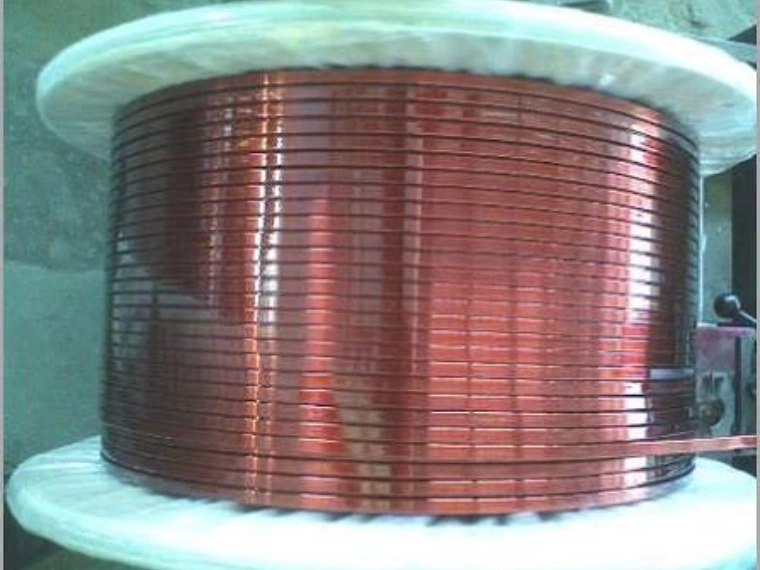
Online Dimensional Control
For precision rectangular copper wire, online measurement can be used before insulation is applied.
Typical monitoring parameters include:
| Measurement | Purpose |
| Width | Maintain conductor geometry |
| Thickness | Control conductor size |
| Line speed | Synchronize equipment |
| Tension | Maintain stable processing |
| Position | Keep conductor aligned |
| Roll position | Support automatic correction |
The basic closed-loop principle is:
Online Measurement → Deviation Detection → PLC → Rolling Adjustment → Dimensional Correction
This helps maintain more consistent dimensions during continuous production.
Mica vs. Enamel vs. Paper Insulation
Different electrical conductor applications require different insulation systems.
| Insulation Type | Main Characteristics | Typical Application |
| Enamel | Thin electrical coating | Motors, transformers, coils |
| Paper | Wrapped cellulose insulation | Transformers |
| Mica | High electrical and thermal resistance | Motors and generators |
| Composite system | Multiple insulation materials | Specialized electrical machines |
These insulation technologies should not be treated as interchangeable.
The conductor geometry, voltage level, thermal requirement, winding process, and final equipment design determine the appropriate insulation system.
For enamel insulated conductors, see: What is Enamelled Copper Flat Wire? Applications and Benefits
For paper insulated transformer conductors, see: Paper Covered Copper Flat Wire for Transformer Windings
Why Dimensional Stability Matters During Coil Forming
Mica insulated conductors may undergo further bending and forming when they are manufactured into motor or generator coils.
Therefore, the conductor must maintain stable geometry before and after insulation.
Important properties include:
- Straightness
- Consistent width
- Consistent thickness
- Controlled corner radius
- Appropriate copper softness
- Stable insulation adhesion
- Reliable bending behavior
If the bare conductor geometry varies significantly along the coil length, automated or precision coil forming becomes more difficult.
This makes upstream rolling stability an important part of the complete winding manufacturing process.
Quality Control Requirements
Quality inspection should cover both the bare copper conductor and the insulation system.
Bare Copper Inspection
Typical parameters include:
- Width
- Thickness
- Corner radius
- Surface quality
- Straightness
- Conductivity
- Mechanical condition
Insulated Conductor Inspection
| Inspection Item | Purpose |
| Overall dimensions | Verify finished conductor size |
| Insulation thickness | Maintain electrical design |
| Tape overlap | Ensure complete coverage |
| Surface condition | Detect insulation damage |
| Electrical insulation | Verify dielectric performance |
| Winding quality | Support downstream processing |
For high-performance electrical machines, inspection should be integrated into production rather than relying only on final sampling.
Production Equipment Requirements
A production line for mica insulated rectangular copper conductors may include several separate processes:
Pay-Off → Drawing → Annealing → Precision Rolling → Online Measurement → Surface Inspection → Mica Wrapping → Take-Up
Depending on the required product, the rolling section may include:
- Precision two-high rolling
- Multi-pass rolling
- Four-roll forming
- Precision sizing
- Online laser measurement
- Automatic roll adjustment
- Tension control
For integrated rolling and drawing solutions, see: Magnet Wire Rolling and Drawing Solutions for High Efficiency Electrical Conductors
Information Required Before Selecting Equipment
Before designing a production solution, manufacturers should define the conductor and insulation requirements.
| Required Parameter | Example |
| Copper grade | C11000 / OF Copper |
| Input diameter | mm |
| Bare conductor width | mm |
| Bare conductor thickness | mm |
| Width tolerance | ±mm |
| Thickness tolerance | ±mm |
| Corner radius | R mm |
| Copper condition | Soft / Semi-hard |
| Mica tape specification | Customer defined |
| Insulation thickness | mm |
| Number of layers | Customer defined |
| Production speed | m/min |
| Coil weight | kg |
| Online measurement | Required / Optional |
The production line can then be configured according to the actual conductor rather than selecting a rolling machine based only on nominal dimensions.
Conclusion
Mica insulated rectangular copper wire is an important conductor solution for motors, generators, and other demanding electrical machines.
The mica insulation system provides important electrical and thermal properties, but reliable insulation begins with a high-quality rectangular copper conductor.
Manufacturers need precise control of:
- Width and thickness
- Corner radius
- Surface quality
- Straightness
- Copper mechanical condition
- Dimensional tolerance
- Insulation thickness and overlap
- Tension during wrapping and take-up
By combining precision drawing, annealing, rolling, online dimensional measurement, controlled insulation wrapping, and stable take-up, manufacturers can achieve more consistent conductor quality for demanding motor and generator applications.
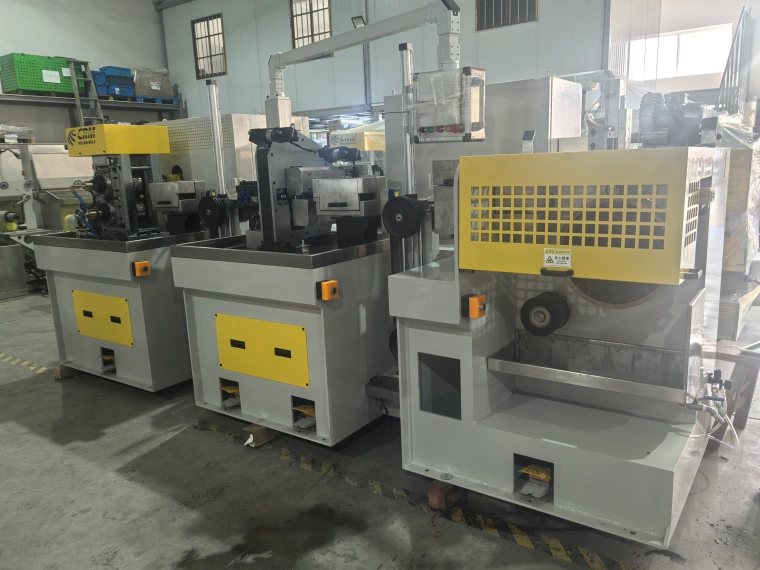
Sky Bluer Environmental Technology Co., Ltd. provides customized precision rolling mills and complete flat wire manufacturing solutions for copper conductors used in motors, generators, transformers, and other electrical equipment.
CRM solutions can be designed according to the customer’s raw material, finished width and thickness, tolerance, corner radius, surface requirements, production speed, and downstream insulation process.
If you are planning a rectangular copper conductor production project for mica insulated motor or generator windings, send us your technical specifications. Our engineering team can recommend the appropriate rolling process and production-line configuration.