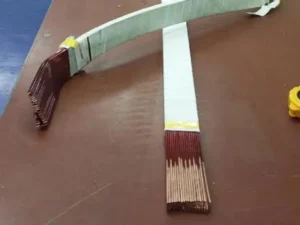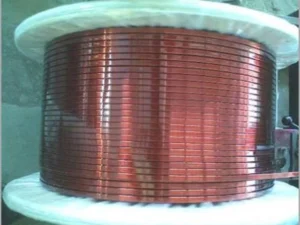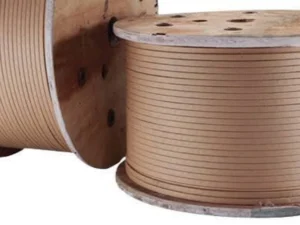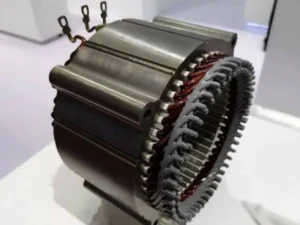
Copper flat wire has become an increasingly important conductor solution for modern motors and generators due to its excellent electrical conductivity, high slot utilization, and improved thermal performance.
Compared with traditional round copper wire, flat wire provides a more compact conductor arrangement inside the stator or rotor slot. This allows engineers to achieve higher power density, improved electromagnetic efficiency, and better utilization of limited installation space.
Today, copper flat wire is widely used in:
- Electric vehicle motors
- Industrial motors
- High-efficiency generators
- Wind power generators
- Aerospace electrical systems
- High-performance electrical machines
However, producing copper flat wire for motors and generators requires strict control of conductor geometry, surface quality, mechanical properties, and dimensional stability.
Why Copper Flat Wire Is Used in Motors and Generators
Traditional motors mainly use round copper wire because it is easy to process and wind.
However, round wire leaves unused space between adjacent conductors.
Copper flat wire solves this problem by providing a rectangular cross-section that better matches the geometry of modern motor slots.
| Feature | Round Copper Wire | Copper Flat Wire |
| Cross-section | Circular | Rectangular |
| Slot utilization | Lower | Higher |
| Packing efficiency | Moderate | Excellent |
| Current density optimization | Limited | Better |
| Heat dissipation | Moderate | Improved |
| Winding structure | Flexible | More compact |
| Manufacturing complexity | Lower | Higher |
The main advantage of flat wire is not simply the shape change, but the ability to optimize the complete electromagnetic design of the motor or generator.
Main Applications of Copper Flat Wire
Copper flat wire is used in different electrical machines depending on performance requirements.
Electric Vehicle Motors
Electric vehicle motors require high power density, compact size, and excellent thermal performance.
Flat copper conductors help manufacturers increase the amount of copper placed inside the stator slot.
Typical applications include:
- Hairpin motors
- Traction motors
- High-speed motors
- Hybrid vehicle motors
For EV-specific rectangular conductor technology, see: EV Motor Hairpin Wire Production Lines for Rectangular Copper Wire Manufacturing
Industrial Motors
Industrial motors require stable operation, long service life, and high efficiency.
Copper flat wire can improve:
- Copper filling factor
- Energy efficiency
- Thermal management
- Mechanical stability
Typical applications include:
| Motor Type | Flat Wire Application |
| Servo motor | High precision winding |
| Industrial AC motor | High efficiency winding |
| Compressor motor | Compact winding design |
| Generator motor | High power output |
Generators
Large generators require conductors capable of handling high current loads while maintaining reliable insulation performance.
Copper flat wire is commonly used in:
- Wind turbine generators
- Hydroelectric generators
- Industrial power generators
For generator applications, conductor dimensions, surface quality, and straightness are especially important because the winding process often requires precise assembly.
Typical Copper Flat Wire Specifications for Motors
The required dimensions vary depending on motor design.
Typical ranges include:
| Parameter | Typical Range |
| Material | C11000 / OF Copper |
| Width | 1–20 mm |
| Thickness | 0.3–6 mm |
| Width tolerance | ±0.005–0.03 mm |
| Thickness tolerance | ±0.003–0.02 mm |
| Corner radius | R0.1–0.8 mm |
| Conductivity | ≥97% IACS |
| Surface | Smooth and defect-free |
High-performance motors often require tighter dimensional control because conductor geometry directly affects slot filling and insulation thickness.
Important Requirements for Motor and Generator Flat Wire
Unlike general copper strip products, motor and generator flat wire has several special requirements.
Dimensional Accuracy
Width and thickness must remain stable throughout the entire coil length.
Important parameters include:
| Parameter | Importance |
| Width accuracy | Ensures proper slot positioning |
| Thickness accuracy | Controls winding height |
| Corner radius | Protects insulation |
| Straightness | Improves winding stability |
| Cross-section consistency | Ensures uniform electrical performance |
Even small dimensional variations can influence automated winding processes.
Surface Quality
The copper surface must be clean and free from defects.
Common requirements include:
| Requirement | Purpose |
| Smooth surface | Better insulation adhesion |
| Low burr level | Prevent insulation damage |
| No scratches | Improve reliability |
| Stable roughness | Consistent coating performance |
For insulated copper flat wire applications, surface quality becomes even more important.
Related article: What is Enamelled Copper Flat Wire? Applications and Benefits
Corner Radius Control
Corner radius is a critical factor for electrical insulation reliability.
A sharp corner may create:
- Higher electrical stress concentration
- Uneven insulation thickness
- Increased risk of insulation failure
A controlled radius provides:
- Better insulation coverage
- More stable winding performance
- Improved conductor reliability
Typical corner radius requirements:
| Application | Typical Radius |
| General flat wire | R0.2–0.8 mm |
| Motor conductor | R0.2–0.5 mm |
| High precision conductor | Customer defined |
Copper Flat Wire Manufacturing Process
A typical manufacturing process includes:
Copper Rod → Wire Drawing → Precision Rolling → Surface Treatment → Inspection → Take-Up
Step 1: Raw Material Preparation
High-quality copper rod or round copper wire is selected according to:
- Conductivity requirement
- Mechanical condition
- Final conductor size
Step 2: Drawing
Drawing improves:
- Diameter accuracy
- Material consistency
- Surface condition
Step 3: Precision Rolling
Rolling converts round copper wire into the required flat rectangular shape.
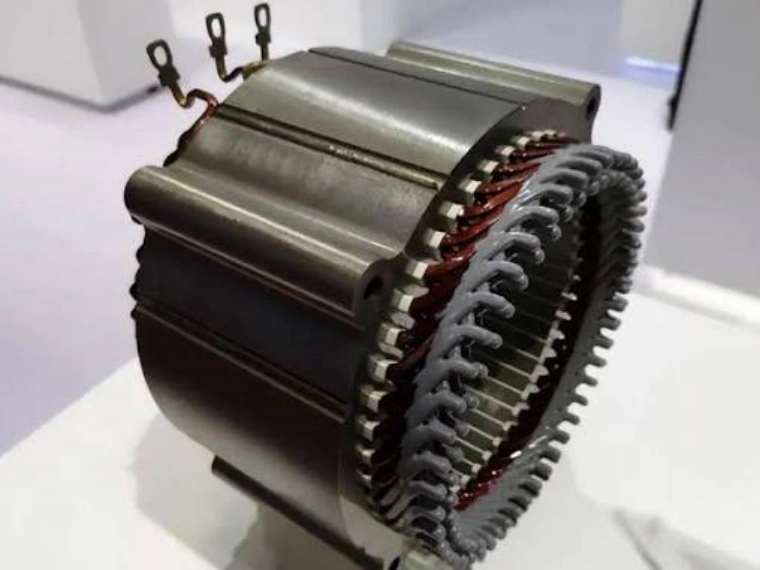
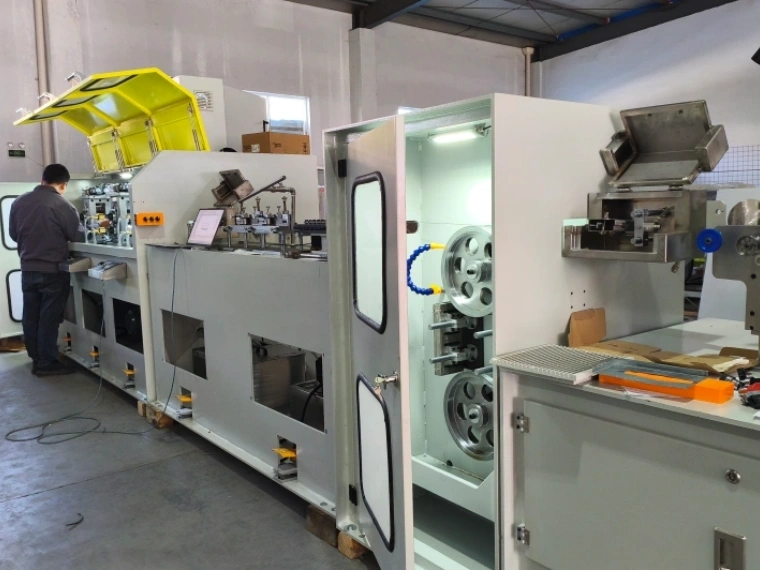
A typical production system may include:
| Equipment | Function |
| Pay-off system | Stable material feeding |
| Drawing unit | Diameter reduction |
| Precision rolling mill | Flat wire forming |
| Laser gauge | Online measurement |
| Take-up system | Coil production |
For complete flat wire manufacturing solutions, see: Complete Flat Wire Manufacturing Lines for Energy, Automotive, and Power Industries
Precision Rolling Requirements
Motor and generator copper flat wire production requires stable rolling conditions.
Important parameters include:
| Parameter | Effect |
| Rolling force | Controls deformation |
| Roll gap accuracy | Controls thickness |
| Roll alignment | Controls symmetry |
| Wire tension | Improves stability |
| Rolling speed | Influences productivity |
| Lubrication | Improves surface quality |
For high precision applications, automatic control systems can help maintain stable production over long operating periods.
Online Measurement and Quality Control
Modern copper flat wire production lines often use online measurement systems.
Typical inspection items include:
| Inspection Item | Method |
| Width | Laser measurement |
| Thickness | Laser measurement |
| Straightness | Online inspection |
| Surface defects | Optical inspection |
| Tension | Sensor monitoring |
| Coil quality | Automatic control |
The advantage of online measurement is that production deviations can be detected and corrected immediately.
Copper Flat Wire vs Enamelled Flat Wire
Copper flat wire is usually the conductive foundation before insulation.
| Product | Manufacturing Stage |
| Bare copper flat wire | Rolling and sizing |
| Enamelled flat wire | Copper rolling + enameling |
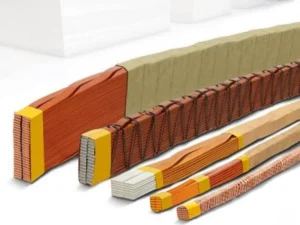
| Paper covered copper wire | Copper rolling + paper insulation |
| Mica insulated conductor | Copper rolling + mica wrapping |
Therefore, the quality of bare copper flat wire directly influences the performance of the final insulated conductor.
For more information: High Speed Flat Wire Production Systems for Enameled and Paper Covered Wire
How to Select a Copper Flat Wire Production Solution
Before selecting equipment, manufacturers should define:
| Item | Example Requirement |
| Copper grade | C11000 / OF Copper |
| Input diameter | mm |
| Final width | mm |
| Final thickness | mm |
| Corner radius | R mm |
| Tolerance | ±mm |
| Production speed | m/min |
| Coil weight | kg |
| Surface requirement | Smooth / polished |
| Automation level | Manual / Automatic |
A suitable production line should be designed according to the final motor or generator application rather than only the conductor size.
Conclusion
Copper flat wire plays an important role in the development of high-efficiency motors and generators.
Its advantages in:
- Higher slot utilization
- Improved power density
- Better thermal performance
- Compact winding design
make it an ideal conductor solution for modern electrical machines.
However, producing reliable copper flat wire requires precise control of:
- Width
- Thickness
- Corner radius
- Surface quality
- Straightness
- Electrical performance
Sky Bluer Environmental Technology Co., Ltd. provides customized precision rolling mills and complete flat wire production solutions for copper conductors, including motor, generator, transformer, and energy applications.
With advanced rolling technology, online measurement systems, and complete process integration, CRM helps manufacturers produce high-quality copper flat wire with stable dimensions and reliable performance.
If you are planning a copper flat wire production line for motors or generators, contact our engineering team with your conductor size, material grade, tolerance requirements, and production targets.