Introduction
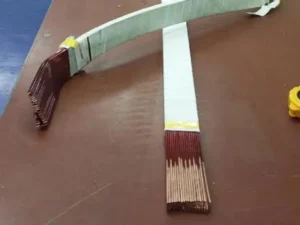
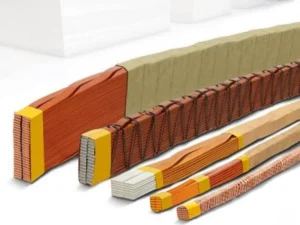
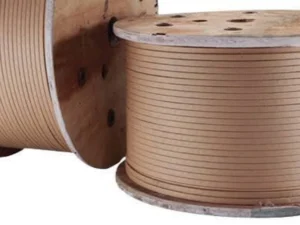
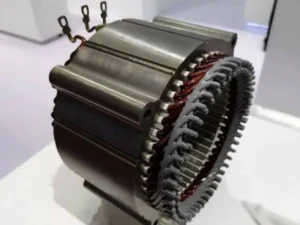
Hairpin winding technology has become the dominant solution for modern EV Motor Hairpin Wire Production Lines due to its high slot fill factor, excellent thermal conductivity path, and compatibility with fully automated laser welding systems. Compared with traditional round magnet wire, hairpin conductors rely on precisely controlled rectangular geometry and highly repeatable mechanical forming behavior.
In high-speed EV motor designs (typically 12,000–25,000 rpm), conductor geometry stability directly affects AC losses, thermal distribution, and inverter-driven electromagnetic efficiency. Even small deviations in thickness or edge radius can lead to uneven current density, localized heating, and welding instability during stator assembly.
The production of hairpin wire therefore begins upstream with precision rolling of high-purity copper into rectangular profiles, followed by controlled annealing, surface treatment, and forming-line optimization.
Hairpin Wire Electrical and Mechanical Requirements
EV motor design requires a balance between electrical conductivity, mechanical formability, and laser welding compatibility.
Material Standards
Copper Grades
- C11000 (ETP Copper)
- C10200 (OFHC Copper for high-performance EV motors)
Electrical Performance
- Conductivity: ≥ 101% IACS
- Resistivity stability: < ±1.5% variation along coil length
Mechanical Performance Window
Hairpin conductors must maintain stable deformation behavior during tight-radius bending:
- Tensile strength: 220–360 MPa (post rolling condition)
- Elongation: 10–25% (balanced ductility vs stiffness)
- Yield strength control: critical for springback consistency
- Work hardening index: tightly controlled for forming repeatability
Typical Cross-Section Ranges
| Thickness (mm) | Width (mm) | Application |
| 0.8 – 2.5 | 2 – 10 | Standard EV stator windings |
| 1.0 – 3.0 | 4 – 12 | High torque / SUV motors |
| 0.6 – 1.5 | 2 – 6 | High-speed compact motors |
Surface and Quality Requirements
- Surface defect level: zero micro-scratch tolerance (laser weld zone critical)
- Surface roughness: Ra ≤ 0.3–0.5 μm
- Edge condition: burr-free, controlled micro-radius
- Oxide layer thickness: strictly minimized for welding consistency
These parameters directly affect laser welding penetration stability and electrical joint resistance.
Manufacturing Flow for Hairpin Wire
Hairpin conductor production is a continuous but highly controlled multi-stage process.
Standard Production Chain
- Rod breakdown drawing (primary diameter control)
- Intermediate annealing (grain reset process)
- Multi-pass flat rolling to rectangular profile
- Edge radius correction rolling
- Final precision sizing pass
- Surface cleaning and micro-polishing
- Optional insulation pre-coating (enamel base layer)
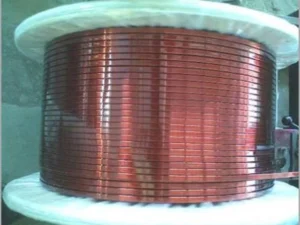
- Precision coiling for automatic forming line feeding
Process Integration Logic
Unlike transformer conductors, EV hairpin wire requires:
- Higher geometric repeatability
- Lower springback variability
- Strict batch-to-batch consistency
- Compatibility with fully automated forming systems
Thermal–Mechanical Coordination
Annealing and rolling must be synchronized:
Annealing temperature: 350–600°C (depending on reduction rate)
Controlled recrystallization to ensure uniform grain size
Avoid over-softening (which increases forming instability)
Avoid under-annealing (which increases springback)
Key Technical Challenges in Hairpin Wire Rolling
EV motor conductor production is significantly more demanding than transformer-grade flat wire due to dynamic forming requirements.
Springback Variation During Bending
Caused by uneven yield strength distribution
Leads to inaccurate hairpin geometry in automated forming lines
Micro-Crack Formation After High Reduction
Occurs at edges under excessive rolling stress
Directly affects fatigue life during vibration cycles
Edge Sharpness and Insulation Failure Risk
Sharp edges cause enamel coating breakdown
Increases partial discharge risk in high-voltage EV systems
Hardness Non-Uniformity Across Width
Leads to inconsistent bending angles
Causes assembly misalignment in stator slots
Surface Contamination and Welding Instability
Oil residues or oxide layers reduce laser absorption consistency
Results in weak or porous weld joints
Precision Rolling Control System
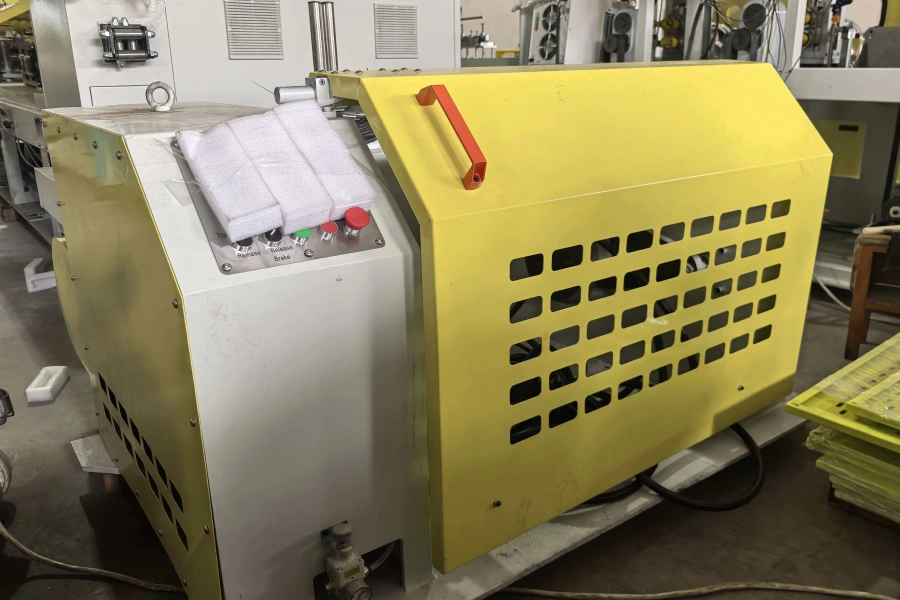
Modern EV hairpin wire rolling lines integrate multi-layer closed-loop control systems to ensure high repeatability.
Multi-Stage Rolling Control Architecture
- Differential speed control between roll sets
- Dynamic roll gap compensation (μm-level precision)
- Adaptive load balancing system
- Real-time deformation tracking
Hardness Feedback Loop (HV Control)
- Inline hardness monitoring after each critical pass
- Automatic adjustment of reduction ratio
- Ensures consistent forming behavior across coils
Edge Conditioning Technology
- Edge softening rolling process
- Micro-radius formation control
- Burr elimination through controlled deformation flow
Recrystallization Optimization
- Controlled annealing cycles integrated into rolling line
- Grain size homogenization across cross-section
- Reduction of anisotropic deformation behavior
Critical Tolerance Targets
- Thickness deviation: ≤ ±0.003 mm
- Width deviation: ≤ ±0.01 mm
- Hardness variation: ≤ ±5 HV
- Edge radius deviation: ≤ ±0.02 mm
Advantages in EV Motor Applications
Precision hairpin wire production provides significant performance improvements in EV motor systems.
Electrical Performance Improvements
- Lower AC losses at high frequency operation
- Improved current distribution uniformity
- Reduced hot-spot formation in stator slots
Thermal Management Benefits
- Higher thermal conductivity path efficiency
- Improved heat dissipation from winding to housing
- Reduced thermal aging of insulation systems
Manufacturing and Automation Benefits
- Stable laser welding performance
- High compatibility with robotic forming systems
- Reduced assembly tolerance stack-up
Motor Performance Gains
- Slot fill factor increase: +15–20%
- Higher torque density potential
- Improved efficiency at high-speed operation
- Reduced copper loss in inverter-driven systems
Application Scope in EV Industry
Hairpin wire is widely used in modern electrification systems:
- Battery electric vehicle (BEV) traction motors
- Hybrid electric vehicle (HEV) drive motors
- High-speed e-axle integrated systems
- Electric commercial vehicle drivetrains
- High-efficiency industrial servo motors
Conclusion
EV motor hairpin wire production represents one of the most advanced segments in precision copper conductor manufacturing. The combination of ultra-precise rolling technology, controlled metallurgical processing, and real-time digital monitoring enables consistent production of rectangular conductors suitable for automated winding and laser welding systems.
As EV motor designs continue evolving toward higher power density and faster rotational speeds, the demand for tighter tolerances, improved surface integrity, and more stable forming behavior will continue to increase. Precision rolling mills therefore play a central role in enabling next-generation electric drive technology.
These advancements are supported by Sky Bluer Environmental Technology Co., Ltd., contributing to higher precision, improved process stability, and more reliable production performance in EV motor conductor manufacturing systems.