CRM presents its latest CRM2020-S spring wire rolling machine at the Wuxi Taihu Spring Expo, demonstrating solutions for producing precision flat and shaped wire for spring applications.
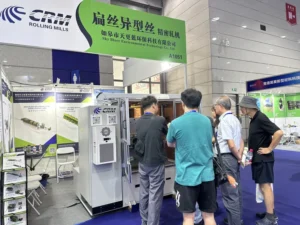
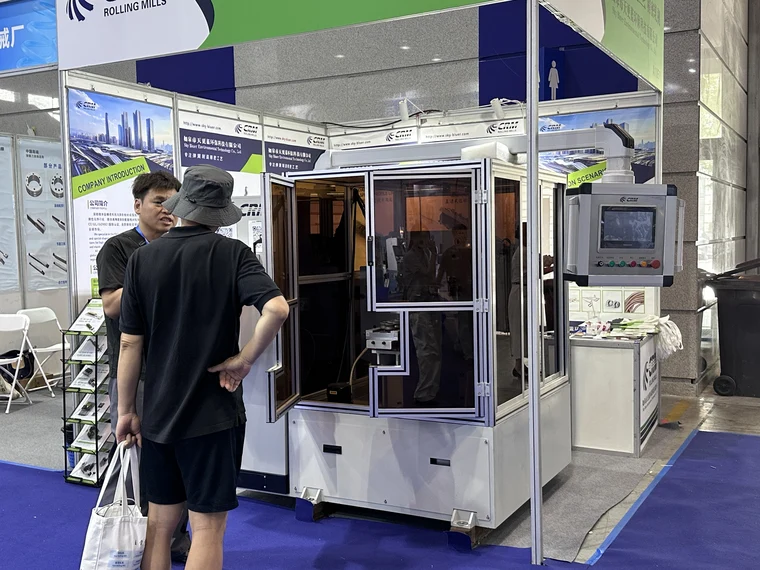
The CRM team is exhibiting at the Wuxi Taihu Spring Expo from August 20 to 22 at the Wuxi Taihu International Expo Center. At Booth B1051, we are showcasing our latest machine model, the CRM2020-S, with a clear focus on the needs of spring and spring-wire manufacturers.
Unlike a presentation based only on photographs, videos, or technical brochures, the actual CRM2020-S machine is on display at our booth. Visitors can inspect the machine up close, discuss their materials and applications, and speak directly with our technical and sales teams about their production requirements.
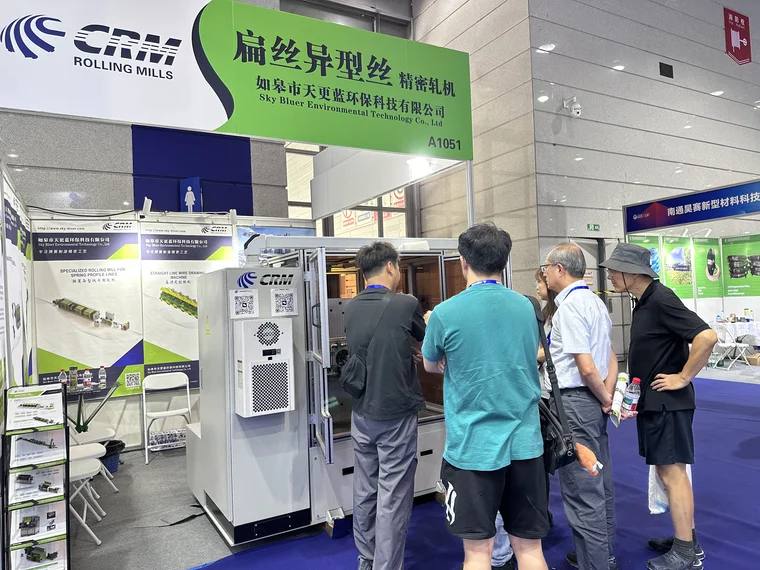
CRM2020-S for Flat and Shaped Spring Wire Production
The CRM2020-S is primarily intended for the production of precision flat and shaped wire used in the spring industry.
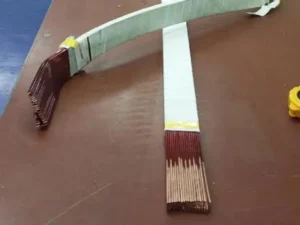
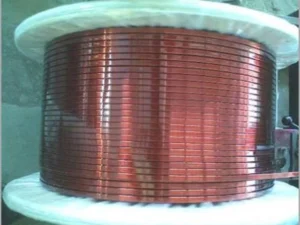
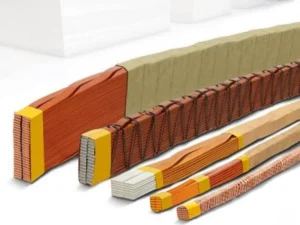
Although conventional round wire remains widely used, many modern spring applications require rectangular, flat, trapezoidal, or other specially shaped wire profiles. The selected wire profile can influence the spring’s available installation space, load characteristics, contact area, forming performance, and overall product design.
The CRM2020-S provides spring manufacturers with a solution for processing metal wire into the profile and dimensions required for subsequent spring forming. Typical applications may include:
- Wave springs
- Flat springs and spring clips
- Spiral and clock springs
- Constant-force springs
- Retaining rings and circlips
- Special-profile compression and torsion springs
- Customized spring elements for specific assemblies
At the exhibition, customers can bring their own drawings or samples and discuss important project details with our team, including the input wire diameter, finished width and thickness, required profile, dimensional tolerance, material condition, production capacity, and downstream forming process.
Common Spring-Wire Materials
Spring manufacturers work with a wide range of materials depending on the required strength, fatigue resistance, corrosion resistance, conductivity, operating temperature, and service environment.
Some of the most commonly used material categories for flat and shaped spring-wire applications include:
High-Carbon Spring Steel
High-carbon spring steel, including music wire and other carbon spring-wire grades, is widely used because of its strength, elasticity, fatigue performance, and cost-effectiveness. It is commonly found in general industrial springs, mechanical components, clips, retaining parts, and high-volume spring products.
Stainless Spring Steel
Stainless steel grades such as AISI 302, 304, and 316, as well as precipitation-hardening grades such as 17-7 PH, are frequently selected when corrosion resistance, cleanliness, appearance, or long service life is important.
Stainless spring wire is commonly used in electrical equipment, food-processing machinery, medical products, household appliances, marine environments, and other applications exposed to moisture or chemicals.
Alloy Spring Steel
Silicon-chromium and chrome-vanadium spring steels are commonly used for spring components that require high strength, good fatigue resistance, and reliable performance under repeated or dynamic loading.
These materials are widely found in automotive components, industrial machinery, tools, mechanical assemblies, and other demanding spring applications.
Copper Alloys
Phosphor bronze and beryllium copper are widely used for conductive springs, electrical contacts, terminals, connectors, switches, and precision spring components. These materials combine spring properties with electrical conductivity and corrosion resistance.
The suitability of each material for a specific rolling process depends on several factors, including its initial dimensions, hardness, required reduction, final profile, dimensional tolerance, and subsequent heat-treatment or forming process. Our team evaluates these requirements when recommending an equipment configuration.
Spring Applications Across Multiple Industries
Flat and shaped spring wire is used in a broad range of industries. At the Wuxi Taihu Spring Expo, we are discussing applications with customers from several major sectors.
Automotive and Electric Vehicles
Automotive manufacturers and component suppliers use precision spring products in transmissions, braking systems, seating mechanisms, motors, battery systems, electrical connections, locking assemblies, and many other mechanical and electronic components.
The continued development of electric vehicles is also increasing demand for compact, reliable spring and conductive components with consistent dimensions and performance.
Electrical and Electronics
Flat springs, contact springs, terminals, connectors, relay components, switches, and battery contacts are widely used in electrical and electronic products. These applications often require precise wire dimensions, controlled profiles, reliable conductivity, and stable forming performance.
Home Appliances and Consumer Products
Household appliances, power tools, office equipment, locks, and consumer products use large quantities of spring clips, flat springs, retaining components, and small precision spring parts.
For high-volume production, consistency in the incoming flat or shaped wire is important for maintaining stable forming and assembly processes.
Industrial Machinery
Industrial equipment uses wave springs, retaining rings, preload springs, sealing components, locking elements, and special-profile springs in bearings, pumps, valves, motors, gearboxes, and other mechanical systems.
Medical and Precision Equipment
Medical devices and precision instruments may require small spring components manufactured from stainless steel or specialty alloys. These applications typically place high demands on dimensional consistency, surface condition, cleanliness, and repeatable performance.
Aerospace and Other Specialized Applications
Aerospace and other high-performance industries use carefully engineered spring components for locking, sealing, vibration control, positioning, and load management. The selected material and wire profile must be matched to the application’s operating temperature, loading conditions, and service environment.
Meeting Customers at the Wuxi Taihu Spring Expo
One of the most valuable parts of this exhibition has been the opportunity to meet many of our long-standing customers again. Face-to-face conversations allow us to learn more about their current production, new product development, and plans for future equipment upgrades.
We have also welcomed many new visitors from the spring, wire, automotive, electrical, and metal-processing industries. Their feedback provides valuable insight into current market requirements, including tighter dimensional tolerances, more complex wire profiles, higher production efficiency, and the need for customized manufacturing solutions.
Displaying the CRM2020-S at the booth has made these conversations more practical. Instead of discussing a machine only in theory, customers can see the actual equipment while reviewing their drawings, samples, and production goals with our team.
Visit the CRM Team at Booth B1051
Today is the third and final day of the Wuxi Taihu Spring Expo. If you are attending the event, we invite you to visit Booth B1051 and see the CRM2020-S in person.
Whether you are producing wave springs, flat springs, retaining rings, conductive spring components, or other custom spring products, our team would be pleased to discuss your material, wire profile, tolerance, and production requirements.
Exhibition: Wuxi Taihu Spring Expo
Date: August 20–22
Venue: Wuxi Taihu International Expo Center
Address: No. 88 Qingshu Road, Taihu New City, Wuxi, China
Booth: B1051
We look forward to meeting more spring-industry professionals at the exhibition and continuing these technical discussions after the event.