Introduction
A copper strip rolling mill is specialized industrial cold rolling equipment designed for wide-width copper strip and heavy flat copper conductor production. Different from small flat wire rolling mills used for narrow fine wire, copper strip rolling mills feature larger roll spans, higher hydraulic rolling force, and automatic thickness control systems, supporting stable production of wide copper busbars, power strips, and electronic conductive strips. Many industry buyers confuse strip rolling mills with ordinary flat wire rolling mills, resulting in incorrect model selection and unqualified products. This article explains the structure, working principle, core parameters, and industrial applications of copper strip rolling mills, providing professional equipment selection references. Cross-check flat wire rolling systems at copper flat wire production process and general rolling knowledge at copper rolling process guide.
Core Structure of Copper Strip Rolling Mill
A complete copper strip rolling production system consists of six core modular units, ensuring full-automatic continuous wide-strip forming:
- Hydraulic Uncoiler: Supports large-weight copper coil raw materials with constant tension control to prevent strip deviation and wrinkling.
- Pre-Straightening and Cleaning Unit: Removes surface oxide, oil stains, and corrects strip flatness deviation before rolling.
- Main Rolling Stand: Available in two-roll and four-roll structures. Four-roll stands provide higher rigidity for ultra-thin wide strip production.
- AGC Hydraulic Gap Adjustment System: Automatic real-time roll gap calibration to maintain precise thickness tolerance.
- Closed-Loop Lubrication Cooling System: Controls rolling temperature and ensures uniform surface quality.
- Edge Trimming and Coiling Unit: Trims irregular edges and winds finished strips into standard industrial coils.
Working Principle of Copper Strip Rolling Mill
Copper strip rolling adopts room-temperature cold plastic deformation technology without material heating. The entire working process includes four systematic stages.
First, the uncoiler releases raw copper strip material, and the straightener corrects bending and torsion defects. Surface cleaning removes all impurities that may affect rolling quality. Second, the hydraulic rolling stand applies precise pressure to compress the copper blank to the target thickness while expanding the material width uniformly. Third, the online laser detection system continuously monitors thickness and flatness, feeding data back to the AGC hydraulic system for automatic roll gap adjustment to eliminate dimensional drift. Finally, edge trimming removes irregular edges, inline annealing eliminates rolling stress, and finished strips are automatically coiled for delivery.
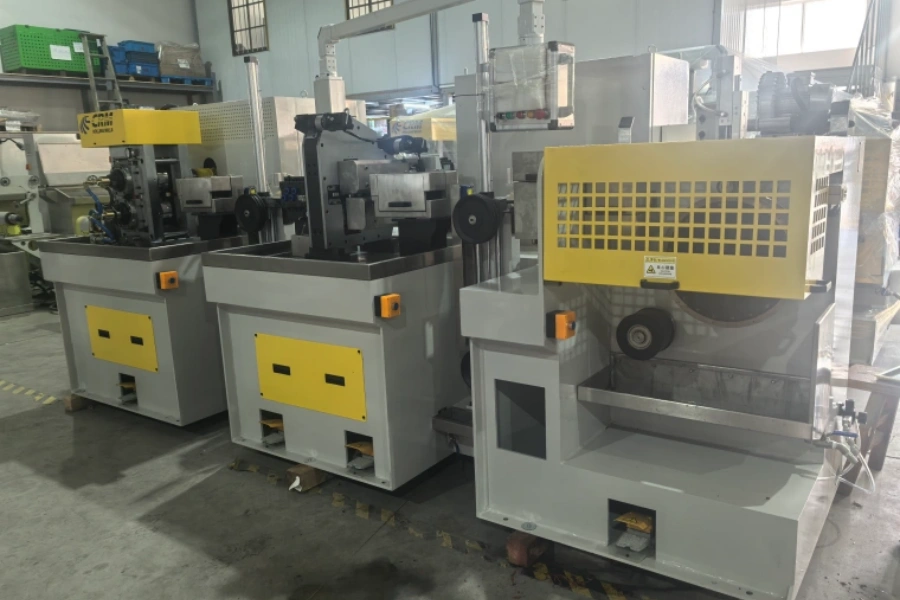
Key Technical Parameters of Industrial Strip Mills
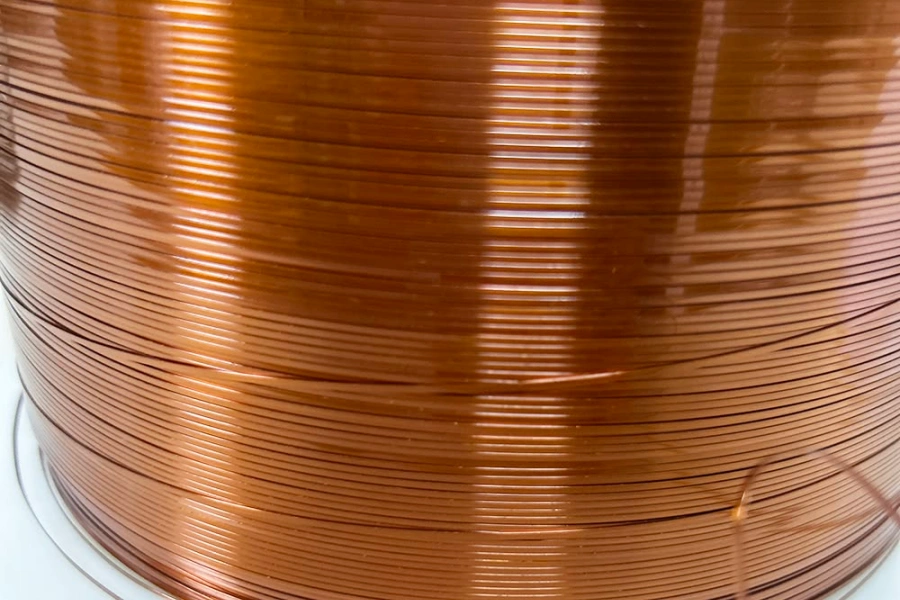
Modern copper strip rolling mills support ETP copper, oxygen-free copper, and copper alloy materials. Finished strip width ranges from 10mm to 250mm, with thickness from 0.2mm to 5mm. Precision models achieve thickness tolerance within ±0.005mm. Equipped with SIEMENS and Yaskawa servo drive systems, the equipment supports stable high-speed continuous production up to 360m/min, meeting large-scale industrial manufacturing demands.
Main Industrial Application Scenarios
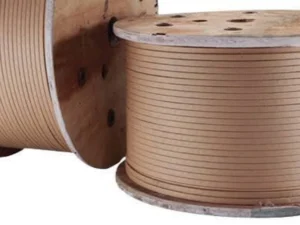
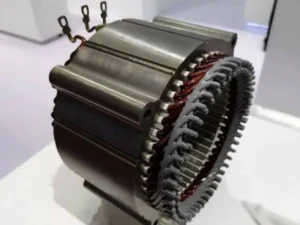
Copper strip rolling mills are widely used in power distribution, new energy storage, electronic manufacturing, transformer production, and automotive electrical industries. Typical products include high-voltage cabinet copper busbars, battery connection strips, electronic connector shielding strips, transformer wide conductive strips, and new energy vehicle battery module connecting strips. All products require excellent flatness, consistent thickness, and stable conductivity.
Difference Between Strip Rolling Mill and Flat Wire Rolling Mill
Strip rolling mills focus on wide-width copper materials above 10mm, equipped with high-pressure hydraulic systems and edge trimming functions. Flat wire rolling mills are designed for narrow fine wire below 10mm with lighter rolling force and no trimming modules. Strip mills target industrial busbar and power conductive products, while flat wire mills focus on precision enameled wire and electronic fine wire.
Conclusion
Copper strip rolling mills are essential core equipment for wide-section copper conductive material production, achieving high-precision, high-flatness, and high-stability copper strip manufacturing through hydraulic automatic control and high-rigidity rolling stands. Scientific equipment configuration and process control directly determine finished product quality and production capacity. Sky Bluer Environmental Technology Co., Ltd provides customized two-roll and four-roll copper strip rolling mill turnkey projects, covering uncoiling, rolling, trimming, annealing, and automatic coiling, delivering full lifecycle technical services for global industrial clients. For rolling and drawing process comparison, refer to copper rolling mill vs drawing machine; for motor rectangular wire production technology, visit rectangular copper wire motor manufacture.