Introduction
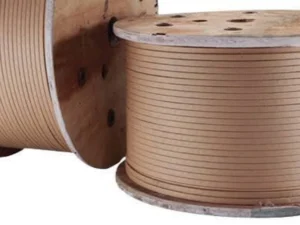
Flat copper wire manufacturers mainly rely on two metal forming technologies: cold rolling with copper rolling mills and tensile forming with wire drawing machines. Many factory buyers and process engineers confuse the advantages, limitations, and applicable scenarios of these two processes, resulting in improper equipment selection, unstable product quality, and increased production costs. To help manufacturers make accurate decisions, this article compares rolling mill and wire drawing machine(copper rolling mill vs drawing machine) technology from working principles, precision capability, surface quality, production efficiency, and material waste rates. This article provides clear selection guidelines for flat copper wire mass production. Refer to practical rolling procedures at/copper-flat-wire-production-process and overall rolling system knowledge at /copper-rolling-process-guide.
Fundamental Working Principle Differences
Copper Rolling Mill Working Logic
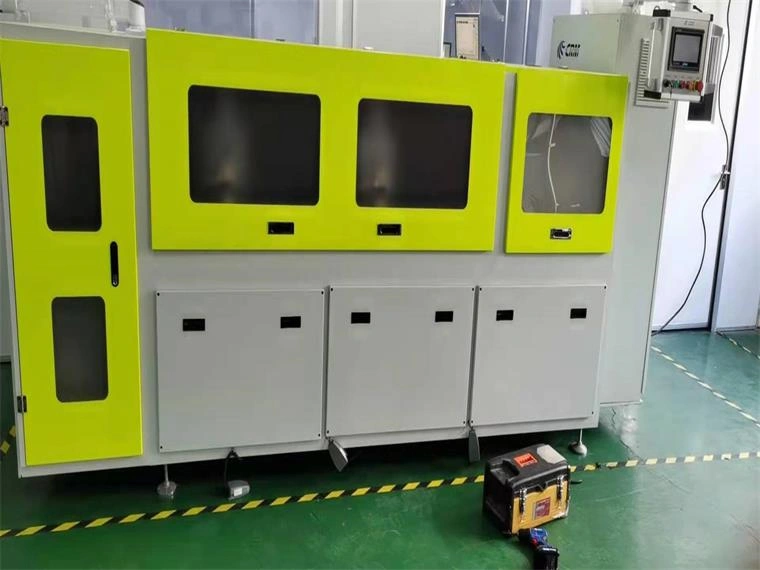
Rolling mills form copper wire through physical compression. Round copper rods pass through precise roll gaps, and rotating rolls apply uniform external pressure to reshape the wire cross-section. The deformation is even across the entire material section, and edge profiles can be precisely customized by changing roll shapes. No tensile force is applied during forming, minimizing internal residual stress.
Wire Drawing Machine Working Logic
Wire drawing machines rely on tensile force to pull copper rods through fixed-shape die holes. The cross-section shrinks under tension. For flat wire production, manufacturers must use special rectangular dies. However, tensile forming inevitably creates uneven edge stress, frequent edge burrs, and inconsistent flatness, making it unsuitable for high-precision flat wire requirements.
Comprehensive Performance Comparison Table
| Comparison Dimension | Copper Rolling Mill | Wire Drawing Machine |
| Dimensional Tolerance | ±0.001mm ultra-high precision | Minimum ±0.02mm tolerance |
| Surface Quality | Smooth, burr-free, low roughness | Easy scratches and edge burrs |
| Profile Flexibility | Custom flat, rectangular, trapezoidal profiles | Limited fixed die shapes |
| Production Efficiency | High-speed continuous rolling | Multiple passes, frequent die replacement |
| Material Waste Rate | ≤3% | 8%–12% |
Pros and Cons for Flat Wire Manufacturing
Copper Rolling Mill Advantages and Limitations
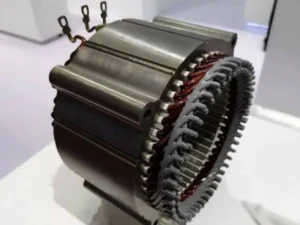
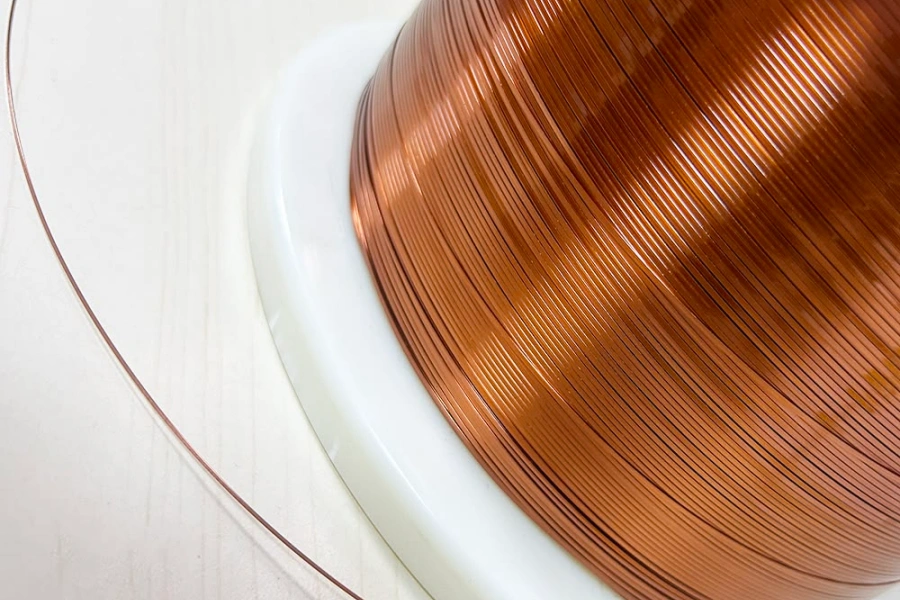
Rolling mills deliver unmatched precision for flat copper wire production. Uniform compression deformation ensures consistent thickness and width, excellent straightness, and stable electrical performance. Roll gaps can be adjusted freely without replacing molds, supporting flexible multi-specification production. Finished wire has minimal residual stress, perfectly adapting to automatic motor winding machines. The only downside is higher initial equipment investment and slightly higher technical maintenance requirements, especially for 4-roll high-precision models shown at /4-roll-copper-rolling-mill-precision-advantages.
Wire Drawing Machine Advantages and Limitations
Wire drawing machines feature low purchase cost and simple operation, ideal for ordinary round wire production. However, for flat copper wire, tensile forming causes unavoidable edge deformation, surface scratches, and dimensional deviation. Die wear is rapid during thin wire production, leading to frequent replacement and increased production costs. Drawing machines cannot meet micron-level precision requirements for automotive and aerospace flat wire.
Industrial Equipment Selection Guidelines
Manufacturers producing high-end flat copper wire for new energy vehicles, transformers, aerospace, and medical devices must choose rolling mill systems. Factories producing low-precision thick rectangular wire with loose tolerance requirements can adopt wire drawing machines for cost control. For maximum efficiency, many large manufacturers adopt hybrid solutions: drawing machines for preliminary diameter reduction and precision rolling mills for final flat forming, improving overall efficiency by 25%.
Conclusion
For professional high-precision flat copper wire manufacturing, copper rolling mill technology is far superior to traditional wire drawing processes, offering better precision, surface quality, stability, and lower material waste. Wire drawing machines are only suitable for low-standard thick copper wire production. Sky Bluer Environmental Technology Co., Ltd provides customized rolling and drawing combined production lines, high-precision copper rolling mills, and full-process turnkey solutions for global copper wire manufacturers, helping enterprises optimize production processes and improve product competitiveness. For strip rolling equipment principles, visit /copper-strip-rolling-mill-principle; for motor rectangular wire production, check /rectangular-copper-wire-motor-manufacture.