Industrial Background of Nickel Alloy Wire Drawing
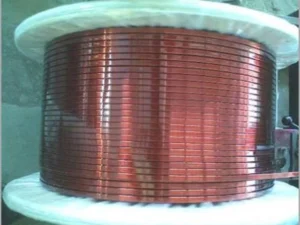
Nickel alloy materials are widely used in aerospace, chemical processing, marine engineering, and high-temperature resistance systems. Their mechanical behavior is significantly different from copper, aluminum, or stainless steel, mainly due to their high strength and rapid work-hardening characteristics.
During deformation, nickel alloys tend to increase in hardness very quickly, which makes continuous plastic processing difficult. This is why a standard wire drawing machine cannot be directly applied. Instead, a specialized Nickel Alloy Wire Drawing Machine is required to maintain stable deformation control while preventing wire fracture or surface damage.
In industrial production, the drawing process is not only about reducing diameter but also about maintaining microstructure stability and ensuring surface integrity under high mechanical stress.
Wire Drawing Process and Engineering Logic
The nickel alloy drawing process is a multi-stage controlled deformation system rather than a single reduction operation.
The complete workflow generally follows:
Raw Rod → Surface Treatment → Multi-pass Drawing → Intermediate Annealing → Fine Drawing → Final Spooling
Each stage plays a different engineering role. Surface treatment removes oxidation layers that would otherwise increase friction and damage the die system. Multi-pass drawing gradually reduces diameter, ensuring that stress is distributed rather than concentrated.
Intermediate annealing is particularly critical. Without it, the material becomes too brittle due to accumulated strain hardening. Fine drawing then ensures dimensional accuracy and surface smoothness.
A simplified comparison of process stages:
| Stage | Function | Risk if unstable |
| Rough Drawing | Initial reduction | Wire cracking |
| Annealing | Restore ductility | Breakage if skipped |
| Fine Drawing | Precision shaping | Diameter deviation |
For deeper downstream integration, see: How to Manufacture Nickel Alloy Flat Wire: Step-by-Step Guide
Machine Structure and Core Systems
A Nickel Alloy Wire Drawing Machine is built as a high-torque, multi-system coordination platform. Its design is centered on mechanical stability and process control rather than simple speed output.
The main systems include:
Mechanical Transmission System
This system provides pulling force through capstan units designed with reinforced alloy steel or ceramic coating. Nickel alloys require significantly higher traction force than normal metals, so structural rigidity is essential.
Die System
The die system determines final wire quality. Typically:
- Tungsten carbide dies for rough drawing
- Diamond dies for precision stages
Die geometry must be carefully optimized to avoid micro-cracks and excessive friction.
Cooling and Lubrication System
Heat accumulation is one of the biggest challenges in nickel alloy processing. Continuous cooling systems combined with controlled lubrication ensure thermal stability and reduce wear.
Control System
Modern machines use PLC-based systems with real-time feedback for tension, speed, and diameter control.
Technical Parameters Overview
Although configurations vary depending on production requirements, typical industrial parameters are:
| Parameter | Range |
| Inlet Diameter | 0.8–4.5 mm |
| Outlet Diameter | 0.05–2.0 mm |
| Drawing Speed | 15–30 m/s |
| Die Stages | 9–21 passes |
| Cooling Type | Emulsion circulation |
These parameters are adjusted according to alloy grade and target application.
.webp)
Industrial Applications of Nickel Alloy Wire
Nickel alloy wire is used in industries where extreme environmental resistance is required.
Typical applications include aerospace turbine systems, marine corrosion-resistant cables, chemical processing pipelines, and high-temperature resistance heating elements. Each application requires different levels of mechanical strength and surface quality.
For example, aerospace applications prioritize fatigue resistance, while chemical industries focus on corrosion stability. These differences directly influence machine configuration and process design.A complete production chain is often integrated with rolling systems: Nickel Alloy Flat Wire Production Line: From Wire Drawing to Precision Rolling
Engineering Challenges and Solutions
Nickel alloy processing introduces several technical challenges.
The most significant issue is work hardening. As the material is deformed, its strength increases rapidly, which raises the risk of wire breakage. Another challenge is die wear caused by high friction forces. Heat accumulation also affects dimensional stability and surface quality.
To address these issues, modern systems implement multi-stage annealing, intelligent lubrication control, and closed-loop tension regulation. These technologies significantly improve stability and extend die lifespan.
Conclusion and Industrial Value
A Nickel Alloy Wire Drawing Machine is not a simple mechanical device but a precision industrial system combining metallurgy, mechanical engineering, and automation control. Its role is to ensure that high-strength nickel alloys can be processed into stable, high-quality wire products for demanding industrial applications.
Sky Bluer Environmental Technology Co., Ltd. specializes in the design and manufacturing of advanced nickel alloy wire drawing systems and complete production line solutions. Our equipment is engineered for high stability, precision control, and long-term industrial reliability. If you are planning to build or upgrade a nickel alloy wire production system, Sky Bluer Environmental Technology Co., Ltd. can provide customized technical solutions and full production line support to ensure efficient and stable manufacturing performance.