Evolution of Flat Wire Manufacturing Systems
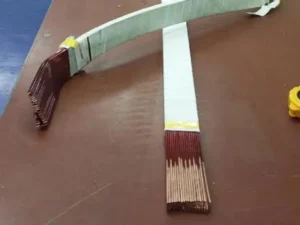
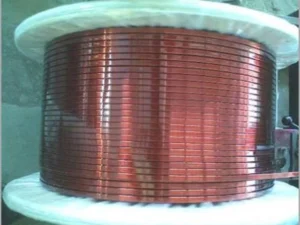
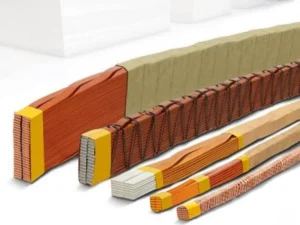
Nickel alloy flat wire production represents a higher level of manufacturing complexity compared to round wire processing. It requires not only precise wire drawing but also controlled rolling deformation to achieve flat geometry with stable thickness distribution.
A modern Nickel Alloy Flat Wire Production Line integrates multiple processes including drawing, annealing, rolling, surface conditioning, and final winding. This integration ensures continuous production flow and consistent material properties.
Traditional standalone machines are no longer sufficient for industrial-scale production because they cannot maintain dimensional consistency across multiple processing stages.
Overall Production Line Structure
The complete production line is typically composed of several interconnected systems working in sequence.
Core Process Flow
Raw Material → Wire Drawing → Intermediate Annealing → Precision Rolling → Surface Calibration → Final Winding
Each stage contributes to final product quality. Unlike single-machine setups, the production line ensures continuous material transfer without manual interruption.
System Overview Table
| Section | Function |
| Drawing Unit | Diameter reduction |
| Annealing Unit | Restore ductility |
| Rolling Unit | Shape transformation |
| Calibration System | Thickness control |
| Winding System | Final packaging |
Wire Drawing Stage in the Production Line
The wire drawing section acts as the foundation of the entire system. It prepares the material for subsequent rolling by controlling diameter uniformity and surface quality.
At this stage, tension stability is critical. Any fluctuation will directly affect downstream rolling precision. Therefore, the drawing machine must operate under tightly controlled PLC synchronization with the rest of the system.
To better understand the drawing stage, see our detailed guide on Nickel Alloy Wire Drawing Machine: Features, Process & Applications.
.webp)
Precision Rolling Technology
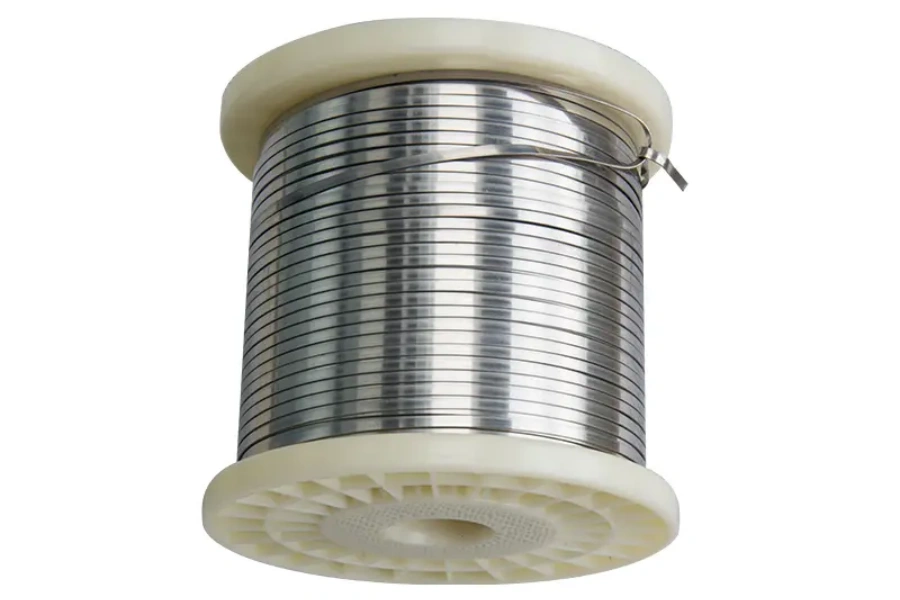
After completing the drawing process, the wire enters the precision rolling stage, where its geometry is transformed from a round profile into a flat or shaped structure. This stage is significantly more sensitive than drawing because it involves multi-directional deformation rather than linear reduction.
In rolling, the material is compressed between high-precision rollers under controlled pressure. Even minor deviations in roller alignment or pressure distribution can lead to thickness inconsistency across the width of the strip. This makes mechanical precision and system synchronization extremely important.
Unlike drawing, where deformation is mostly axial, rolling introduces complex stress distribution across both width and thickness directions. As a result, process stability depends on multiple parameters working simultaneously rather than independently.
Key engineering variables include roller pressure, rotational speed synchronization, thermal stability, and surface friction behavior. Among these, temperature control plays a crucial role because nickel alloys tend to harden further under heat accumulation, which can lead to uneven deformation resistance across the material surface.
A well-designed rolling system therefore integrates:
- Precision roller gap adjustment systems
- Real-time pressure compensation mechanisms
- Synchronization control with upstream drawing units
- Continuous surface lubrication management
These systems ensure that the final flat wire maintains consistent thickness tolerance and stable mechanical properties across long production runs.
Annealing and Material Stability Control
Annealing is one of the most critical processes in nickel alloy flat wire production because it directly determines whether the material can maintain ductility throughout continuous deformation stages.
During wire drawing, nickel alloys accumulate internal stress due to repeated plastic deformation. If this stress is not released, the material becomes increasingly brittle and may crack during the rolling stage. Therefore, intermediate annealing is not optional in industrial production.
Modern production lines usually integrate continuous annealing furnaces between drawing and rolling sections. This inline setup avoids batch transfer and helps maintain stable process continuity.
From an engineering perspective, annealing mainly performs three functions:
- Restores ductility by reorganizing the internal structure of the alloy
- Releases internal stress to prevent cracking in later stages
- Stabilizes surface condition for consistent rolling performance
Temperature control is highly sensitive in this process. Even small fluctuations can affect grain structure and final mechanical properties. For this reason, advanced systems use multi-zone heating and feedback control to keep temperature distribution stable and uniform.
Advantages of Integrated Production Lines
Compared to traditional standalone systems, integrated production lines offer significant advantages:
- Continuous production without interruption
- Reduced handling loss
- Higher dimensional consistency
- Lower labor dependency
- Improved energy efficiency
These advantages make integrated systems the preferred solution for large-scale nickel alloy manufacturing. Full process reference: How to Manufacture Nickel Alloy Flat Wire: Step-by-Step Guide
Industrial Applications of Flat Wire
Nickel alloy flat wire is widely used in:
- High-temperature heating systems
- Precision electronic connectors
- Aerospace structural components
- Energy transmission systems
- Specialized industrial sensors
Each application requires strict dimensional control, which is only achievable through integrated production systems.
Conclusion
A Nickel Alloy Flat Wire Production Line represents the highest level of integration in modern alloy processing technology. By combining drawing, annealing, and precision rolling into a continuous system, manufacturers can achieve superior dimensional accuracy and stable mechanical properties.
Sky Bluer Environmental Technology Co., Ltd. designs and manufactures advanced nickel alloy processing systems, including complete flat wire production lines and high-precision rolling solutions. Our engineering focus is on process stability, automation integration, and long-term industrial reliability. For manufacturers seeking to build or upgrade production capacity, Sky Bluer Environmental Technology Co., Ltd. provides fully customized Nickel Alloy Flat Wire Production Line solutions and professional technical support.