Introduction to Medical Titanium Rectangular Wire
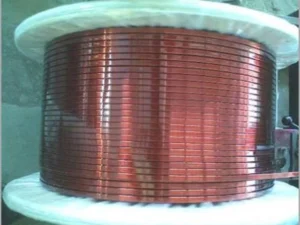
Medical titanium alloy rectangular wire Medical Alloy Vacuum Melting Equipment produced is a core special-shaped wire material for high-end orthopedic, dental and minimally invasive medical devices. Compared with stainless steel wire, titanium alloy wire has lower density, better biocompatibility, no magnetic conductivity, and closer elastic modulus to human bone, so it will not produce rejection reaction and mechanical stimulation.
Grade 2 pure titanium and Grade 5 Ti-6Al-4V ELI titanium alloy are two mainstream medical titanium materials. Titanium alloy has high chemical activity, easy oxidation, poor room-temperature ductility, and high rolling forming difficulty. Ordinary wire production lines are difficult to produce high-precision, non-oxidized medical titanium rectangular wire.
Sky Bluer specializes in customized manufacturing solutions for medical titanium special-shaped wire, overcoming the technical pain points of titanium wire oxidation, cracking and unstable forming. This article systematically introduces the full manufacturing process, core equipment, key control technologies and application scenarios of medical titanium rectangular wire, linking the full-cluster process system of the blog: Medical Wire Manufacturing Guide: From Melting to Precision Flat Wire Production.
Material Characteristics of Grade 2 & Grade 5 Medical Titanium Alloy
Grade 2 Pure Titanium (ASTM F67)
High purity, excellent biocompatibility, soft texture and good ductility. It is suitable for medical fixator wires, dental auxiliary wires and low-load implanted components, with strict requirements on surface finish and dimensional precision.
Grade 5 Ti-6Al-4V ELI Titanium Alloy (ASTM F136)
Extra low interstitial grade titanium alloy, with high strength, good fatigue resistance and stable mechanical properties. It is the preferred material for high-load orthopedic implants and precision surgical components, with extremely high requirements for rolling process consistency.
Full Manufacturing Process of Medical Titanium Rectangular Wire
Titanium alloy is extremely easy to oxidize at high temperature, so the whole process adopts oxygen-free and low-temperature control logic. The full process covers vacuum purification melting, forging blank making, fine wire drawing, vacuum annealing, special-shaped precision rolling and surface passivation treatment.
Process Flow: Titanium Raw Material Inspection
→ VAR Vacuum Remelting
→ Ingot Forging & Grain Refinement
→ Fine Wire Drawing
→ Multi-Stage Vacuum Annealing
→ Rectangular Profile Precision Rolling
→ Surface Passivation & Polishing
→ Precision Detection & Packaging
Vacuum Remelting Purification
Titanium raw materials are easy to absorb oxygen and nitrogen impurities. We adopt Vacuum Melting Equipment for VAR vacuum arc remelting to remove gas impurities, purify alloy components, and ensure that the titanium ingot meets medical-grade purity standards, avoiding brittle fracture of finished wire caused by impurities.
Low-Deformation Fine Wire Drawing
Titanium alloy has poor room-temperature ductility. The Wire Drawing Machine adopts low-speed uniform wire feeding and small-deformation multi-pass drawing process to avoid wire breakage and surface scratching, producing high-quality round wire blanks for subsequent rectangular rolling.
Multi-Stage Vacuum Annealing
Titanium wire is prone to work hardening during drawing. Multi-stage vacuum annealing is adopted to eliminate internal stress, restore material ductility, and completely avoid oxidation and color difference caused by open annealing.
Special-Shaped Precision Rolling (Core Process)
Different from flat wire, titanium rectangular wire requires accurate control of edge right angle, side flatness and overall dimensional symmetry. The customized special profile rolling mill adopts multi-pass profile forming technology to realize one-time precise forming of rectangular section. For rolling technical details, refer to: Precision Rolling for Medical Flat Wire: Process and Equipment.
Medical-Level Surface Passivation Treatment
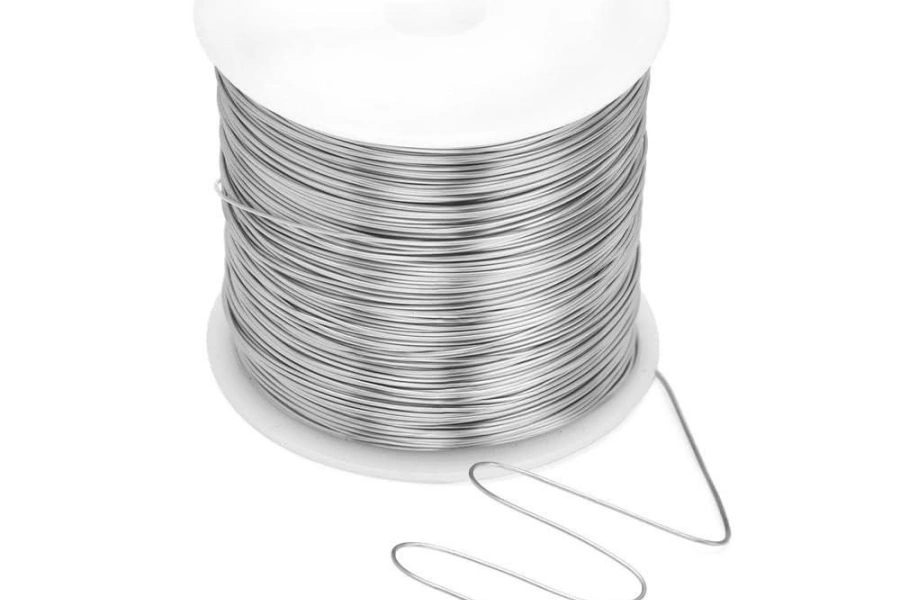
The rolled titanium rectangular wire undergoes professional chemical passivation and ultra-fine polishing to form a dense and stable oxide film on the surface, improving corrosion resistance and biocompatibility, and meeting long-term implantation requirements.
.webp)
Core Technical Difficulties & Breaking Solutions
High-Temperature Oxidation of Titanium Alloy
Solution: Full-process vacuum closed production, no high-temperature exposure to air, completely eliminate surface oxidation and color difference defects.
Low-Temperature Brittleness & Rolling Cracking
Solution: Optimize multi-pass micro-deformation rolling parameters, match segmented vacuum annealing, balance deformation force and material ductility, and reduce cracking rate to zero.
Rectangular Section Asymmetry & Edge Defects
Solution: Adopt customized profile roll mold and real-time closed-loop dimensional calibration technology to ensure regular rectangular section and consistent edge straightness.
Ultra-Precision Tolerance Control
Through high-rigidity rolling mill and intelligent compensation system, the thickness and width tolerance of titanium rectangular wire is stably controlled within ±0.002mm. For detailed tolerance control methods, see: How to Achieve ±0.002 mm Tolerance in Medical Rectangular Wire Manufacturing.
Medical Application Scenarios of Titanium Rectangular Wire
- Grade 2 Pure Titanium Rectangular Wire: Dental orthodontic accessories, medical soft tissue fixators, minimally invasive instrument connecting wires
- Grade 5 Titanium Alloy Rectangular Wire: Orthopedic bone fixation wires, spinal correction accessories, high-strength surgical precision components
FAQ for Medical Titanium Rectangular Wire Manufacturing
Q1: Why is titanium medical wire more difficult to produce than stainless steel wire?
A: Titanium alloy has high chemical activity, easy oxidation, poor room-temperature ductility, and strict requirements for deformation control and oxygen-free environment, with higher process and equipment thresholds.
Q2: What is the key to producing high-quality titanium rectangular wire?
A: Vacuum oxygen-free full-process production, multi-pass micro-deformation rolling, matched vacuum annealing process and special-shaped profile precision rolling mold.
Q3: Can your equipment produce customized special-shaped titanium wires?
A: Yes. We can customize trapezoidal, rectangular and other special cross-section titanium wires according to customer drawings, meeting personalized medical device design requirements.
Q4: Does the finished titanium wire need special anti-corrosion treatment?
A: Yes. Professional passivation and polishing treatment is required to form a stable protective layer and ensure long-term biocompatibility in human body environment.
Q5: What is the precision level of your titanium rectangular wire production line?
A: It can stably produce medical titanium rectangular wire with ±0.002mm ultra-precision tolerance and flatness ≤0.3mm/m, reaching international medical implant grade standards.
Recommended Titanium Wire Production Equipment & Turnkey Line
Core Recommended Equipment: Grade 2/Grade 5 Titanium Rectangular Wire Production Line, Special Profile Wire Rolling Mill, Vacuum Melting Equipment
Sky Bluer Medical Alloy Vacuum Melting Equipment solves the industry pain points of titanium wire oxidation, cracking and low precision. The full-line equipment is perfectly matched, with stable process and high finished product qualification rate, which is the preferred solution for high-end medical titanium wire manufacturers.
Looking for the right titanium wire production equipment? Contact our engineers for a tailored production line proposal and a competitive price.