Introduction: Precision & Compliance in Modern Medical Flat Wire Production
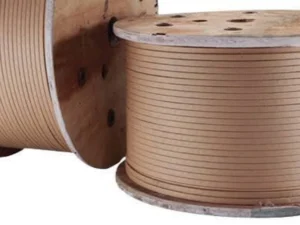
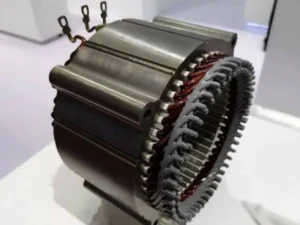
Medical flat wire and profiled wire are foundational components for high-end medical devices, including vascular stents, orthodontic wires, surgical guide wires, orthopedic implants, and pacemaker electrodes. Unlike ordinary industrial metal wire, medical-grade wire requires ultra-tight dimensional tolerance, excellent surface finish, stable mechanical properties, and strict biocompatibility compliance. Even minor deviations in thickness, width, or surface defects can lead to device failure and clinical safety risks.
Most traditional wire manufacturing factories only focus on intermediate rolling and drawing processes, lacking integrated capabilities for raw material purification and vacuum melting, resulting in unstable alloy composition and inconsistent finished wire quality. As a professional manufacturer with 20+ years of industrial rolling experience and 669+ global industrial partners including SIEMENS, Yaskawa, SKF, and OMRON, Sky Bluer delivers full-turnkey medical wire manufacturing solutions covering vacuum melting, forging, wire drawing, precision cold rolling, vacuum annealing, surface treatment, and intelligent detection. This guide serves as the core pillar page of our medical wire manufacturing knowledge cluster, systematically elaborating the full-process manufacturing technology, core equipment configuration, quality control standards, and ultra-precision production solutions for mainstream medical alloy wires.
This article focuses on engineering technology and equipment application rather than basic material popular science, providing actionable technical guidance for medical wire manufacturers to achieve high-precision, high-yield, and compliant mass production.
Complete Manufacturing Workflow of Medical Precision Flat Wire
All mainstream medical alloy wires (stainless steel, titanium alloy, Nitinol, cobalt-chromium alloy) follow a standardized high-precision manufacturing process. The full workflow runs through raw material inspection, vacuum purification smelting, ingot processing, wire forming, heat treatment, precision rolling, surface finishing, and final inspection, forming a closed-loop production system with strict quality control. The standardized process flow is as follows:
Raw Material Inspection & Sorting
→ VIM/VAR Vacuum Melting
→ Ingot Homogenization & Hot Forging
→ Hot Rolling Rough Forming
→ Multi-Pass Fine Wire Drawing
→ Vacuum Continuous Annealing
→ Ultra-Precision Cold Rolling (Flat/Profiled Wire)
→ Precision Surface Treatment
→ Online Dimensional & Surface Inspection
→ Dust-Free Coiling & Sealed Packaging
Raw Material Inspection & Sorting
Medical wire production starts with strict raw material screening. Impurity elements such as carbon, oxygen, and sulfur in raw metal materials directly affect the biocompatibility and fatigue resistance of finished wires. We configure professional spectral analysis equipment to detect material composition, strictly screening raw materials that meet ASTM medical-grade standards. Unqualified raw materials are eliminated to avoid batch quality defects in subsequent processes.
- Core Process Purpose: Control initial material purity and eliminate hidden dangers of composition deviation
- Quality Control Difficulty: Trace impurity element detection and batch consistency control
- Supporting Equipment: Raw material spectral analyzer, precision hardness tester
VIM/VAR Vacuum Melting & Purification
Ordinary atmospheric melting will cause medical alloys to absorb oxygen, nitrogen and other impurities, resulting in poor corrosion resistance and easy fracture of finished wires. For high-end medical alloy materials, secondary vacuum melting is essential. Sky Bluer’s supporting Vacuum Melting Equipment includes VIM (Vacuum Induction Melting) and VAR (Vacuum Arc Remelting) systems, which can effectively remove gas impurities and non-metallic inclusions, uniform alloy composition, and improve material compactness.
- Core Process Purpose: Purify alloy components, eliminate internal pores and inclusions, and meet medical biocompatibility standards
- Quality Control Difficulty: Vacuum degree stability and uniform ingot crystallization
- Equipment Advantage: Our vacuum melting system supports adjustable vacuum degree (10⁻³Pa high vacuum), realizing ultra-high purification of medical alloys
Ingot Homogenization & Hot Forging
After vacuum melting, the alloy ingot has slight component segregation and uneven internal stress. High-temperature homogenization heat treatment and hot forging are adopted to refine grain structure, eliminate casting stress, and improve material ductility, laying a foundation for subsequent multi-pass drawing and rolling to avoid wire cracking and fracture.
Multi-Pass Fine Wire Drawing
The forged rough wire is processed into precise round wire blank through multi-pass continuous drawing. The Wire Drawing Machine independently developed by Sky Bluer adopts servo constant tension control technology, which realizes uniform wire diameter and stable surface quality. Reasonable drawing pass distribution can effectively reduce work hardening of medical alloys and improve production continuity.
Vacuum Continuous Annealing
Medical alloy wires are prone to work hardening during drawing and rolling, resulting in increased brittleness and poor formability. Traditional open annealing easily causes surface oxidation and discoloration. Our vacuum annealing equipment realizes oxygen-free heat treatment, accurately controls annealing temperature and holding time according to different alloy characteristics, eliminates internal processing stress, and restores material ductility without damaging surface finish.
Ultra-Precision Cold Rolling (Core Process)
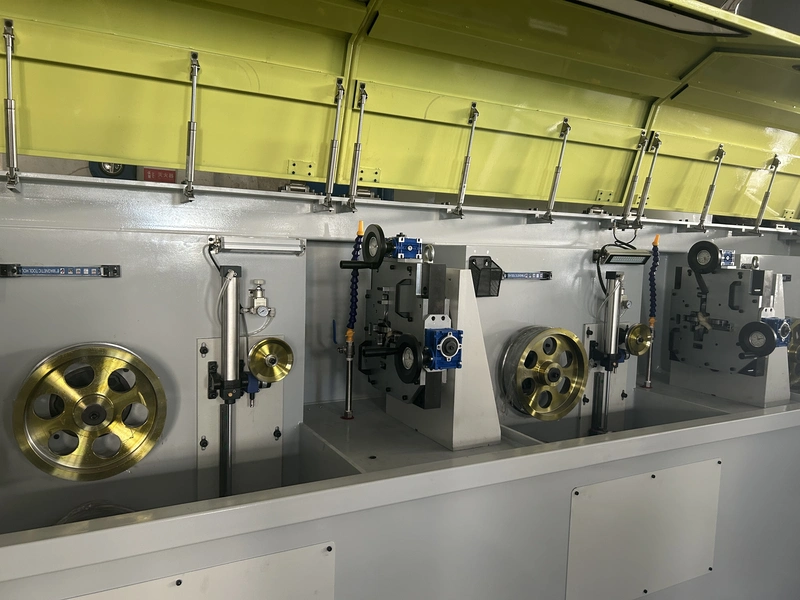
Precision cold rolling is the core process determining the dimensional accuracy and flatness of medical flat wire. Different from ordinary industrial rolling mills, the Precision Rolling Mill used for medical wire production adopts multi-stand micro-deformation rolling technology, high-rigidity fuselage and tungsten carbide rolls, with automatic temperature compensation and closed-loop dimensional feedback system. It can realize ultra-precision forming of flat wire and special-shaped wire such as rectangle and trapezoid, with the minimum tolerance up to ±0.001mm.
For professional production parameters and process details of this core process, please refer to our exclusive cluster article: Precision Rolling for Medical Flat Wire: Process and Equipment.
Precision Surface Finishing
Medical implant-grade wires require mirror-level surface finish without scratches, burrs and oxide layers. After cold rolling, the wires undergo professional electrolytic polishing and ultra-fine grinding treatment to remove surface micro-defects, improve surface smoothness and corrosion resistance, and fully meet medical sterile application standards.
Intelligent Online Inspection & Precision Packaging
The production line is equipped with full-dimensional online inspection system, which realizes real-time monitoring of wire thickness, width, flatness and surface defects. All qualified products are automatically coiled in a dust-free workshop and sealed and packaged to avoid secondary pollution, meeting the strict requirements of medical device production.
Main Medical-Grade Alloy Wire Technical Parameter Comparison Table
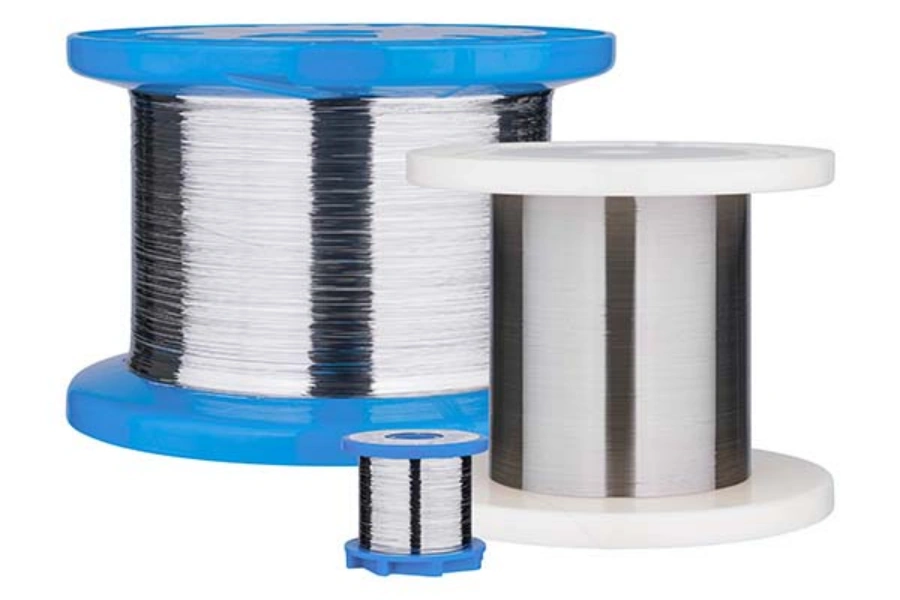
Different medical alloy materials have significant differences in process parameters, tolerance standards and applicable equipment. We have sorted out the core parameters of six mainstream medical wires, providing accurate parameter basis for manufacturers to select processes and equipment. All data are summarized and optimized based on international medical standards and actual production experience, with higher practicability than ordinary industry parameter tables.
| Material Grade | Executive Standard | Thickness Range (mm) | Width Range (mm) | Industry Standard Tolerance | Sky Bluer Ultra-Precision Tolerance | Core Supporting Equipment | Typical Medical Applications |
| 316LVM Stainless Steel | ASTM F138 | 0.01–0.30 | 0.035–0.80 | ±0.005mm | ±0.002mm | Stainless Steel Flat Wire Production Line, Precision Cold Rolling Mill | Vascular guide wire, surgical spring, implant accessories |
| 304V Stainless Steel | ASTM A313 | 0.01–0.25 | 0.03–0.75 | ±0.006mm | ±0.002mm | Multi-Pass Wire Drawing Machine, Flat Wire Flattening Mill | Orthodontic wire, medical filter wire, minimally invasive instrument wire |
| Grade 2 Pure Titanium | ASTM F67 | 0.02–0.35 | 0.08–0.80 | ±0.005mm | ±0.002mm | Titanium Rectangular Wire Production Line, Special Profile Rolling Mill | Orthopedic implant wire, medical fixture wire |
| Grade 5 Ti-6Al-4V ELI | ASTM F136 | 0.02–0.30 | 0.07–0.70 | ±0.006mm | ±0.002mm | High-Speed Titanium Cold Rolling Mill, Vacuum Melting Equipment | High-strength surgical components, dental implant accessories |
| Nitinol (NiTi Alloy) | ASTM F2063 | 0.025–0.20 | 0.076–0.80 | ±0.005mm | ±0.002mm | Micro Precision Rolling Mill, Vacuum Annealing Furnace | Vascular stents, shape memory guide wires, orthodontic memory wires |
| MP35N / CoCr Alloy | ASTM F562 | 0.015–0.28 | 0.06–0.75 | ±0.006mm | ±0.002mm | Alloy Multi-Stand Rolling Mill, Fine Wire Drawing Line | Pacemaker electrode wires, high-fatigue medical implant wires |
Core Technical Challenges in Medical Wire Manufacturing & Optimized Solutions
Medical precision flat wire manufacturing faces many technical bottlenecks in actual production, including material hardening, dimensional tolerance drift, surface oxidation, and low production yield. Based on years of engineering practice, Sky Bluer has targeted solutions for core pain points, relying on self-developed precision equipment and mature process systems to help manufacturers break through production limitations.
Ultra-Tight Tolerance Control Difficulty
Most ordinary rolling mills can only maintain ±0.01mm tolerance, which cannot meet the precision requirements of high-end medical devices. Long-term continuous production is prone to dimensional deviation caused by equipment temperature rise and roll wear. Sky Bluer Solution: Equip all medical-grade rolling mills with real-time temperature compensation system and closed-loop servo feedback system, with high-rigidity fuselage design to reduce deformation. For ultra-precision production scenarios, we support customized processes to achieve ±0.001mm minimum thickness tolerance and ±0.002mm width tolerance. For detailed tolerance control technologies, please check: How to Achieve ±0.002 mm Tolerance in Medical Rectangular Wire Manufacturing.
Alloy Material Cracking & Work Hardening
Titanium alloy, Nitinol and cobalt-chromium alloy have high hardness and poor ductility, which are easy to crack and break during rolling and drawing. Sky Bluer Solution: Adopt multi-pass micro-deformation rolling process, match segmented vacuum annealing process, reasonably distribute processing deformation, eliminate material hardening stress in real time, and effectively reduce wire cracking rate.
Surface Oxidation & Defect Problems
Medical wires are extremely sensitive to surface defects, and oxidation scratches will affect biocompatibility and service life. Sky Bluer Solution: Adopt full-process oxygen-free production from vacuum melting to vacuum annealing, equipped with dust-free production environment and professional surface finishing process, to ensure mirror-level surface finish of finished wires without oxidation and burrs.
Unstable Batch Production Consistency
Traditional manual adjustment production leads to large differences in wire parameters between batches. Sky Bluer Solution: Fully automated intelligent production line with one-key parameter setting and automatic memory of process data, realizing consistent production parameters for each batch of products and improving product qualification rate to over 99.5%.
Classification Application Scenarios of Medical Precision Flat Wire
Different medical alloy flat wires have unique performance advantages and are widely used in subdivided medical device fields. All our production lines and equipment are customized for targeted application scenarios to ensure matching production accuracy and performance:
- Medical Stainless Steel Wire (316LVM/304V): With excellent corrosion resistance and mechanical stability, mainly used for vascular guide wires, surgical suturing wires, orthodontic brackets and medical filter components. Learn more about professional production processes: How Medical Stainless Steel Flat Wire Is Made: Process, Equipment and Applications.
- Medical Titanium Alloy Wire (Grade2/Grade5): Low density, good biocompatibility and no magnetic conduction, widely used in orthopedic fixation wires, dental implants and minimally invasive surgical instruments. For titanium wire professional manufacturing technology, see: How Medical Titanium Rectangular Wire Is Manufactured?.
- Nitinol Shape Memory Alloy Wire: With unique shape memory function and super elasticity, it is the core material of vascular stents, occluders and minimally invasive intervention devices.
- MP35N/CoCr Cobalt-Chromium Alloy Wire: High fatigue resistance and stable electrical conductivity, specially used for pacemaker electrode wires, cardiac implant wires and long-term in-vivo medical components.
Frequently Asked Questions (FAQ) About Medical Wire Manufacturing
We have sorted out 8 high-frequency professional questions for medical wire manufacturers, covering equipment performance, process parameters, production solutions and after-sales service, to solve core production doubts for customers:
Q1: What is the ultra-precision tolerance that your medical wire rolling equipment can achieve?
A: Our customized medical-grade precision rolling mill can stably achieve ±0.002mm conventional ultra-precision tolerance, and support customized ultra-tight tolerance production up to ±0.001mm, which is far higher than the industry standard, meeting the manufacturing requirements of high-end implant-grade medical wires.
Q2: Can you provide a full turnkey solution from vacuum melting to finished medical wire?
A: Yes. Different from most suppliers that only provide single rolling or drawing equipment, Sky Bluer supports one-stop full-process solutions including vacuum melting, forging, drawing, rolling, annealing, surface treatment and packaging, realizing full factory customized construction for medical wire production.
Q3: What medical alloy materials can your production line process?
A: Our equipment and production lines are compatible with all mainstream medical-grade alloys, including 316LVM/304V medical stainless steel, Grade2/Grade5 titanium alloy, Nitinol nickel-titanium alloy, MP35N and CoCr cobalt-chromium alloy, covering all mainstream materials for medical precision wire.
Q4: How to avoid surface scratches and oxidation defects in medical wire production?
A: We adopt full-process vacuum oxygen-free heat treatment, high-precision non-scratch rolling dies and dust-free closed production environment, matched with professional post-processing polishing technology, to completely avoid surface oxidation, scratches and burrs, ensuring medical-grade surface finish.
Q5: What is the production efficiency advantage of your medical wire production line?
A: Our integrated rolling and drawing production line improves overall production efficiency by 25% compared with traditional separate equipment, and reduces material waste rate by more than 15%. The fully automated production system reduces manual intervention and realizes 24-hour stable continuous production.
Q6: Do your equipment and production lines meet international medical production standards?
A: All our production equipment and process solutions comply with ASTM medical material standards and international medical device manufacturing specifications. The finished wires produced meet biocompatibility and dimensional precision requirements for medical clinical applications.
Q7: Can you provide customized production line solutions according to customer’s production capacity and product specifications?
A: Yes. We provide fully customized turnkey solutions according to customers’ required wire thickness, width, material type, daily output and precision standards, including equipment configuration, process debugging, factory layout and personnel training.
Q8: What global after-sales support can you provide?
A: We provide 24/7 global responsive after-sales service, including on-site installation, commissioning, technical training, equipment maintenance and long-term technical guidance, supporting stable production of customers’ factories worldwide.
Recommended Complete Medical Wire Turnkey Production Line Solution
Based on the full-process manufacturing characteristics of medical precision flat wire, Sky Bluer integrates independent core equipment to launch a full-chain turnkey solution from vacuum melting to finished wire packaging, solving the pain points of scattered equipment procurement, disjointed processes and unstable quality for medical wire manufacturers.
Core Equipment Configuration List
- Vacuum Melting System: VIM/VAR dual vacuum melting equipment, for high-purity smelting of medical alloys
- Multi-Pass Wire Drawing Machine: Servo constant tension drawing equipment, for precise round wire blank forming
- Ultra-Precision Rolling Mill: Multi-stand micro-deformation cold rolling equipment, core equipment for flat/profiled wire precision forming
- Vacuum Continuous Annealing Furnace: Oxygen-free stress relief heat treatment equipment
- Intelligent Online Inspection System: Real-time dimensional and surface defect detection equipment
- Automatic Dust-Free Coiling & Packaging Machine: Final sterile packaging equipment
Solution Core Advantages
- Full-process integrated design, seamless connection of each process, no process bottleneck
- Ultra-precision tolerance control, stable mass production of ±0.002mm high-precision wire
- Compatible with all mainstream medical alloy materials, wide application range
- 20+ years of rolling technology accumulation, 669+ global industrial brand certification
- One-stop service: customized design, factory installation, technical training, lifelong after-sales
Inquiry Guidance
If you need customized medical wire production line scheme, equipment parameter list, production layout drawing and accurate quotation, please contact our professional engineering team via info@precision-rolls.com. We will provide targeted turnkey solutions according to your production needs, and help you build a high-efficiency, high-precision medical wire intelligent production factory.
Internal Link & Cluster Resource Summary
This blog is the core of Sky Bluer’s Medical Wire Manufacturing theme cluster. For more professional segmented process and equipment knowledge, please browse our other articles:
How Medical Stainless Steel Flat Wire Is Made: Process, Equipment and Applications
Precision Rolling for Medical Flat Wire: Process and Equipment
How Medical Titanium Rectangular Wire Is Manufactured?
Vacuum Melting Equipment for Medical Alloy Flat Wire Manufacturing
How to Achieve ±0.002 mm Tolerance in Medical Rectangular Wire Manufacturing