In the evolving landscape of precision wire manufacturing, traditional wire drawing machines—relying solely on die-based diameter reduction—are increasingly challenged by demands for higher versatility, tighter tolerances, and cost efficiency. Enter the wire drawing machine with micro rolling cassettes (also known as cold rolling cassette mode wire drawing machines): a revolutionary upgrade that replaces conventional dies with precision-engineered roller assemblies, redefining dry wire drawing technology. As a leader in wire processing innovation, Sky Bluer Environmental Technology Co., Ltd. (CRM brand) has spearheaded the development of these advanced machines, delivering solutions that balance high precision, flexibility, and sustainability for modern industrial needs. This comprehensive guide explores the technology, advantages, applications, and key considerations of micro rolling cassette wire drawing machines.
A Paradigm Shift: From Die Drawing to Micro Rolling Cassettes
Traditional wire drawing relies on pulling wire through a series of fixed dies to reduce diameter, a process limited by:
- Rigid specifications (difficult to adapt to custom profiles)
- Higher friction (requiring extensive lubrication)
- Die wear (increasing maintenance costs)
- Surface quality inconsistencies (prone to scratches or die marks)
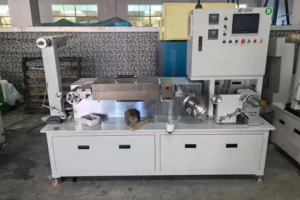
Micro rolling cassettes address these pain points by leveraging compressive deformation via rotating rollers—an innovation that transforms dry wire drawing into a more precise, flexible, and efficient process . These cassettes are compact, modular components designed to seamlessly integrate with existing wire drawing machines (or as part of new CRM production lines), requiring minimal adjustments while delivering transformative results .
What Is a Micro Rolling Cassette?
A micro rolling cassette is a modular roller assembly that replaces traditional wire drawing dies, consisting of 4-10 precision-machined rollers made from wear-resistant materials (tool steel, sintered metal, or carbide steel) . Key design features include:
- Customizable Roller Configuration: Roller count and geometry are tailored to material type, input wire diameter, and desired reduction rate (typically 15-30% per pass) .
- Ultra-Precision Engineering: Rollers achieve ≤0.001mm precision, with PVD-coated options (available in CRM models) extending service life by 30% .
- Dry Operation Compatibility: Designed for dry wire drawing, reducing lubrication requirements by 90% compared to die-based systems .
- Modular Swappability: Cassettes can be quickly replaced or swapped with standard die boxes, enabling flexible production of fixed or custom specifications .
How Micro Rolling Cassette Wire Drawing Machines Work
The operation of these machines follows a streamlined, four-step process that ensures precision and consistency—integrating advanced technology from Sky Bluer’s CRM models:
1. Preparation & Integration
- Cassette Installation: The micro rolling cassette is mounted onto the wire drawing machine, aligned with the wire path. CRM cassettes are designed to match the dimensions of standard dies, enabling plug-and-play integration with minimal downtime .
- Material Selection: Compatible raw materials (carbon steel, stainless steel, copper, titanium, etc.) are fed into the machine via a pay-off unit, with diameter pre-calibrated to the cassette’s specifications.
2. Tension-Controlled Rolling
- Wire Feeding: The wire enters the cassette’s roller assembly, guided by precision wire guides. Tension is maintained via servo-driven controls (a hallmark of CRM’s direct drive servo motor models) to prevent slippage .
- Rotational Deformation: As the wire passes through the roller holes, friction and tension drive the rollers to rotate—applying uniform compressive force that reduces diameter while preserving the material’s grain structure . Unlike die drawing (which stretches the wire), rolling deformation enhances tensile strength by 20-40% .
3. Precision Monitoring & Adjustment
- Real-Time Quality Control: CRM machines integrate laser measuring systems that monitor wire diameter with ±0.001mm accuracy, feeding data to a PLC for closed-loop adjustments . Standard cassettes achieve ±0.02mm tolerance, while high-precision CRM models reach ±0.01mm .
- Tension Optimization: Direct drive servo motors (featured in CRM’s carbon steel wire drawing machines) dynamically adjust speed and tension, ensuring consistent deformation across long production runs .
4. Post-Processing & Collection
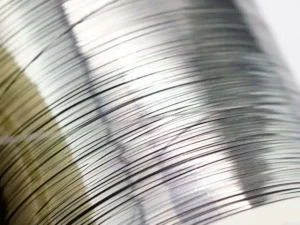
- Dry Finish: The dry drawing process eliminates the need for post-drawing cleaning, delivering wire with a smoother surface (Ra ≤0.4μm) compared to lubricated die drawing .
- Take-Up: The finished wire is collected by a customized take-up unit (spool, coil, or reel), with options for inline annealing or polishing for specialized applications .
Key Advantages of Micro Rolling Cassette Wire Drawing Machines
Compared to traditional die-based wire drawing machines, micro rolling cassette models offer six transformative benefits—backed by industry data and CRM’s technical expertise:
1. Superior Precision & Surface Quality
- Tighter Tolerances: Achieve ±0.01mm tolerance for high-precision applications (e.g., electronics, medical devices) and ±0.02mm for industrial-grade wire .
- Smoother Surfaces: Rolling deformation reduces surface defects (scratches, die marks) by 90%, eliminating the need for secondary polishing in most cases .
2. Enhanced Flexibility & Versatility
- Rapid Specification Changes: Swap cassettes or switch to die boxes in minutes, supporting small-batch production or custom profile needs (flat, square, wedge, triangular) .
- Multi-Material Compatibility: Process ferrous metals (carbon steel, stainless steel, alloy steel) and non-ferrous metals (copper, aluminum, brass, titanium) with the same machine .
3. Cost Efficiency & Sustainability
- Reduced Operating Costs: Dry operation cuts lubrication expenses by 90%, while PVD-coated rollers (CRM option) extend service life by 30-130% compared to standard dies .
- Sustainable Practices: Eliminate lubricant waste and reduce energy consumption by 15-25% (thanks to lower friction in rolling vs. die drawing) .
- Refurbishable Components: Worn rollers can be refurbished and repurposed for other specifications, reducing material waste and replacement costs .
4. Higher Productivity
- Continuous Operation: Multi-channel CRM machines replace single-channel systems, enabling continuous drawing that boosts production efficiency by 40-60% .
- Minimal Downtime: Modular cassettes and centralized lubrication systems (standard in CRM models) reduce maintenance downtime by 50% .
5. Dry Operation Benefits
- Cleaner Production: No lubricant residues mean cleaner wire, ideal for electronics, medical, and food-grade applications .
- Environmental Compliance: Meets global sustainability standards by reducing chemical usage and waste .
6. Easy Integration & Upgrades
- Retrofit Capability: Cassettes can be installed on existing wire drawing machines, avoiding the need for full equipment replacement .
- Scalability: CRM’s modular design allows adding cassettes or upgrading to multi-channel systems as production needs grow .
Suitable Materials & Industrial Applications
Micro rolling cassette wire drawing machines excel in processing a wide range of materials, making them indispensable across key industries:
1. Materials Compatibility
| Material Type | Examples | Key Applications |
| Ferrous Metals | Low/medium/high carbon steel, stainless steel (304/316L), alloy steel, welding wire (solid/flux-cored) | Automotive components, construction reinforcement, industrial fasteners |
| Non-Ferrous Metals | Copper, aluminum, brass, oxygen-free copper | Electronics (PV ribbons, motor coils), electrical wiring, decorative hardware |
| High-Performance Alloys | Titanium, titanium-nickel alloy, nickel | Aerospace parts, medical instruments, chemical processing equipment |
2. Core Industry Applications
- Automotive: Precision wire for springs, connectors, door hinges, and welding consumables—meeting IATF 16949 standards .
- Electronics & Renewable Energy: Ultra-fine copper wire for PV busbars, transformer windings, and circuit boards (down to 0.01mm diameter) .
- Aerospace: High-strength titanium and stainless steel wire for structural components and avionics—complying with AS9100 standards .
- Medical: Biocompatible stainless steel wire for surgical tools and implantable devices (hygienic dry finish, no lubricant contamination) .
- Construction: Ribbed or smooth steel wire for concrete reinforcement and mesh panels—processed via CRM’s multi-channel continuous drawing systems .
Sky Bluer CRM: Leading the Micro Rolling Cassette Revolution
As a pioneer in wire processing technology, Sky Bluer Environmental Technology Co., Ltd. has established its CRM brand as a trusted provider of micro rolling cassette wire drawing machines—offering three key competitive advantages:
1. Cutting-Edge Technology & Customization
- Precision Engineering: CRM micro rolling cassettes feature carbide rollers with ≤0.001mm precision, direct drive servo motors, and PLC closed-loop control .
- Tailored Solutions: Customize roller count (4-10), material (tool steel/carbide/PVD-coated), and profile (flat/square/wedge) to match specific production needs .
- Dry Drawing Expertise: CRM’s direct drive servo motor dry micro wire drawing machine for carbon steel eliminates lubrication waste while delivering ±0.01mm tolerance .
2. Proven Durability & Efficiency
- Long-Lasting Components: PVD-coated rollers extend service life by 30%, while centralized lubrication systems reduce maintenance needs .
- High Production Capacity: Multi-channel CRM models achieve 40-60% higher efficiency than single-channel die drawing machines .
3. Comprehensive Support & Compliance
- Turnkey Solutions: Sky Bluer provides complete production lines (pay-off → cassette drawing → take-up) with installation and training .
- After-Sales Service: 24/7 technical support, 1-year warranty on parts, and roller refurbishment services .
- Global Certifications: ISO 9001, CE, and industry-specific compliance (IATF 16949, AS9100) .
Maintenance Best Practices for Micro Rolling Cassette Machines
To maximize performance and lifespan, follow these CRM-recommended maintenance steps:
- Daily Checks: Inspect roller alignment, tension controls, and laser measuring systems; clean debris from the cassette housing .
- Weekly Lubrication: Lubricate cassette bearings with high-temperature grease (centralized systems automate this in CRM models) .
- Monthly Roller Inspection: Measure roller wear (tracked by processed material weight, not length); replace or refurbish when wear exceeds 0.01mm .
- Quarterly Calibration: Calibrate laser gauges and servo controls to maintain tolerance accuracy .
- Annual Overhaul: Disassemble cassettes to clean internal components and inspect for damage .
Conclusion
Wire drawing machines with micro rolling cassettes represent a transformative leap in precision wire manufacturing, addressing the limitations of traditional die-based systems with superior flexibility, efficiency, and quality. By leveraging rolling deformation, dry operation, and modular design, these machines empower manufacturers to meet the diverse demands of automotive, electronics, aerospace, and medical industries—all while reducing costs and environmental impact. As a leader in this technology, Sky Bluer’s CRM brand delivers innovative, customizable solutions that set the standard for micro rolling cassette wire drawing. Whether you’re retrofitting existing equipment or investing in a new production line, CRM machines offer the precision, durability, and support needed to stay competitive in modern manufacturing.