Introduction
Titanium flat wire and shaped wire are widely used in aerospace, medical, electronics, welding, energy, and other high-performance industrial applications because of their exceptional strength-to-weight ratio, corrosion resistance, and long-term reliability. Compared with conventional steel or copper materials, titanium provides superior durability while maintaining relatively low weight, making it highly suitable for demanding engineering environments.
Manufacturing high-quality titanium profile wire requires more than a simple drawing process. Precision rolling technology allows manufacturers to produce flat, rectangular, and custom-shaped titanium wire with stable dimensional accuracy, excellent surface quality, and repeatable profile consistency.
Modern titanium wire rolling lines combine multi-pass rolling, annealing technology, tension control, online measurement, and intelligent automation systems into a continuous production process. This page explains the complete titanium wire manufacturing workflow, key production equipment, common technical challenges, and how precision rolling improves overall wire quality.
What Is Titanium Flat and Shaped Wire
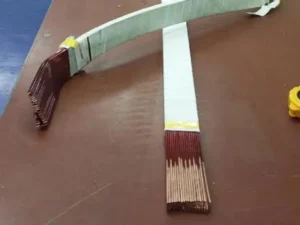
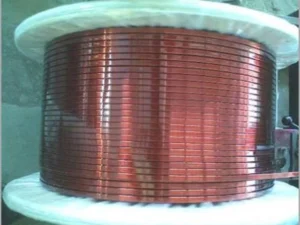
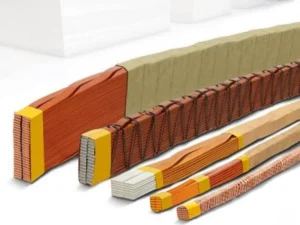
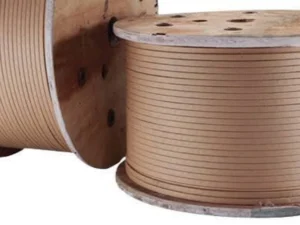
Titanium flat wire refers to titanium wire that has been rolled into flat or rectangular cross-sectional profiles. Titanium shaped wire includes square wire, trapezoidal wire, half-round wire, wedge-shaped wire, and various custom profile geometries developed for specialized applications.
Compared with conventional round wire, flat and profile titanium wire provides improved contact performance, higher space utilization, and more stable assembly characteristics. In many precision industries, profile wire also helps reduce component weight while improving structural efficiency.
Common Titanium Wire Types
| Wire Type | Typical Characteristics | Common Applications |
| Flat Titanium Wire | Thin and wide profile | Battery systems, electronics |
| Rectangular Titanium Wire | Stable dimensional geometry | Aerospace components |
| Square Titanium Wire | Balanced mechanical structure | Precision assemblies |
| Profile Titanium Wire | Customized cross-sections | Industrial engineering |
| Medical Titanium Wire | High surface quality | Surgical and implant devices |
Common materials used in titanium wire manufacturing include Grade 1 Titanium, Grade 2 Titanium, and Grade 5 Titanium (Ti-6Al-4V), depending on the required strength, corrosion resistance, and application environment.
Rather than relying only on material properties, manufacturers increasingly focus on rolling precision, surface consistency, and tolerance control to improve final product performance.
Titanium Wire Rolling Process Overview
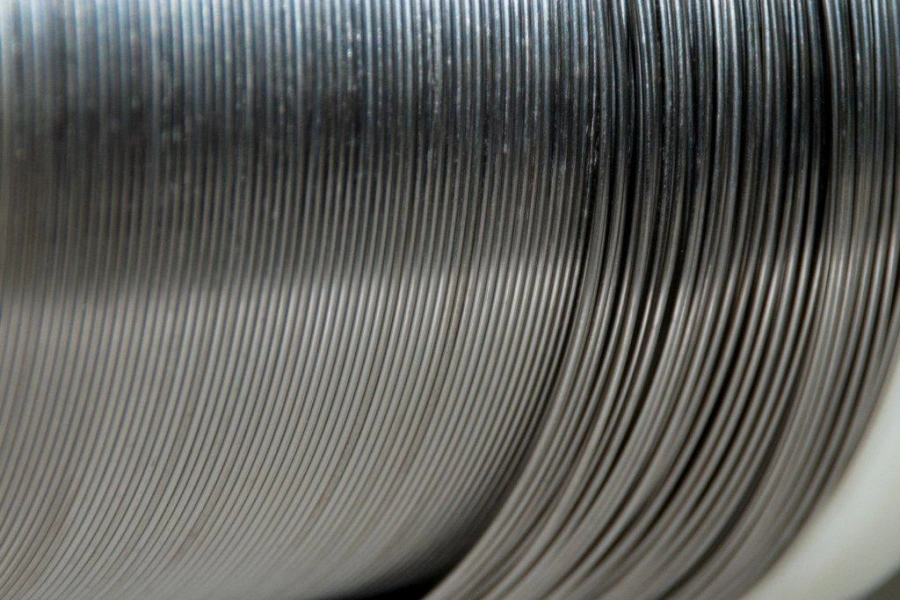
Titanium flat wire manufacturing combines multiple precision production technologies into a continuous rolling process. A typical rolling line transforms round wire into flat or shaped profiles through carefully controlled rolling reduction and progressive deformation.
The production process generally includes wire preparation, precision rolling, intermediate annealing, cooling, tension stabilization, online measurement, and final winding.
Typical Titanium Wire Rolling Workflow
| Production Stage | Main Function |
| Payoff System | Stable wire feeding |
| Surface Preparation | Cleaning and oxide removal |
| Precision Rolling | Shape transformation |
| Intermediate Annealing | Restore ductility |
| Multi-Pass Rolling | Final dimensional forming |
| Surface Finishing | Improve appearance quality |
| Take-Up System | Controlled winding |
During production, the wire gradually passes through several rolling stages until the target width, thickness, and profile geometry are achieved. Multi-pass rolling technology is especially important because titanium materials are sensitive to excessive deformation and work hardening.
Modern rolling lines also integrate online laser measurement systems and automatic tension control to maintain stable production accuracy throughout long operating cycles.
Key Equipment in Titanium Rolling Lines
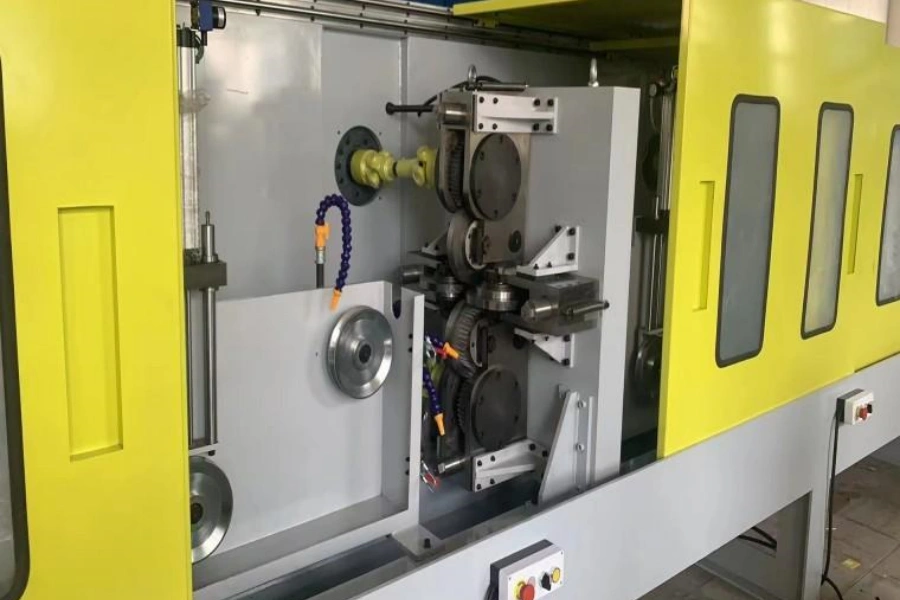
A high-precision titanium rolling line depends on the coordination of several production systems. Each machine directly influences dimensional accuracy, surface quality, and long-term production stability.
Precision Rolling Mill
The rolling mill is the core forming equipment in the production line. It controls profile shaping, rolling reduction, and final wire dimensions. Modern rolling mills use servo positioning systems and precision-ground rollers to achieve stable forming performance.
Important advantages include:
- Stable rolling pressure
- High-speed forming capability
- Low vibration operation
- Fast roll adjustment
- Consistent profile geometry
Annealing Furnace
Titanium materials rapidly harden during cold deformation, making intermediate annealing an important part of many production processes. The annealing furnace restores ductility and reduces internal stress between rolling stages.
A high-quality annealing system should provide stable temperature control, uniform heating performance, and atmosphere protection to minimize oxidation during heat treatment.
Payoff and Take-Up Systems
Stable tension control is essential throughout the rolling process. The payoff system ensures smooth wire feeding, while the take-up machine maintains winding consistency and prevents surface damage.
| Equipment | Main Function | Production Benefit |
| Payoff System | Wire feeding | Stable tension |
| Rolling Mill | Precision forming | Dimensional accuracy |
| Annealing Furnace | Heat treatment | Improved ductility |
| Online Inspection | Real-time measurement | Quality consistency |
| Take-Up Machine | Precision winding | Coil stability |
How Precision Rolling Improves Titanium Wire Quality
Precision rolling technology significantly improves the overall quality, dimensional consistency, and mechanical reliability of titanium wire products compared with conventional forming methods. Modern rolling systems use servo-driven positioning and stable rolling pressure control to maintain accurate thickness and width throughout continuous production runs, allowing manufacturers to achieve tighter dimensional tolerances and more consistent profile geometry. At the same time, optimized rolling reduction and precision roll finishing help improve surface quality by reducing scratches, deformation marks, and edge irregularities, resulting in smoother wire surfaces and better downstream processing performance. Controlled rolling deformation also enhances material uniformity by minimizing internal stress concentration and improving fatigue resistance, flexibility, and long-term mechanical stability. In addition, stable tension management and precision winding systems contribute to improved coil consistency and overall production reliability, making precision rolling technology especially suitable for high-performance aerospace, medical, electronics, and industrial titanium wire applications.
Common Challenges in Titanium Wire Production
Titanium wire manufacturing requires strict process control because titanium alloys are highly sensitive to deformation conditions and temperature variation.
One common challenge is surface scratching during rolling. Improper roll polishing, unstable guiding systems, or contaminated rollers may damage the wire surface and reduce product quality.
Another challenge is dimensional instability. Variations in tension, roller wear, or inconsistent material hardness may affect thickness consistency and profile symmetry during long production runs.
Work hardening is also a major issue in titanium processing. Without proper intermediate annealing, the material may become too hard during deformation, increasing the risk of cracking or unstable forming.
Common Production Challenges and Solutions
| Production Problem | Possible Cause | Typical Solution |
| Surface Scratches | Roller contamination | Precision roll polishing |
| Dimensional Variation | Unstable tension | Automatic tension control |
| Edge Cracking | Excessive reduction | Multi-pass rolling |
| Oxidation | Poor atmosphere control | Protected annealing |
Modern titanium rolling lines solve these issues through intelligent monitoring systems, closed-loop tension control, and optimized rolling process design.
Applications of Titanium Flat and Profile Wire
Aerospace Industry
- Aircraft fastening systems
- Aerospace springs
- Lightweight structural components
- High-temperature assemblies
Medical Industry
- Surgical instruments
- Orthodontic wire
- Implant components
- Medical woven devices
Electronics Industry
- Precision connectors
- Battery systems
- Conductive components
- Electronic assemblies
Industrial Applications
- Welding materials
- Chemical processing equipment
- Marine systems
- High-performance mesh products
How to Choose a Titanium Wire Rolling Line
Choosing the right titanium wire rolling line depends on material type, target profile geometry, production capacity, and precision requirements.
Manufacturers producing ultra-thin flat wire may prioritize thickness stability and surface quality, while custom profile wire production may require advanced forming flexibility and precision profile control.
Modern production lines increasingly integrate intelligent automation systems such as servo positioning, automatic tension adjustment, online laser measurement, and real-time monitoring software to improve long-term production efficiency.
When evaluating equipment suppliers, manufacturers should also consider technical support capabilities, including installation assistance, process optimization, operator training, and spare parts availability.
Important Selection Factors
| Selection Area | Key Consideration |
| Material Type | Titanium grade compatibility |
| Wire Shape | Flat, rectangular, or custom profile |
| Precision Level | Tolerance requirements |
| Production Speed | Output capacity |
| Automation | Intelligent control systems |
| Technical Support | Long-term service capability |
Conclusion
Titanium flat and shaped wire production requires advanced rolling technology, stable process management, and highly integrated production equipment. Through precision rolling, controlled annealing, and intelligent tension control, manufacturers can achieve excellent dimensional accuracy, stable surface quality, and reliable continuous production performance.
Modern titanium rolling lines support the manufacturing of flat wire, rectangular wire, and complex profile wire for aerospace, medical, electronics, and industrial applications requiring long-term reliability and high production precision. High-performance rolling systems also improve production consistency, reduce material waste, and enhance overall operational efficiency during continuous manufacturing.
Whether producing standard flat titanium wire or highly customized profile wire, selecting the right rolling process and equipment is essential for achieving stable manufacturing quality and long-term production efficiency. At Sky Bluer Environmental Technology Co., Ltd., the Sky Bluer brand provides precision rolling mills, customized flat wire production lines, and integrated automation solutions designed to support high-precision titanium wire manufacturing for demanding industrial applications worldwide.