In modern industrial manufacturing, the demand for specialized wire profiles—beyond traditional round wires—continues to grow. From rectangular wires optimizing motor coil space to custom wedge-shaped wires for automotive components, these non-round profiles are critical for enhancing performance, reducing material waste, and meeting tight dimensional requirements. At the core of producing these precision wires lies the standard profile rolling mill—a specialized piece of equipment engineered to transform round wire feedstock into consistent, high-quality profile wires with cross-sections like square, rectangular, wedge, or custom shapes. This article delves into the technology behind standard profile rolling mills, their key technical specifications, production line composition, and the industrial applications driving their widespread adoption.
Understanding Standard Profile Rolling Mills: Core Definition & Purpose
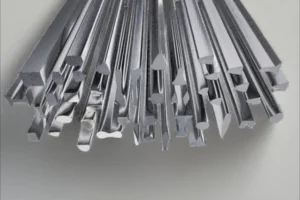
A standard profile rolling mill is a precision-engineered rolling machine dedicated to shaping metal wires into non-circular cross-sections (profile wires) while maintaining strict dimensional accuracy and surface quality. Unlike general-purpose wire rolling equipment, these mills are optimized to handle the unique challenges of profile formation—ensuring uniform thickness, consistent width, and precise corner rounding (as per customer specifications) across the wire length.
What Makes Profile Wires Indispensable?
Profile wires are designed to address specific industrial needs that round wires cannot fulfill:
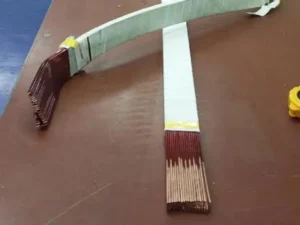
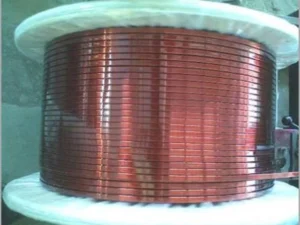
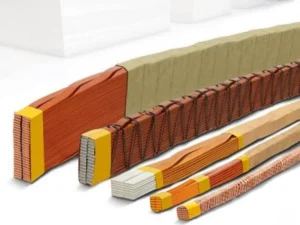
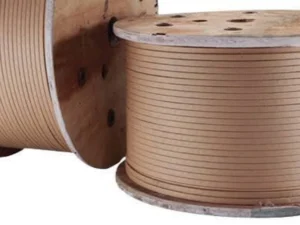
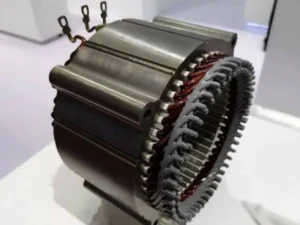
- Space Optimization: Rectangular or square wires fit tightly in coils, motors, and transformers, maximizing space utilization and improving thermal conductivity.
- Mechanical Performance: Custom profiles (e.g., wedge-shaped wires) enhance structural stability in engineering applications, such as automotive suspension components or construction reinforcements.
- Functional Adaptability: Special-shaped wires enable unique connections, electrical contacts, or sealing functions in electronics and precision machinery.
- Material Efficiency: By shaping wires to the exact required geometry, profile rolling reduces material waste compared to machining non-round shapes from round wire.
Key Distinctions of Standard Profile Rolling Mills
What sets standard profile rolling mills apart from conventional rolling equipment:
Material Versatility: Capable of processing a wide range of materials, including carbon spring wire, music wire, stainless steel wire, and precision-drawn nickel alloy wire—catering to diverse industry needs.
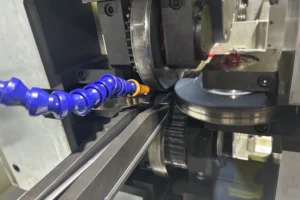
Specialized Roll Designs: Aircraft-grade tungsten carbide steel rolls are precision-machined to match the target profile (square, rectangular, wedge, etc.), ensuring consistent shape replication.
Dual Control Systems: Electric + hydraulic or manual roll adjustments allow for micron-level precision, adapting to different wire sizes and material properties.
Integrated Quality Monitoring: Online laser measuring systems simultaneously track width and thickness during production, ensuring compliance with specifications.
Specifications of Standard Profile Wire Rolling Mill
Manufacturer: Sky Bluer Environmental Technology Co., Ltd
Brand: CRM
| Parameter | Specification |
|---|---|
| Designed Speed | 300 m/min |
| Input Material | Carbon Spring Wire, Music Wire, Spring Wire, Precision Drawn Nickel Alloy Wire, Stainless Steel Wire |
| Input Size | Φ12 mm |
| Thickness Range | 0.004″ – 0.50″ |
| Width Range | 0.012″ – 2.500″ (varies based on material and alloy grade) |
| Maximum Cross-Section | 28 mm² |
| Shapes | Round, Square, Rectangular, Wedge, Special Shapes |
| Weight Limit for Take-Up | 2 Ton |
| Roll Size (Wire Flattening Mills) | 180 x 80 mm |
| Roll Size (Profile Universal Mills) | 200 x 25 mm |
| Corner Rounding | According to customer drawings |
| Roll Adjustment | Electric + Hydraulic or Manual |
| Roll Material | Aircraft-grade tungsten carbide steel |
| Payoff Method | Active or Passive |
| Winding Method | Fully Automatic Precision Wire Winding |
| Drives | Dual Servo Drives |
| Degreasing System | Air knives for oil blowing and scraping |
| Auxiliary Equipment | Central Lubrication System, Cooling System, Online Laser Measuring for simultaneous width & thickness control |
Note: Specifications may vary based on material compatibility, alloy type, and customer requirements.
Production Line Composition
A standard profile rolling mill line typically includes:
Payoff Unit → Flat Rolling Mills → Dancers → Side Rolling Mills → Dancers → Universal Profile Wire Rolling Machines → Precision Winding Unit
This ensures high-quality precision wire production, consistent dimensional accuracy, and smooth surface finishes.
Why Use a Standard Profile Rolling Mill?
Standard profile rolling mills are essential for producing non-round wires with high precision and consistency. Industries using profile wires rely on these mills for:
- Optimized space utilization in motors, transformers, and coils
- Consistent electrical and mechanical performance
- Reduced material waste during production
- Ability to produce complex wire geometries for advanced engineering applications
Additional Solutions from CRM
- Wire Flattening & Shaping Lines
- Machines for Flattening Copper Wire
- Wire Shaping Lines for Carbon Steel Wires
- Flat Wire Rolling Mill
- Copper and Aluminum Flat Wire Drawing Machine
- PV Ribbon Machines with Tin Coating Lines
- Micro Rolling Cassettes
- Titanium Alloy Wire Drawing Machines
- Profile Wire Rolling Lines for Piston Rings
- Copper Strip Rolling Mills
- Ultra Precision Rolling Mills
- Flat Magnet Wire Equipment
Contact Us Today:
- Email: [email protected]
- Mobile/WhatsApp: +86 13861313954
- Website: https://precision-rolls.comProducts/