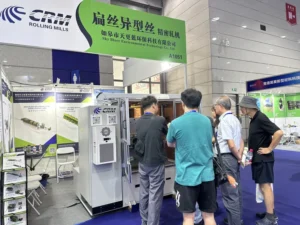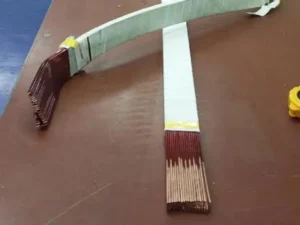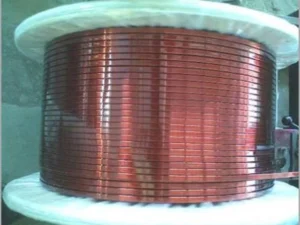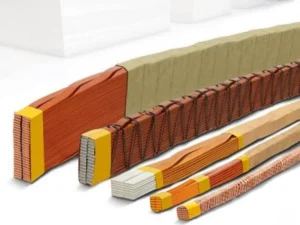
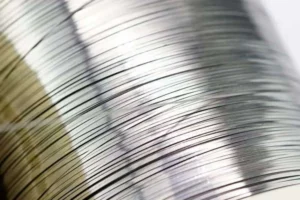
Stainless steel grades 304 and 316L are the backbone of high-performance flat wire production, powering critical components in medical devices, automotive systems, and aerospace technology. To unlock their full potential—combining 304’s exceptional formability with 316L’s superior corrosion resistance—manufacturers rely on specialized stainless steel wire flattening machines like the CRM2024 model. These precision tools transform round stainless steel wire into uniform flat wire with tight dimensional control, ensuring compliance with the stringent standards of modern industries. In this comprehensive guide, we’ll explore how these machines work, their key features, material-specific advantages, and why they’re indispensable for 304 and 316L processing.
-300x200.webp)
Why 304 and 316L Demand Specialized Flattening Machines
Stainless steel grades 304 and 316L each possess unique properties that require tailored flattening solutions:
- Grade 304: Composed of 18-20% chromium and 8-10.5% nickel, 304 is celebrated for its excellent formability, weldability, and cost-effectiveness. It’s the most widely used stainless steel grade, ideal for applications where general corrosion resistance suffices—such as automotive fasteners, architectural components, and electrical connectors. However, its ductility means flattening requires controlled pressure to avoid warping or uneven thickness.
- Grade 316L: A low-carbon variant of grade 316 (with 16-18% chromium, 10-14% nickel, and 2-3% molybdenum), 316L offers superior corrosion resistance—especially against chlorides, industrial solvents, and saltwater environments. This makes it the material of choice for medical implants, marine components, and aerospace parts. Its higher alloy content increases hardness, demanding precision roller technology to maintain surface integrity during flattening.
Generic flattening equipment often fails to address these nuances, leading to inconsistent thickness, surface defects, or compromised mechanical properties. Specialized machines like the CRM2024 are engineered to handle both grades, balancing pressure, speed, and temperature to preserve their unique advantages.
Key Features of CRM2024 Stainless Steel Wire Flattening Machine
The CRM2024 stands out as a leader in 304/316L processing, integrating advanced technologies to deliver precision and durability:
- Advanced Roller Technology: Equipped with tungsten carbide or sintered metal rollers (polished to Ra≤0.4μm ), the machine uses a multi-pass rolling process with 15-25% incremental reduction per pass. This ensures uniform material flow, keeping mechanical property fluctuations within ±5%—critical for applications like medical guide wires, where consistency directly impacts performance.
- Precision Control Systems: Powered by Siemens/Beckhoff controllers and servo drives, the CRM2024 features real-time laser thickness measurement and closed-loop feedback. It achieves dimensional tolerances as tight as ±0.001mm, meeting the ultra-precise requirements of aerospace and medical industries (some applications demand ±0.005mm tolerance for 316L surgical instruments).
- High-Speed & Efficient Operation: With a design speed of 30-350 m/min, the machine enables high-volume production without sacrificing quality. It supports a wide size range (width 2.0-30mm, thickness 0.5-12mm) and can handle up to 50:1, making it versatile for both narrow precision strips and wide flat wire.
- Material-Specific Optimization: The CRM2024 includes adjustable pressure settings and nitrogen-protected annealing options to accommodate 304’s ductility and 316L’s hardness. For 316L, the cooling system prevents overheating during rolling, preserving its corrosion resistance; for 304, it minimizes work hardening to maintain formability.
- Safety & Compliance: Equipped with emergency stop buttons, protective guards, and real-time defect detection, the machine adheres to ISO 9001 and medical device manufacturing standards (e.g., FDA requirements for 316L implant components).
How the Flattening Process Works for 304/316L
The CRM2024 follows a meticulous workflow to transform round wire into high-quality flat wire:
- Wire Preparation: Round 304 or 316L wire is cleaned to remove surface contaminants, then straightened to eliminate bends—critical for uniform flattening.
- Multi-Pass Rolling: The wire passes through a series of precision rollers, with each pass gradually reducing thickness while maintaining width consistency. The machine’s servo-driven rollers adjust pressure dynamically to match the material’s hardness (higher pressure for 316L, gentler control for 304).
- Real-Time Monitoring: Laser measuring systems track thickness and width continuously, sending data to the controller for instant adjustments. This ensures tolerance compliance across thousands of meters of wire.
- Annealing (Optional): For 316L wire used in high-stress applications (e.g., aerospace components), nitrogen-protected annealing relieves internal stresses without compromising corrosion resistance.
- Finishing & Collection: The flat wire is trimmed to length, deburred, and spooled or coiled for shipping. Surface inspection ensures no scratches or defects—essential for medical devices where biocompatibility and surface smoothness are non-negotiable.
Industrial Applications of 304/316L Flat Wire
The flat wire produced by the CRM2024 machine is integral to three key industries:
- Medical: 316L flat wire is used in surgical instruments, orthopedic implants, and guide wires—its corrosion resistance and biocompatibility make it safe for human contact. 304 flat wire is employed in medical device housings and diagnostic equipment.
- Automotive: 304 flat wire powers wiper blades, springs, and electrical connectors, while 316L is used in exhaust systems and under-hood components exposed to harsh chemicals and temperature fluctuations.
- Aerospace: Both grades are used in aircraft fasteners, engine components, and structural reinforcements—316L’s resistance to high-altitude corrosion and 304’s formability make them ideal for lightweight, high-strength parts.
Why Invest in a Specialized 304/316L Wire Flattening Machine?
For manufacturers, the CRM2024 isn’t just equipment—it’s a strategic asset:
- Consistent Quality: Eliminates defects like uneven thickness or surface roughness, reducing waste and rework.
- Increased Productivity: High-speed operation and minimal downtime (thanks to dual pay-off systems) boost output by 30-50% compared to generic machines.
- Cost Savings: Tailored processing reduces material waste and eliminates the need for secondary finishing (e.g., polishing), lowering production costs by 15-25%.
- Compliance Assurance: Meets industry-specific standards (ISO, FDA, aerospace QMS) for 304/316L applications, avoiding costly non-compliance issues.
Understanding Stainless Steel Grade Classifications
To fully appreciate why 304 and 316L require specialized handling, it’s helpful to contextualize them within broader stainless steel categories:
- Austenitic (e.g., 304, 316L, 303, 310): The most common type, known for corrosion resistance and formability. 310 (25% chromium, 20% nickel) excels at high temperatures, while 303 includes sulfur for improved machinability.
- Ferritic (e.g., 430, 409): Contains 10.5-18% chromium, no nickel—offering good corrosion resistance but lower durability than austenitic grades. 409 is widely used in automotive exhaust systems.
- Martensitic (e.g., 410, 420, 440): High-strength, high-hardness grades with 11.5-14% chromium. 440’s high carbon content (0.6-1.2%) makes it ideal for bearings and cutting tools.
- Duplex (e.g., 2205, 2507): Combines austenitic and ferritic properties, offering excellent strength and stress corrosion resistance. 2507 is a super duplex grade for extreme environments.
- Precipitation-Hardening (e.g., 17-4 PH, 15-5 PH): Achieves high strength through heat treatment, suitable for high-stress components like aerospace fasteners.
Conclusion
The CRM2024 stainless steel wire flattening machine is a critical tool for manufacturers working with 304 and 316L—two of the most versatile and in-demand stainless steel grades. By combining advanced roller technology, precision control systems, and material-specific optimization, it delivers flat wire with uniform thickness, superior surface quality, and uncompromised mechanical properties. Whether producing medical implants, automotive components, or aerospace parts, this machine ensures compliance with industry standards while boosting productivity and reducing costs. For businesses aiming to stay competitive in high-precision manufacturing, investing in a specialized 304/316L wire flattening machine isn’t just a choice—it’s a necessity.