Introduction to Stainless Steel Flat Wire Hardness and Its Impact on Performance
The hardness of stainless flat wire plays a critical role in determining its strength, flexibility, and overall durability. Different industrial applications require specific hardness levels to achieve optimal performance, whether it’s for forming, spring components, or high-load connectors. Understanding hardness grades and the corresponding production methods ensures that each batch of wire consistently meets the functional and mechanical requirements of its end-use. This guide explores key aspects of stainless steel flat wire hardness, including how to select appropriate material grades, the heat treatment and hardening processes involved, the production implications of varying hardness levels, typical application scenarios, and the capabilities of modern rolling equipment used to achieve precise specifications.
Typical Stainless Flat Wire Hardness Grades and Material Selection
Stainless steel flat wire hardness is measured using Rockwell or Brinell scales. Common grades:
| Hardness Grade | HRB / HRC Range | Suitable Material Grades | Typical Use Cases |
| Soft / Annealed | 70–80 HRB | 304, 316 | Forming, welding, shaping |
| Medium Hardness | 85–95 HRB | 304, 321, 430 | Clips, electrical compon |
| Fully Hardened | 45–50 HRC | 316, 321, Specialty | Springs, high-load connectorsents |
Material selection factors:
- Corrosion resistance requirements
- Mechanical load and stress
- Formability vs. rigidity balance
Hardening and Annealing Techniques for Stainless Steel Flat Wire
Achieving the desired hardness in stainless steel flat wire requires a careful combination of rolling and heat treatment processes. Cold rolling work-hardens the metal, enhancing both its strength and hardness, while annealing is applied to soften the wire, improving its flexibility and making it easier to form into complex shapes. For precise control over mechanical properties, tempering or stress-relieving treatments are used to fine-tune hardness without compromising ductility. Throughout the process, continuous monitoring and hardness testing at intermediate stages ensure consistency across the batch, guaranteeing that each wire meets the exact specifications required for demanding industrial applications.
Production Considerations for Stainless Steel Flat Wire Based on Hardness
Hardness affects the following production parameters:
- Rolling force: Harder wire requires stronger mills and precision calibration
- Die wear: Harder grades demand wear-resistant dies to maintain dimensional accuracy
- Surface finish: Requires optimized lubrication and controlled rolling speed
- Inspection: Continuous hardness checks prevent defects in critical applications
Process table example:
| Parameter | Soft Wire | Medium Hard Wire | Fully Hardened Wire |
| Rolling force | Low | Medium | High |
| Number of rolling passes | 3–5 | 5–7 | 7–10 |
| Annealing | Yes | Optional | Yes |
| Surface finish | Ra 0.2 – 0.5 μm | Ra 0.3 – 0.6 μm | Ra 0.4 – 0.8 μm |
Applications of Stainless Steel Flat Wire by Hardness Grade
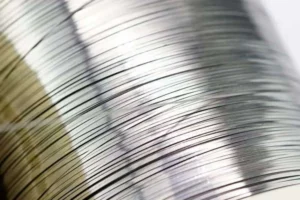
Different hardness grades of stainless steel flat wire are designed to meet the specific demands of various industries and applications.
- Soft or annealed wire is ideal for forming intricate shapes, producing spring components, and performing welding operations, where flexibility and ease of shaping are critical.
- Medium hardness wire offers a balanced combination of strength and flexibility, making it well-suited for automotive clips, electrical contacts, and structural components that require durability without sacrificing formability.
- Fully hardened wire is engineered for high-stress environments, such as industrial springs, heavy-duty fasteners, and high-load connectors, where maximum strength and wear resistance are essential.
Selecting the appropriate hardness grade ensures optimal performance, longevity, and reliability for each specific application.
Conclusion: Applications and Advantages of Stainless Steel Flat Wire
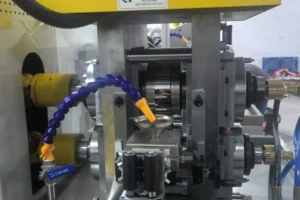
Sky Bluer Environmental Technology Co., Ltd manufactures advanced precision rolling mills capable of producing stainless steel flat wire across a wide range of hardness grades. Our equipment accommodates diverse widths, thicknesses, and R-radius edge specifications, ensuring consistent dimensional accuracy and superior surface quality. The stainless steel flat wire produced with our technology is ideal for multiple industries: automotive components such as clips, connectors, and springs; electronic applications including conductive strips and contacts; industrial uses such as fasteners and machinery components; and medical applications like surgical instruments and implantable devices. Our rolling mills support grades including 304, 316, 321, 430, and other specialty alloys, delivering high-performance wire tailored to demanding industrial requirements.
Contact Sky Bluer Environmental Technology Co., Ltd today to learn how our precision rolling solutions can provide the perfect stainless steel flat wire for your projects.