Introduction
In precision spring steel flat wire manufacturing, the rolling mill structure is only one part of achieving high-quality products. The design of the rolling rolls directly determines material flow, dimensional accuracy, edge quality, surface finish and production stability.
For high carbon spring steel and alloy spring steel materials, improper roll design can create problems such as uneven deformation, edge cracking, excessive residual stress and unstable dimensions.
A successful flat wire rolling process requires a complete understanding of:
- Roll diameter selection
- Groove geometry
- Pass schedule design
- Roll material performance
- Contact pressure distribution
Modern precision rolling systems combine advanced roll design with servo control, online measurement and automatic adjustment technologies to achieve consistent production.
Sky Bluer Environmental Technology Co., Ltd. (CRM) develops customized precision rolling solutions for spring steel flat wire manufacturers worldwide, optimizing every rolling component from material feeding to final dimensional control.
The Importance of Roll Design in Flat Wire Rolling
During cold rolling, the roll is the direct contact component that transfers deformation force to the material.
The roll design affects:
| Factor | Influence |
| Roll diameter | Rolling force and deformation stability |
| Groove design | Material flow and final shape |
| Pass geometry | Reduction efficiency |
| Roll material | Wear resistance and surface quality |
| Surface finish | Product appearance and friction behavior |
Unlike conventional steel strip rolling, precision flat wire rolling requires extremely accurate control because the final product often has tight dimensional requirements.
Typical spring steel flat wire requirements:
| Parameter | Typical Requirement |
| Thickness tolerance | ±0.005–0.01 mm |
| Width tolerance | ±0.01 mm |
| Edge radius control | Stable R geometry |
| Surface roughness | Ra ≤0.8 μm |
| Straightness | ≤3/1000 |
Therefore, roll design becomes a key technology factor.
Roll Diameter Selection Principles
Roll diameter is one of the most important parameters in precision rolling.
A larger roll diameter provides:
- Higher rolling stability
- Reduced elastic deformation
- Better thickness consistency
However, larger rolls also increase:
- Rolling force
- Equipment size
- Energy consumption
A smaller roll diameter provides:
- Higher deformation efficiency
- Lower rolling force
- Better material bite capability
But may create:
- Greater roll deflection
- Less dimensional stability
Typical relationship:
| Roll Diameter | Advantages | Applications |
| Small diameter roll | High reduction efficiency | Fine wire rolling |
| Medium diameter roll | Balance between force and accuracy | Flat wire production |
| Large diameter roll | High stability | Heavy reduction applications |
For precision spring steel flat wire production, roll diameter must be selected according to:
- Material strength
- Input diameter
- Reduction ratio
- Final tolerance
- Rolling force requirement
Groove Design for Flat Wire Rolling
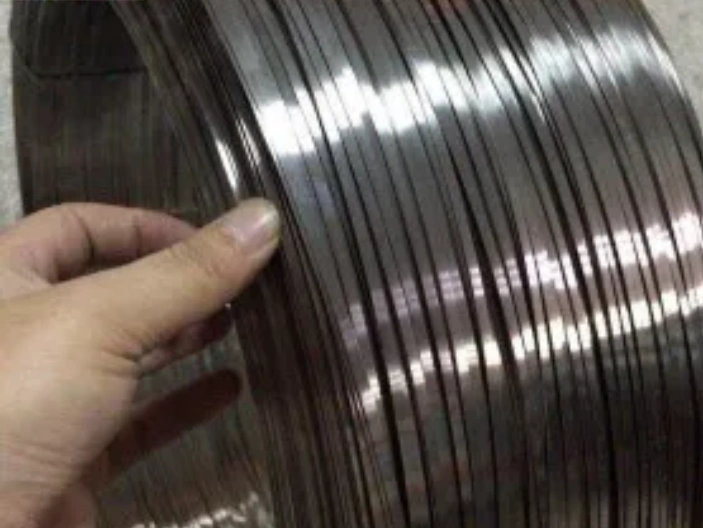
Groove design determines how the round wire gradually transforms into the final flat profile.
A poor groove design may cause:
- Material overflow
- Uneven width expansion
- Edge cracks
- Surface defects
A professional pass design normally includes:
Breakdown Pass
Purpose:
- Establish stable deformation
- Convert round section into intermediate profile
Characteristics:
- Higher reduction capability
- Controlled material flow
Intermediate Pass
Purpose:
- Gradually increase width
- Reduce thickness
- Control edge formation
Finishing Pass
Purpose:
- Achieve final size
- Improve surface quality
- Stabilize dimensions
Typical groove design factors:
| Parameter | Function |
| Groove radius | Controls edge shape |
| Groove depth | Determines material filling |
| Groove angle | Controls metal flow |
| Clearance | Prevents overfilling |
For spring steel flat wire, groove geometry must also consider the final spring forming requirements.
Pass Design and Material Flow Control
Pass design is closely connected with reduction ratio optimization.
A good pass design ensures:
- Uniform deformation
- Reduced internal stress
- Stable mechanical properties
The rolling designer must consider:
Width Expansion
During flat wire rolling, material naturally expands sideways.
If width expansion is uncontrolled:
- Width tolerance increases
- Edge shape becomes unstable
Neutral Point Control
The neutral point determines the transition between forward and backward slip.
Incorrect design may increase:
- Surface friction
- Roll wear
- Product defects
Reduction Distribution
The deformation should be distributed across multiple passes.
Typical example:
| Pass Type | Reduction Range |
| Breakdown | 15–25% |
| Intermediate | 10–20% |
| Finishing | 5–10% |
The final passes require greater precision because they determine the finished product quality.
Roll Material Selection for Spring Steel Rolling
Roll material directly influences production life and product quality.
High-strength spring steels require rolls with:
- High hardness
- Wear resistance
- Surface stability
- Fatigue resistance
Common roll materials:
| Roll Material | Characteristics | Application |
| Tool steel | High hardness | General precision rolling |
| High-speed steel (HSS) | Excellent wear resistance | High production lines |
| Tungsten carbide | Extremely high wear resistance | High precision applications |
| Special alloy steel | Balanced performance | Customized applications |
For high carbon spring steel production, tungsten carbide rolls are often selected for finishing operations because they maintain stable dimensions over long production cycles.
Roll Surface Finish and Product Quality
The roll surface directly transfers its condition to the finished wire.
Poor surface quality may result in:
- Scratches
- Surface marks
- Uneven reflection
- Fatigue risk
Precision rolling rolls require:
- Accurate grinding
- Controlled surface roughness
- Stable geometry
Typical requirements:
| Parameter | Value |
| Roll surface roughness | Ra 0.2–0.6 μm |
| Dimensional accuracy | Micron level |
| Profile accuracy | According to product tolerance |
High-quality rolls are essential for producing spring components where surface defects may reduce fatigue life.
Roll Design and Precision Rolling System Integration
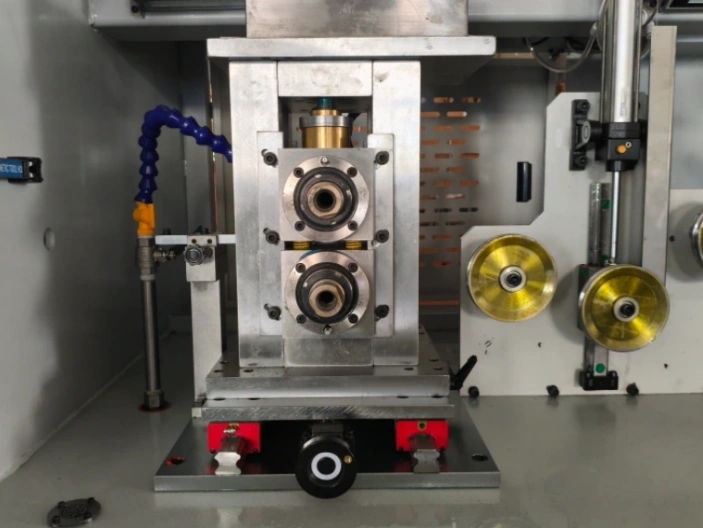
A precision rolling system is not only determined by the main rolling mill structure. Roll design, roll material selection and pass geometry are critical factors that directly affect flat wire dimensional accuracy, surface quality and production stability.
Modern CRM rolling systems integrate:
| System | Function |
| Precision rolls | Accurate deformation |
| Servo adjustment | Automatic gap control |
| Laser measuring system | Online inspection |
| PLC control | Process optimization |
| Closed-loop control | Stable production |
Roll Design Influence on Quality Control
Proper roll design helps maintain thickness tolerance, surface finish and edge quality during continuous flat wire production.
It is also an important factor for achieving consistent product performance.
Quality control indicators include:
- Thickness deviation
- Width accuracy
- Edge radius
- Surface roughness
- Straightness
Advanced Roll Design for Spring Steel Applications
Different applications require different roll strategies.
Automotive Valve Springs
Requirements:
- High fatigue resistance
- Stable dimensions
- Excellent surface quality
Industrial Precision Springs
Requirements:
- Consistent elasticity
- Accurate profile geometry
- Reliable long-term performance
Electronic Spring Components
Requirements:
- Extremely precise dimensions
- Smooth surface finish
- Small profile variation
CRM engineers design rolling solutions according to:
- Material grade
- Product geometry
- Production speed
- Accuracy requirement
FAQ
1. Why is roll design important in precision flat wire rolling?
Roll design controls how material flows during deformation. It directly affects thickness accuracy, edge quality, surface finish and production stability.
2. How does roll diameter influence flat wire quality?
Roll diameter affects rolling force, roll deflection and deformation stability. Proper selection helps maintain consistent dimensions and reduce defects.
3. What roll material is suitable for spring steel flat wire production?
Tool steel, high-speed steel and tungsten carbide rolls are commonly used. The best choice depends on material hardness, production speed and accuracy requirements.
4. How does groove design affect spring steel wire quality?
Groove geometry controls material filling, width expansion and edge formation. Incorrect groove design may cause cracking and dimensional variation.
5. What is the difference between breakdown and finishing rolls?
Breakdown rolls focus on efficient deformation, while finishing rolls focus on achieving final accuracy, surface quality and profile stability.
6. Can one roll design be used for different spring steel grades?
No. Different materials such as SAE1095, 60Si2Mn and SUP10 have different deformation characteristics and require optimized roll designs.
Conclusion
Roll design is one of the core technologies behind successful precision flat wire production.
For spring steel and other high-strength materials, the correct combination of:
- Roll diameter
- Groove geometry
- Pass design
- Roll material
- Surface quality
determines the final product performance.
A precision rolling mill is not simply a machine; it is a complete deformation system where every parameter influences the final wire quality.
Sky Bluer Environmental Technology Co., Ltd. (CRM) provides customized precision rolling solutions for global manufacturers producing spring steel flat wire, profile wire and other high-performance metal products.