Introduction
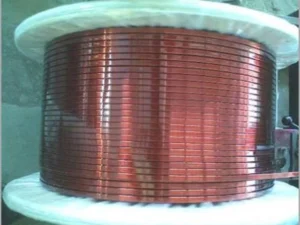
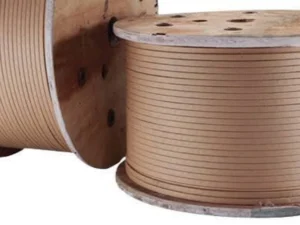
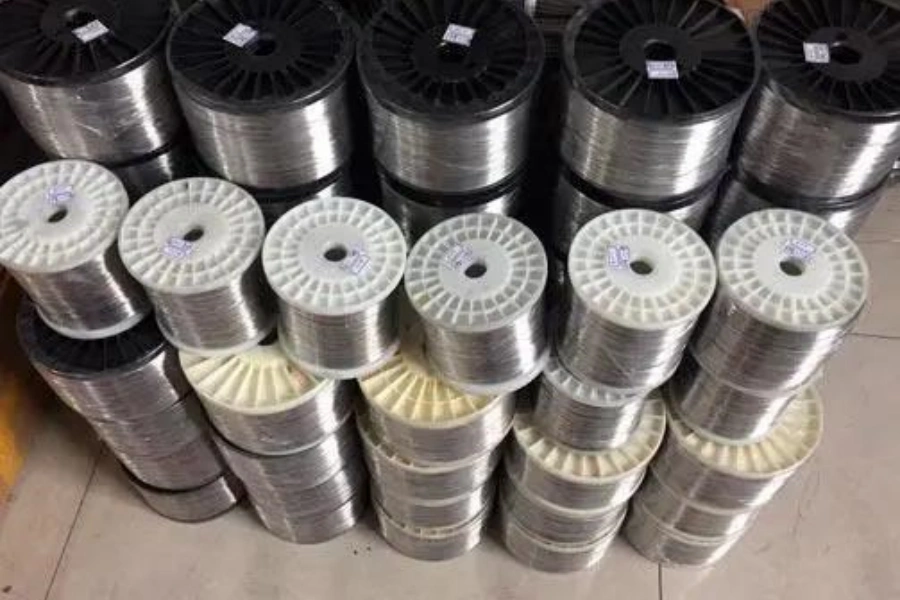
Titanium flat wire rolling is a highly specialized manufacturing process used to convert round titanium wire into flat or rectangular profiles with excellent dimensional accuracy and surface consistency. Compared with traditional drawing-only methods, precision rolling technology offers better flatness control, improved edge quality, and more stable mechanical properties. Because titanium alloys have high strength and strong deformation resistance, the rolling process requires precise control of rolling reduction, tension stability, and forming pressure throughout the entire production line.
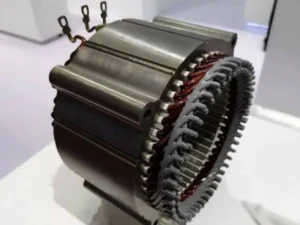
Titanium flat wire is widely used in aerospace, medical devices, battery systems, electronics, precision welding materials, and chemical processing industries. In these applications, manufacturers often require tight thickness tolerances, smooth surfaces, and reliable production consistency. Precision rolling technology makes it possible to achieve these requirements through carefully designed rolling stages and advanced automation systems.
Multi-Pass Rolling Technology in Titanium Flat Wire Manufacturing
Titanium materials typically cannot achieve the final flat wire dimensions in a single rolling stage because excessive deformation may lead to cracking, unstable profile geometry, or severe work hardening. For this reason, titanium flat wire manufacturing usually relies on multi-pass rolling technology. In this process, the wire gradually passes through several rolling stands, with each pass applying a controlled reduction ratio.
The first rolling stages focus on transforming the round wire into a preliminary flat profile. Intermediate stages stabilize the material flow and improve width consistency, while the final passes refine thickness precision and surface quality. Intermediate annealing is often introduced between rolling stages to restore ductility and reduce internal stress accumulation caused by cold deformation.
| Rolling Stage | Main Function | Important Control |
| Initial Rolling | Shape transformation | Reduction ratio |
| Intermediate Rolling | Profile stabilization | Tension control |
| Precision Rolling | Thickness sizing | Roll gap accuracy |
| Finishing Rolling | Surface optimization | Edge quality |
This gradual rolling process improves dimensional stability and helps maintain consistent flatness across continuous production runs.
Rolling Reduction and Dimensional Control
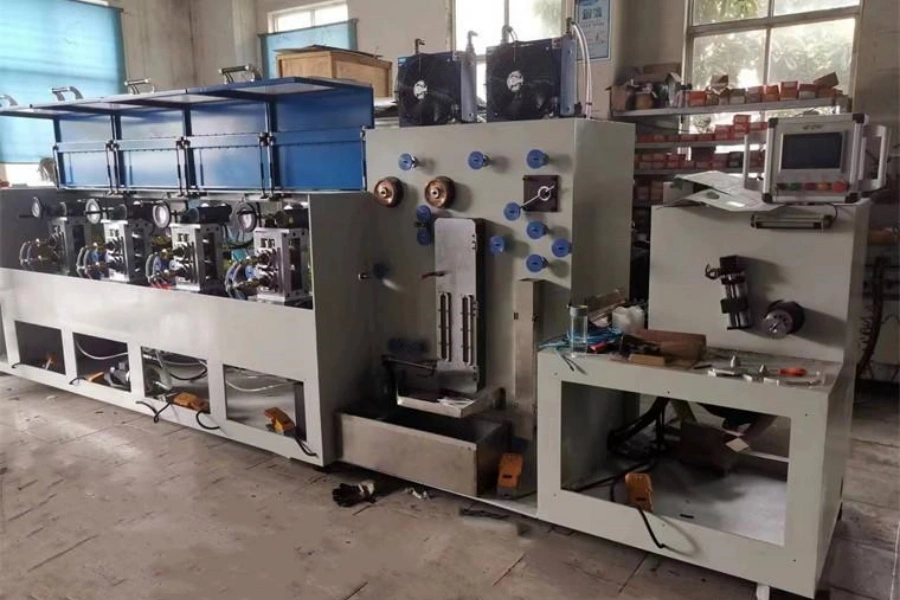
Rolling reduction directly affects wire quality, surface stability, and mechanical performance. Excessive reduction during a single rolling stage may cause edge cracking, unstable deformation flow, or surface defects. For this reason, precision rolling mills use carefully controlled reduction ratios combined with servo positioning systems and automatic gap adjustment.
Modern titanium flat wire production lines often integrate online measurement systems to monitor thickness and width in real time. Stable rolling pressure and accurate pass design allow manufacturers to maintain tighter tolerances while reducing scrap rates and production variation.
| Quality Target | Precision Rolling Advantage |
| Thickness consistency | Stable roll gap control |
| Width uniformity | Controlled material flow |
| Surface stability | Reduced deformation stress |
| Production consistency | Automated monitoring |
Flatness and Edge Quality Control
Flatness is one of the most important quality indicators in titanium flat wire manufacturing. Uneven rolling pressure, improper tension settings, or roller deflection may result in wave deformation or inconsistent profile geometry. Precision rolling systems improve flatness through servo-driven adjustment, stable tension control, and optimized roll alignment.
Edge quality is equally important, especially for aerospace and medical applications where dimensional precision and surface safety are critical. Poor edge control may lead to burr formation, cracking, or uneven material flow. High-quality rolling mills reduce these risks through precision-ground rollers, stable guiding systems, and optimized reduction strategies.
The combination of flatness control and edge optimization helps manufacturers achieve smoother surfaces, better downstream processing performance, and higher overall product reliability.
Equipment Used in Titanium Flat Wire Production
A complete titanium flat wire production line typically includes a precision rolling mill, annealing furnace, payoff system, take-up machine, and online inspection equipment. The rolling mill controls profile deformation and final sizing, while the annealing furnace restores ductility during multi-pass processing.
The payoff and take-up systems maintain stable wire tension throughout production, which is essential for dimensional consistency and flatness control. Modern production lines may also include laser measurement systems and intelligent monitoring software to improve automation and process stability.
Internal Link Suggestions:
- Precision Rolling Mill
- Titanium Annealing Furnace
- Active Payoff System
- Precision Take-Up Machine
Applications of Titanium Shaped and Rectangular Wire
Aerospace Applications
- Lightweight structural parts
- High-strength fastening systems
- Precision aerospace assemblies
Medical Applications
- Surgical instruments
- Implant components
- Orthodontic systems
Electronics and Precision Manufacturing
- Conductive connectors
- Battery systems
- Sensor components
Industrial Engineering
- Precision mesh
- Specialized welding materials
- High-performance equipment components
Conclusion
Titanium flat wire rolling combines precision forming technology, multi-pass rolling control, and advanced automation systems to achieve high-quality flat wire manufacturing. Through controlled rolling reduction, stable flatness management, and optimized edge quality control, manufacturers can produce titanium flat wire with superior dimensional consistency and reliable surface performance.
Modern titanium flat wire production lines are designed to support continuous high-precision manufacturing for demanding aerospace, medical, electronics, and industrial applications requiring stable quality and long-term reliability. At Sky Bluer Environmental Technology Co., Ltd., the Sky Bluer brand focuses on advanced rolling mill solutions and customized flat wire production systems, helping manufacturers improve production efficiency, dimensional accuracy, and process stability for high-performance titanium flat wire applications.