Industrial Nature of Nickel Alloy Processing Difficulties
Nickel alloy wire drawing is widely recognized as one of the most technically demanding processes in metal forming. Unlike copper or aluminum, nickel-based materials exhibit strong work hardening behavior, meaning that their mechanical strength increases rapidly during deformation. This characteristic makes continuous processing difficult and introduces multiple instability risks in industrial production.
A Nickel Alloy Wire Drawing Machine must therefore operate under strict process control conditions to manage stress accumulation, thermal load, and die wear simultaneously. In real production environments, challenges rarely appear as a single issue; instead, they occur as a combination of mechanical, thermal, and material-related factors.
Work Hardening and Wire Breakage
One of the most common problems in nickel alloy drawing is excessive work hardening. As the wire passes through each die, its internal crystal structure becomes more rigid. If deformation is too aggressive, the material loses ductility and eventually fractures.
This issue is especially serious in high-speed continuous production lines where operators attempt to increase output without adjusting reduction ratios.
Typical causes include:
- Excessive single-pass reduction
- Insufficient annealing cycles
- Poor lubrication stability
- Incorrect die angle configuration
To control this issue, manufacturers usually adopt a multi-stage reduction strategy combined with intermediate annealing. This ensures that the material regains sufficient ductility before entering the next deformation stage.
Die Wear and Surface Degradation
Another major challenge is accelerated die wear. Nickel alloys generate extremely high friction during drawing, which directly impacts die lifespan and surface quality of the wire.
A comparison of die performance under different conditions:
| Die Type | Lifespan | Application |
| Carbide Die | Medium | Rough drawing |
| Diamond Die | High | Precision drawing |
| Coated Die | Medium-High | Specialized alloys |
Die wear leads to:
- Diameter inconsistency
- Surface scratches
- Increased production downtime
To reduce this, modern systems integrate optimized lubrication delivery and controlled drawing angles to minimize frictional stress.
Thermal Instability During High-Speed Drawing
Heat generation is unavoidable during nickel alloy processing due to high deformation resistance. If cooling is insufficient, temperature rises rapidly, affecting both material behavior and machine stability.
Thermal instability leads to:
- Surface oxidation
- Reduced tensile strength
- Increased wire brittleness
- Lubrication breakdown
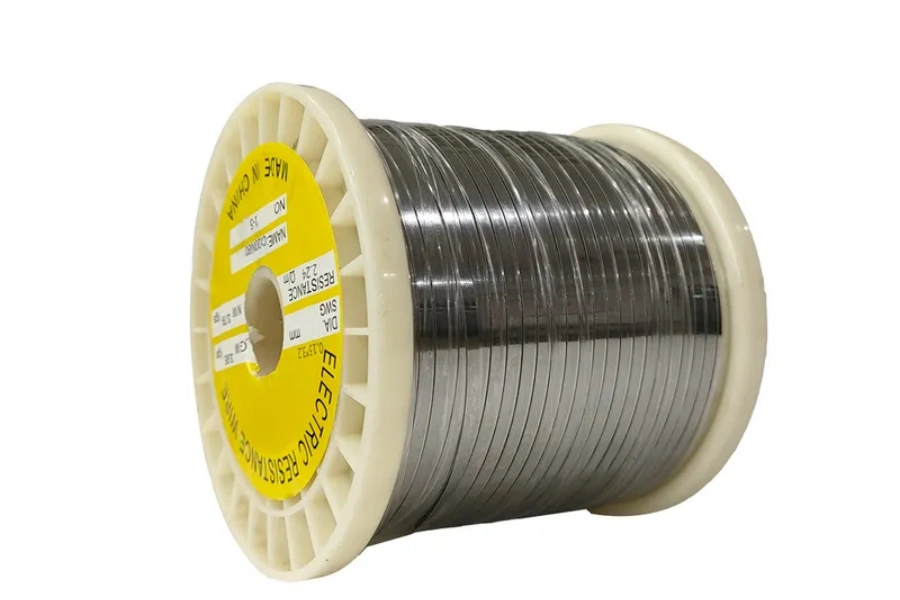
Modern Nickel Alloy Wire Drawing Machines solve this problem through multi-zone cooling systems and continuous emulsion circulation. These systems maintain stable temperature distribution across all drawing stages.
.webp)
Lubrication Failure and Process Instability
Lubrication plays a critical role in controlling friction between wire and die. In nickel alloy processing, lubrication failure can quickly escalate into serious production problems.
Common lubrication issues include:
- Uneven oil film distribution
- Contaminated lubricant
- Insufficient flow rate
- Temperature-induced viscosity loss
Once lubrication fails, friction increases sharply, leading to both die damage and surface defects. Advanced systems use automatic lubrication monitoring to ensure consistent flow and pressure throughout the process.
Dimensional Inaccuracy and Tension Fluctuation
Maintaining consistent wire diameter is one of the most important quality requirements. However, nickel alloy drawing is highly sensitive to tension variations.
Even small fluctuations in capstan speed or load distribution can result in dimensional deviation.
Main causes include:
- Inconsistent capstan torque
- Poor PLC synchronization
- Mechanical vibration
- Unstable feed tension
Modern machines address this through closed-loop tension control systems that continuously adjust speed and force balance in real time.
Engineering Optimization Strategies
To overcome these challenges, industrial systems adopt integrated engineering solutions rather than isolated improvements.
Key optimization strategies include:
- Multi-stage annealing integration
- Intelligent lubrication control systems
- High-precision die geometry design
- Real-time tension feedback loops
- Temperature-controlled cooling circuits
These technologies work together to stabilize the entire drawing process, especially in long-duration production environments.
Conclusion
Nickel alloy wire drawing presents multiple interconnected challenges involving material behavior, mechanical stress, thermal stability, and lubrication control. Successful production depends not only on machine capability but also on system-level engineering coordination.
A well-designed process ensures stable deformation, reduced downtime, and consistent product quality even under continuous high-load operation.
Sky Bluer Environmental Technology Co., Ltd. specializes in engineering advanced nickel alloy wire drawing systems designed to solve industrial production challenges such as work hardening, die wear, and thermal instability. Our solutions integrate precision mechanical design with intelligent process control, enabling manufacturers to achieve stable and efficient production performance. For customized Nickel Alloy Wire Drawing Machine systems and complete production line solutions, Sky Bluer Environmental Technology Co., Ltd. provides full technical support and engineering consultation.