Micron-Precision Metal Foil Production: The Hidden Technology Powering High-End Industries
From the tiny capacitors in your smartphone to the lightweight components in commercial jets and life-saving medical stents, countless high-tech products rely on one unsung hero: ultra-thin, precision-engineered metal foils and strips. These materials—often thinner than a human hair, with tolerances measured in micrometers (μm) or even nanometers (nm)—are not just “thin metal”; they are the result of cutting-edge manufacturing technology that balances extreme precision, surface perfection, and material integrity.
Micron-precision metal foil production is the backbone of industries where “good enough” simply won’t cut it. For semiconductor manufacturers, a deviation of just a few nanometers can render a chip useless. For aerospace engineers, a flawed surface on a fuel cell component can compromise safety. And for medical device designers, a stent’s metal foil must be uniformly thin to flex with blood vessels while maintaining structural strength. Behind every reliable, high-performance product in electronics, aerospace, medical, and renewable energy lies a production process that prioritizes micron-level control—here’s how it works, and why it matters.
The Science Behind Micron-Precision Metal Foil
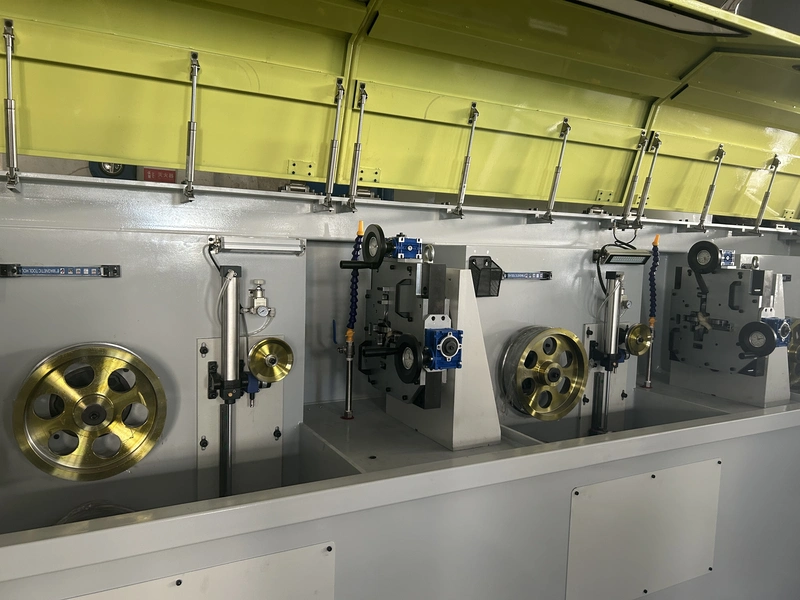
At the core of micron-precision metal foil production is a specialized cold rolling process, where metal stock (wire or strip) is passed through pairs of ultra-rigorous work rolls. Unlike hot rolling, which uses heat to soften metal, cold rolling relies on controlled pressure to reduce thickness—preserving the material’s mechanical properties while achieving exceptional dimensional accuracy.
What sets this process apart is the attention to detail at every step:
- Ultra-Precision Roll Design: Work rolls are manufactured to near-perfect standards, with specialized surface coatings that minimize friction and prevent defects. Their rigidity ensures uniform pressure across the metal’s width, eliminating thickness variations.
- Intelligent Digital Control: Advanced CNC and automation systems regulate every parameter—roll speed, pressure, temperature, and tension—with real-time feedback. This digital oversight reduces human error and ensures repeatable results, even for batch after batch of production.
- Surface Perfection: The cold rolling process, paired with post-processing polishing (where needed), delivers flaw-free surfaces with no scratches, burrs, or oxidation. For applications like optical coatings or semiconductor components, this “mirror-like” finish is non-negotiable.
Another key advantage of this production method is its compatibility with a wide range of metals. Whether it’s copper for capacitors, titanium for medical stents, aluminum for aerospace parts, or specialty alloys for photovoltaic cells, the process adapts to material properties to maintain precision and surface quality. This versatility makes micron-precision metal foil production a cornerstone of cross-industry innovation.
Why Micron Precision Matters for High-End Industries
The impact of micron-precision metal foil extends far beyond technical specs—it directly enables the performance, efficiency, and safety of high-end products:
- Electronics: Ultra-thin copper or aluminum foils are used in flexible printed circuits (FPCs), capacitors, and inductors. Their uniform thickness ensures consistent conductivity, while their thin profile allows for miniaturization—critical for shrinking device sizes without sacrificing power.
- Aerospace: Lightweight, high-strength foils and strips are used in aircraft fuel cells, structural components, and avionics. Precision reduces material waste and ensures components meet strict weight requirements, improving fuel efficiency and flight safety.
- Medical Devices: Biocompatible metals like titanium or stainless steel are rolled into ultra-thin foils for stents, catheters, and miniature sensors. Uniform thickness ensures these devices flex appropriately in the body while resisting corrosion and wear.
- Photovoltaics & Optics: Thin metal foils act as conductive layers in solar cells or reflective coatings in optical components. Their precise thickness and surface smoothness maximize energy conversion efficiency and optical performance.
Even in research and development, micron-precision metal foil production plays a vital role. Laboratories and R&D teams use the technology to create custom materials with tailored thicknesses and physical properties, accelerating innovation in emerging fields like flexible electronics, advanced batteries, and nanotechnology.
The Future of Micron-Precision Metal Foil Production
As high-end industries push for smaller, more efficient, and more reliable products, the demand for even tighter precision and thinner foils will grow. Advances in roll design (e.g., nanocoatings for smoother surfaces), AI-powered process control (for predictive maintenance and real-time adjustments), and sustainable manufacturing (reducing energy use and waste) are shaping the future of this technology.
For manufacturers, investing in micron-precision metal foil production isn’t just about meeting current standards—it’s about staying ahead of industry demands. For end-users, it’s about trusting that the products they rely on (from smartphones to medical devices) are built with components that meet the strictest quality criteria.
In the end, micron-precision metal foil production is more than a manufacturing process—it’s a catalyst for progress. It turns raw metals into the building blocks of innovation, proving that even the thinnest materials can have the biggest impact.