Introduction
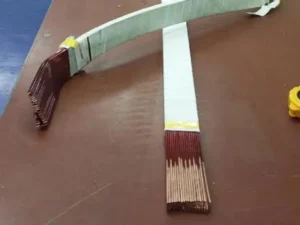
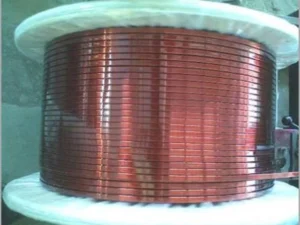
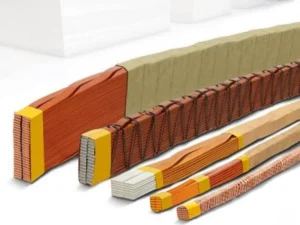
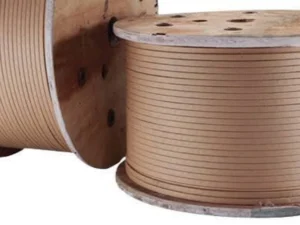
Flat wire manufacturing is a precision rolling process used to convert round metal wire into flat or rectangular profiles with controlled thickness, width, conductivity, and surface quality. Compared with traditional round wire products, precision flat wire provides better space utilization, improved electrical contact performance, and more stable thermal conductivity in demanding industrial applications.
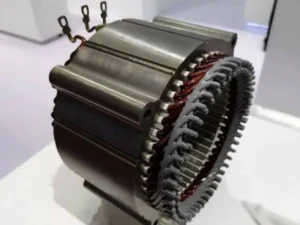
Precision flat wire production is widely used in machine components, transformer windings, semiconductor components, medical devices, and aerospace conductors, where micron-level tolerance and consistent material performance are required.
To achieve stable production quality, the manufacturing process must carefully control rolling deformation, tension stability, annealing conditions, material flow, and inline dimensional accuracy throughout the entire production line.
From Round Wire to Flat Geometry
The flat wire manufacturing process begins with round wire, typically produced through multi-pass wire drawing.
During flattening, the material undergoes controlled plastic deformation between precision rolls. The circular cross section gradually changes into a rectangular or near-rectangular geometry while maintaining material continuity.
Three deformation behaviors occur simultaneously during rolling:
- Thickness reduction
- Lateral width spread
- Longitudinal elongation
Unlike conventional steel strip rolling, flat wire production involves very small cross-sectional dimensions and extremely sensitive deformation behavior.
Even slight instability in rolling pressure or tension may result in thickness fluctuation, edge cracking, camber, surface marks, and residual stress concentration.
For ultra-thin precision wire, the deformation window becomes increasingly narrow as thickness decreases.
Critical Process Parameters in Flat Wire Production
Stable flat wire manufacturing depends on strict control of multiple process parameters.
Reduction Ratio
Reduction ratio directly affects deformation stability and internal material stress.
Reduction\ Ratio=\frac{H_0-H_1}{H_0}\times100%
Typical single-pass reduction values:
| Material | Recommended Reduction |
| Copper | 15–35% |
| Stainless Steel | 8–20% |
| Titanium Alloy | 5–15% |
| Nickel Alloy | 5–18% |
Excessive reduction may cause severe work hardening and edge fracture.
European precision rolling processes generally prefer multi-pass deformation with smaller reduction increments to improve structural stability.
Rolling Speed
Rolling speed affects thermal behavior, surface finish, and dimensional repeatability.
| Product Type | Rolling Speed |
| Standard Flat Wire | 20–80 m/min |
| Precision Electronic Wire | 10–50 m/min |
| PV Ribbon | 80–300 m/min |
High-speed production requires highly synchronized servo systems to maintain stable elongation and tension balance.
Tension Stability
Tension control is one of the most critical factors in precision flat wire production.
Unstable tension directly influences thickness accuracy, width consistency, camber, and surface smoothness.
Typical European precision lines maintain tension accuracy within ±1–2%.
Advanced production systems use closed-loop servo feedback combined with dancer control systems and load cell monitoring.
Roll Temperature Control
Roll temperature significantly influences dimensional stability during continuous production.
Thermal expansion of rolls may alter the rolling gap at micron level, especially during high-speed operation.
| Production Type | Temperature Stability |
| Standard Production | ±5°C |
| Precision Production | ±1–2°C |
Many European high-precision lines use internal roll cooling systems to reduce thermal deformation.
Metallurgical Changes During Rolling
Cold deformation causes major metallurgical changes inside the material structure.
During flattening, grain structures become elongated along the rolling direction while dislocation density increases rapidly.
This phenomenon is known as work hardening.
Effects of work hardening include:
- Increased tensile strength
- Reduced ductility
- Higher internal stress
- Reduced elongation capability
For precision electronic conductors, excessive hardening may negatively affect bending performance and electrical stability.
Material microstructure control therefore becomes essential in high-end flat wire production.
Grain Refinement and Residual Stress
As rolling reduction increases, grain refinement occurs within the material.
While refined grain structure may improve strength, excessive deformation can generate residual stress concentration.
Residual stress may later cause coil deformation, camber instability, shape memory effects, and surface cracking during bending.
European manufacturers often perform intermediate annealing specifically to stabilize grain structure and reduce internal stress accumulation.
Annealing Process Optimization
Annealing is one of the most critical stages in precision flat wire manufacturing.
Its purpose is not only softening the material but also restoring metallurgical stability after cold deformation.
During annealing, recrystallization occurs inside the material structure.
This process restores ductility, reduces dislocation density, improves conductivity, and stabilizes mechanical behavior.
Typical Annealing Parameters
| Annealing Method | Temperature Range |
| Resistance Annealing | 300–700°C |
| Induction Annealing | 400–900°C |
| Continuous Furnace Annealing | 500–1100°C |
For copper PV ribbon production, conductivity recovery is especially important.
European PV ribbon manufacturers often require conductivity values above 97–101% IACS.
Annealing atmosphere control is also critical to prevent oxidation and surface discoloration.
European Dimensional Tolerance Standards
European precision flat wire customers generally require significantly tighter tolerances than standard industrial applications.
| Product Type | Thickness Tolerance |
| Standard Flat Wire | ±0.02 mm |
| Precision Flat Wire | ±0.005 mm |
| PV Ribbon | ±0.003–0.01 mm |
Typical width tolerance ranges between ±0.01–0.03 mm.
Camber requirements are often maintained below 1 mm/m.
For ultra-precision electronic conductors, some European customers require thickness repeatability within ±2–3 μm.
Surface Quality Requirements
Surface condition is one of the most strictly controlled quality indicators in precision flat wire manufacturing.
| Product Type | Surface Roughness |
| Standard Industrial Wire | Ra 0.2–0.4 μm |
| Electronic Conductors | Ra 0.05–0.15 μm |
| PV Ribbon | Ra ≤0.10 μm |
Common surface defects include roll marks, oxidation stains, scratches, micro pits, and burr formation.
European customers also pay close attention to edge geometry consistency and burr control.
Inline Quality Control Systems
Modern flat wire production lines increasingly rely on inline monitoring systems rather than offline inspection.
| System | Function |
| Laser Gauge | Thickness measurement |
| Vision Inspection | Surface defect detection |
| Eddy Current System | Crack detection |
| Load Cell Monitoring | Tension control |
Advanced production lines can automatically correct rolling gap deviations in real time through servo feedback systems.
Process Capability in Precision Production
European customers increasingly focus on long-term process capability rather than only individual product measurements.
| Parameter | Common Requirement |
| Cp | ≥1.33 |
| Cpk | ≥1.33–1.67 |
Stable Cp and Cpk values indicate consistent long-term production quality.
For high-end electronic and photovoltaic applications, process repeatability is often more important than maximum production speed.
Common Manufacturing Challenges
Precision flat wire production faces several major process challenges.
Edge Cracking
Usually caused by excessive reduction or insufficient annealing.
Thickness Instability
Often related to thermal expansion, tension fluctuation, or roll eccentricity.
Camber
Typically caused by asymmetric rolling pressure or guide misalignment.
Surface Damage
Frequently associated with contaminated rolls or unstable lubrication conditions.
Modern European production lines reduce these risks through automatic monitoring and closed-loop process control.
Industry 4.0 in Flat Wire Manufacturing
Modern precision rolling lines are increasingly integrated with Industry 4.0 systems.
Advanced digital features include:
- Real-time production monitoring
- Servo synchronization
- Production traceability
- Automatic alarm systems
- Remote diagnostics
- Production data analysis
These technologies improve production efficiency while reducing scrap rates and long-term operational instability.
About CRM Rolling Mill
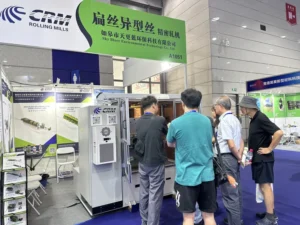
CRM Rolling Mill specializes in precision wire flattening machines, flat wire rolling mills, shaped wire production lines, and customized turnkey rolling solutions.
Our equipment is designed for high-precision production of copper flat wire, stainless steel flat wire, titanium flat wire, PV ribbon, and special alloy conductors.
CRM production lines integrate precision rolling technology, servo tension control, inline annealing systems, automatic thickness measurement, and intelligent PLC automation to achieve stable production performance and high dimensional consistency.
With extensive experience in precision rolling applications, CRM provides customized engineering solutions based on customer material requirements, tolerance targets, production capacity, and industrial application demands.
Conclusion
Precision flat wire manufacturing requires stable rolling deformation, accurate tension control, consistent metallurgical performance, and reliable process stability throughout the entire production process.
CRM Rolling Mill specializes in metal rolling machines designed to convert round wire into precision flat wire for applications including PV ribbon, electronic conductors, battery connectors, and special alloy materials. Our equipment is developed to achieve high dimensional accuracy, stable surface quality, and continuous high-speed production for modern flat wire manufacturing industries.
If you are planning a new flat wire production project or looking to upgrade your existing rolling mill line, contact CRM Rolling Mill for customized machine solutions, technical support, and complete turnkey production line recommendations.