Introduction
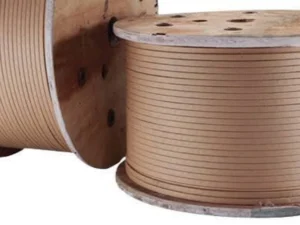
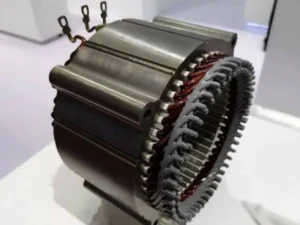
In modern wind turbine generators, the performance and reliability of the stator and rotor windings are critical. High-quality copper wire must meet extremely stringent standards to ensure efficiency, longevity, and thermal stability under heavy electrical loads, while maintaining precise geometry, dimensional stability, and superior surface quality.
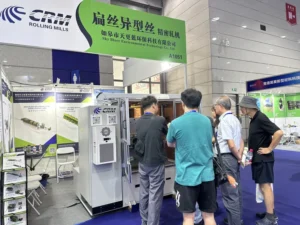
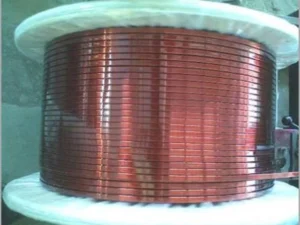
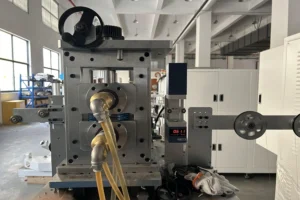
The CRM2026-C Copper Wire Flattening Machine is designed to meet these challenges through advanced cold-rolling technology, capable of producing consistently flat and shaped wires with exceptional uniformity. Its highly adaptive tension control system ensures smooth and stable wire flow, preventing deformation during processing. The machine also features intelligent automation, including precise feeding, guided shaping, and automated monitoring of wire geometry and surface quality. Together, these capabilities allow manufacturers to achieve reliable, high-quality wire production suitable for the most demanding wind turbine generator coil applications, whether for large-scale industrial production or precision-critical components.
High Standards for Wind Turbine Generator Coils
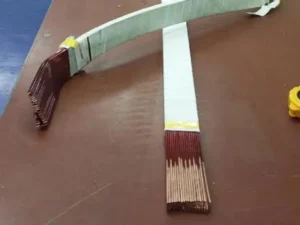
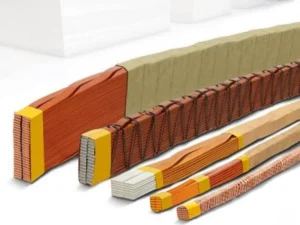
Wind turbine generators are complex electromechanical systems, and the performance of their stator and rotor coils directly affects overall efficiency, reliability, and lifespan. The copper wire used in these coils must meet extremely stringent standards, because even small deviations in wire geometry, surface quality, or mechanical properties can lead to energy losses, overheating, or premature failure.
Wind turbine generator coils face several engineering challenges:
- High Electrical Conductivity: The copper wire must have consistent cross-sectional dimensions to minimize electrical resistance and maximize current density.
- Precise Geometry and Flatness: Uneven wire profiles reduce coil packing efficiency, increasing eddy current losses and localized heating.
- Surface Smoothness: Low surface roughness (Ra ≤ 0.6 μm) is crucial to avoid insulation wear and ensure long-term reliability.
- Dimensional Stability: Straightness tolerances up to 3/1000 prevent winding defects and improve assembly accuracy.
- Mechanical Strength: Wires must withstand winding tension and thermal expansion without deformation or cracking.
Meeting these requirements ensures that wind turbine generators operate efficiently, with reduced energy losses and longer operational lifetimes.
CRM2026-C Copper Wire Flattening Machine: Technical Overview
To meet the rigorous demands of wind turbine generator manufacturing, wire flattening machines must deliver unmatched precision, consistency, and efficiency. The CRM2026-C has been engineered with advanced features and robust design to ensure that every copper or brass wire processed meets the exacting standards required for high-performance generator coils. Below is a detailed overview of its technical specifications:
| Feature | Specification |
| Brand | CRM |
| Model | CRM2026-C |
| Type | Precision Cold Rolling |
| Shapes | Flat, Rectangle, Square, Wedge, Triangle |
| Expanded Processing Range | Input wire diameters from 1.5–10 mm, max width 16 mm, max thickness 6 mm |
| Ultra-High Precision | Tolerance ±0.005 mm, straightness 3/1000, surface roughness Ra ≤ 0.6 μm |
| Design Speed | 50–500 m/min |
| Material | Copper wire, Brass wire |
| Press-Down Model | Automatic or manual |
| Stages | Single stage / Tandem wire flattening & shaping lines |
| Roll Material | Carbide steel |
| Roll Precision | <0.001 mm |
| Optional Devices | Pay-off machine, wire guide, laser measuring system, central lubrication system, predictive maintenance sensors |
How CRM2026-C Meets Wind Turbine Coil Standards
- Expanded Processing Range
The machine handles wires from 1.5–10 mm diameter, producing flat, square, wedge, or triangular profiles. This flexibility accommodates various coil designs and generator sizes. - Ultra-High Precision
- Tolerance: ±0.005 mm
- Straightness: 3/1000
- Surface Roughness: Ra ≤ 0.6 μm
These specifications ensure uniform electrical conductivity, precise coil packing, and minimal insulation wear.
- High-Speed Production
With speeds of 50–500 m/min, the CRM2026-C supports continuous industrial-scale manufacturing while maintaining tight tolerances. - Advanced Shaping Capability
The machine can produce complex wire profiles, including wedge and triangular cross-sections, optimizing slot filling and magnetic flux efficiency in generator windings. - Intelligent Automation and Maintenance
Features such as automatic feeding, adaptive tension control, centralized lubrication, and predictive maintenance sensors reduce operator intervention, prevent downtime, and maintain consistent product quality.
Why CRM2026-C Stands Out
Unlike conventional wire flatteners, the CRM2026-C integrates precision, speed, and intelligent automation in one system:
- Adaptive Tension Control maintains uniform stress along the wire, preventing deformation during high-speed flattening.
- Predictive Maintenance Sensors monitor roller conditions, lubrication levels, and motor performance, proactively preventing faults and maximizing uptime.
- Customizable Roll Adjustments allow radial, axial, and phase tuning for exact wire geometry.
- Industrial-Scale Reliability with double-serve roll drives, carbide steel rolls, and robust frame design ensures consistent production for large wind turbine projects.
- Versatility Across Materials: Handles copper and brass wires, producing both flat wires for coil windings and shaped wires for specialized components.
These features make the CRM2026-C not just a wire flattener, but a critical production solution for high-performance wind turbine generator coils.
Conclusion
For manufacturers of wind turbine generators, precision and reliability of copper wire are non-negotiable. The CRM2026-C Copper Wire Flattening Machine delivers expanded processing capability, ultra-high precision, high-speed production, and intelligent automation, meeting the exacting standards of modern wind turbine generator coils.By converting standard round wires into perfectly flat or shaped profiles, the CRM2026-C ensures maximum efficiency, reduced energy losses, and long-term operational stability in wind turbine generators.
Discover how the CRM2026-C can transform your wind turbine generator production—contact us today for a personalized consultation and demonstration!