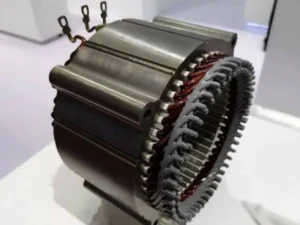
Wire rods serve as the foundational semi-finished products for countless industrial applications, from construction reinforcements to high-precision automotive components. Behind the production of these critical materials lies the wire rod mill—specialized equipment that transforms metal billets into wires of controlled cross-sections, including flat, square, and custom special-shaped profiles. For decades, global markets have associated precision China wire rod rolling technology with European or American manufacturers, but China has emerged as a global leader in wire rod mill production, blending advanced engineering, intelligent manufacturing, and sustainable practices. This article explores the core technology of Chinese wire rod mills, their diverse equipment types, industry applications, and the competitive advantages driving their global recognition.
Understanding Wire Rod Mills: Core Principles & Process
A wire rod mill is a specialized rolling system designed to reduce the cross-sectional area of metal billets (typically 120-150mm in cross-section) through continuous, multi-stand rolling, producing wire rods with diameters ranging from 4.5mm to 27mm. Unlike traditional single-pass rolling, modern wire rod mills use sequential stands to achieve gradual deformation, ensuring high elongation coefficients and consistent dimensional accuracy—critical for downstream processing into finished products.
The Continuous Rolling Process: From Billet to Finished Wire
The production workflow of a wire rod mill follows a precisely controlled sequence, integrating heating, rolling, cooling, and collection:
- Billet Preparation & Reheating: Continuous cast billets (steel, copper, aluminum, or alloys) undergo surface defect inspection before being heated to 950-1100℃ in walking beam furnaces. This temperature optimizes metal malleability while avoiding overheating or decarburization.
- Multi-Stand Rolling: Heated billets pass through three stages of rolling stands—roughing, intermediate, and finishing—each with progressively smaller roll gaps. Modern mills feature synchronized stands that process the billet in a single direction, eliminating the need for repeated handling and reducing energy consumption by 15-20% compared to batch rolling.
- Profile Shaping for Specialized Wires: For flat, square, or special-shaped wires, custom roll pass designs (e.g., square-oval, grooved profiles) are used to achieve the desired cross-section. Precision alignment of rolls ensures uniform thickness across the wire’s width, a key requirement for applications like electromagnetic wires and automotive connectors.
- Controlled Cooling & Collection: Post-rolling, wires are cooled via temperature-controlled systems to set metallurgical properties—critical for strength and ductility. The finished wires are then coiled into spools for storage or further processing, with high-speed lines achieving rolling speeds of up to 130 m/s.
Key Equipment Types in Chinese Wire Rod Mills
Chinese manufacturers offer a diverse range of wire rod mill configurations, tailored to different material types and product requirements:
- Two-Roll Rolling Mills: Ideal for general-purpose wire production, offering cost-effectiveness and simplicity for standard round or square wires.
- Four-Roll Rolling Mills: Equipped with enhanced stability and precision, suitable for high-tolerance flat wires used in electronics and aerospace components.
- Universal Turkish Rolling Mills: Specialized for asymmetric or complex special-shaped wires, featuring adjustable roll angles to accommodate custom profiles.
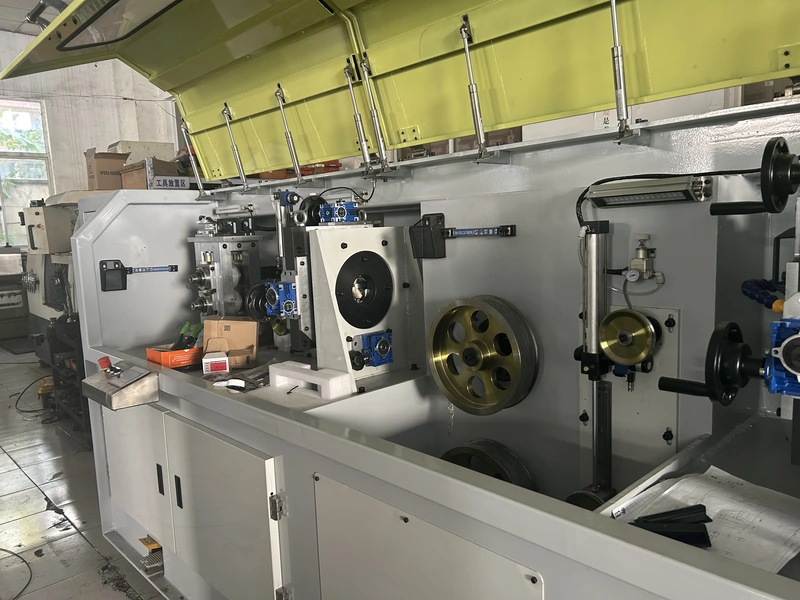
- Continuous Rolling Production Lines: Integrated systems for high-volume production, including flat wire continuous rolling lines and profiled wire lines, capable of 24/7 operation with minimal human intervention.
Material Versatility & Application-Specific Solutions
Chinese wire rod mills excel in processing a wide spectrum of materials, adapting to the unique properties of each metal to deliver optimized wire products. This versatility has made them indispensable across diverse industrial sectors.
Material Compatibility: From Common Metals to Specialty Alloys
Modern Chinese wire rod mills are engineered to process:
- Ferrous Metals: Carbon steel, stainless steel, and high-strength alloy steel—used in construction, machinery, and automotive components.
- Non-Ferrous Metals: Copper (for electrical conductivity), aluminum (for lightweight applications), and their alloys—critical for electronics and renewable energy systems.
- Specialty Materials: Corrosion-resistant alloys, high-tensile steels, and biocompatible metals—deployed in aerospace, medical devices, and military applications.
Industry Applications: Flat & Special-Shaped Wires in Action
The precision wires produced by Chinese mills are tailored to solve specific industry challenges, with shape design directly influencing performance:
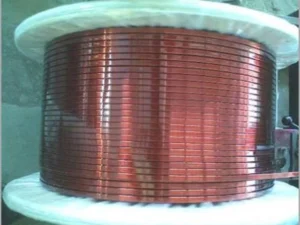
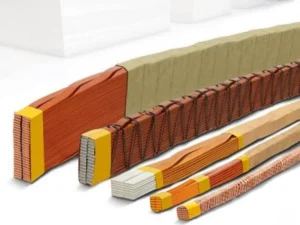
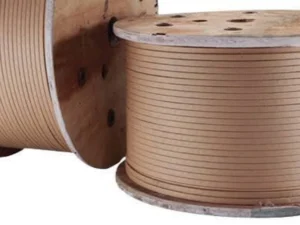
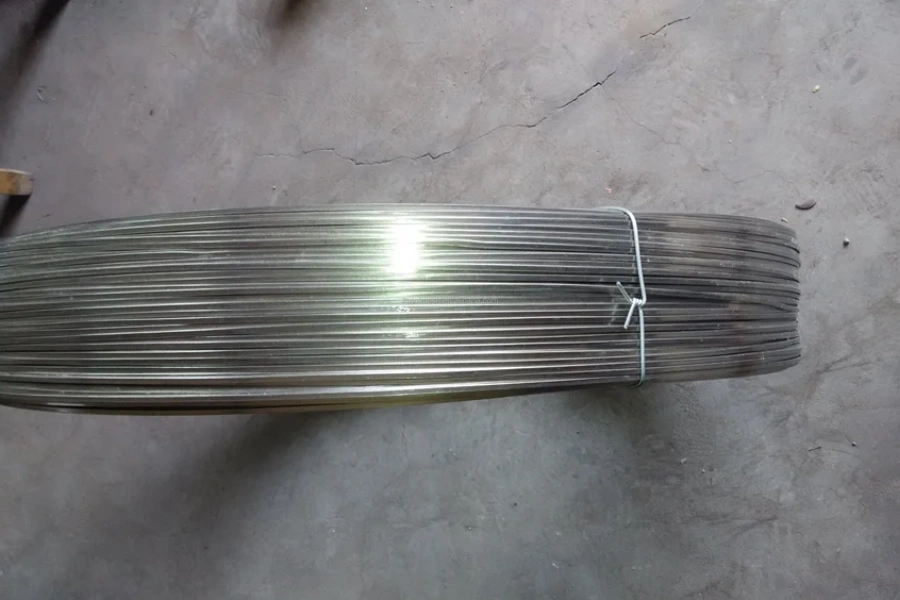
- Electromagnetic Wire & Electronics: Flat copper wires minimize space occupation in transformers and motors, while their large surface area enhances heat dissipation. Special-shaped wires reduce signal interference in electronic connectors.
- Automotive & Aviation: High-strength flat steel wires are used in suspension springs and seat frames, while lightweight aluminum wires reduce vehicle weight. Special-shaped wires fit 狭小 spaces in EV battery packs and aircraft hydraulic systems.
- Petrochemical & Mining: Corrosion-resistant alloy wires withstand harsh chemical environments, while square wires provide structural stability in mining screens.
- Construction & Infrastructure: Round steel wire rods are processed into reinforcing mesh, accounting for 41% of global wire rod consumption. Flat wires are used in architectural decorative elements and heating systems.
- Specialty Sectors: Military and defense applications leverage custom special-shaped wires for equipment miniaturization, while papermaking industries use precision flat wires in CTC production lines.
China’s Wire Rod Mill Industry: Technology Evolution & Global Leadership
China’s rise as a wire rod mill powerhouse is driven by strategic policy support, technological innovation, and large-scale industrial integration. What was once a market dominated by imports has transformed into a global export hub, with Chinese mills setting new standards for precision and efficiency.
Technological Innovation: From Catch-Up to Global Pioneering
Chinese wire rod mill technology has evolved rapidly, breaking reliance on international suppliers:
- Intelligent Manufacturing: Integration of 5G, digital twin, and AI-driven control systems has enabled real-time parameter optimization. For example, 鞍钢集团’s smart production line uses edge computing to monitor roll wear and tension fluctuations, achieving a 98.2% one-pass yield and 12.5% energy reduction.
- Domestic Core Components: Key technologies like high-speed 无扭精轧机组 now boast 93.6% 国产化率,with 自主 – developed bearings, hydraulic systems, and control modules replacing imported parts.
- Green Transformation: Adoption of 永磁同步电机 and waste heat recovery systems reduces energy consumption by 15-20%, aligning with China’s “double carbon” goals. Low-temperature rolling technology cuts NOx emissions by over 10% while maintaining product quality.
Industry Scale & Global Impact
China’s wire rod mill industry has achieved remarkable scale and global reach:
- Production Capacity: The country operates over 370 high-speed wire rod production lines, with leading manufacturers like Yonggang and Zhongtian ranking among the world’s top producers.
- Export Growth: In 2023, China’s high-speed wire rod mill equipment exports reached $17.4 billion, a year-on-year increase of 23.1%, primarily supplied to Southeast Asia, the Middle East, and Africa.
- Market Share: Asia-Pacific accounts for 40% of the global wire rod market, with Chinese products dominating due to their balance of quality and cost-effectiveness.
Competitive Advantages of Chinese Wire Rod Mills
Chinese wire rod mills stand out in the global market due to four core strengths, addressing the needs of both domestic and international clients:
Precision & Quality Compliance
Modern Chinese mills adhere to strict international standards (ISO, ASTM, DIN) and implement comprehensive quality control systems. Advanced measuring tools ensure dimensional tolerances as tight as ±0.01mm for special-shaped wires, meeting the requirements of high-end industries like aerospace and electronics.
Customization & Flexibility
Manufacturers offer tailored solutions for unique application needs, from custom roll pass designs for special-shaped wires to adjustable production lines that switch between materials (e.g., copper to stainless steel) with minimal downtime. This flexibility is critical for small-batch specialty orders and large-scale mass production alike.
Cost-Effectiveness & Scalability
Large-scale production clusters in China reduce component costs, while automated lines boost throughput—enabling competitive pricing without compromising quality. For example, continuous rolling lines can produce tens of thousands of tons annually, lowering unit production costs for construction and automotive clients.
Sustainable & Efficient Operations
Chinese mills prioritize green manufacturing, integrating energy-saving technologies and low-carbon processes. The adoption of short-flow production and heat recovery systems reduces carbon footprints, aligning with global sustainability directives. A 2023 industry report showed that 56.8% of Chinese wire rod mills have implemented energy-saving retrofits, with ton-steel energy costs reduced by up to 18.6 yuan.
Selecting the Right Wire Rod Rolling Solution: Key Considerations
For businesses seeking wire rod rolling equipment or precision wire products, understanding application requirements and equipment capabilities is critical to making informed decisions:
Align Equipment with Material & Product Specifications
- Material Type: Choose mills designed for your target material—e.g., four-roll mills for non-ferrous metals like copper, or high-strength alloy-capable lines for automotive components.
- Wire Profile: Flat wires require precision roll alignment, while special-shaped wires need customizable roll pass designs. Confirm the mill’s ability to achieve your desired cross-section (square, oval, grooved, etc.).
Balance Production Volume & Precision Needs
- High-Volume Applications: Opt for continuous rolling lines with high-speed capabilities (up to 130 m/s) for standard wires used in construction or general manufacturing.
- High-Precision Applications: Select mills with intelligent control systems and multi-stand finishing units for electronics or aerospace wires, where dimensional consistency is non-negotiable.
Evaluate Sustainability & After-Sales Support
- Energy Efficiency: Prioritize mills with energy-saving features (e.g., variable frequency drives, heat recovery) to reduce operational costs and carbon emissions.
- Technical Support: Choose manufacturers offering remote monitoring, spare parts supply, and training—critical for minimizing downtime. Chinese leaders like Sky Bluer provide customized solutions and global after-sales service.
Conclusion
China’s wire rod rolling technology has evolved from a follower to a global innovator, driven by technological breakthroughs, intelligent manufacturing, and a commitment to sustainability. Chinese wire rod mills excel in producing precision flat, square, and special-shaped wires, supporting industries ranging from construction to aerospace with versatile, cost-effective solutions. As the global demand for high-strength, low-carbon, and custom-shaped wires grows—fueled by EV adoption, renewable energy expansion, and infrastructure development—China’s role in the global wire rod supply chain will only strengthen. Whether you’re an engineer seeking technical insights, a manufacturer upgrading production lines, or a buyer sourcing reliable wire products, understanding China’s wire rod rolling technology reveals a world of innovation that balances precision, efficiency, and value.