Introduction
Annealing process is critical for titanium wire manufacturing. During rolling, drawing, and profile forming operations, titanium materials undergo continuous plastic deformation that gradually increases hardness and reduces ductility. If this work hardening effect is not properly controlled, the material may become difficult to process and more susceptible to cracking during subsequent production stages.
At the same time, titanium is highly reactive at elevated temperatures. While annealing improves mechanical properties and restores formability, it also introduces the risk of oxidation and surface discoloration. Without proper atmosphere protection, the wire surface may develop oxide layers that negatively affect appearance, corrosion resistance, and downstream processing performance.
For manufacturers producing titanium flat wire, rectangular wire, and custom profile wire, understanding annealing technology and oxidation control is essential for achieving stable product quality and reliable manufacturing results.
Why Titanium Wire Requires Annealing
Titanium alloys are known for their high strength and excellent corrosion resistance, but they also exhibit significant work hardening during cold deformation processes.
As rolling reductions increase, the material gradually loses ductility and becomes more difficult to form. Internal stresses accumulate within the wire, increasing the possibility of cracking, dimensional instability, and inconsistent mechanical properties.
Annealing helps solve these challenges by restoring the material structure and improving workability.
Benefits of Proper Annealing
- Restores ductility
- Reduces internal stress
- Improves formability
- Enhances rolling stability
- Reduces cracking risk
- Supports multi-pass rolling operations
For precision titanium wire production, annealing is often performed between rolling stages to maintain consistent processing conditions and ensure stable product quality.
Vacuum Annealing for High-Quality Titanium Wire
Vacuum annealing is widely considered one of the most effective heat treatment methods for premium titanium wire products.
During vacuum annealing, the furnace chamber is evacuated to remove oxygen and other reactive gases. This controlled environment minimizes oxidation and helps preserve the natural metallic appearance of the titanium surface.
Compared with conventional annealing methods, vacuum systems provide significantly better protection against surface contamination and discoloration.
Advantages of Vacuum Annealing
| Feature | Benefit |
| Oxygen-free environment | Minimal oxidation |
| Clean heating conditions | Improved surface quality |
| Reduced contamination | Better product reliability |
| Uniform heat treatment | Consistent mechanical properties |
Vacuum annealing is commonly used for aerospace components, medical wire products, and other high-value applications where surface appearance and material performance are critical.
Although vacuum furnaces typically involve higher capital investment, many manufacturers choose them because they reduce rework requirements and improve final product quality.
Protective Atmosphere Annealing Technology
Not every production application requires a vacuum furnace. Many titanium wire manufacturers successfully use protective atmosphere annealing systems to balance quality and production cost.
Protective atmosphere furnaces use inert or controlled gases to reduce oxygen exposure during heat treatment.
Common atmosphere options include:
- Argon
- Nitrogen-based mixtures
- Inert gas blends
- Customized protective atmospheres
The effectiveness of oxidation control depends largely on atmosphere purity and furnace sealing performance. If oxygen enters the furnace chamber during operation, surface discoloration may occur even when protective gases are present.
Compared with open-air annealing, protective atmosphere systems provide substantially better surface quality while supporting continuous production at higher throughput levels.
Bright Annealing and Surface Appearance Control
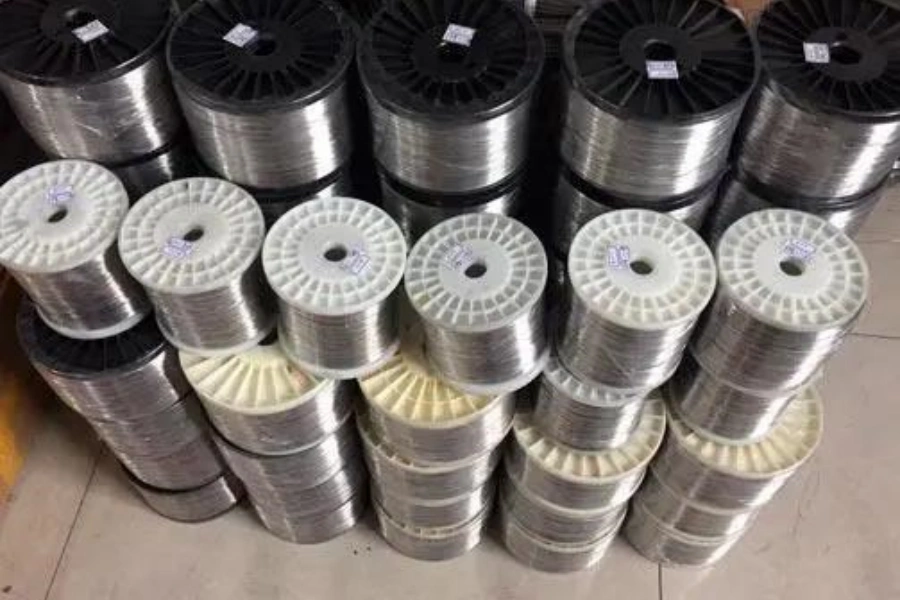
Many customers require titanium wire with a clean, bright, and uniform surface appearance after heat treatment. This requirement is especially common in medical, electronics, and decorative industrial applications.
Bright annealing refers to a heat treatment process designed to minimize oxidation and maintain the metallic appearance of the titanium surface.
Achieving bright annealing requires careful control of several factors:
- Furnace atmosphere quality
- Oxygen concentration
- Heating temperature
- Holding time
- Cooling conditions
When these parameters are properly managed, manufacturers can produce titanium wire with excellent appearance and minimal discoloration.
Bright Annealing Benefits
| Quality Objective | Production Advantage |
| Bright metallic surface | Improved product appearance |
| Low oxide formation | Better corrosion resistance |
| Uniform color | Consistent quality |
| Clean surface | Easier downstream processing |
Bright annealing not only improves aesthetics but also enhances the perceived value of the finished product.
Common Oxidation and Discoloration Problems
Oxidation remains one of the most common challenges in titanium heat treatment.
When titanium is exposed to oxygen at elevated temperatures, a chemical reaction occurs that forms oxide layers on the material surface. Depending on the severity of oxidation, the surface may develop different colors and textures.
Typical Oxidation Issues
| Surface Condition | Possible Cause |
| Blue discoloration | Excessive oxidation |
| Yellow or brown stains | Oxygen contamination |
| Dark gray surface | Poor atmosphere control |
| Oxide scale formation | Severe oxidation exposure |
| Uneven color appearance | Temperature inconsistency |
Although some discoloration may be cosmetic, severe oxidation can negatively affect corrosion resistance and increase the need for additional surface treatment.
To minimize these issues, manufacturers must carefully control both furnace atmosphere and process temperature throughout the annealing cycle.
How to Select the Right Annealing Furnace
Choosing the correct annealing furnace is an important investment decision for titanium wire manufacturers.
Different production requirements may favor different furnace technologies depending on product quality expectations, production volume, and available budget.
Several factors should be evaluated during the selection process.
Key Furnace Selection Criteria
| Evaluation Factor | Importance |
| Temperature uniformity | Consistent heat treatment |
| Atmosphere control capability | Oxidation prevention |
| Production capacity | Manufacturing efficiency |
| Automation level | Process stability |
| Energy efficiency | Operating cost reduction |
| Maintenance requirements | Long-term reliability |
Manufacturers producing aerospace and medical-grade titanium wire often prioritize atmosphere quality and temperature precision, while larger industrial operations may focus on production capacity and operating efficiency.
A properly designed furnace should support both current production requirements and future expansion plans.
Complete Titanium Rolling and Annealing Line Solutions
For optimal production performance, annealing should not be viewed as a standalone process. Instead, it should be integrated into the overall titanium wire manufacturing line.
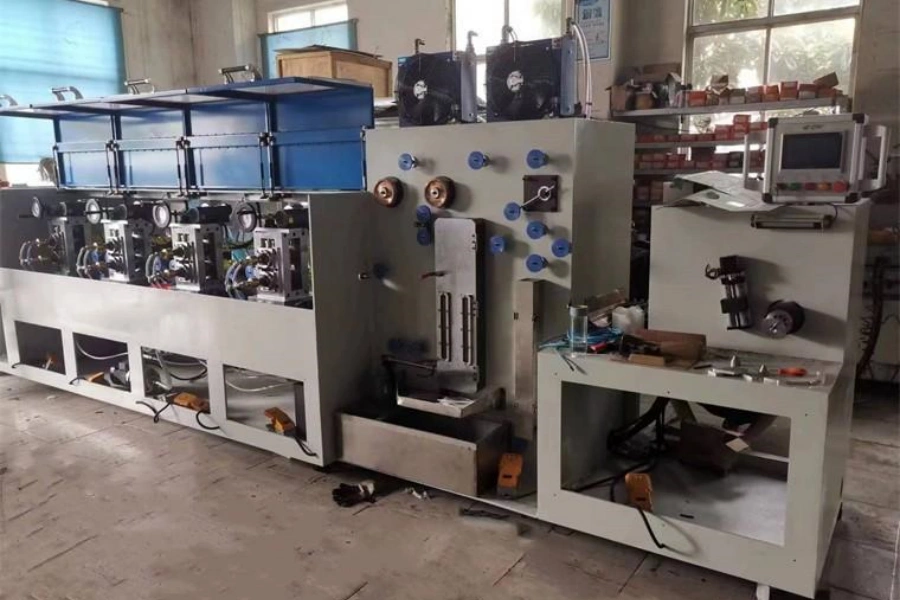
Modern production systems combine rolling, annealing, tension control, inspection, and winding technologies into a coordinated process that improves quality and efficiency.
A complete titanium wire production line may include:
- Precision rolling mill
- Annealing furnace
- Active payoff machine
- Automatic tension control system
- Online measurement equipment
- Precision take-up machine
By integrating these systems, manufacturers can maintain stable dimensions, consistent material properties, and superior surface quality throughout production.
Advanced automation platforms further enhance performance by collecting process data and making real-time adjustments to improve operational stability.
Conclusion
Annealing plays a vital role in titanium wire manufacturing by restoring ductility, reducing internal stress, and supporting high-precision rolling operations. However, successful heat treatment requires more than temperature control alone. Effective oxidation prevention is equally important for maintaining surface quality, corrosion resistance, and product appearance.
Whether using vacuum annealing or protective atmosphere technology, manufacturers must carefully manage furnace conditions to achieve reliable and repeatable results. Modern annealing systems, combined with intelligent process control, enable producers to manufacture titanium wire with bright surfaces, stable mechanical properties, and consistent production quality.
For companies producing titanium flat wire, rectangular wire, and custom profile wire, investing in advanced annealing technology can significantly improve product performance while reducing defects and manufacturing costs.
Sky Bluer Environmental Technology Co., Ltd. provides customized titanium wire annealing furnaces, precision rolling mills, and complete rolling and annealing production line solutions designed to help manufacturers achieve superior surface quality, stable production performance, and reliable long-term operation.