Introduction
Surface quality control is one of the most critical indicators of titanium flat wire performance. In industries such as aerospace, medical devices, electronics, and battery manufacturing, customers often evaluate not only dimensional accuracy but also the condition of the wire surface. Even minor scratches, oxidation marks, or surface contamination can affect downstream processing, product reliability, and overall manufacturing efficiency.
Titanium is highly valued for its excellent corrosion resistance, strength-to-weight ratio, and biocompatibility. However, these advantages also make titanium more sensitive to certain manufacturing conditions. During rolling, annealing, and handling, improper process control may introduce defects that reduce product quality. For this reason, modern titanium flat wire production lines incorporate advanced rolling technology, cleaning systems, lubrication management, and inspection equipment to ensure consistent surface quality throughout the manufacturing process.
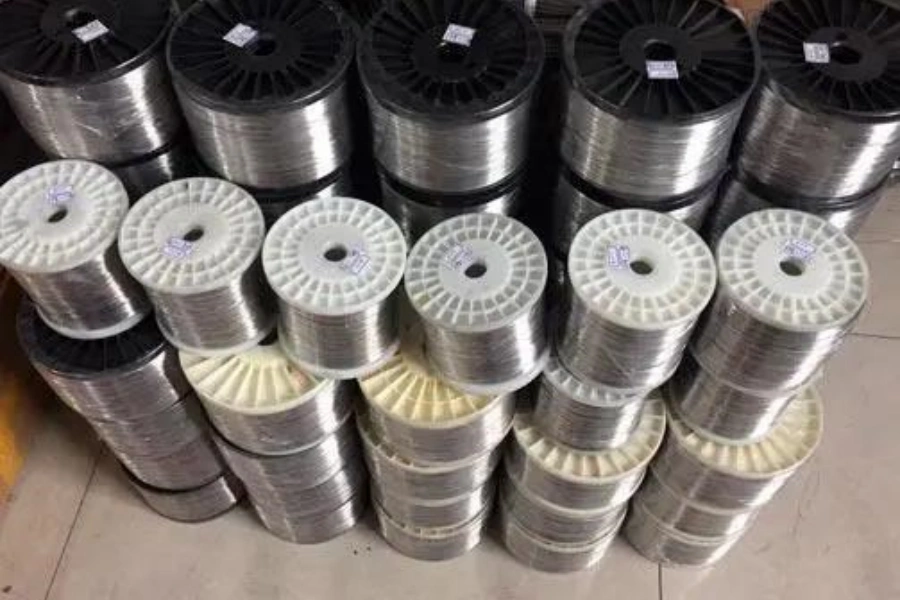
Why Surface Quality Matters in Titanium Wire Manufacturing
The surface condition of titanium flat wire directly influences its performance in final applications. A smooth and defect-free surface improves corrosion resistance, enhances fatigue life, and reduces the risk of failure during service.
For aerospace components, surface defects may become stress concentration points that accelerate fatigue damage under cyclic loading conditions. In medical applications, clean and consistent surfaces are essential because implants and surgical devices require strict biocompatibility standards. Electronics manufacturers also rely on high-quality wire surfaces to ensure reliable assembly and stable electrical performance.
As customer expectations continue to increase, surface quality has become an important competitive factor for titanium wire manufacturers seeking to supply high-end markets.
Common Surface Defects in Titanium Flat Wire Production
Several types of defects may occur during rolling and subsequent processing stages. Understanding the causes of these defects is the first step toward improving production quality.
| Surface Defect | Typical Cause | Potential Impact |
| Scratches | Worn rollers or guides | Poor appearance and reliability |
| Roller Marks | Improper roller finish | Surface inconsistency |
| Oxide Stains | Poor annealing atmosphere | Discoloration |
| Embedded Particles | Contamination | Reduced product quality |
| Surface Pits | Material defects or debris | Lower fatigue performance |
Among these defects, scratches are one of the most common issues in titanium flat wire manufacturing. Since titanium surfaces are relatively sensitive, even minor contact with damaged equipment components can leave visible marks that remain throughout the production process.
Oxide stains are another frequent concern, particularly when annealing conditions are not properly controlled. These defects can affect both appearance and corrosion resistance.
How Roller Finish Influences Titanium Wire Surface Quality
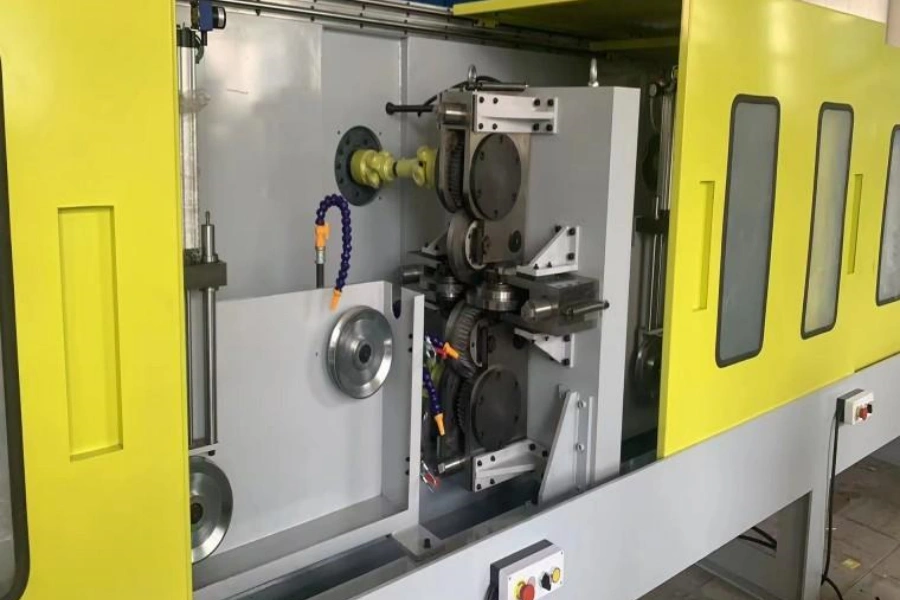
The rolling mill is the core forming equipment in titanium flat wire production, and the condition of the rollers has a direct impact on surface quality.
Precision-ground rollers create smooth and uniform contact with the wire during deformation. If roller surfaces become worn, damaged, or contaminated, surface defects may quickly appear on the finished product. Roller finish affects not only appearance but also material flow during rolling, profile stability, and dimensional consistency.
Several factors contribute to roller performance:
- Surface roughness
- Roller hardness
- Roller alignment
- Wear resistance
- Roll gap stability
Regular roller inspection and maintenance help ensure stable production conditions. Many manufacturers implement preventive maintenance schedules to replace or regrind rollers before wear begins affecting product quality.
Cleaning Systems for Titanium Rolling Lines
Surface contamination can originate from raw materials, drawing lubricants, production debris, or handling processes. Effective cleaning systems are therefore essential throughout the manufacturing line.
Before rolling, cleaning removes contaminants that could damage roller surfaces or become embedded in the wire. After rolling, cleaning prepares the wire for annealing, coating, welding, or additional processing operations.
Typical Cleaning Stages
| Cleaning Stage | Main Purpose |
| Pre-Rolling Cleaning | Remove oil and contamination |
| Intermediate Cleaning | Reduce debris accumulation |
| Pre-Annealing Cleaning | Improve heat treatment quality |
| Final Cleaning | Prepare finished product |
Many modern production lines integrate continuous cleaning systems that operate automatically alongside rolling equipment. This approach improves production efficiency while reducing the risk of surface contamination.
Lubrication Management During Precision Rolling
Lubrication plays a vital role in maintaining surface quality during titanium flat wire production. Proper lubrication reduces friction between the wire and rolling rollers, helping to prevent scratching, excessive wear, and heat generation.
An effective lubrication system provides several benefits:
- Reduced roller wear
- Improved surface finish
- Lower rolling force
- More stable material flow
- Longer equipment life
However, lubrication must be carefully controlled. Excessive lubricant may create cleaning challenges, while insufficient lubrication can increase friction and accelerate surface damage.
Modern rolling lines often use precision dosing systems to maintain consistent lubrication levels throughout production. This helps achieve an optimal balance between forming performance and surface quality.
Surface Inspection and Quality Testing Methods
Even with advanced production equipment, inspection remains an essential part of quality control. Manufacturers use multiple inspection methods to verify that finished titanium wire meets customer requirements.
Visual inspection remains the first step in identifying obvious surface defects. However, modern facilities increasingly rely on automated systems capable of detecting imperfections that may be difficult to observe with the naked eye.
Common inspection methods include:
- Visual surface inspection
- Surface roughness measurement
- Optical inspection systems
- Laser-based monitoring
- Automated defect detection
These technologies provide valuable production data and allow manufacturers to identify problems before large quantities of material are affected.
As quality standards continue to rise, automated inspection systems are becoming increasingly important for high-volume titanium wire production.
Best Practices for Preventing Surface Defects
Achieving excellent titanium wire surface quality requires a combination of process control, equipment maintenance, and operator expertise.
Manufacturers can significantly reduce defect rates by focusing on several key areas:
- Maintaining precision roller conditions
- Implementing effective cleaning procedures
- Optimizing lubrication management
- Controlling annealing atmosphere quality
- Monitoring tension stability during rolling
- Performing regular equipment inspections
Rather than relying solely on final inspection, successful manufacturers treat surface quality control as an integrated process that begins with raw material preparation and continues through every stage of production.
Conclusion
Titanium wire surface quality is influenced by multiple factors, including roller finish, cleaning systems, lubrication management, annealing conditions, and process control. By minimizing scratches, oxidation, contamination, and other surface defects, manufacturers can significantly improve product performance, appearance, and production consistency.
Modern titanium flat wire production lines combine precision rolling technology with advanced cleaning, lubrication, and inspection systems to achieve high-quality surface finishes for demanding aerospace, medical, electronics, and industrial applications. Effective surface quality control not only reduces production defects but also enhances customer satisfaction and long-term manufacturing reliability.Sky Bluer Environmental Technology Co., Ltd. specializes in precision rolling mills, wire surface treatment solutions, cleaning systems, and complete titanium wire production lines. Our customized equipment and process solutions help manufacturers improve surface finish quality, reduce rolling defects, and achieve stable, high-efficiency production for demanding titanium flat wire and profile wire applications.