Introduction: Vacuum Melting Determines Medical Wire Grade
The core difference between medical-grade alloy wire and ordinary industrial wire lies in material purity and internal structural uniformity. All high-end medical wires such as 316LVM stainless steel, Nitinol, titanium alloy and MP35N cobalt-chromium alloy must undergo vacuum melting purification. Ordinary atmospheric melting will produce a large number of oxygen, nitrogen impurities and non-metallic inclusions, resulting in poor biocompatibility, easy fatigue fracture and unstable mechanical properties of finished wire, which cannot meet medical implantation standards.
Vacuum melting is the primary core process of the entire medical wire manufacturing chain and the source guarantee of product quality. Without high-precision vacuum melting equipment, no matter how advanced the subsequent rolling and drawing equipment is, it cannot produce qualified medical implant-grade wire.
As the key equipment support page of the medical wire theme cluster, this article focuses on the working principle, equipment types, process parameters, application advantages and matching production lines of medical alloy vacuum melting equipment, and is closely linked with the full-process system of the blog: Medical Wire Manufacturing Guide: From Melting to Precision Flat Wire Production.
Why Medical Alloy Wire Must Adopt Vacuum Melting Technology
Remove Harmful Gas Impurities
High vacuum environment can effectively remove oxygen, nitrogen, hydrogen and other harmful gases in the alloy, reduce internal pore defects, and improve the compactness and uniformity of the alloy ingot.
Eliminate Non-Metallic Inclusions
Vacuum purification removes oxide and sulfide inclusions, avoids micro-defects inside the wire, and prevents fatigue fracture of medical wires during long-term implantation.
Uniform Alloy Composition
Vacuum melting realizes uniform mixing of various alloy elements, eliminates component segregation, and ensures consistent mechanical properties and dimensional stability of subsequent rolled wires.
Improve Medical Biocompatibility
Ultra-high-purity alloy materials reduce human tissue rejection and corrosion reaction, meeting the strict biocompatibility requirements of implant-grade medical devices.
Core Types & Working Principles of Medical Vacuum Melting Equipment
Sky Bluer’s supporting medical-grade vacuum melting equipment is divided into two core types: VIM vacuum induction melting and VAR vacuum arc remelting, which are applicable to different medical alloy materials and production scenarios.
VIM Vacuum Induction Melting Furnace
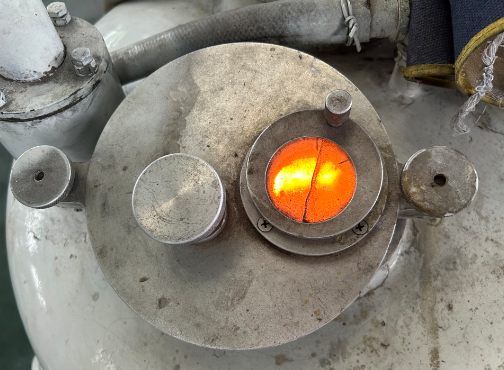
It adopts electromagnetic induction heating to melt raw materials in a high-vacuum closed cavity, with uniform heating and thorough purification. It is suitable for batch smelting of stainless steel, cobalt-chromium alloy and other multi-element medical alloys, with high production efficiency and stable component uniformity.
VAR Vacuum Arc Remelting Furnace
It uses electric arc high-temperature remelting for secondary purification of alloy ingots, which can further eliminate micro-inclusions and pores. It is specially used for high-precision medical alloys such as Nitinol shape memory alloy and Grade 5 titanium alloy, greatly improving material fatigue resistance and structural stability.
.webp)
Standard Vacuum Melting Process for Mainstream Medical Alloys
316LVM/304V Medical Stainless Steel
Adopt VIM primary vacuum melting + fine component adjustment, strictly control carbon and sulfur content, ensure low impurity characteristics of medical stainless steel, and provide high-purity ingots for subsequent Stainless Steel Flat Wire Production Line rolling.
Medical Titanium Alloy (Grade2/Grade5)
Adopt VAR vacuum arc remelting process, ultra-high vacuum environment avoids titanium oxidation, ensures high purity and uniform grain of titanium ingot, and matches titanium special-shaped wire rolling process. For subsequent forming process, refer to: How Medical Titanium Rectangular Wire Is Manufactured?.
Nitinol Nickel-Titanium Alloy
VIM+VAR secondary vacuum melting is adopted to accurately control the nickel-titanium element ratio, eliminate internal structural defects, and ensure stable shape memory performance and super elasticity of finished Nitinol medical wire.
MP35N/CoCr Cobalt-Chromium Alloy
High-precision VIM vacuum melting is adopted to stabilize the ratio of cobalt, chromium and molybdenum elements, improve the fatigue resistance and electrical conductivity of the alloy, and meet the long-term service requirements of pacemaker electrode wires.
Key Technical Parameters of Medical-Grade Vacuum Melting Equipment
- Ultimate Vacuum Degree: 1×10⁻³Pa high vacuum, meeting ultra-high purification requirements of medical alloys
- Temperature Control Accuracy: ±5℃ high-precision temperature control, uniform alloy melting
- Ingot Uniformity: Zero component segregation, zero internal pores, fully meeting medical implant standards
- Applicable Materials: Full coverage of medical stainless steel, titanium alloy, Nitinol, cobalt-chromium alloy
- Production Matching: Perfectly connected with subsequent drawing, rolling and annealing equipment to form a full-process closed-loop production line
Common Melting Defects & Optimization Solutions
Alloy Component Segregation
Cause: Uneven heating and insufficient melting time. Solution: Optimize induction heating parameters and extend uniform melting holding time to ensure full mixing of alloy elements.
Internal Pores & Inclusions
Cause: Insufficient vacuum degree and incomplete gas removal. Solution: Improve ultimate vacuum degree and extend vacuum degassing time to thoroughly purify the alloy.
Surface Oxidation of Ingot
Cause: Vacuum cavity air leakage. Solution: Adopt fully sealed cavity design and real-time vacuum monitoring system to ensure zero air leakage in the melting process.
FAQ for Medical Alloy Vacuum Melting
Q1: What is the difference between medical vacuum melting and industrial vacuum melting?
A: Medical-level equipment has higher vacuum degree, stricter impurity control and more uniform component adjustment, which can meet the biocompatibility and long-term fatigue resistance requirements of implanted wires.
Q2: Do all medical alloy wires need secondary VIM+VAR melting?
A: Conventional stainless steel can adopt single VIM melting; high-end Nitinol, titanium alloy and cobalt-chromium alloy need secondary remelting to achieve ultra-high purity.
Q3: How does vacuum melting affect the final precision of medical wire?
A: High-purity and uniform ingot avoids subsequent rolling cracking and dimensional deviation, which is the basic guarantee for stable production of ±0.002mm ultra-precision wire. See: How to Achieve ±0.002 mm Tolerance in Medical Rectangular Wire Manufacturing.
Q4: Can your vacuum melting equipment be matched with your rolling and drawing lines?
A: Yes. All equipment is independently developed and matched, realizing seamless connection from melting to finished wire, with optimized overall process and stable production.
Q5: What is the yield improvement after adopting medical-grade vacuum melting?
A: The finished product qualification rate of medical wire is increased from less than 85% of ordinary processes to more than 99.5%, greatly reducing material waste.
Recommended Vacuum Melting Equipment & Full Turnkey Line
Core Recommended Equipment: Medical Grade VIM Vacuum Induction Melting Furnace, VAR Vacuum Arc Remelting Furnace, Full Melting-to-Rolling Turnkey Production Line
Sky Bluer medical vacuum melting equipment is specially optimized for medical alloy characteristics, with high purification accuracy and stable operation. It can form a one-stop full-process solution with subsequent Wire Drawing Machine and Precision Rolling Mill, helping customers build professional medical wire production factories.