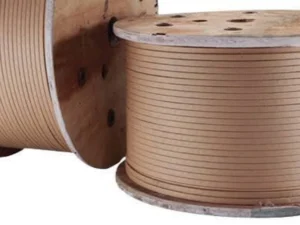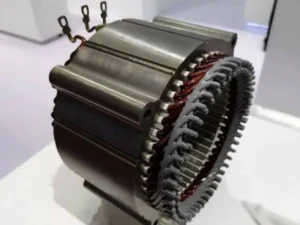
Introduction
The industrial landscape demands unparalleled precision in steel wire and flat wire production, as industries ranging from automotive, electronics, aerospace, and construction rely on wires with exact dimensional tolerances, superior surface finish, and consistent mechanical properties. These wires serve as critical components in everything from high-performance automotive springs to miniaturized electronic connectors, where even microscopic deviations can compromise performance.
Our comprehensive guide covers the full spectrum of spring steel, flat wire, and shaped wire manufacturing equipment—from standalone precision machines to integrated production lines—offering in-depth insights into machine types, production processes, technical specifications, and optimization strategies to meet the stringent requirements of today’s industrial applications.
For instance, manufacturers looking to understand how flat wire rolling machines shape spring steel efficiently can explore our detailed guide on Flat Wire Rolling Machines, while those interested in converting round wire rods into complex profiles can reference our Shaped Wire Production Line insights.
Industry Overview
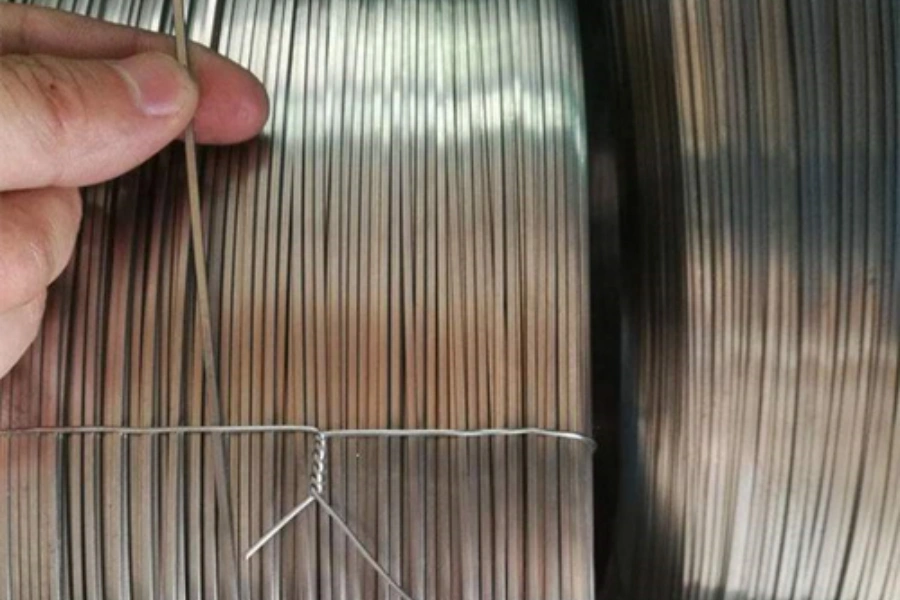
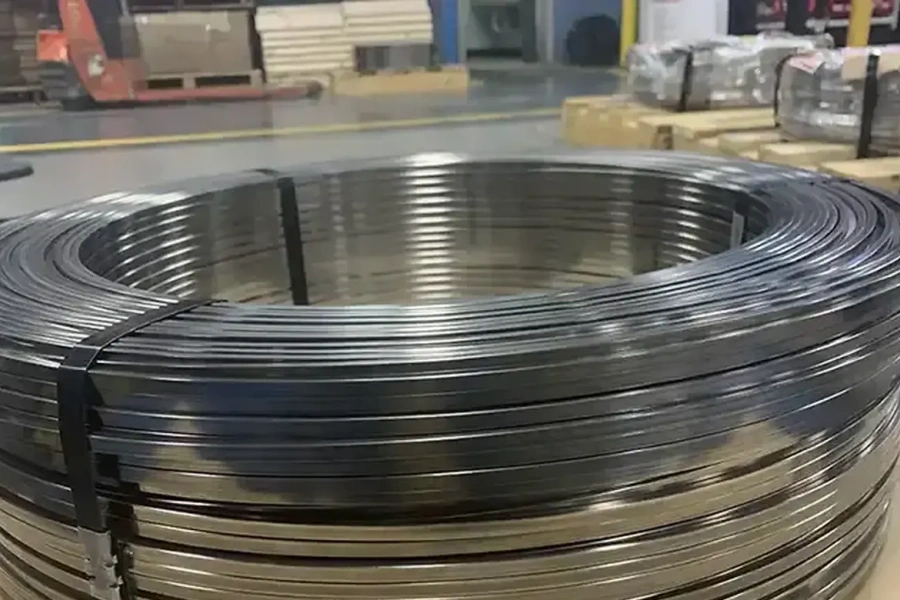
Steel wire production encompasses three primary profile categories: round, flat, and custom-shaped wires, each tailored to specific industrial needs and presenting unique manufacturing challenges. Below is an expanded breakdown of their applications, key production considerations, and typical technical requirements:
| Wire Type | Applications | Key Production Considerations | Typical Technical Requirements |
| Spring Steel Wire | Automotive suspension springs, engine valves, industrial clips, medical devices | Tensile strength (1,800–2,200 MPa for high-performance applications), precise diameter control (±0.005 mm), fatigue resistance (≥10⁶ cycles), corrosion resistance | Diameter range: 0.1–10 mm; Surface roughness: Ra ≤ 0.2 μm; Elongation at break: 5–10% |
| Flat Wire | Electrical contacts, PCB connectors, lithium-ion battery tabs, stamping components, automotive seat frames | Width & thickness uniformity (±0.01 mm), surface smoothness (no scratches or oxidation), conductivity (for electrical applications), formability | Width: 0.2–25 mm; Thickness: 0.05–5 mm; Aspect ratio (width/thickness): 2:1 to 20:1; Tensile strength: 400–1,500 MPa (varies by material) |
| Shaped Wire | Custom profiles (square, hexagonal, triangular, grooved, or irregular geometries) for industrial machinery, aerospace fasteners, precision gears, and architectural components | Profile accuracy (±0.02 mm), dimensional consistency across length, mechanical property retention (tensile strength, hardness), compatibility with post-processing (threading, welding) | Profile size: 0.5–20 mm (maximum cross-sectional dimension); Surface finish: Ra ≤ 0.3 μm; Straightness: ≤0.2 mm/m |
The industry is driven by lightweighting, miniaturization, and sustainability trends, which push manufacturers toward equipment with higher precision, faster throughput, and reduced environmental impact. For a technical comparison of forming methods, including the pros and cons of rolling versus drawing, check our Rolling vs. Drawing Methods article.
Core Equipment Overview
The production of high-precision wires depends on specialized equipment engineered to handle the unique requirements of each profile type. Below is an expanded breakdown of core machines, including detailed technical parameters, design features, and operational capabilities:
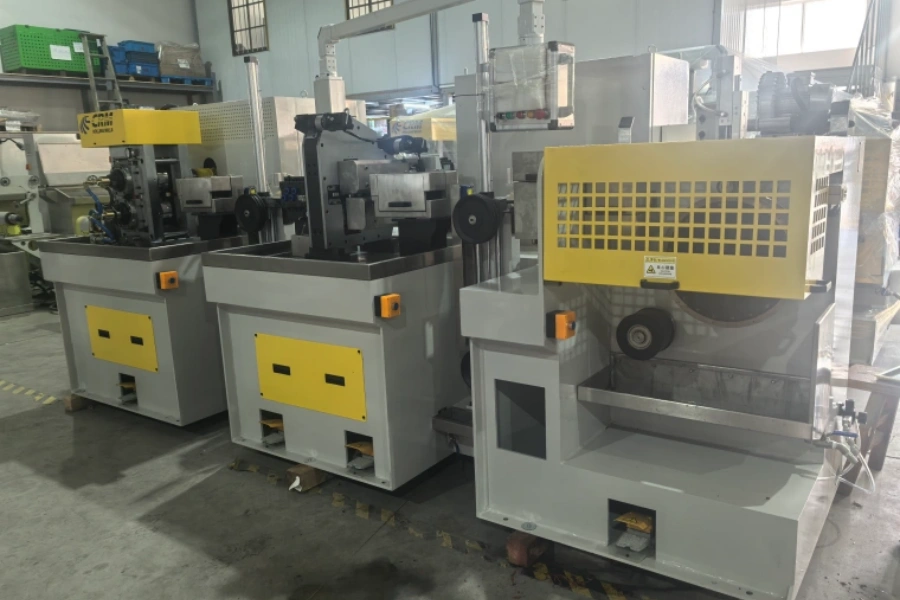
Flat Wire Rolling Machines
Function: Convert round wire (or wire rod) into flat profiles through incremental multi-pass rolling, ensuring uniform width, consistent thickness, and scratch-free surface finish.
Technical Parameters:
- Wire width range: 0.2–25 mm (extended from 20 mm to cover larger industrial applications)
- Thickness range: 0.05–5 mm
- Thickness tolerance: ±0.005–±0.01 mm (tighter tolerance for high-precision electronics)
- Rolling speed: 100–500 m/min (variable speed control for different materials)
- Number of passes: 2–8 (adjustable based on material hardness and thickness reduction ratio)
- Material compatibility: Spring steel (SAE 1070–1095, ASTM A228), stainless steel (304, 316), carbon steel, copper alloys (C11000), aluminum alloys (6061)
- Tension control: Closed-loop servo system (tension range: 5–50 N)
- Surface protection: Ceramic or Tungsten Carbide (WC) rollers with polished finish (Ra ≤ 0.1 μm)
Key Features:
- Inline thickness measurement (laser-based, accuracy ±0.002 mm) for real-time feedback
- Automatic roller gap adjustment (CNC-controlled) to maintain tolerance
- Oil lubrication system with filtration (10 μm filter) to prevent contamination
- Modular design for quick changeover between profiles (≤30 minutes)
- Integrated cooling system (water or air) to control material temperature during rolling
Shaped Wire Forming Machines
Function: Transform round wire into custom cross-sectional profiles (square, hexagonal, triangular, grooved, or user-defined geometries) through precision die rolling or extrusion.
Technical Parameters (Expanded):
- Maximum profile size: 0.5–20 mm (cross-sectional dimension)
- Profile tolerance: ±0.01–±0.02 mm (depending on profile complexity)
- Wire speed: 50–300 m/min (adjustable for different profile types)
- Die stations: 4–12 (multi-stage forming for complex profiles)
- Material compatibility: Spring steel, stainless steel, titanium alloys (for aerospace), nickel-based superalloys, brass, bronze
- Profile accuracy: ±0.008 mm for simple shapes (square/hexagonal); ±0.02 mm for complex irregular profiles
- Straightness: ≤0.15 mm/m (critical for assembly in precision machinery)
Key Features:
- CNC-controlled die positioning (repeatability: ±0.001 mm) for consistent profile formation
- Inline profile inspection (3D laser scanning) to detect deviations in real time
- Quick-change die sets (tool-less for standard profiles) to reduce downtime
- Tension stabilization system (hydraulic or pneumatic) to prevent wire breakage
- Integration with annealing/tempering units (temperature control: 200–800°C) for mechanical property optimization
Complete Production Lines
Function: Integrate all stages of wire production—from raw material processing (wire drawing) to forming, heat treatment, finishing, and quality inspection—into a streamlined workflow.
Core Components:
- Wire Drawing Machine: Reduces raw wire rod diameter to the required pre-form size (diameter range: 0.3–15 mm; drawing speed: 100–400 m/min; die material: polycrystalline diamond (PCD) for wear resistance)
- Rolling/Forming Module: Flat wire rolling machines or shaped wire forming machines (as detailed above)
- Annealing/Tempering Unit: Heat treatment to adjust mechanical properties (temperature range: 300–900°C; cooling rate: 5–50°C/min; controlled atmosphere (nitrogen) to prevent oxidation)
- Finishing Module: Deburring, polishing (surface roughness Ra ≤ 0.1 μm), and coating (zinc plating, nickel plating, or powder coating)
- Quality Inspection System: Inline measurement of dimensions, surface finish, and mechanical properties (tensile strength, hardness via ultrasonic testing)
- Cutting & Packaging: Precision cutting (length tolerance: ±0.5 mm) and automated packaging (coils or straight lengths)
Benefits:
- Throughput increase: 30–50% compared to standalone machines
- Consistent quality: Reduced human error and process variability.
- Energy efficiency: Integrated systems reduce energy consumption by 15–20%
- Traceability: Full process monitoring (temperature, speed, tension) for each batch
- Scalability: Modular design allows addition of new modules (e.g., coating, threading)
For insights into cutting-edge machine innovations, see our Latest Innovations in Wire Forming Machines article.
-1.webp)
Production Challenges
High-precision wire production faces several complex challenges that directly impact quality, efficiency, and cost. Below is an expanded analysis of key challenges with technical context:
- Dimensional Accuracy: Maintaining tight tolerances (±0.005–±0.02 mm) across long production runs (10,000+ meters) is challenging due to factors like roller/die wear (0.001–0.003 mm wear per 1,000 meters), material temperature fluctuations (which cause thermal expansion/contraction), and tension variations. For example, spring steel wire heated to 150°C during rolling can expand by 0.1%, leading to thickness deviations if not compensated.
- Surface Finish: Achieving scratch-free, smooth surfaces (Ra ≤ 0.2 μm) is critical for applications like electronic contacts or aerospace components. Common issues include roller contamination (oil residue, metal particles), improper lubrication (insufficient or incompatible lubricants), and wire contact with rough guide surfaces.
- Material Handling: High-strength materials (e.g., spring steel with tensile strength ≥2,000 MPa) are prone to stress-induced breakage during processing. Improper tension (too high or too low) can cause wire deformation or breakage, leading to downtime and material waste (typically 2–5% of raw material).
- Efficiency: Balancing throughput with quality is a key challenge. For example, increasing rolling speed from 300 to 500 m/min can boost productivity by 67%, but may increase the risk of dimensional deviations or surface defects if not accompanied by advanced process control.
- Material Compatibility: Different materials require specialized processing parameters. For instance, stainless steel (316) has higher hardness (HV 200–250) than carbon steel (HV 150–180), requiring harder rollers (WC vs. tool steel) and lower rolling speeds to prevent die wear.
For strategies to overcome these challenges, see Maintenance & Efficiency Tips for Wire Flattening Machines.
Optimization Strategies
To overcome production challenges and achieve peak performance, implement the following technical optimization strategies:
- Inline Measurement & Real-Time Feedback: Install laser-based thickness/profile measurement systems (e.g., Keyence LK-G Series) with a sampling rate of 1,000 Hz to monitor dimensions continuously. Integrate the system with CNC controls to automatically adjust roller gap, tension, or speed within ±0.001 mm, reducing dimensional deviations by 40–60%.
- Process Parameter Optimization: Develop material-specific process maps that define optimal rolling speed, tension, and pass sequence. For example:
- Spring steel (SAE 1095): 4 passes, speed 350 m/min, tension 30 N, roller temperature 80°C
- Stainless steel (304): 6 passes, speed 250 m/min, tension 25 N, roller temperature 100°C
Use finite element analysis (FEA) software (e.g., ANSYS) to simulate rolling processes and optimize parameters before production.
- Preventive Maintenance: Establish a strict maintenance schedule based on machine usage and material type:
- Inspect rollers and dies every 500 hours (for high-strength materials) or 1,000 hours (for standard materials) for wear; replace if wear exceeds 0.002 mm
- Clean lubrication systems every 2,000 hours to remove contaminants
- Calibrate tension control systems every 1,500 hours to ensure accuracy (±0.5 N)
- Replace guide rollers every 3,000 hours to maintain surface quality
- Automation & Robotics: Integrate robotic arms (e.g., Fanuc LR Mate 200iD) for material loading/unloading and wire guiding, reducing manual handling by 90% and minimizing stress-induced defects. Use machine vision systems (e.g., Cognex In-Sight) to detect surface defects in real time, rejecting faulty wire before it proceeds to subsequent stages.
- Material Preparation: Pre-treat raw wire to improve processability:
- Anneal high-strength materials before rolling to reduce hardness (e.g., spring steel annealed at 700°C for 1 hour to lower HV from 250 to 180)
- Degrease and clean wire to remove contaminants that cause surface defects
- Apply a thin layer of specialized lubricant (e.g., molybdenum disulfide for high-temperature applications) to reduce friction between wire and rollers
- Energy & Waste Reduction: Optimize machine settings to reduce energy consumption—for example, using variable frequency drives (VFDs) to adjust motor speed based on production demand, cutting energy use by 15–20%. Implement scrap recycling systems to recover unused wire (typically 2–5% of production) and reprocess it into raw material.
For a deeper dive into optimizing high-precision wire production, visit Latest Innovations in Wire Forming Machines.
Applications
Automotive: Leaf springs, coil springs, connectors, seatbelt buckles. For spring steel flat wire applications in automotive or industrial machinery, see our Spring Steel Flat Wire: Applications & Equipment Selection article for detailed guidance on equipment and material selection.
Electronics: PCB components, battery tabs, micro-connectors.
Industrial Machinery: Gears, fasteners, conveyor wires.
Aerospace: Aircraft frames, engine valves, avionics wiring.
Conclusion & CTA
This guide has covered the full range of high-precision steel wire and flat wire production equipment—from standalone flat wire rolling machines and shaped wire forming machines to complete production lines—along with technical details, common challenges, and optimization tips. No matter if you’re making spring steel for automotive parts, precision flat wire for electronics, or custom-shaped wire for aerospace, having the right equipment and following best practices makes all the difference in quality, efficiency, and cost control.
With CRM’s lineup of Flat Wire Rolling Machines, you get reliable, high-performance solutions designed for today’s demanding industrial applications. Let CRM help you take your wire production to the next level.