Introduction
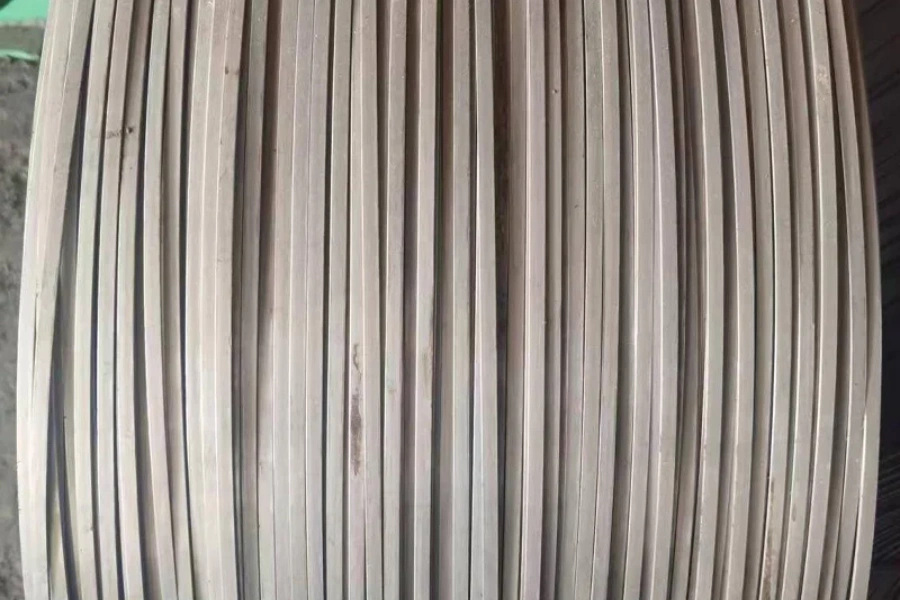
Flat wire rolling machines are indispensable in manufacturing for transforming round spring steel wire into precise flat profiles. These profiles are widely used in automotive leaf springs, industrial connectors, stamping components, electrical contacts, and specialty fasteners. High-quality flat wire requires strict control over thickness tolerance, consistent width, superior surface finish, and reliable mechanical properties.
Today’s flat wire rolling machines combine multi-pass rolling technology, precision tension control, surface-protected rollers, and inline measurement systems to meet these requirements. PLC-controlled automation further enhances throughput, reduces scrap, and maintains dimensional consistency, making these machines crucial for high-volume and high-precision production environments. Manufacturers seeking detailed insights into equipment selection and applications can also refer to our guide on Spring Steel Flat Wire: Applications & Equipment Selection, which explains how to match machine capabilities to specific wire grades and industrial needs.
Working Principle
Flat wire rolling is a mechanical deformation process in which round wire gradually passes through a series of rolling stages to form a flat profile. This ensures precise width and thickness, uniform surface finish, and consistent mechanical properties.
Key Process Steps
- Wire Feeding: Wire is uncoiled from reels or spools and guided through tension-controlled feeding systems to prevent misalignment, twisting, or distortion. Advanced tension stabilization ensures minimal variation even at high speeds.
- Initial Flattening Pass: The first rolling stage slightly compresses the wire to begin the flattening process while minimizing surface scratches. This step is critical for sensitive materials like stainless steel or copper alloys.
- Multi-Pass Rolling: Depending on material hardness and target thickness, the wire undergoes 2–6 passes. Each stage progressively reduces thickness, ensuring dimensional accuracy and even internal stress distribution.
- Tension Control: Servo-controlled systems maintain straightness and flatness, preventing bending or warping. This precision is particularly important for high-strength spring steel used in automotive leaf springs.
- Surface Protection: Hardened, chrome-plated, or ceramic rollers prevent scratches and maintain surface quality. The use of coated rollers has been shown to reduce micro-surface defects by over 60%.
- Inline Measurement: Laser or optical sensors continuously monitor thickness, width, and flatness, feeding real-time data back to CNC controls for automatic adjustments. This integration allows manufacturers to maintain tolerances as tight as ±0.01 mm.
- Optional Annealing: Heat treatment before or after rolling relieves residual stress and improves ductility, ensuring the flat wire maintains mechanical properties suitable for demanding applications.
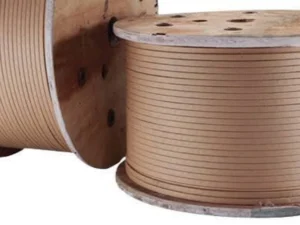
- Collection & Packaging: Finished flat wire is coiled, cut to length, or directly fed into downstream operations. Automated handling reduces the risk of deformation or surface damage during collection.
For high-volume production, combining this rolling process with insights from Maintenance & Efficiency Tips for Wire Flattening Machines helps maximize throughput and minimize downtime while protecting equipment longevity.
Technical Specifications
| Parameter | Typical Range | Notes |
| Wire Width | 0.2 – 20 mm | Adjustable roller gap for different widths |
| Thickness | 0.05 – 5 mm | ±0.005–0.01 mm tolerance for precision |
| Rolling Speed | 50 – 500 m/min | Material-dependent, adjustable via VFD |
| Number of Passes | 2–6 | Softer steel requires fewer passes |
| Material | Spring steel, stainless steel, copper alloys | Heat-treated or annealed wire |
| Roller Material | Hardened steel, chrome plating | High wear resistance |
| Max Tension | 500 N | Maintains flat wire stability |
| Lubrication | Oil or emulsion | Ensures smooth operation and reduces wear |
| Inline Measurement | Laser/optical sensors | Continuous thickness, width, and flatness monitoring |
Advanced Features:
- CNC-controlled roller gap adjustment ensures ±0.002 mm accuracy.
- Modular design allows quick profile changes, reducing downtime (<30 minutes).
- Integrated cooling systems stabilize wire temperature and prevent dimensional drift.
- Optional inline annealing and tempering units for high-strength spring steel (temperature 200–800°C).
Industrial Applications
High Dimensional Accuracy: Maintains ±0.01 mm thickness and width tolerance across long production runs.
- Surface Integrity: Roller coatings prevent scratches, dents, or oxidation.
- Reduced Internal Stress: Multi-pass rolling distributes stress evenly, improving flatness and fatigue life.
- Material Flexibility: Suitable for spring steel, stainless steel, and copper alloys.
- Integrated Heat Treatment: Inline annealing ensures optimal mechanical properties for specialized applications.
Manufacturers adopting these machines alongside techniques described in our Latest Innovations in Wire Forming Machines for Industrial Use can further enhance production automation and integrate real-time process monitoring for higher efficiency.
-1.webp)
Applications Across Industries
Automotive:
- Leaf springs (thickness 1.5–3 mm, width 10–20 mm) with fatigue resistance >10⁶ cycles.
- Clips, retaining rings, and fasteners requiring high precision.
Electrical & Electronics:
- PCB connectors and terminals (thickness 0.05–0.2 mm, width 0.5–2 mm).
- Battery tabs and flat conductors with high current-carrying capacity (>20 A/mm²).
Industrial Machinery:
- Stamping components, brackets, washers, and precision parts (surface Ra ≤0.1 μm).
Medical Devices:
- Surgical instruments and implants using stainless steel flat wire.
A practical example: An automotive manufacturer implemented a six-pass flat wire rolling line with inline laser measurement. Thickness tolerance of ±0.01 mm was maintained, throughput increased by 18%, and scrap rate decreased by 12%, highlighting the efficiency gains possible with precise process control.
For guidance on selecting machines for specific applications, consulting our Spring Steel Flat Wire: Applications & Equipment Selection article is recommended.
Optimization Best Practices
- Roller and Die Maintenance: Inspect every 500–1000 hours to prevent wear or scratches.
- Tension and Speed Adjustment: Optimize based on steel grade, hardness, and wire thickness.
- Inline Measurement Integration: Automatic real-time correction of thickness and flatness deviations.
- Lubrication Control: Maintain proper oil or emulsion levels for surface quality and roller longevity.
- Pre-Annealed Wire: Reduces hardness variation and facilitates smooth rolling.
- Automation & PLC Systems: Ensures repeatable quality across shifts, reduces operator error, and improves efficiency.
Integrating these strategies with innovations in wire forming technologies improves both quality and production efficiency.
Conclusion
Flat wire rolling machines play a pivotal role in producing high-precision spring steel flat wire for automotive, electronics, industrial, and medical applications. By integrating multi-pass rolling, precise tension control, surface protection, inline measurement, and optional annealing, manufacturers can achieve consistent, high-quality output.
Maintaining optimized operational parameters, performing regular maintenance, and utilizing automation technologies ensures higher throughput, reduced scrap, and dependable production performance. For businesses seeking advanced capabilities, Sky Bluer Environmental Technology Co., Ltd. offers a complete range of Flat Wire Rolling Machines, providing tailored solutions for precision wire production in even the most demanding industrial environments.
Discover our full lineup and see how our machines can elevate your spring steel and flat wire production.