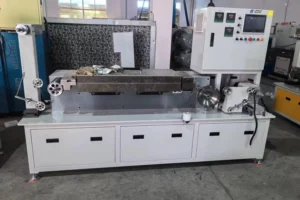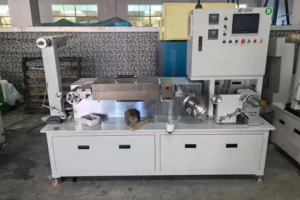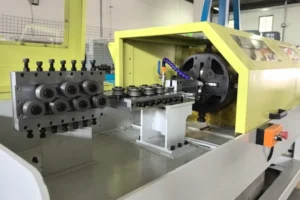
Wire flattening machines, also known as wire flatteners, are specialized industrial machines designed to flatten and reduce the thickness of round wires and metal strips while precisely maintaining their controlled width. They are widely adopted in wire manufacturing, electrical component production, jewelry making, and many other metal processing industries.
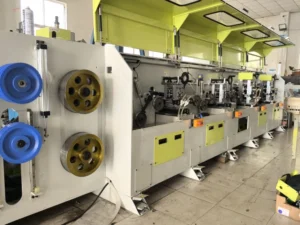
Key Features & Main Components of Wire Flattening Machines
1. Flattening Rolls
The core part of the machine is a set of high-precision flattening rolls, constructed from hardened steel or carbide for long service life and wear resistance.
Rolls are designed in cylindrical or custom profiled forms, precisely aligned and accurately spaced. Wire or metal strip passes through the roll nip to achieve uniform flattening. Roll surfaces can be made flat or custom-profiled to produce special shaped flat wire as required.
2. Roll Gap Adjustment Mechanism
Wire flattening machines are equipped with precise gap adjustment systems to control material thickness while keeping the original width stable.
Adjustment methods include manual, hydraulic, and motorized modes, matching different precision levels and automation demands. Operators can fine-tune the roll gap easily to meet various finished wire size specifications.
3. Drive Motor & Transmission System
An industrial electric motor powers the flattening rolls through a stable drive system, delivering steady running speed and consistent forming quality.
Most models support adjustable speed control, allowing flexible production settings for different metal materials and wire thickness ranges.
4. Tension Control System
Built-in tension control mechanisms maintain stable feeding tension during the flattening process.
This prevents material slipping, wrinkling, and deformation, ensuring even feeding, stable traction, and perfectly uniform flatness across the full width of the wire or strip.
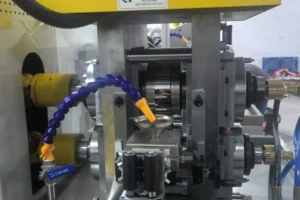
5. Cooling & Lubrication System
Metal rolling inevitably generates friction and heat. Wire flattening machines are fitted with professional cooling and lubrication systems to:
- Dissipate rolling heat
- Reduce friction between material and rolls
- Protect roll surface quality and extend service life
- Improve surface finish of finished flat wire
6. Intelligent Control Panel
The machine is equipped with an intuitive control interface for setting roll gap, running speed, tension and other core parameters.
Built-in monitoring and feedback functions ensure precise, repeatable, and stable flattening results for mass production.
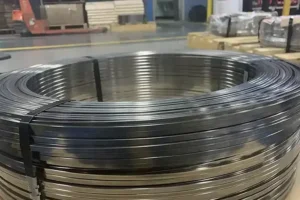
Types & Applications
Wire flattening machines are available in multiple sizes and structural configurations to suit diverse industrial needs.
Typical applications:
- Electrical connectors & electronic components
- Jewelry forming parts
- Flat wire springs
- Metal mesh and filter screen wire
- Custom precision flat metal strips
In short, wire flattening machines are essential equipment for producing precision flat wires and metal strips with accurate thickness, fixed width, and consistent surface quality.